

Blockchain Identity Standards: A Guide to Decentralized ID
Ever feel like you don't actually own your digital identity? Between Google logins and government databases, your personal data is scattered across servers you don't control. This centralized setup is exactly why 83% of identity theft breaches happen-there is just one big honey pot for hackers to hit. Blockchain identity standards is a set of technical frameworks that shift control of digital identity from central authorities back to the individual user. By using distributed ledgers, these standards let you prove who you are without handing over your entire life story to every website you visit.
The Core Pillars of Decentralized Identity
To understand how this works, we need to look at the two heavy hitters in the space: DIDs and Verifiable Credentials. If you think of a traditional ID as a plastic card issued by a state, these standards are the digital version, but with a twist: you hold the card, and the blockchain just verifies that the card is real.
Decentralized Identifiers (or DIDs) are unique, permanent URIs that don't require a central registry. Instead of a username owned by Facebook, a DID looks like did:method:identifier. As of late 2024, there are 37 different methods to create these, such as did:ion for the ION network or did:sov for Sovrin. They act as a digital address that you own and control through private keys.
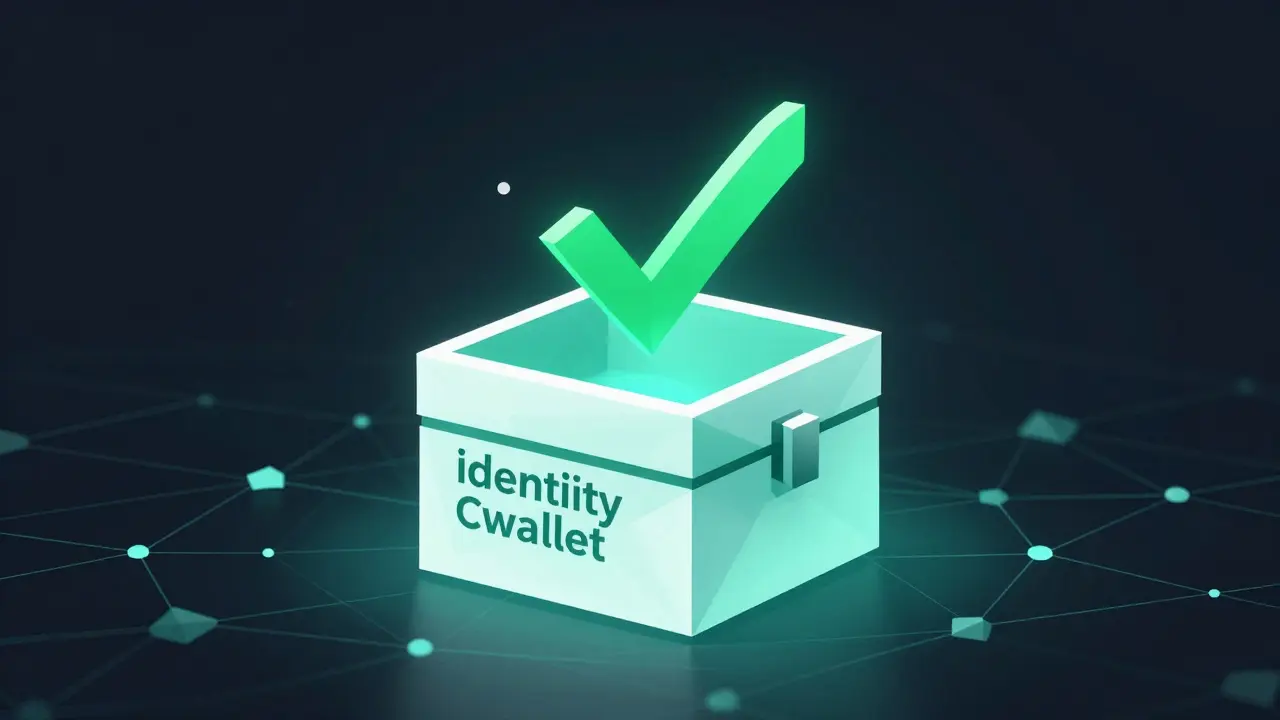
Then we have Verifiable Credentials (VCs). These are the actual claims about you-like your age, your degree, or your citizenship. The magic here is something called selective disclosure. Thanks to zero-knowledge proofs, you can prove you are over 21 without actually showing your birthdate. Imagine walking into a club and the bouncer sees a green checkmark for "Age 21+" without ever seeing your actual ID card. That is the power of VCs.
Comparing the Major Frameworks
Not all blockchain identity systems are built the same. You'll usually run into two camps: permissioned (private) networks and public (permissionless) networks. Most big companies prefer the permissioned route because they want to know who is running the nodes and ensure things stay compliant with laws like GDPR.
| Feature | Permissioned (e.g., Sovrin, Hyperledger Indy) | Public (e.g., Ethereum ENS, ION) |
|---|---|---|
| Transaction Speed | High (1,000+ TPS) | Lower (~15 TPS) |
| Control | Vetted Stewards | Fully Decentralized |
| Typical Use Case | Banking KYC, Government IDs | Web3 Profiles, Personal Branding |
| Scalability | High (Millions of IDs) | Moderate (Scaling challenges) |
For example, the Sovrin Network is a powerhouse for enterprise use, processing millions of identities. On the other hand, the Ethereum Name Service (ENS) is great for the crypto-native crowd, though it can't match the sheer volume of a dedicated permissioned chain. If you're a bank, you're likely looking at something like R3 Corda to cut your KYC onboarding time-some banks have seen that drop from 72 hours to just 20.
Real-World Wins and User Headaches
It sounds great on paper, but the rollout hasn't been perfectly smooth. In the Philippines, the Department of Social Welfare used a Hyperledger Indy-based system and slashed identity fraud by 94% in their cash assistance programs. That is a massive win for transparency and efficiency.
However, the "self-sovereign" part of Self-Sovereign Identity (SSI) puts a lot of pressure on the user. In a traditional system, if you lose your password, you click "Forgot Password." In the world of blockchain identity, if you lose your recovery phrase, you might lose your identity forever. About 63% of negative reviews for these wallets stem from users who accidentally locked themselves out of their own lives.
We've also seen that age and tech-savviness play a huge role. A pilot project in Australia, myGovID, had to be scrapped because nearly 70% of users over 55 found the digital wallet interface too confusing. It shows that while the math is solid, the user experience (UX) still needs a lot of work.
The Tech Stack: What's Under the Hood?
If you're looking to implement this, you can't just put everything on the chain. Blockchains are slow and expensive for storing large files. Instead, most systems use a hybrid approach. About 68% of developers use the IPFS (InterPlanetary File System) to store the actual credentials off-chain, while the blockchain only holds the cryptographic proof that the data is valid.
Security is non-negotiable here. You'll typically see 256-bit elliptic curve keys (like secp256k1) being used. For high-security financial apps, biometric-bound credentials are becoming the norm. These don't just check a fingerprint; they use liveness detection to make sure a hacker isn't just holding up a photo of your face to the camera.
For developers, building this from scratch is a nightmare. It can take up to 18 weeks just to get a basic credential system running. Using SDKs like Truvera has been shown to speed this up significantly, sometimes cutting that time down to just a week and a half. The talent gap is real, too-blockchain developers are commanding huge salaries because there just aren't enough people who understand both the cryptography and the business logic.
What's Next for Digital Identity?
The next few years are going to be a whirlwind of regulation. In Europe, eIDAS 2.0 (coming in June 2026) will basically force EU member states to recognize blockchain-based identities. This is a huge catalyst for adoption because it moves the tech from "cool experiment" to "legal requirement."
We're also seeing a move toward "Universal Resolvers." Since there are so many different DID methods, the Decentralized Identity Foundation (DIF) is working on ways to make different chains talk to each other. This means your identity on a government chain could be verified by a private company's app without any friction.
The biggest looming challenge? AI. While AI can help detect fraud in identity claims, there's a real worry about "algorithmic identity bias." If an AI decides your identity is "suspicious" based on a flawed pattern, you could be locked out of essential services with no human to appeal to. The industry is currently racing to create standards that keep the AI in check while reaping the security benefits.
What is the difference between a DID and a traditional username?
A traditional username is owned by a company (like Google or X). If they delete your account, you lose your identity on that platform. A DID is a decentralized identifier that you own. No single company can take it away from you because it exists on a distributed ledger, not a corporate server.
Is blockchain identity actually more private?
Yes, if implemented correctly. Through Verifiable Credentials and zero-knowledge proofs, you can share a "proof" of a fact (like being a citizen of a certain country) without sharing the actual document or your full name. This prevents companies from hoarding your data in massive databases that are prone to leaks.
What happens if I lose my private key for my identity wallet?
This is currently the biggest pain point. In many early systems, losing your key means losing your identity permanently. However, newer standards are introducing "social recovery" and biometric-bound keys to make recovery easier without sacrificing decentralization.
Which industries are using this the most?
The BFSI (Banking, Financial Services, and Insurance) sector leads the way, taking up about 24% of the market. They use it primarily to slash the cost and time of KYC (Know Your Customer) checks and to fight the billions of dollars lost annually to fraud.
Does this replace my passport or driver's license?
Not yet. While the tech exists, it requires legal recognition. Frameworks like eIDAS 2.0 in Europe are paving the way for digital identities to have the same legal standing as physical passports, but we are still in the transition phase.
Next Steps and Troubleshooting
If you are an enterprise looking to move toward these standards, don't start by building a custom chain. Start by mapping your requirements to the NIST Special Publication 800-63B guidelines. Most successful companies start with a hybrid model: keep the high-volume data off-chain using IPFS and only use the blockchain for the final verification hash.
For individual users, the move is to look for wallets that support the W3C Verifiable Credentials data model. If a wallet doesn't mention interoperability or W3C standards, you're likely just trading one centralized provider for another, which defeats the whole purpose of the technology.




24 Comments
Surender Kumar
April 12, 2026 at 06:52
this sounds like a grate way to handle data. hope it actualy gets used more widespread soon!
Lela Singh
April 12, 2026 at 13:39
Absolute game-changer! Selective disclosure is pure magic for privacy. 🚀
7stargee Emmanuel Obani
April 13, 2026 at 21:37
lol imagine thinkin a blockchain solves trust issues. just another way to lose your money 🙄
Kelly Cantrell
April 15, 2026 at 11:59
Of course they want a "universal resolver." It is just a fancy name for a global tracking system so the elites can keep tabs on every single movement we make. They'll start with "convenience" and end with a social credit score just like in China. Once your ID is on a ledger, they can flip a switch and erase you from existence if you don't follow the party line. It is a trap designed to strip away the last remnants of American sovereignty. I will stick to my paper documents and cash, thanks.
Terrance Hausmann
April 16, 2026 at 04:24
We should try to find a middle ground where security and accessibility meet.
Will Dixon
April 16, 2026 at 13:15
it is just hard for some laos to use these wallets. we need simpler apps.
Carroll Foster
April 17, 2026 at 19:52
Oh sure, because adding another layer of cryptographic abstraction is exactly what the average user wants. I'm sure the "sybil resistance" of a permissioned chain will totally make everyone feel cozy while some vetted stewards play god with their data. Absolute peak efficiency here, folks.
Artavius Edmond
April 19, 2026 at 06:56
I'm pretty chill with how this is evolving. Seems like a fair move toward autonomy.
Rebecca Violette
April 19, 2026 at 16:33
i lost my key last year and literaley cried for days cuz i couldnt access my stuff... it's so unfair
Swati Sharma
April 19, 2026 at 16:53
The integration of ZK-proofs for selective disclosure is a massive leap in achieving a trustless architecture. It's great to see the shift toward W3C standards to avoid vendor lock-in.
Stanly Hayes
April 20, 2026 at 08:17
Get with the program! This is the future and anyone fighting it is just slowing us down!
logan bates
April 22, 2026 at 04:05
USA needs to lead this, not some EU regulation like eIDAS.
Omotola Balogun
April 22, 2026 at 11:01
Actually, the distinction between a DID and a traditional identifier is often misunderstood; the former is a self-generated entity whereas the latter is a leased asset. It's basic cryptography, really.
Alan Seiden
April 23, 2026 at 18:31
Typical rubbish. Another
Samson Selleck
April 24, 2026 at 18:08
The sheer lack of nuance regarding the trade-offs between L1 finality and the latent latency of off-chain IPFS storage is genuinely exhausting. One must wonder if the proponents of these "standards" even grasp the Byzantine Fault Tolerance implications of their proposed hybrid models. It's an intellectual vacuum. Most of these implementations are merely glorified databases with a blockchain skin to attract venture capital. We are witnessing the commodification of identity through a lens of pseudo-innovation that fails to address the actual systemic vulnerabilities of elliptic curve cryptography in a post-quantum landscape. The hubris is simply staggering. I find the entire discourse around SSI to be a tedious exercise in circular reasoning. It's an elitist playground for those who enjoy the sound of their own jargon. Truly a wasteland of thought.
Rob Mitchell
April 26, 2026 at 01:55
Using a hybrid model with IPFS is the way to go for speed.
william manes
April 27, 2026 at 08:39
Stop playing with toys! Real ID is government issued! 🇺🇸💪
Tyler Webb
April 29, 2026 at 00:12
It sounds really scary to lose your identity forever. I hope social recovery becomes the standard soon. :)
James Bone
April 30, 2026 at 06:56
The irony of people wanting "control" while handing their keys to a piece of software they didn't write is just peak comedy.
Adam Auksel
April 30, 2026 at 20:38
Great breakdown! I think we can all learn to adapt to these new tools together. 🌟
Aaliyah BROTHERS
May 2, 2026 at 17:27
THEY WANT US IN A DIGITAL CAGE!!! First it is a "wallet" then it is a "digital passport" then suddenly you can't even buy bread without a blockchain scan!!! WAKE UP!!! The eIDAS 2.0 is just a blueprint for a technocratic nightmare!!! 😱😱😱
Heather Warren
May 3, 2026 at 12:14
I can help anyone struggling with the setup process if you need a hand!
Kieran Smith
May 5, 2026 at 09:30
i wonder if there is a way to make it so kids can use it safely too? maybe some kind of guardrail system?
ssjuul z
May 6, 2026 at 04:52
Let's just push for a standard that works for everyone and stop the fighting. :D