
Bank Account Freezing for Crypto Activity: Causes, Prevention & Fixes in 2026
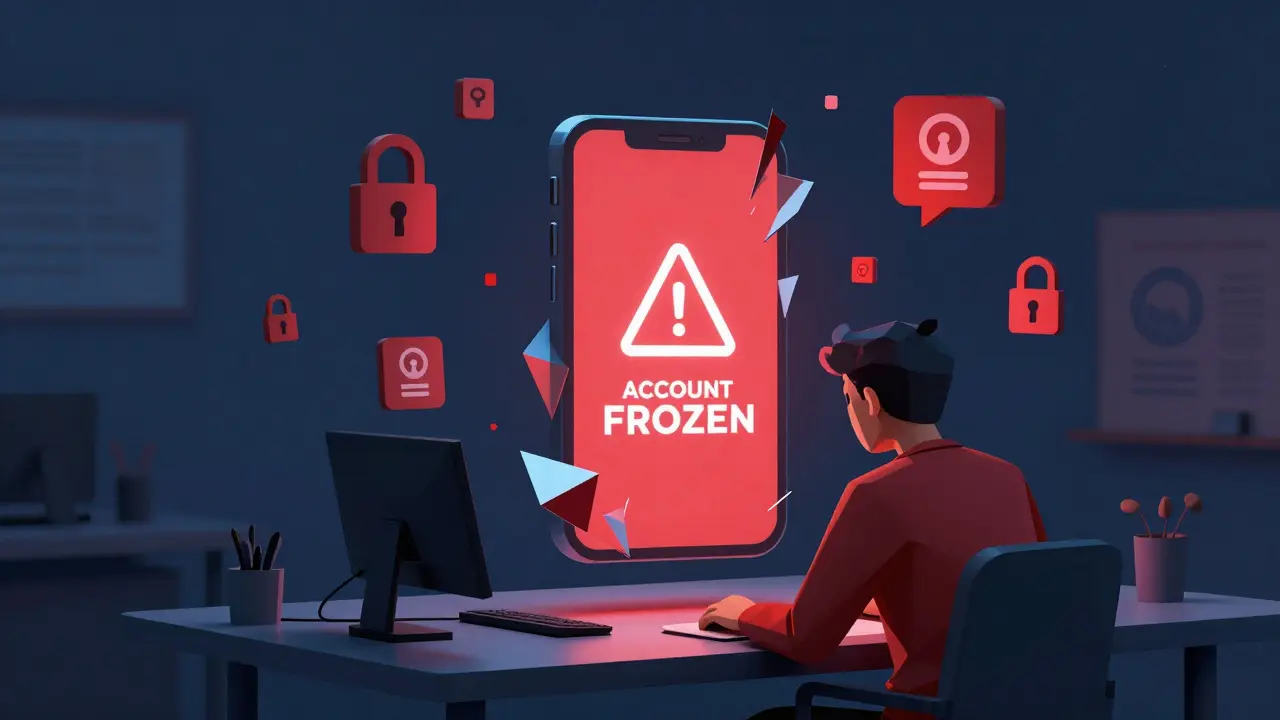
You send a legitimate payment to a friend or sell some Bitcoin on an exchange. Days later, you log into your banking app and see a red flag: account frozen. No warning. No explanation. Just a sudden stop to your access to your own money. This is the new reality for many cryptocurrency users in 2026.
It’s not just bad luck. It’s a systemic shift driven by stricter Anti-Money Laundering (AML) laws and advanced blockchain tracking tools that banks are now required to use. If you hold crypto, understanding why this happens-and how to stop it-is no longer optional. It’s essential for keeping your finances safe.
Why Banks Freeze Accounts Linked to Crypto
To understand the freeze, you have to look at what banks see. To them, cryptocurrency isn’t just digital cash; it’s a high-risk vector for money laundering. When you move crypto from an exchange to your bank account, the bank sees a deposit. But thanks to blockchain analysis, which is technology that traces the history of cryptocurrency transactions across public ledgers, they can also see where that money came from before it hit your wallet.
If any part of that transaction chain touches a darknet market, a sanctioned entity, or a mixing service, your account gets flagged. You didn’t do anything wrong, but the system doesn’t care about intent. It cares about risk exposure. This is called "tainted funds." Even if you bought your Bitcoin legally years ago, if you received a small amount of change from a compromised address during a trade, the entire batch can be considered contaminated.
The technical engine behind this is Know Your Transaction (KYT), which is automated software used by financial institutions to monitor real-time cryptocurrency flows against known illicit addresses. These systems run 24/7. They don’t sleep. And they are incredibly aggressive in 2026 compared to previous years.
| Trigger Type | Description | Risk Level |
|---|---|---|
| Tainted Input | Receiving funds from an address linked to illegal activity | Critical |
| Mixing Service Use | Using tumblers or mixers to obscure transaction history | Critical |
| High-Frequency Off-Ramping | Frequent large withdrawals from exchanges to bank accounts | High |
| Unverified Exchange Withdrawal | Withdrawing from an exchange with weak KYC standards | Medium |
| New Account Activity | Sudden large crypto deposits into a newly opened bank account | High |
The Regulatory Shift: The GENIUS Act and FDIC Changes
The landscape changed dramatically in mid-2025 with the passage of the GENIUS Act, formally known as the Guiding and Establishing National Innovation for U.S. Stablecoins Act, which is federal legislation establishing regulatory frameworks for stablecoins and enforcement mechanisms for crypto assets. Signed into law in June 2025, this act gave banks clearer authority-and obligation-to freeze assets associated with crypto violations.
Under the GENIUS Act, a "lawful order" allows regulators to seize or freeze payment stablecoins without needing immediate judicial review in every case. This means banks can act faster than ever before. Simultaneously, the Federal Deposit Insurance Corporation (FDIC) updated its guidance in April 2025. While it allowed banks to engage in crypto activities without prior approval, it demanded rigorous risk management. Banks realized that while they could participate in crypto, they had to protect themselves from retail users who might bring regulatory heat.
This created a bifurcated market. Large institutions like JPMorgan Chase and Bank of America began exploring stablecoin ventures because they have the resources to comply. Individual users, however, faced stricter scrutiny. The message was clear: banks will handle institutional crypto, but they want minimal exposure to individual retail traders unless those traders are fully vetted.
How to Protect Your Bank Account
You can’t control the blockchain’s history, but you can control your entry points. Here are practical steps to reduce the risk of a freeze.
- Use Clean Wallets: Never receive funds directly from unknown sources. If someone sends you crypto, ask for their transaction history. Better yet, use a dedicated receiving wallet that never interacts with mixed or suspicious addresses.
- Avoid Mixers: Mixing services are automatic red flags. Even if you’re trying to enhance privacy, banks view this as an attempt to hide illicit origins. In 2026, using a mixer is almost guaranteed to trigger a freeze.
- Off-Ramp Through Reputable Exchanges: Only withdraw to your bank from major, regulated exchanges like Coinbase or Kraken. These platforms perform their own KYT checks. If they let you withdraw, your bank is more likely to accept the deposit. Avoid small, offshore exchanges with weak compliance.
- Keep Records: Maintain screenshots of your purchase orders, tax reports, and transaction hashes. If your account freezes, you’ll need to prove the source of funds quickly.
- Gradual Off-Ramping: Don’t dump $50,000 worth of Bitcoin into your checking account overnight. Break it down into smaller, consistent amounts over time. Sudden spikes look suspicious.
What to Do If Your Account Is Already Frozen
Panic helps nothing. When your account freezes, the clock starts ticking. Banks usually give you a window-often 10 to 30 days-to provide documentation before they terminate the relationship entirely.
First, contact your bank immediately. Ask for the specific reason for the freeze. Is it a general AML flag? Or is it tied to a specific transaction? Get this in writing if possible.
Next, prepare a "Source of Funds" package. This should include:
- Proof of acquisition (buy orders from exchanges)
- Tax returns showing crypto income
- Transaction hashes linking your wallet to the clean purchase
- A letter explaining your crypto activity simply and honestly
Do not lie. Do not omit details. Compliance officers are trained to spot inconsistencies. If you used a mixer, admit it, but explain why (e.g., privacy concerns) and show that no illicit funds were involved. However, be aware that admitting to mixer use may still result in account closure, even if the freeze is lifted temporarily.
If the bank refuses to unfreeze the account, you may need legal counsel specializing in financial compliance. The cost is high, but losing access to your primary banking can be devastating.
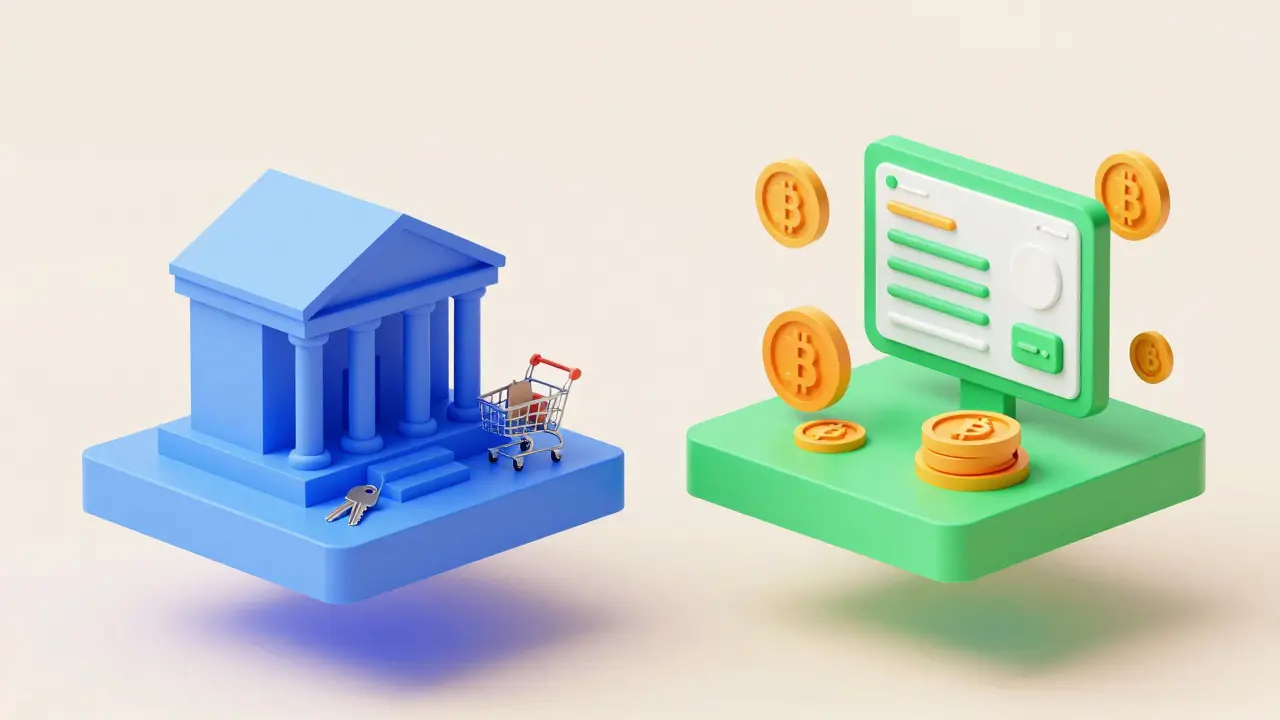
The Future: DeFi vs. Traditional Banking
As traditional banks tighten their grip, many users are looking toward Decentralized Finance (DeFi). Platforms that operate outside the traditional banking infrastructure don’t require bank accounts for transactions. However, this isn’t a perfect solution. You still need to off-ramp eventually to pay rent or buy groceries. And when you do, you face the same bank scrutiny.
The trend suggests a future where crypto users maintain separate banking relationships. One account for daily spending, kept completely separate from crypto activities. Another account, perhaps at a crypto-friendly neobank, dedicated solely to off-ramping. This segregation reduces the risk of contaminating your primary financial lifeline.
Regulators are watching this space closely. The GENIUS Act and subsequent laws aim to close loopholes. Expect more rules targeting secondary markets and decentralized exchanges in the coming years. Staying informed is your best defense.
Why did my bank freeze my account for crypto?
Your bank likely detected a connection between your crypto transactions and high-risk addresses using KYT monitoring. This can happen even if you acted legally, due to "tainted funds" from previous owners of the coins.
How long does a crypto-related bank freeze last?
Freezes typically last 10 to 30 days while the bank investigates. Complex cases involving large sums or multiple tainted inputs can take months. Prompt submission of documentation speeds up the process.
Can I sue my bank for freezing my crypto account?
Generally, no. Banks have broad discretion under AML laws to freeze accounts suspected of illicit activity. Unless you can prove negligence or discrimination, legal recourse is limited and expensive.
Does the GENIUS Act affect international users?
Yes, indirectly. Many global banks follow U.S. regulatory standards to avoid being cut off from the dollar system. If you use a U.S.-based bank or exchange, the GENIUS Act applies. International banks may adopt similar strictures to remain compliant.
Is it safer to use a crypto-friendly neobank?
Neobanks may be more tolerant of crypto activity, but they are still subject to AML laws. They often have lower thresholds for triggering reviews. Using a neobank exclusively for crypto off-ramping, while keeping a traditional bank for daily expenses, is a common strategy.






23 Comments
Ryan Peters
July 1, 2026 at 17:12
The GENIUS Act is just another way for the deep state to choke off financial freedom while they print money out of thin air. It’s pathetic that we have to beg banks not to freeze our own assets because some bureaucrat in D.C. decided crypto looks 'suspicious' to their broken algorithms.
ross harris
July 3, 2026 at 16:14
One must consider the ontological weight of a frozen account; it is not merely a transactional halt but a metaphysical severing from the material world, leaving the soul adrift in a digital purgatory where liquidity is a myth and trust is a currency no longer minted by men.
Carl Belgrave
July 3, 2026 at 20:44
If you’re too stupid to keep your crypto separate from your daily spending bank, you deserve to get frozen. Real Americans know how to manage risk without needing a nanny state to hold their hand through every single transaction.
Carl Hanzel
July 4, 2026 at 01:44
You all are missing the point entirely because you want comfort instead of truth. The system isn't broken, it's working exactly as designed to crush the little guy who thinks he can opt-out of surveillance capitalism with a wallet address.
Daniel J. Cox
July 6, 2026 at 01:21
I’ve seen this happen to friends in Europe too, so it’s definitely a global trend rather than just a US thing. Keeping a strict separation between my DeFi activities and my rent-paying account has saved me more headaches than I can count :)
Emma Rémond
July 7, 2026 at 04:08
It is frankly amusing that retail traders still believe they can navigate KYT protocols without professional-grade compliance infrastructure. Your 'clean wallets' are an illusion if you interact with the broader ecosystem, which is inherently contaminated by the very nature of decentralized anonymity.
ELNORA JEFFERSON
July 8, 2026 at 03:13
This whole article is just fear-mongering designed to make you feel helpless. Banks will do whatever they want anyway so why bother trying to fix anything?
Carol @minaszilda
July 9, 2026 at 22:43
Remember that patience is key when dealing with these institutions. Document everything clearly and stay calm, as your demeanor can influence how seriously they take your source of funds explanation.
John Curry
July 11, 2026 at 21:00
The tragedy here is not the technology, but the human inability to adapt to a new paradigm without clinging to the old guard’s rules. We are watching the birth pangs of a new financial order, painful as they may be for those caught in the crossfire.
Trent Erman1
July 13, 2026 at 04:47
Hey everyone! Just a reminder that using reputable exchanges like Coinbase or Kraken really does help because their internal checks often clear up issues before they hit your bank. Stay proactive and keep those records organized! 🚀
Fiona Ellis
July 13, 2026 at 13:39
I must ask, do you truly understand the implications of mixing services on your personal liability? It is quite fascinating how many users ignore the legal precedents set regarding obfuscation techniques 😊
Nicole Woessner
July 14, 2026 at 03:12
In my experience living abroad, the banking systems in Asia are actually stricter about this than people realize. You have to be super careful with any cross-border flows or you’ll get flagged instantly
Jon Milton
July 14, 2026 at 08:44
We need to stop fighting each other and start demanding better regulatory clarity. The current ambiguity hurts everyone, from the casual holder to the institutional investor, and it stifles innovation across the board.
Sajjad Ghorbani Moghaddam
July 16, 2026 at 05:11
Just wanted to share that keeping a simple spreadsheet of all your transactions helps a lot when you have to prove source of funds. It doesn’t have to be complicated, just accurate and easy to read for the compliance officer.
Rebecca Shoniker
July 16, 2026 at 12:28
Let us be perfectly clear: if you cannot explain the provenance of your assets, you do not own them. The burden of proof lies squarely on the individual, and failure to comply is not a victimhood narrative but a compliance deficiency.
Jay Sharma
July 17, 2026 at 10:03
They are tracking every satoshi to build a profile on your behavior. This isn’t about money laundering, it’s about social control and ensuring you never have true financial privacy again.
Scott Miller
July 17, 2026 at 21:48
Don’t let them win! Keep pushing forward and educating yourself. The more we normalize crypto usage, the less power these arbitrary freezes will have over our lives.
Abby Martin
July 19, 2026 at 14:38
It’s absolutely ridiculous that we have to treat our own money like contraband. If you’re doing something illegal, fine, but for honest people, this is just oppressive and inefficient bureaucracy at its worst.
Mélanie Boulay
July 21, 2026 at 01:08
I have found that maintaining a detailed log of every interaction with exchanges, including timestamps and confirmation numbers, provides a robust defense against arbitrary freezes, although it requires significant upfront effort and discipline to maintain such a rigorous record-keeping system over time.
Maurice Flynn
July 21, 2026 at 23:54
Take a breath and look at the bigger picture. These challenges are temporary hurdles in the evolution of finance. Adapt your strategy, stay informed, and remember that resilience is built through overcoming these exact types of obstacles.
nancy jarecki
July 23, 2026 at 16:26
The sheer incompetence of relying on automated flags for complex financial behaviors is staggering. One would think that in 2026, we would have moved past binary risk assessments, but apparently, nuance is still lost on both regulators and bankers alike.
Robert Hundley
July 23, 2026 at 17:58
Yo, just stick to the basics! Use clean wallets, avoid mixers, and keep your docs ready. It’s not rocket science, just common sense mixed with a bit of caution. Let’s keep the community safe and sound! :D
Melissa L
July 25, 2026 at 17:16
i got my acount frozen last month and it was a nightmare. took forever to get it back even though i did nothing wrong. just be carefull guys