
CEEX vs CEX.IO: Critical Review and Safety Warning for 2026
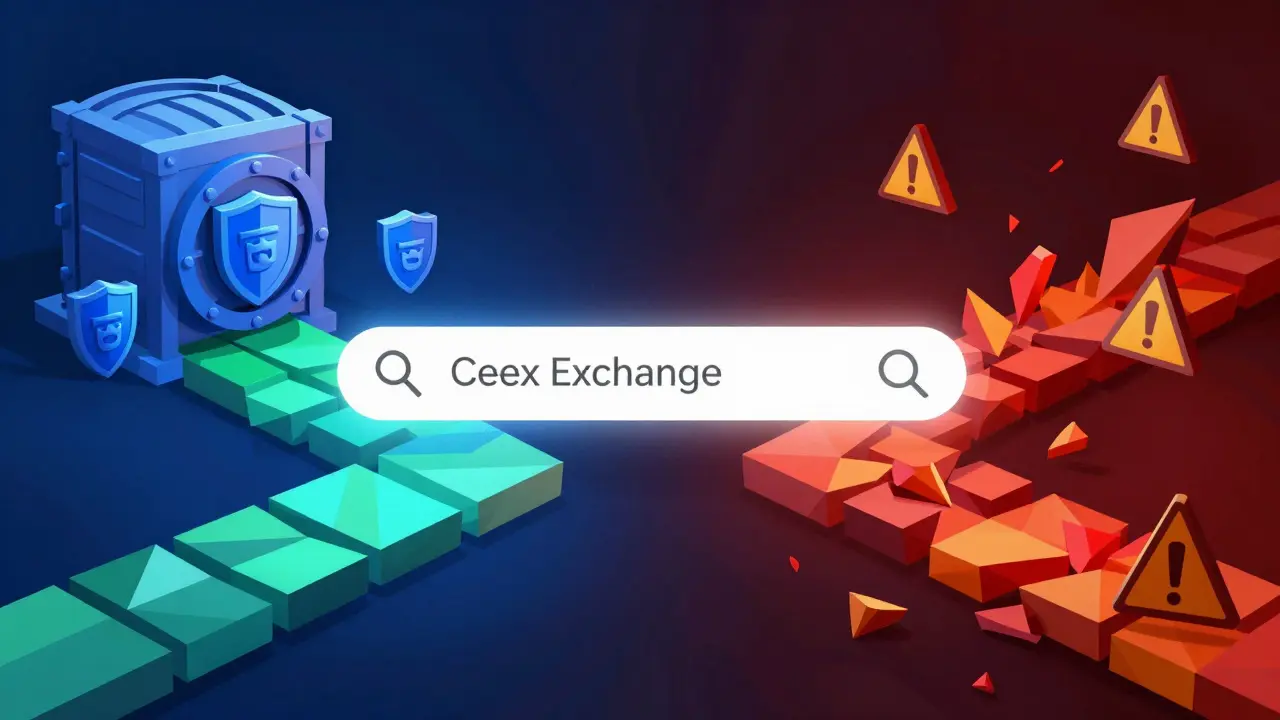
There is a dangerous confusion happening in the cryptocurrency space right now. You might be looking for a safe place to trade Bitcoin or Ethereum, but you’ve stumbled upon a name that sounds legitimate yet hides a massive red flag. The search term "CEEX exchange" often leads users down two very different paths: one toward CEX.IO, a regulated, established platform with millions of users, and another toward Ceex Exchange, a potentially fraudulent operation promising unrealistic returns. Getting this wrong could cost you everything you invest. This review clears up the fog, separates the legitimate broker from the scam, and helps you decide if either platform deserves your money in 2026.
The Great Name Confusion: CEEX vs. CEX.IO
Before you deposit a single dollar, you need to understand the identity crisis at play here. There is no major, reputable exchange known simply as "CEEX." When people search for this term, they are usually making one of two mistakes. First, they mean CEX.IO, which has been operating since 2013 and is headquartered in the United States, Lithuania, and St. Kitts and Nevis. Second, they have encountered Ceex Exchange, a platform that lacks regulatory standing and exhibits classic signs of a scam.
CEX.IO is a real company. It started as a cloud mining service and evolved into a full-featured exchange. It holds a Money Service Business (MSB) license from FinCEN and has secured Money Transmitter Licenses (MTLs) in 35 US states. This regulatory footprint is crucial. In contrast, Ceex Exchange operates without these safeguards. Scammers often use names that mimic trusted brands to catch beginners off guard. If you see a site called "Ceex" promising guaranteed profits, close it immediately. Legitimate exchanges never guarantee returns because the crypto market is inherently volatile.
Is CEX.IO Safe? A Deep Dive into Security and Regulation
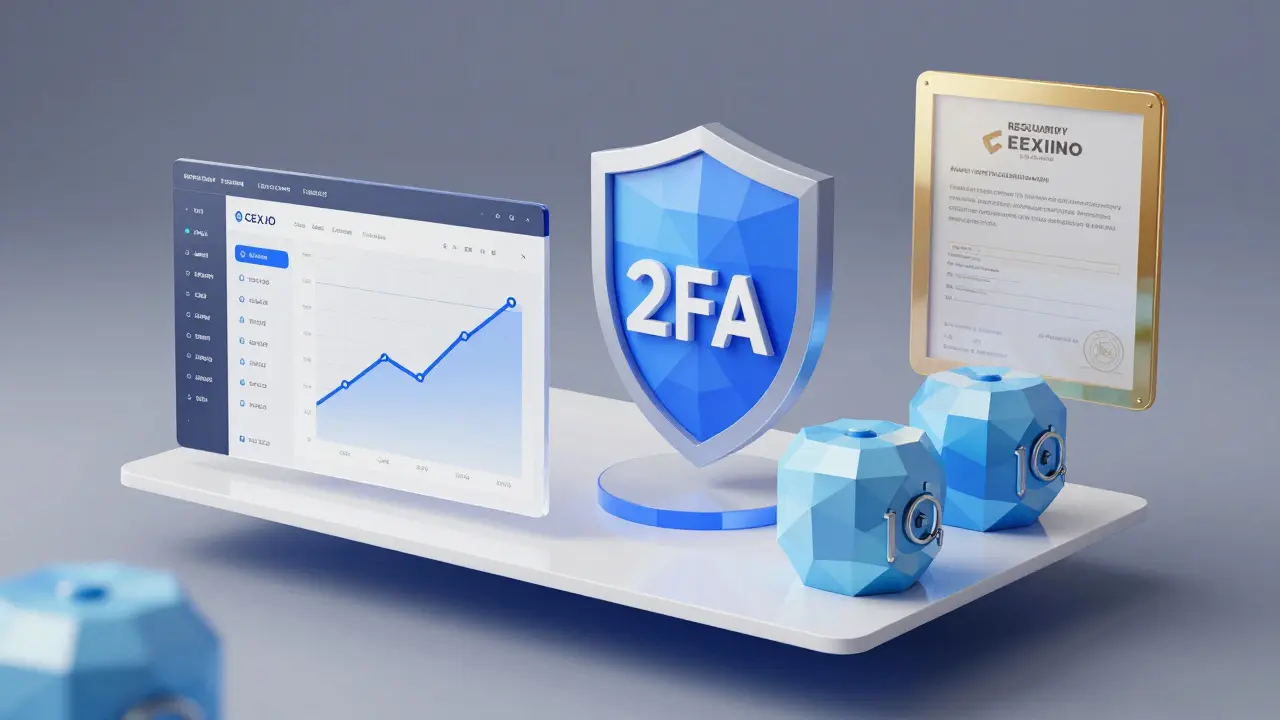
Safety is the number one concern for any trader. CEX.IO has built a reputation on security, boasting zero major hacks since its inception. This is a significant achievement in an industry where giants like Mt. Gox collapsed and others like Binance have faced breaches. The platform uses cold storage for the majority of user funds, keeping them offline and away from potential cyber threats. They also employ two-factor authentication (2FA) and advanced encryption protocols.
However, "safe" does not mean "risk-free." While CEX.IO is secure against external hackers, it still faces regulatory scrutiny. Its licenses cover specific jurisdictions, meaning availability varies by country. If you are in a region where CEX.IO is not licensed, your funds may not have the same legal protections. Always check if the exchange is authorized to operate in your specific location before signing up.
Trading Experience: Fees, Assets, and Interface
If you choose CEX.IO, what kind of trading environment will you encounter? The platform supports over 200 cryptocurrencies, including major assets like Bitcoin, Ethereum, Solana, and Tether. It offers more than 350 trading pairs, providing ample liquidity for most traders. According to Kaiko data, CEX.IO ranks second in the industry for 2% market depth, which means you can execute large trades with minimal slippage.
The fee structure is competitive for high-volume traders. The maker-taker model charges 0.01% for takers and 0% for makers at higher volume tiers. However, be wary of hidden costs. Deposit and withdrawal fees can add up, especially when moving fiat currency. Additionally, CEX.IO has faced criticism for inactivity fees, which can eat into your profits if you leave funds idle for extended periods. Always read the fine print regarding dormant accounts.
The interface itself is functional but can feel cluttered compared to sleeker competitors. The "Exchange Plus" platform offers advanced charts and risk management tools, which great for experienced traders. For beginners, the layout might be overwhelming. There is no demo account available, so you cannot practice strategies with virtual money. This lack of a sandbox environment is a notable drawback for new users who want to learn without risking capital.
| Feature | CEX.IO (Legitimate) | Ceex Exchange (Fraudulent) |
|---|---|---|
| Regulation | FinCEN MSB, MTLs in 35 US States | None / Unregulated |
| Security Track Record | No major hacks since 2013 | Unknown / High Risk |
| Promises Returns? | No, standard market risks apply | Yes, guarantees profit (Red Flag) |
| User Base | 15+ million global users | Small, likely targeted victims |
| Fees | Transparent maker/taker model | Hidden withdrawal fees, impossible to withdraw |
Who Is CEX.IO For? And Who Should Avoid It?
CEX.IO fits well for intermediate to advanced traders who value security and regulatory compliance. If you are based in the US or Europe, the licensing provides peace of mind. The deep liquidity makes it suitable for larger trades where slippage matters. The margin trading feature, offering up to 10x leverage with USDT, ETH, or BTC as collateral, appeals to those comfortable with higher risk.
However, casual investors or absolute beginners might find better options elsewhere. The lack of a demo account and the complex interface can be barriers to entry. Furthermore, if you are looking for the widest selection of altcoins, platforms like Coinbase or Binance offer more extensive token lists. CEX.IO focuses on quality over quantity, sticking to proven assets rather than listing every new meme coin that pops up.
How to Spot Crypto Scams Like Ceex Exchange
Understanding why Ceex Exchange is dangerous helps you avoid similar traps in the future. Scammers rely on urgency and greed. They promise "risk-free" investments and "guaranteed" daily returns. In the volatile world of cryptocurrency, such promises are mathematically impossible. No legitimate financial institution can guarantee profits.
Another red flag is aggressive marketing. If you receive unsolicited messages via WhatsApp, Telegram, or email directing you to a platform like "Ceex," it is almost certainly a scam. These platforms often use sophisticated websites that look professional, but they lack transparent ownership information. Check for physical addresses, regulatory licenses, and independent reviews. If you cannot find verifiable contact details or regulatory filings, stay away.
Finally, watch out for withdrawal issues. On fraudulent platforms, you can usually deposit money easily, but withdrawing it becomes a nightmare. They may impose arbitrary fees, require impossible verification steps, or simply disappear. Legitimate exchanges like CEX.IO process withdrawals smoothly, albeit with standard network fees.

Alternatives to Consider in 2026
If CEX.IO does not meet your needs, or if you want to diversify, consider these reputable alternatives:
- Coinbase: Ideal for beginners due to its simple interface and strong regulatory compliance in the US. It offers a wide range of assets but charges higher fees for basic transactions.
- Binance: The largest exchange by volume, offering hundreds of coins and low fees. However, it faces ongoing regulatory challenges in various countries, which may affect access.
- Kraken: Known for excellent customer support and strong security. It is a solid choice for traders who prioritize reliability and transparency.
- KuCoin: Offers a vast selection of altcoins and innovative features like launchpad events. It is popular among crypto enthusiasts looking for early-stage tokens.
Each of these platforms has its own strengths and weaknesses. Compare their fee structures, supported assets, and regulatory status in your region before making a decision. Never put all your eggs in one basket; spreading your assets across multiple reputable exchanges can mitigate risk.
Final Verdict: Proceed with Caution
The distinction between CEX.IO and Ceex Exchange is stark. One is a regulated, secure platform with a long track record; the other is a predatory scheme designed to steal your funds. Always verify the exact URL and regulatory status of any exchange you consider. If you are looking for a reliable place to trade major cryptocurrencies with strong security measures, CEX.IO is a viable option, provided you accept its fee structure and interface complexity. If you encounter "Ceex Exchange" anywhere, treat it as a scam and report it to relevant authorities. Your financial safety depends on staying informed and skeptical of too-good-to-be-true promises.
Is CEEX Exchange a scam?
Yes, platforms specifically named "Ceex Exchange" (distinct from CEX.IO) are widely considered scams. They promise guaranteed returns and lack regulatory oversight. Always ensure you are using CEX.IO, the legitimate platform, if you intend to trade on a similarly named service.
Is CEX.IO safe for beginners?
CEX.IO is safe in terms of security and regulation, but its interface may be complex for absolute beginners. It lacks a demo account, so you cannot practice without real money. Beginners might prefer simpler platforms like Coinbase until they gain more experience.
What are the fees on CEX.IO?
CEX.IO uses a maker-taker fee model. Taker fees start at 0.01% for high-volume traders, while maker fees can be 0%. However, there are additional costs for deposits, withdrawals, and potential inactivity fees for dormant accounts.
Does CEX.IO have a mobile app?
Yes, CEX.IO offers mobile applications for both iOS and Android devices, allowing users to trade, buy, and sell cryptocurrencies on the go. The app provides core functionality similar to the web platform.
Can I trust CEX.IO with my funds?
CEX.IO has a strong security track record with no major hacks since its founding. It employs cold storage and robust encryption. However, always remember that no exchange is 100% immune to risk, and you should only invest what you can afford to lose.




15 Comments
Jan Gilmore
May 24, 2026 at 22:37
Look, I've been in this game since the Mt. Gox days and let me tell you something about regulatory compliance. It's not just a buzzword, it's the difference between sleeping at night and waking up to find your life savings gone. CEX.IO has those FinCEN licenses for a reason. They have to report suspicious activity, they have to follow AML laws, and that creates a paper trail that scammers like Ceex actively avoid. You think these guys want to be regulated? No way. Regulation means oversight, and oversight means they can't just vanish with your money when the rug pull happens. The fact that Ceex promises guaranteed returns is the biggest laugh of the year because if anyone could guarantee profits in crypto, they wouldn't need your deposit, they'd just leverage their own capital and become billionaires overnight without sharing the wealth. Stop falling for the 'too good to be true' pitch.
Caique Muniz
May 25, 2026 at 06:28
i mean its pretty obvious who the scam is but why do people keep falling for it lol
ceex sounds like a typo anyway who types x twice like that on purpose? seems sketchy af
Bradley Geldenhuys
May 26, 2026 at 22:53
We must consider the philosophical underpinnings of trust in decentralized systems versus centralized intermediaries. When we place our faith in an entity like CEX.IO, we are essentially betting on their integrity and their ability to withstand external pressures. However, when we encounter entities like Ceex, we are witnessing the purest form of predatory capitalism where the only goal is extraction. It is aggressive to say the least how these scams prey on the hopeful. But we must remain optimistic that education will win out. If you understand the market dynamics, you realize that volatility is a feature, not a bug, and any platform promising to eliminate risk is lying to your face. We need to teach each other to look beyond the shiny website and see the lack of substance underneath. It’s about building a community that looks out for one another rather than letting greed blind us to the red flags that are staring us right in the eye.
robert Whitehead
May 28, 2026 at 18:06
The sheer incompetence of users who fall for 'Ceex' is staggering. It is not rocket science to check if a company is registered with FinCEN. The fact that people ignore basic due diligence speaks volumes about the collective intelligence of the retail trading crowd. CEX.IO might have its flaws with fees and UI, but at least it operates within the legal framework of multiple jurisdictions. Ceex is nothing more than a digital mugging operation disguised as a financial service. I have seen too many accounts drained by these fake platforms because users were too lazy to verify the URL or read the terms of service. It is self-righteous to call out this behavior, but someone has to point out that ignorance is not bliss, it is expensive. If you cannot distinguish between a licensed MSB and a random domain registered last week, you do not deserve to trade with real money.
Mike S
May 29, 2026 at 01:37
Oh wow, another article telling us what we already know? Groundbreaking stuff.
I bet the author gets paid by CEX.IO to write this glowing review while pretending to be objective. Look at all those positive points about security and regulation! Sure, Jan Gilmore (wait, wrong name) sure loves pointing out the obvious. Meanwhile, the rest of us are over here dealing with slippage and hidden fees on every major exchange. At least the scammers are honest about wanting your money, even if they lie about giving it back. This whole 'safety warning' thing is so dramatic. Just use a hardware wallet and stop using exchanges altogether if you're so worried. But hey, thanks for the free marketing for CEX.IO, I'm sure they appreciate the exposure from your 'critical' review.
H F
May 29, 2026 at 04:53
I completely agree with the assessment here! It is absolutely vital that we spread awareness about these deceptive practices. The confusion between CEEX and CEX.IO is a massive issue that affects thousands of traders globally. I have personally seen friends get confused by similar names and nearly lose their funds. The detailed breakdown of the regulatory differences is incredibly helpful and should be shared widely. Let's work together to ensure that new entrants to the crypto space are protected from these predatory schemes. Your effort in clarifying this distinction is truly appreciated and makes a huge difference in the community!
Michael Berggren
May 30, 2026 at 20:05
This is such an important topic! 🌟 I’ve always said that doing your own research is the golden rule of crypto. The comparison table is super clear and really helps highlight the red flags. 😊 I especially liked the part about guaranteed returns being a myth. It’s so true! No legitimate business can promise profit in such a volatile market. I hope everyone reads this carefully before making any decisions. Stay safe out there and keep learning! 🚀💰
Kiran CS
June 1, 2026 at 09:18
One must acknowledge the profound disparity in sophistication between the two entities discussed. While the average participant may struggle to discern the nuances of regulatory compliance, the educated observer recognizes the inherent instability of unregulated platforms. It is quite amusing to watch the masses flock towards the siren song of 'guaranteed returns,' oblivious to the mathematical impossibility of such claims. The pretension of believing one can beat the market consistently without risk is a hallmark of amateurism. One should perhaps consult more rigorous academic sources on financial fraud before forming an opinion, though I suppose the simplicity of this article caters well to the common denominator.
Bijan Das
June 2, 2026 at 07:46
why does everyone care so much about ceex? its obviously a scam. like seriously who falls for that?
the article is too long and boring. just say its a scam and move on. i dont need a history lesson about cex.io. waste of time.
Ashley Rodriguez
June 3, 2026 at 23:16
i was actually thinking about signing up for ceex because my friend told me it had low fees but after reading this i am so glad i stopped to ask around first because it sounds really scary how they trick people into thinking it is the same as cex.io which seems much more legit with all the licenses and stuff and i feel like i learned a lot from this post even though it was a bit long to read but worth it to save my money
Bridget Coogle
June 5, 2026 at 10:31
Thank you for sharing this crucial information. It is easy to feel overwhelmed by the number of options available, but clarity is key. Please always prioritize your safety and verify every detail before proceeding. We are all in this together and looking out for each other is essential.
Zara Zaman
June 6, 2026 at 04:07
It is unacceptable that foreign scams are targeting US citizens with impunity. These operations often hide behind offshore servers, making it difficult for local law enforcement to act. We need stricter regulations on cross-border crypto transactions to protect American investors. Platforms like CEX.IO that comply with US laws should be supported, while fraudulent entities like Ceex must be shut down immediately. Do not support platforms that undermine our financial sovereignty.
Larry Port
June 7, 2026 at 18:44
I found the section on withdrawal issues particularly insightful. It highlights a fundamental asymmetry in scam operations: ease of entry versus difficulty of exit. This pattern is consistent across various fraudulent schemes, not just in crypto. It raises questions about the psychological tactics used to create urgency during deposits while creating friction during withdrawals. For those considering CEX.IO, the mention of inactivity fees is a practical concern that warrants attention. It suggests a business model that relies on user engagement or dormant assets, which is different from the outright theft model of Ceex. Understanding these distinctions helps in making informed choices.
Jocelyn Garcia
June 7, 2026 at 18:45
The liquidity depth metrics cited from Kaiko data are interesting. A 2% market depth ranking suggests significant institutional participation, which adds a layer of stability compared to smaller venues. However, the lack of a demo account remains a UX flaw for onboarding newbies. The jargon-heavy nature of the fee structure also poses a barrier. Overall, the technical analysis holds up, but the educational gap persists.
Amit Varpe
June 8, 2026 at 19:58
Great info! 👍 Always check the license. Scams are everywhere. Stay safe brothers! 🇮🇳