
Future of Tokenomics Design: How Blockchain Economics Is Evolving in 2026
Tokenomics used to be simple: mint a token, set a supply cap, throw in a burn mechanism, and hope people buy in. That was 2018. Today, in 2026, tokenomics is no longer just a marketing tool-it’s the economic engine that keeps entire blockchain networks alive. Projects that fail to design thoughtful, layered, and sustainable token economies are vanishing. The ones that survive are building systems that mirror real-world economies: complex, regulated, and deeply interconnected.
From Speculation to Substance
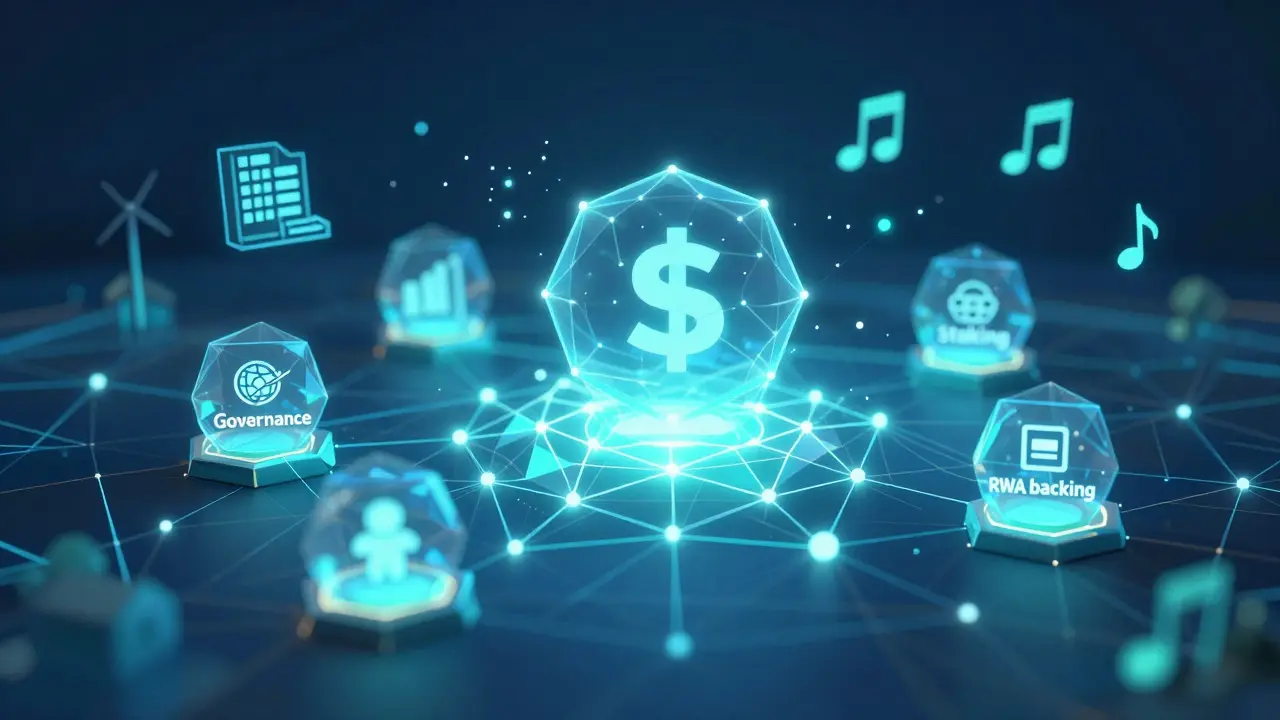
Early crypto tokens were often just lottery tickets. If the price went up, you won. If it crashed, you lost. No utility, no governance, no real reason to hold. That era is over. The future of tokenomics isn’t about pumping supply-it’s about creating ongoing value. Tokens now need to do real work: pay for network access, reward contributors, secure infrastructure, or even represent ownership in physical assets.Look at how token utility has shifted. In 2024, over 60% of new token launches included at least three distinct use cases-staking, governance, fee discounts, and access to exclusive services. The most successful projects don’t just ask users to hold tokens-they give them a reason to use them every day. Think of it like a loyalty program, but decentralized. You earn tokens by validating transactions, contributing code, or even helping moderate community forums. And those tokens? They’re usable inside the ecosystem, not just traded on exchanges.
Regulation Isn’t the Enemy-It’s the Foundation
Remember when regulators were the scary outsiders? Now, they’re part of the design process. The EU’s MiCA regulation and stricter SEC oversight forced the industry to grow up. Projects that ignored compliance got shut down. Those that built it in from day one? They’re thriving.Tokenomics today must include compliance as a core layer. That means:
- Transparent on-chain audits of token distribution
- KYC/AML checks built into staking or governance participation
- Clear legal classification of token roles (utility vs. security)
It’s not about slowing things down-it’s about building trust. Investors now demand accountability. A project that can show its token supply is fairly distributed, its treasury is transparent, and its governance rules are enforceable? That’s the kind of project that gets institutional backing.
Real-World Assets Are the New Frontier
By 2030, over $1.5 trillion in real-world assets-think real estate, commodities, bonds, and even intellectual property-will be tokenized. That’s not a prediction. It’s what’s already happening.Companies are now issuing tokens that represent fractional ownership of office buildings in Berlin, wind farms in Texas, or even music royalties from top artists. These aren’t just NFTs with fancy graphics. They’re legally recognized digital securities backed by real cash flow. Tokenomics here isn’t about hype-it’s about replicating the structure of traditional finance but with blockchain efficiency.
How does this change token design? For one, supply isn’t arbitrary anymore. If a token represents 1% of a $100 million property, its value is tied to that asset’s performance. Demand comes from investors seeking yield, not speculation. And governance? Token holders vote on property management decisions-rent increases, renovations, even who manages the maintenance.
DAOs and DeFi Are Merging Into One System
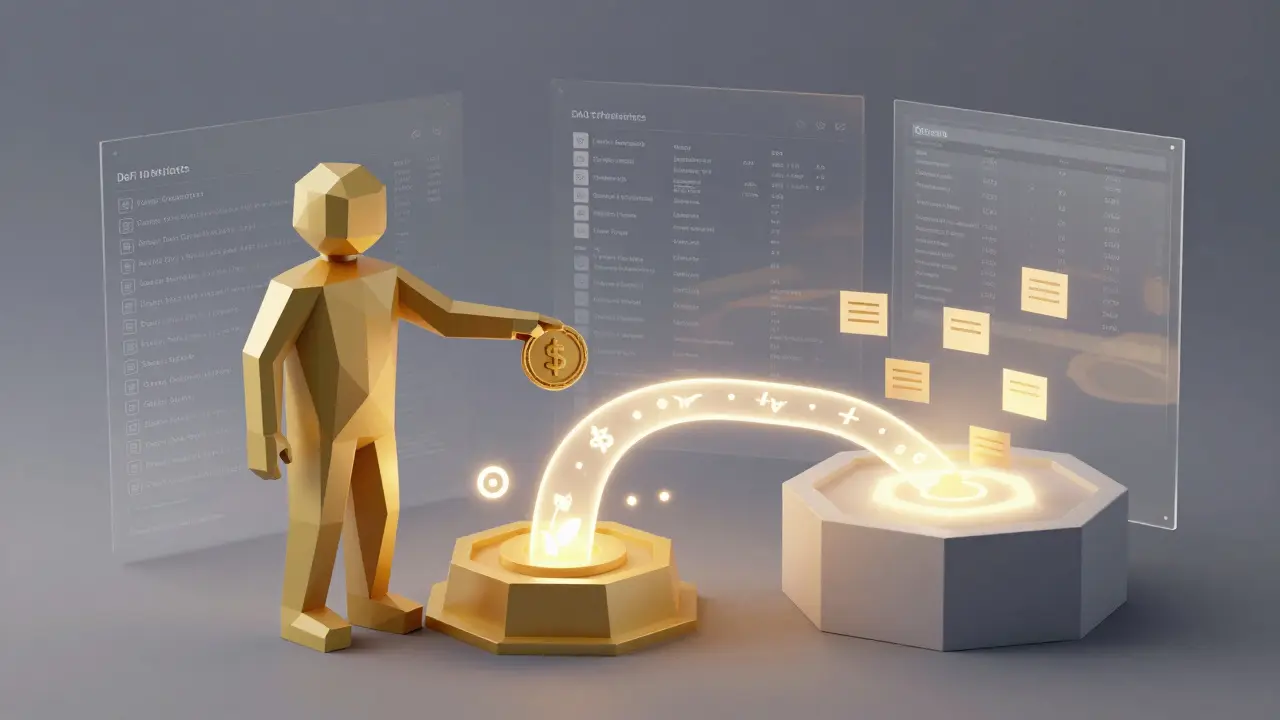
Decentralized Autonomous Organizations used to feel like digital cooperatives with slow decision-making. Now, they’re becoming financial powerhouses.The biggest shift? DAO tokens are no longer just for voting. They’re being used as collateral in DeFi protocols. You can now stake your DAO token on Aave to borrow USDC, or lock it in Curve to earn yield. This creates a feedback loop: the more people use the token, the more valuable it becomes-and the more incentive there is to participate in governance.
Take the example of a DAO that funds open-source software development. Its token isn’t just a voting tool. Holders can:
- Propose funding for new projects
- Stake their tokens to earn a share of project revenues
- Use them to pay for premium developer tools within the ecosystem
This isn’t theory. It’s live. Projects like Gitcoin and BanklessDAO are already doing this. The result? Higher retention, deeper engagement, and tokens that hold value because they’re used-not just held.
Liquid Restaking Tokens Are Changing How Security Works
You might not have heard of Liquid Restaking Tokens (LRTs), but they’re quietly reshaping blockchain economics. Here’s the simple version: instead of locking your ETH in staking and losing liquidity, you turn it into a token that can be used elsewhere-while still earning staking rewards.Think of it like a savings account that also lets you borrow against it. LRTs let you secure Ethereum’s network, earn rewards, AND use your staked assets in DeFi-all at once. That’s a game-changer for capital efficiency.
Projects like EigenLayer are already handling over $20 billion in restaked assets. The tokenomics here are elegant: users get rewarded for securing not just Ethereum, but other chains and services that rely on its security. The more services that use this pooled security, the more demand there is for the LRT. It’s a self-reinforcing system.
The Four Pillars of Sustainable Tokenomics
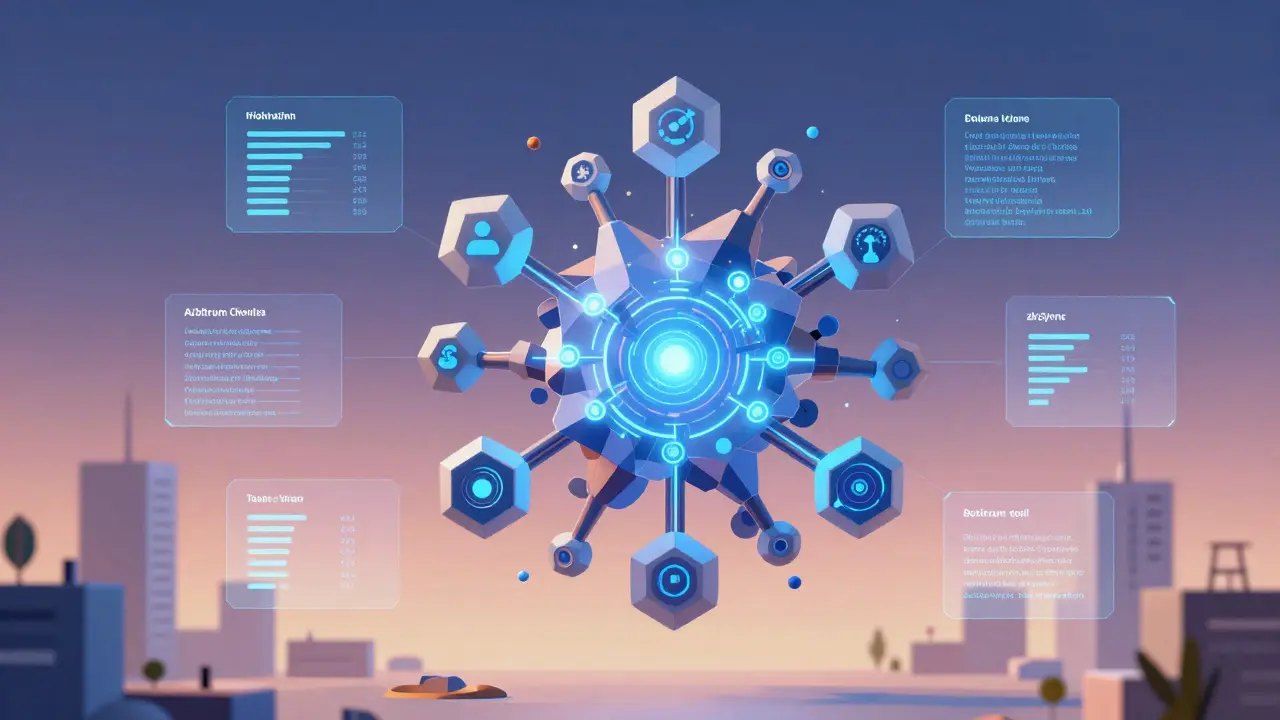
Not all token designs last. The ones that do follow four non-negotiable rules:- Continuous Value Generation - Tokens must create value every day. Whether through fees, services, or rewards, they can’t rely on hype.
- Risk Mitigation - Smart contracts must be audited. Ownership concentration must be monitored. No single wallet should hold more than 5% of supply.
- Balanced Supply and Demand - Too many tokens? Inflation kills value. Too few? No one can use them. The sweet spot is utility-driven demand.
- Decentralized Governance - Power can’t sit in the hands of five developers. Voting power must be distributed, transparent, and accessible.
Ignore one of these, and the whole system unravels. Look at the collapse of several 2023 projects. They had flashy marketing, big airdrops, and zero real utility. When the hype faded, the token price crashed-because there was nothing left to hold it up.
What’s Next? The Rise of Adaptive Tokenomics
The next leap isn’t just about adding more features. It’s about making tokenomics self-adjusting.Imagine a token that automatically increases staking rewards when network usage drops. Or one that reduces supply if inflation exceeds 3%. Or a governance system that pauses changes if more than 60% of voters are inactive.
AI is making this possible. Algorithms now monitor on-chain behavior in real time and suggest economic adjustments. These aren’t manual fixes-they’re automated responses built into the protocol. The goal? To create economies that adapt like living systems, not static spreadsheets.
Projects experimenting with this right now include those using AI-driven parameters for token issuance, dynamic fee structures, and machine-learning-based risk scoring. It’s not sci-fi. It’s happening on Base, zkSync, and Arbitrum chains today.
Final Thought: Tokenomics Is the New Business Model
The future of tokenomics isn’t about crypto. It’s about economics. It’s about designing systems that align incentives, reduce friction, and create lasting value. Whether you’re building a DAO, tokenizing a building, or launching a DeFi protocol-the rules are the same.People don’t buy tokens because they’re cool. They buy them because they work. The best tokenomics designs don’t scream for attention. They quietly make everything better: faster, cheaper, fairer.
That’s the future. Not hype. Not speculation. Just solid, smart, sustainable design.
What makes a tokenomics model sustainable?
A sustainable tokenomics model has four key pillars: continuous value generation (tokens must serve real functions), balanced supply and demand (no inflation or scarcity traps), strong risk mitigation (audited smart contracts, distributed ownership), and decentralized governance (fair decision-making). Without these, even popular tokens collapse when hype fades.
How are real-world assets changing tokenomics?
Real-world asset (RWA) tokenization turns physical assets-like property, bonds, or commodities-into digital tokens backed by actual cash flow. This shifts tokenomics from speculation to utility: the token’s value is tied to rent payments, interest, or sales revenue. It also attracts traditional investors who want exposure to crypto without pure volatility. By 2030, over $1.5 trillion in RWAs are expected to be tokenized.
Why are DAOs merging with DeFi protocols?
DAOs and DeFi are merging because they complement each other. DAO tokens give governance power; DeFi protocols give them liquidity and yield. When you can stake your DAO token to earn interest, borrow against it, or use it as collateral, its value isn’t just in voting-it’s in earning. This creates stronger incentives to hold and participate, making both ecosystems more resilient.
What are Liquid Restaking Tokens (LRTs)?
Liquid Restaking Tokens (LRTs) let you stake your crypto (like ETH) and still use it elsewhere. Instead of locking funds in staking, you receive a token that represents your staked asset and can be used in DeFi apps-earning yield while still securing the network. This boosts capital efficiency and creates new economic incentives. Projects like EigenLayer are already managing over $20 billion in restaked assets.
Is regulation good or bad for tokenomics?
Regulation is good-when it’s built in. Frameworks like MiCA and SEC guidelines force projects to be transparent, accountable, and legally compliant. This eliminates scams and attracts institutional money. Projects that design compliance into their tokenomics from day one gain trust, legal clarity, and long-term viability. Ignoring regulation leads to shutdowns. Embracing it leads to growth.


19 Comments
shreya gupta
March 19, 2026 at 01:42
Let me get this straight-you're telling me we've moved from meme coins to tokenized wind farms? And somehow that's progress? I'm all for regulation, but when your 'economic engine' requires KYC to stake your ETH, we've officially become a bank with blockchain-themed wallpaper.
Also, who authorized this? The DAO? Or the SEC? Because if it's the latter, then congratulations-you've just built a regulated monopoly with a smart contract.
Derek Lynch
March 20, 2026 at 03:05
THIS. THIS IS THE FUTURE. Finally, we’re moving beyond the casino model. I’ve been saying this for years-tokens need utility, not hype. The fact that people are now using tokens to pay for code reviews, vote on property upgrades, or earn yield from restaked ETH? That’s not crypto. That’s capitalism with better tech.
Stop treating blockchain like a lottery. Start treating it like an economy. And yes, regulation isn’t the enemy-it’s the scaffolding. You don’t build a skyscraper without permits. Why should a $10B protocol be any different?
If you’re still holding a token with zero use case in 2026, you’re not an investor. You’re a spectator. And spectators don’t win.
Shreya Baid
March 22, 2026 at 02:47
I appreciate the depth of this analysis, but I must gently point out that the assumption that compliance = trust is both overly optimistic and dangerously incomplete.
Regulation can be a shield, yes-but it can also be a weapon used by centralized entities to entrench power under the guise of 'security.' We’ve seen this before in traditional finance: compliance frameworks that favor incumbents and crush innovation under layers of legal overhead.
True trust is built through transparency, not paperwork. A token that is audited, distributed, and governed by its users-not by lawyers-is the real innovation. Let’s not confuse bureaucracy with integrity.
Sarah Zakareckis
March 22, 2026 at 21:47
Tokenomics is the new business model? Wow. Groundbreaking. I didn’t realize that giving people a token to vote on whether to fix the AC in the DAO-owned building was somehow a revolutionary economic framework.
Also, 'adaptive tokenomics' powered by AI? Sounds like a fancy way of saying 'we automated the pump-and-dump.' If your protocol is adjusting rewards based on 'on-chain behavior,' you’re not building an economy-you’re building a Skinner box.
And $1.5 trillion in RWAs? Cool. So now we’re tokenizing real estate, and the first thing we’ll do is let hedge funds buy 90% of it. Brilliant.
Steph Andrews
March 23, 2026 at 00:18
I love how this post talks about sustainability like it’s a checklist. But what about the people? The devs working 80-hour weeks for 0.01% of the token? The moderators who keep the community alive but get nothing? The grandma in Nigeria who bought her first token to send money home?
Tokenomics isn’t just about systems. It’s about stories. And if your model doesn’t lift people up-not just investors-it’s just another pyramid with a whitepaper.
Prakash Patel
March 24, 2026 at 23:38
So the future of blockchain is… regulation, real estate, and DAOs that double as DeFi collateral? I’m confused. Wasn’t the whole point of crypto to get away from this stuff?
Now we’re just Wall Street with a blockchain sticker. I’m not against progress. I’m against renaming old systems and calling it innovation.
Zachary N
March 26, 2026 at 03:31
Let me add something important that the post glosses over: liquidity depth. All these new token models-LRTs, RWA-backed tokens, DAO-DeFi hybrids-only work if there’s deep, resilient liquidity. Without it, you’re not building an economy. You’re building a house of cards that collapses the moment one whale sells.
Most projects focus on token design but ignore market structure. They forget that a token’s value isn’t just in its utility-it’s in its ability to be traded, borrowed, and used without slippage. That’s why projects like EigenLayer succeed-not because of the tech, but because they partnered with stable, high-volume DeFi protocols from day one.
Also, governance participation rates matter. If 70% of voters are inactive, your 'decentralized' system is just a boardroom with a Discord channel.
Don’t just build the engine. Build the fuel station, the roads, and the traffic cops.
Elizabeth Kurtz
March 27, 2026 at 16:36
There’s something beautiful about how tokenomics is evolving into something that actually serves people-not just traders. I’ve been in this space since 2017, and I’ve seen the hype cycles come and go. But this? This feels different.
When a token lets a freelance developer in Jakarta earn fees for fixing smart contracts, or a farmer in Brazil tokenize his coffee harvest to get upfront capital-that’s not speculation. That’s empowerment.
We’re not just changing finance. We’re changing opportunity.
john peter
March 27, 2026 at 22:31
How quaint. You speak of 'sustainable tokenomics' as if it were a philosophical ideal rather than an economic inevitability. The truth is this: all systems collapse under entropy. Your 'four pillars' are merely the last gasps of a dying paradigm.
Real value is not generated by utility. Real value is extracted by control. The most successful token economies are not those that are fair or balanced-they are those that centralize power under the illusion of decentralization.
Who controls the AI-driven parameters? Who audits the audits? Who owns the legal entity behind the RWA token? The answer is never the community.
It never is.
Marc Morgan
March 28, 2026 at 06:56
So we went from 'moon' to 'microeconomic equilibrium' in 8 years? I’m impressed. Also, I just used my LRT to buy a coffee and it auto-paid in USDC. That’s wild. Like, I didn’t even think about it. That’s the real win-not the whitepaper. It’s invisible infrastructure.
Also, why are we still arguing about regulation? The market already voted. The projects that didn’t comply? Dead. The ones that did? Now they’re on Nasdaq. Case closed.
Kira Dreamland
March 30, 2026 at 00:05
Y’all are overthinking this. Tokens are just loyalty points now. You earn them. You spend them. You get perks. It’s like Starbucks but with more math.
And honestly? I’m fine with that. I don’t need to understand the blockchain. I just want to use my token to get early access to the new NFT art drop. That’s it.
Sarah Hammon
March 31, 2026 at 22:50
One thing no one talks about is how hard it is to actually build these systems. I work on a DAO that tokenizes community gardens. We have 3 use cases, audits, and governance. But 80% of our token holders don’t even know how to connect their wallet. The tech is there. The people? Not so much.
Maybe the real innovation isn’t in the token design-it’s in onboarding grandma to crypto.
iam jacob
April 2, 2026 at 22:08
I just want to say… I’m tired. I’ve been holding this token since 2022. I believed. I staked. I voted. I moderated. And now? It’s just… another asset class. No magic left. Just numbers.
Was it worth it? I don’t know anymore.
Jesse Pals
April 3, 2026 at 20:48
Bro. LRTs are like having a savings account that also moonlights as a credit card. You stake ETH → get LRT → use it to borrow USDC → earn yield → still secure the chain. It’s like crypto got a side hustle.
Also, DAOs + DeFi? Imagine your voting power also pays your rent. That’s not Web3. That’s just… life.
Peace out ✌️
Diane Overwise
April 3, 2026 at 23:15
Adaptive tokenomics powered by AI? That sounds like a recipe for disaster. What happens when the algorithm misreads a spike in trading as 'demand' and dumps 10% more supply? Or when it thinks 50% inactive voters means 'consensus' and auto-passes a treasury hack?
AI doesn’t understand nuance. It understands patterns. And patterns can be gamed.
Also, 'orthography: casual misspelling'-I meant 'orthography: careless.' But you get the point.
Ann Liu
April 4, 2026 at 17:58
Correcting a minor but critical error in the original post: the claim that 'over 60% of new token launches included at least three distinct use cases' is misleading. According to Token Terminal’s Q1 2026 report, the figure is 68%, with staking, governance, and fee discounts being the top three. Access to exclusive services ranked fourth, not third.
Accuracy matters. Especially in economics.
Dionne van Diepenbeek
April 5, 2026 at 02:35
Tokenomics is dead long live tokenomics
shreya gupta
April 6, 2026 at 05:56
Wow. A comment that’s literally one sentence and manages to say everything. I’m impressed. Also, I’m now convinced this entire thread was just a cleverly disguised poem.
Derek Lynch
April 7, 2026 at 06:51
Exactly. The most profound insight in this whole thread is that sentence. Tokenomics isn’t dead. It’s just no longer a novelty. It’s infrastructure. And infrastructure? You don’t notice it until it’s gone.