How DePIN Projects Work: Decentralized Infrastructure Powered by Blockchain
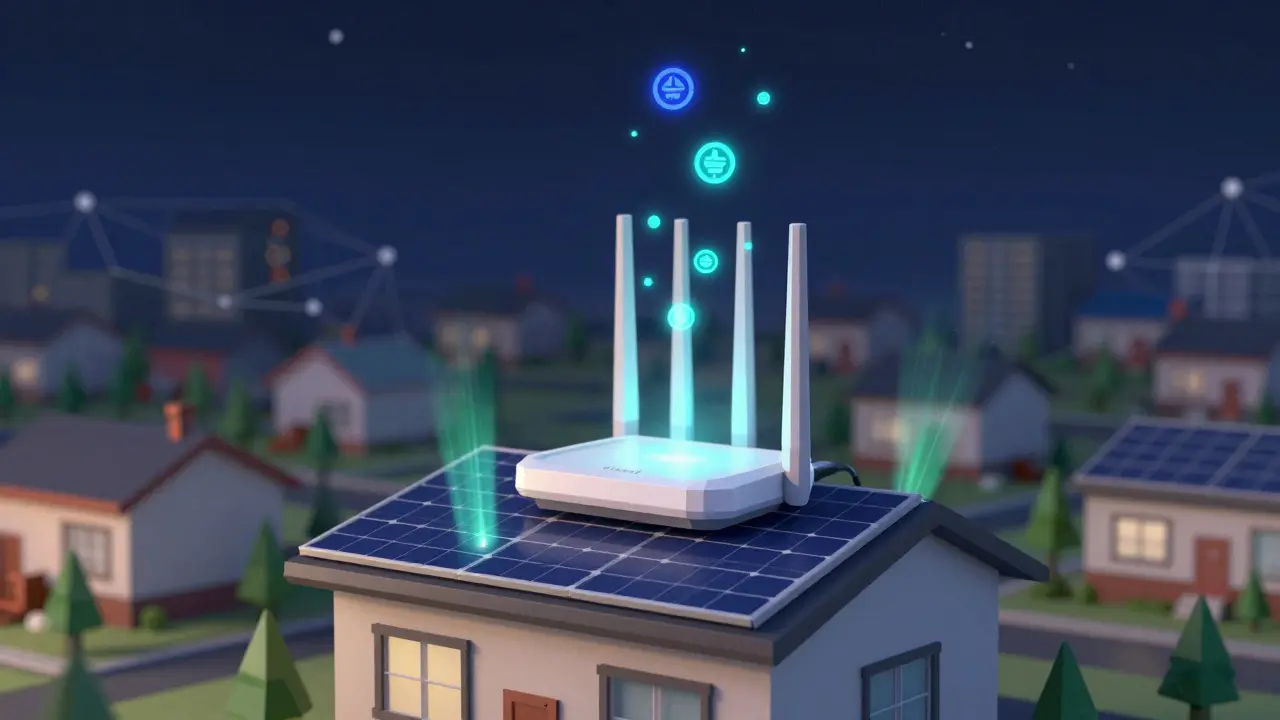
Imagine a world where your home Wi-Fi router doesn’t just connect you to the internet-it also earns you cryptocurrency for helping build a global wireless network. Or where your solar panels don’t just power your house, but also feed excess energy into a community grid that pays you in tokens. This isn’t science fiction. It’s DePIN-Decentralized Physical Infrastructure Networks-and it’s already changing how the world builds and shares physical resources.
What Exactly Is DePIN?
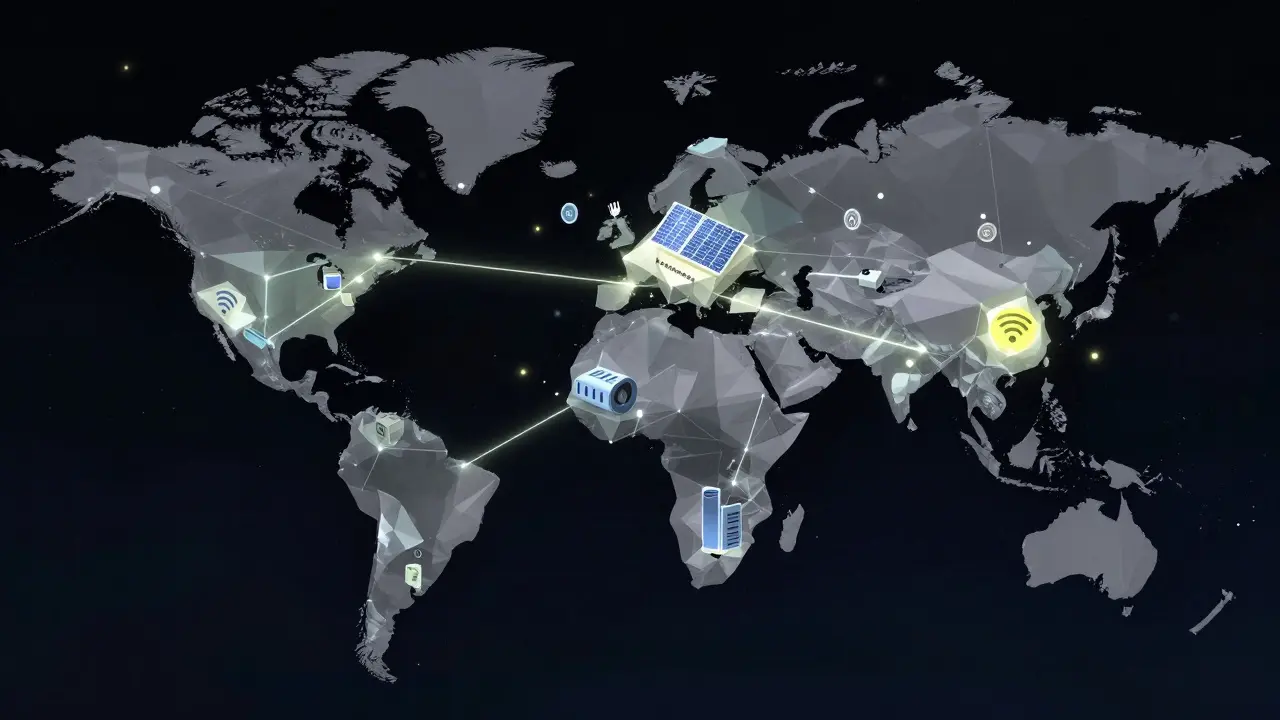
DePIN stands for Decentralized Physical Infrastructure Networks. At its core, it’s a system that uses blockchain technology to turn real-world assets-like cell towers, solar panels, storage drives, and even internet hotspots-into parts of a shared, community-owned network. Instead of a single company owning and controlling infrastructure, thousands of individuals contribute their unused resources and get rewarded with cryptocurrency. Think of it like Airbnb, but for physical infrastructure. You’re not renting out a room-you’re renting out your bandwidth, your energy, or your computing power. And instead of Airbnb taking a cut, the network runs on smart contracts that automatically pay you when you contribute. The magic happens because blockchain acts as the backbone: it records every contribution, enforces rules through code, and distributes rewards without needing a middleman. No corporate HQ. No approval forms. Just you, your hardware, and a token reward waiting to be claimed.The Three Technical Pillars of DePIN
DePIN doesn’t work by accident. It’s built on three tightly connected technical layers:- Smart contracts-self-executing programs on the blockchain that handle everything from payment to access control. If you provide 100GB of storage, the contract checks the data, confirms it’s valid, and sends you tokens automatically.
- Tokenization-physical resources are turned into digital tokens. A hotspot that provides Wi-Fi coverage becomes a token-earning node. A solar panel generating extra power becomes a unit of energy currency.
- Distributed network architecture-there’s no central server. Infrastructure is spread across thousands of locations, making the system more resilient. If one hotspot goes down, others pick up the slack.
Two Types of DePIN Networks
Not all DePIN projects are the same. They fall into two clear categories based on what kind of resources they use.Physical Resource Networks (PRNs)
These are location-dependent. The value of your contribution is tied to where you are. Examples:- Helium Hotspots: Devices that provide wireless coverage for IoT devices. The more coverage you add in underserved areas, the more tokens you earn.
- EV Charging Stations: Individuals install chargers in their driveways or garages and get paid when others use them.
- Solar Energy Grids: Homeowners with solar panels sell excess power to neighbors through a blockchain-based marketplace.
Digital Resource Networks (DRNs)
These are location-independent. Your contribution is about capacity, not geography:- Storage: You give unused hard drive space to a decentralized cloud like Filecoin or Arweave and get paid in tokens.
- Computing Power: Your idle GPU contributes to AI training or scientific simulations through projects like Render Network.
- Bandwidth: You share your internet connection and earn tokens for routing data for others.
How Do You Earn From DePIN?
There are three main ways to get rewarded:- Sharing excess resources-If you have unused storage, bandwidth, or energy, you can turn it into income. A home router with extra capacity? Plug in a Helium hotspot. Solar panels producing more than you use? Connect to an energy DePIN.
- Building new infrastructure-Some networks pay you to install hardware. For example, Helium offers subsidies to buy hotspots, and you earn tokens as soon as they’re online.
- Providing services-You can earn by running specific tasks. Want to help train an AI model? Contribute your GPU. Need to store a file permanently? Upload it to Arweave and get paid.
Why DePIN Matters
Traditional infrastructure is broken in ways most people don’t notice. Telecom companies charge high fees for coverage in low-density areas. Cloud providers lock you into contracts. Energy grids are centralized and vulnerable to outages. DePIN fixes this by flipping the script:- No single point of failure-If one node goes offline, the network keeps running. No more blackouts from a single server crash.
- Lower costs-Without corporate overhead, services become cheaper. Helium’s wireless network costs a fraction of traditional cellular providers.
- Global access-Someone in Indonesia can earn tokens by running a hotspot, even if they’ve never had access to reliable internet before.
- Ownership-You’re not a customer. You’re a co-owner. Your tokens give you a say in how the network evolves.
Real-World Examples You Can Use Today
You don’t need to wait for DePIN to arrive. It’s already here:- Helium-The most well-known DePIN. Over 2 million hotspots worldwide. Users earn HNT tokens for providing wireless coverage to IoT devices like trackers and sensors.
- Filecoin-A decentralized storage network. You rent out hard drive space and earn FIL tokens. Used by artists, researchers, and companies needing permanent, uncensorable storage.
- Render Network-Turn your GPU into a rendering farm. Artists and game developers pay in RNDR tokens to render 3D scenes using your idle graphics card.
- Power Ledger-A peer-to-peer energy trading platform. Homeowners with solar panels sell excess power to neighbors in real time, paid in tokens.
How Governance Works Without a CEO
Who decides what happens next in a DePIN network? No board of directors. No CEO. Instead, governance is handled by token holders. If a network wants to upgrade its protocol, change reward rates, or add new features, token holders vote. The more tokens you hold, the more voting power you have-but the system is designed to prevent concentration of power. Many networks use quadratic voting or lock-up periods to ensure small participants still have a voice. This means the network evolves based on what the community needs-not what a corporation thinks will maximize profit. Want better rewards for rural hotspot operators? Propose it. Got a better way to verify energy contributions? Submit a proposal. If enough people agree, it happens.Challenges and Risks
DePIN isn’t perfect. There are hurdles:- Hardware costs-Buying a hotspot or mining rig upfront can be expensive, even with subsidies.
- Token volatility-Rewards are paid in crypto, which can swing in value. Some users cash out immediately; others hold long-term.
- Regulatory gray zones-Energy sharing, wireless spectrum use, and data storage laws vary by country. Not all DePIN projects are legal everywhere.
- Scalability-Some networks struggle to handle millions of devices without slowing down.
The Bigger Picture
DePIN is more than a new way to earn crypto. It’s a blueprint for how infrastructure should be built in the 21st century. For decades, we’ve accepted that big companies control the essentials: internet, power, cloud storage. But DePIN shows that when you give people the tools and the incentive, they’ll build better, fairer systems themselves. It’s not about replacing corporations overnight. It’s about offering an alternative-one that’s open, transparent, and owned by the people who use it. The next time you see a cell tower, think: who owns it? Who profits from it? And could it be owned by you?Can anyone join a DePIN project?
Yes. DePIN networks are permissionless, meaning you don’t need approval to join. All you need is the right hardware-like a hotspot, extra storage space, or a spare GPU-and an internet connection. Some networks may require you to buy a device upfront, but there are no background checks, credit scores, or corporate gatekeepers.
Do I need to be tech-savvy to participate?
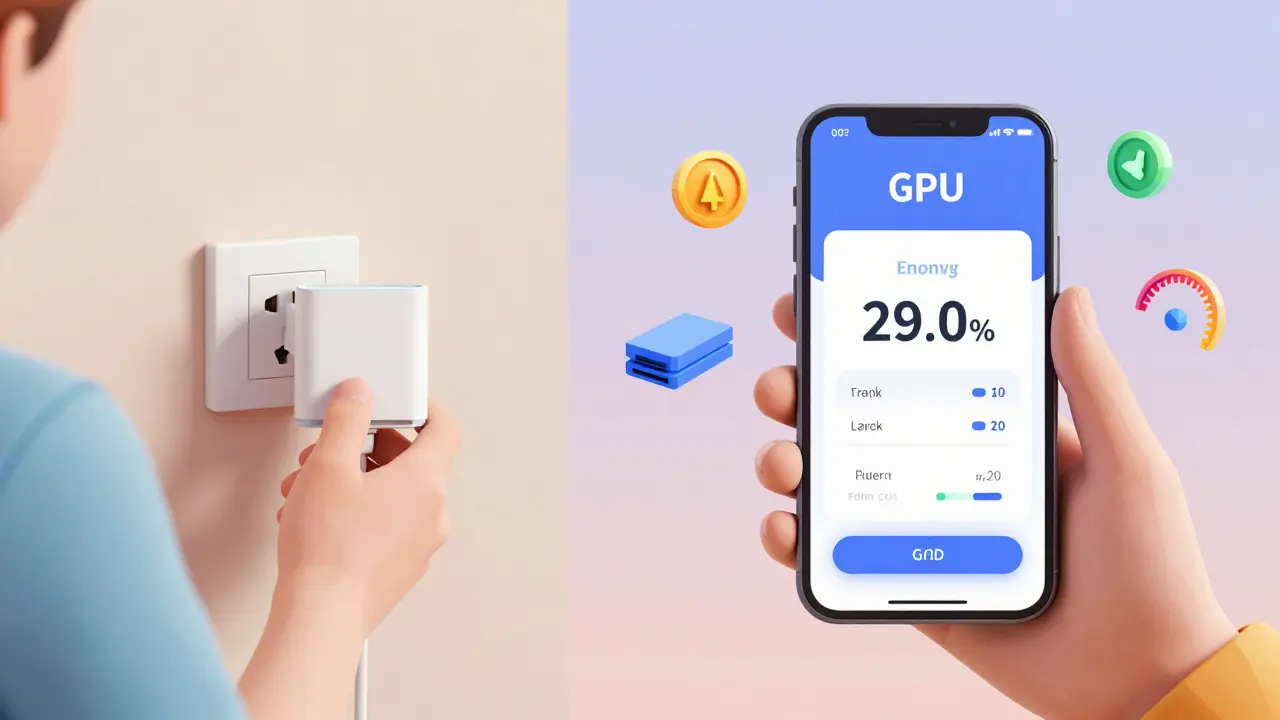
Not at all. Many DePIN devices are plug-and-play. For example, a Helium hotspot connects to your Wi-Fi like a router-no coding or technical setup needed. Most networks have mobile apps that show your earnings, network status, and rewards in simple terms. You don’t need to understand blockchain to earn from it.
Are DePIN rewards worth it?
It depends on your setup and location. A Helium hotspot in a densely populated area might earn $10-$50 per month. A storage provider with 5TB of space might earn $5-$20. For many, it’s a side income-not a replacement for a salary. But in places where traditional jobs are scarce, these earnings can be life-changing. The real value is in ownership: you’re not just using a service-you’re helping build it.
How are DePIN projects different from mining crypto?
Crypto mining uses electricity to solve math problems that secure a blockchain-no real-world output. DePIN rewards you for providing useful physical or digital services: internet coverage, storage, energy, or computing power. You’re not just securing a network-you’re building infrastructure that people actually use.
Can DePIN replace companies like AT&T or AWS?
Not yet-but it’s getting close. Helium already offers cheaper IoT connectivity than AT&T in many regions. Filecoin and Arweave provide cheaper, more permanent storage than AWS for certain use cases. DePIN won’t replace all centralized services, but it’s carving out niches where it’s faster, cheaper, or more reliable. In underserved areas, it’s already the only option.