
How to Evaluate Utility Token Projects: A Practical Guide for 2026
Not all tokens are created equal. Some promise access to a service. Others promise quick profits. And too many do neither - they just float in the market, waiting for someone to buy them on hope. If you’re trying to figure out whether a utility token is worth your attention, you’re not alone. In 2026, over 62% of all crypto tokens are utility tokens, with a combined market cap of $214 billion. But here’s the hard truth: 92% of tokens that lacked real utility vanished within 18 months during the last market correction. So how do you separate the ones that actually work from the ones that are just hype dressed up as tech?
Understand What a Utility Token Really Is
A utility token isn’t an investment contract. It’s a key. It gives you access to a product or service inside a blockchain ecosystem. Think of it like a subway pass - you don’t buy it to make money, you buy it to ride the train. Ethereum’s ERC-20 standard, launched in 2015, made this possible by letting developers create tokens that could do more than just transfer value. Today, tokens like Chainlink (LINK) let you pay for real-world data feeds. Filecoin (FIL) lets you rent unused hard drive space. UNI lets you vote on changes to Uniswap’s protocol.The SEC’s Howey Test from 1946 still applies: if people are buying the token expecting profits from someone else’s work, it’s likely a security. That’s why so many projects fail. They market their token like an investment - promising returns, staking rewards, or price growth - while calling it a "utility" token. In fact, 72% of tokens labeled as utility in SEC investigations failed the test because of misleading marketing. A true utility token doesn’t need to be promoted as a way to get rich. It needs to be used.
Check the Tokenomics - The Numbers Don’t Lie
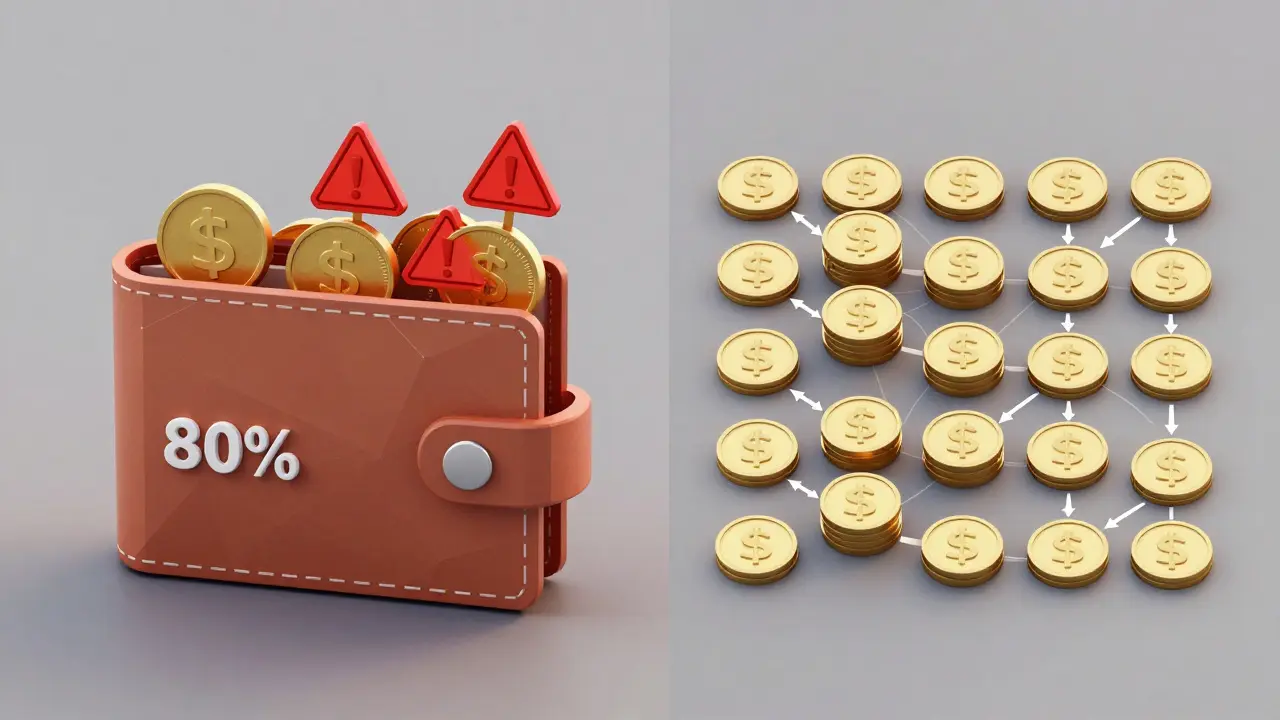
Tokenomics is the engine behind utility. If it’s broken, the whole system stalls. Start with supply. Successful projects cap their total supply. Filecoin, for example, has a hard limit of 2 billion FIL. No surprises. No inflation. Then look at distribution. If more than 35% of the tokens are held by the top 10 wallets, that’s a red flag. Centralization kills decentralization. You want wide, early distribution - not a few insiders sitting on 80% of the supply.Deflationary mechanics matter too. Projects that burn tokens (like Binance’s BNB) reduce supply over time. According to Bitbond’s 2024 analysis, tokens with burns had 23% higher retention rates than those that just printed more. But don’t just look at burns - look at velocity. If a token turns over more than 1.2 times per year, it’s either being traded too much or not being used. The sweet spot? Between 0.5 and 1.2 transactions per token annually. High velocity means people are flipping, not using.
Verify the Tech - Can It Actually Work?
A whitepaper is just a story. The code is the proof. First, check if the smart contract has been audited. Not one audit - multiple. OpenZeppelin, CertiK, and Hacken are trusted names. A single audit costs $15,000-$50,000. If the project didn’t spend this, they’re cutting corners. Then look at the contract code on GitHub. Is it open? Are there regular commits? Over 50 weekly commits is a strong signal. If the last commit was six months ago, the project is dead.Transaction speed matters. If the token runs on Ethereum mainnet and needs to handle 100+ transactions per second (like a gaming or payment app), it’s already too slow. Ethereum does 15-30 TPS. Layer 2s like Polygon or Arbitrum do 2,000+. Ask: "Does this token need speed?" If yes, is it built for it? Also, check the token standard. ERC-20 is fine for simple transfers, but if the project needs to handle multiple asset types (like in-game items and currency), ERC-1155 is better. It cuts gas costs by 40%, according to Dedalus Horizon’s 2023 data.
Measure Real Usage - Not Price
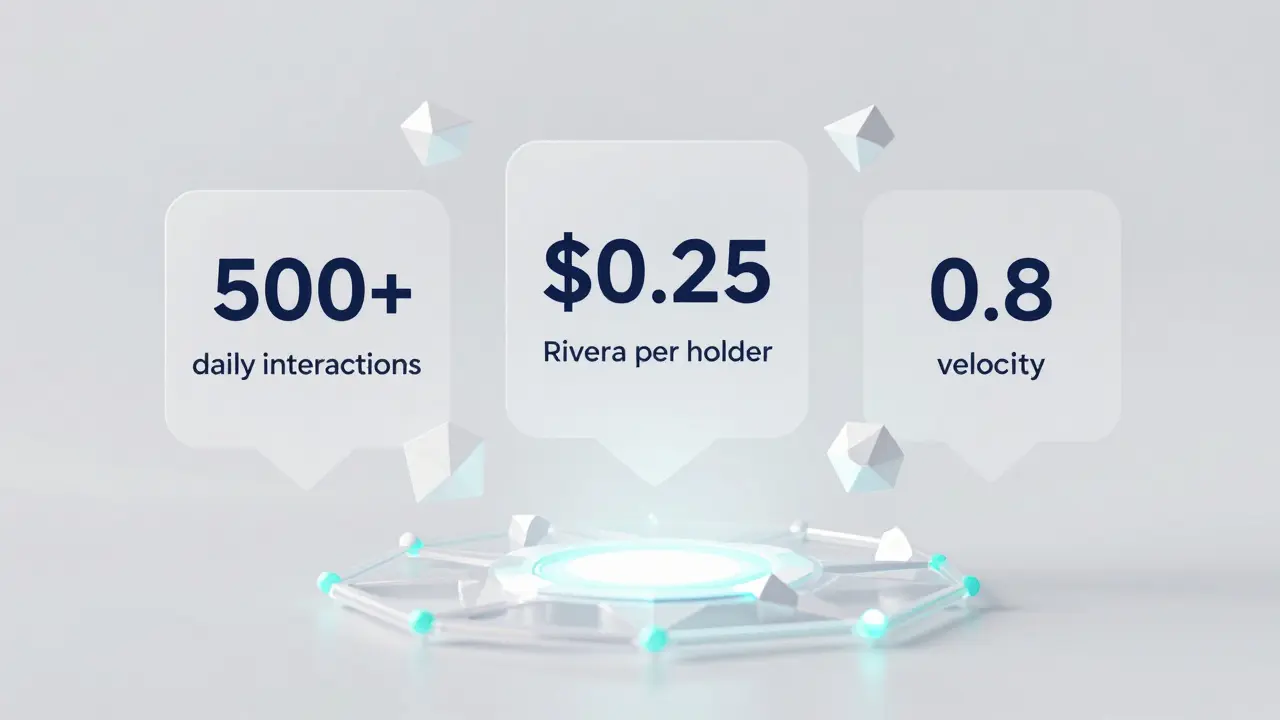
Price is noise. Usage is truth. You need to answer one question: "Do people actually use this token for its intended purpose?" Use free tools like Dune Analytics to track on-chain metrics. Look for:- Active contract interactions: Successful projects have over 500 daily interactions.
- Transactions per holder: Aim for more than 5 monthly transactions per wallet.
- Revenue per token: If the token generates at least $0.25 in revenue per holder per month, it’s creating real value.
Chainlink’s LINK token is a textbook example. It doesn’t just sit in wallets - it’s used in over $75 billion worth of verified data transactions. That’s not speculation. That’s utility. Compare that to tokens where 80% of trading volume comes from speculative buys. Those are dead weight. The MIT 2023 study found that projects where utility drove less than 60% of transaction volume had an 83% failure rate.
Watch for Utility Decay
Many tokens start strong. They launch with a killer app. Then, six months later, usage drops. That’s utility decay. It’s the silent killer. According to Blockchain App Factory’s 2024 survey, 68% of failed tokens showed this pattern. You need to ask: "Is this token’s use case growing, or just fading?" Look at monthly active users. If they’re flat or declining, the project is dying. Tools like Nansen can help you see if wallets are still interacting or just holding. A token with 10,000 holders but only 2,000 active users? That’s a warning.Also, check if the project has a clear upgrade path. Did they launch with one feature, then add five more? Or is the roadmap just a list of buzzwords? Real projects update their utility. They add integrations, new use cases, partnerships. If the whitepaper hasn’t changed since 2022, it’s probably not alive.
Compare Against Proven Models
Don’t evaluate in a vacuum. Look at what’s working. DEX tokens like UNI and SUSHI outperform social media or meme tokens by 67% in 12-month holding periods. Why? Because they’re embedded in daily workflows. You don’t just trade UNI - you use it to vote, pay fees, and earn rewards. Infrastructure tokens like LINK and DOT have lower volatility (under 52%) than gaming tokens like AXS (89%). That’s because their value comes from function, not hype.Staking requirements matter too. Tokens like Polkadot’s DOT require holders to stake to keep the network secure. This creates alignment. Nansen data shows staking tokens have 34% higher holder retention. But don’t confuse staking with yield farming. If the token’s only value is a 20% APY, it’s a Ponzi. If staking is part of network security and the token is used to pay for services - that’s utility.
Regulatory Clarity Is Non-Negotiable
In 2026, regulation isn’t optional - it’s a filter. The SEC now requires three things for a token to be considered truly utility-based:- A functional use case that existed at launch.
- Over 50% of the token’s value derived from actual use within 12 months.
- No marketing that promises profit or price growth.
Projects that got SEC no-action letters (like Ripple’s XRP in 2023) are far more likely to survive. Switzerland’s FINMA requires over 70% of value to come from actual usage. Singapore’s MAS demands 12 months of operational history before launch. If a project is dodging regulators or hiding jurisdiction, walk away. Regulatory clarity isn’t bureaucracy - it’s proof the team understands this isn’t a casino.
Use the Tools - Don’t Guess
You don’t need to be a coder to evaluate a token. But you do need to use the right tools. Start with Dune Analytics (free) to build dashboards tracking active users, transaction volume, and token velocity. Then use Nansen ($99/month) to see if wallets are holding or moving. Token Terminal ($499/month) shows revenue generated by the protocol - not just price. If the token generates $10 million in monthly revenue but has a $1 billion market cap, that’s a good sign. If it generates $500K and is valued at $500 million? Red flag.Learn to read GitHub. Look for recent commits, open issues, and contributor count. A project with 50+ contributors and weekly updates is alive. One with 3 contributors and 6-month-old commits? Dead. And always check if the team has real-world partners. Chainlink works with AWS, Google Cloud, and SWIFT. That’s not marketing fluff - that’s validation.
Final Checklist: 5 Questions Before You Buy
Before you invest, ask these five questions:
- Is the token used for something real? If you can’t explain its function in one sentence, it’s probably not utility.
- Is the supply capped and fairly distributed? No more than 35% in top 10 wallets. No unlimited printing.
- Is there on-chain proof of usage? Use Dune Analytics. If daily active users are below 500, reconsider.
- Has it been audited and updated? Multiple audits. Active GitHub. No abandoned code.
- Is the team transparent and compliant? Do they disclose jurisdiction? Do they avoid profit promises?
If you answer "yes" to all five, you’re looking at something real. If even one is "no," walk away. Utility tokens aren’t about luck. They’re about systems that work - and you need to see the proof.
What’s the difference between a utility token and a security token?
A utility token gives access to a product or service within a blockchain ecosystem - like paying for data or renting storage. A security token represents ownership, like shares in a company, and is subject to securities laws. The SEC’s Howey Test determines this: if people buy the token expecting profit from others’ efforts, it’s a security. Utility tokens must not promise returns or price growth.
Can a utility token still be a good investment?
Yes - but not because you expect it to rise in price. A utility token becomes valuable when its ecosystem grows. If more people use it, demand increases naturally. Chainlink’s LINK rose because it was used in $75 billion in data transactions, not because of hype. The best utility tokens appreciate because they’re needed - not because they’re marketed as investments.
How do I check if a token has real usage?
Use free tools like Dune Analytics. Look for daily active contract interactions (over 500), transactions per holder (more than 5 monthly), and revenue generated by the protocol. If the token’s primary use is trading on exchanges, not using the service it’s meant for, it’s likely speculative.
Why do so many utility tokens fail?
Most fail because they never created real utility. They launched with a vague whitepaper, promised future features, and relied on speculation. The MIT 2023 study found that 83% of failed projects had utility driving less than 60% of transaction volume. Others decayed because they didn’t adapt - their initial use case faded, and they never added new ones.
Is staking the same as utility?
No. Staking helps secure a network, but it’s not utility. Utility means the token is used to access a service - like paying for data, buying virtual land, or voting on governance. If a token’s only value is a staking reward, it’s a yield farm, not a utility token. True utility tokens often include staking as a feature - not the main reason to hold them.
Utility tokens are the backbone of real blockchain adoption. They’re not meant to be traded like stocks. They’re meant to be used. If you focus on usage over price, audits over hype, and real metrics over promises, you’ll avoid the traps most investors fall into. The market is crowded. But the ones that last? They’re the ones that actually work.


17 Comments
jack carr
March 5, 2026 at 06:32
Honestly? This is one of the clearest breakdowns I've seen in months. No fluff, just facts. I've been burned before by 'utility' tokens that were just ICOs in disguise. This checklist? I'm printing it out. Seriously.
Eva Gupta
March 7, 2026 at 04:13
I'm from India and honestly, this guide feels like a lifeline. We have so many young investors here who think buying a token = instant riches. This helps explain why real utility matters - not just in crypto, but in any tech. Thank you for writing this.
Nancy Jewer
March 7, 2026 at 10:30
The tokenomics section is spot-on. I've been analyzing 12 projects this quarter, and the ones with deflationary mechanics + low top-10 concentration (>85% distributed) are the only ones showing sustainable on-chain activity. Also, velocity metrics >1.2 are a dead giveaway for speculation - not usage. This aligns perfectly with our internal dashboards at the lab.
Ken Kemp
March 7, 2026 at 16:03
I just checked my fav project's github - last commit was 7 months ago. 😅 I feel dumb now. Thanks for the reminder. I always skip the code part because I'm not a dev. But now I know: if the commits are dead, the project is dead. Lesson learned.
Julie Potter
March 9, 2026 at 04:43
I can't believe people still fall for this. Every single one of these 'utility' tokens ends up being pumped by influencers who don't even know what a smart contract is. I watched one project go from $0.02 to $2.50 in 3 weeks - then crash to $0.004. All because they said 'we'll integrate with AI next quarter.' Like, wow. Just... wow.
Leah Dallaire
March 11, 2026 at 00:50
You're all missing the point. This whole 'utility token' thing is a distraction. The real value is in the blockchain infrastructure - not the token. The token is just a ledger entry. The SEC doesn't care about your 'use case' - they care about control. And guess who controls the wallets? The same VCs who funded the ICO. This is all theater.
prasanna tripathy
March 11, 2026 at 18:55
I really appreciate how this breaks down usage metrics. In India, we have tons of projects that claim 'decentralized governance' but only 3 people vote. I use Dune every week to check active wallets - if it's under 200/day, I walk. Simple. No need for fancy jargon.
James Burke
March 13, 2026 at 06:57
This is exactly what I needed. I’ve been trying to explain to my cousin why his 'next moonshot' token is garbage. Now I can just send him this. The part about ERC-1155 vs ERC-20? I didn’t even know that mattered. But now I get it - gas costs kill adoption. Thanks.
Jonathan Chretien
March 13, 2026 at 13:10
I mean... if you're not staking, are you even holding? 😏 Just kidding. But seriously - staking isn't utility. It's a tax on holding. Real utility is when you pay for coffee with your token. Not when you lock it up for 12% APY. That's just crypto interest. We need to stop calling it innovation.
Bill Pommier
March 15, 2026 at 07:33
This article is dangerously misleading. You're normalizing a regulatory gray zone. The SEC has already classified 91% of utility tokens as securities under the Howey Test. Your 'checklist' is a roadmap for evasion. This isn't education - it's legal arbitrage disguised as insight.
Olivia Parsons
March 17, 2026 at 01:31
I used Dune to track a token I'm interested in. Daily interactions: 480. Close. But transactions per holder: 7.5/month. Revenue per token: $0.31. That’s solid. I’m holding. Not because I think it’ll double - because it’s actually being used. This guide helped me see what to look for.
Nick Greening
March 18, 2026 at 04:29
You say 'if it's not used, it's dead.' But what if the project is in stealth mode? What if they're building something bigger? You're ignoring the long game. Some of the biggest projects had zero usage for 18 months. Look at Ethereum in 2016. You're optimizing for now, not tomorrow.
Issack Vaid
March 19, 2026 at 21:17
I love how everyone here is treating this like a science. It's not. It's a game. The 'real utility' narrative is just the new 'moon to Mars' pitch. The real metric? Who's buying when the price drops? The whales. Not the users. The users are just noise.
Shawn Warren
March 19, 2026 at 22:02
Utility tokens are the future of decentralized ecosystems. Period. The metrics you outlined are not just good - they are essential. The projects that pass this filter will be the ones that survive the next cycle. This is not speculation - this is foundational analysis. Do the work.
Jackson Dambz
March 20, 2026 at 15:11
I read this whole thing. Too much. I just want to know if I should buy. Can you just say yes or no?
Megan Lutz
March 22, 2026 at 00:55
The real test isn't in the tokenomics - it's in the culture. If the community is actively building, reporting bugs, translating docs, creating tutorials - that’s utility. Not Dune charts. Not GitHub commits. Human energy. That’s what keeps a project alive. The rest is just data.
Jesse VanDerPol
March 23, 2026 at 22:21
Agreed. The checklist works.