
Is Blockchain Technology the Future of Digital Transactions? 2026 Analysis
The Death of the Three-Day Wait
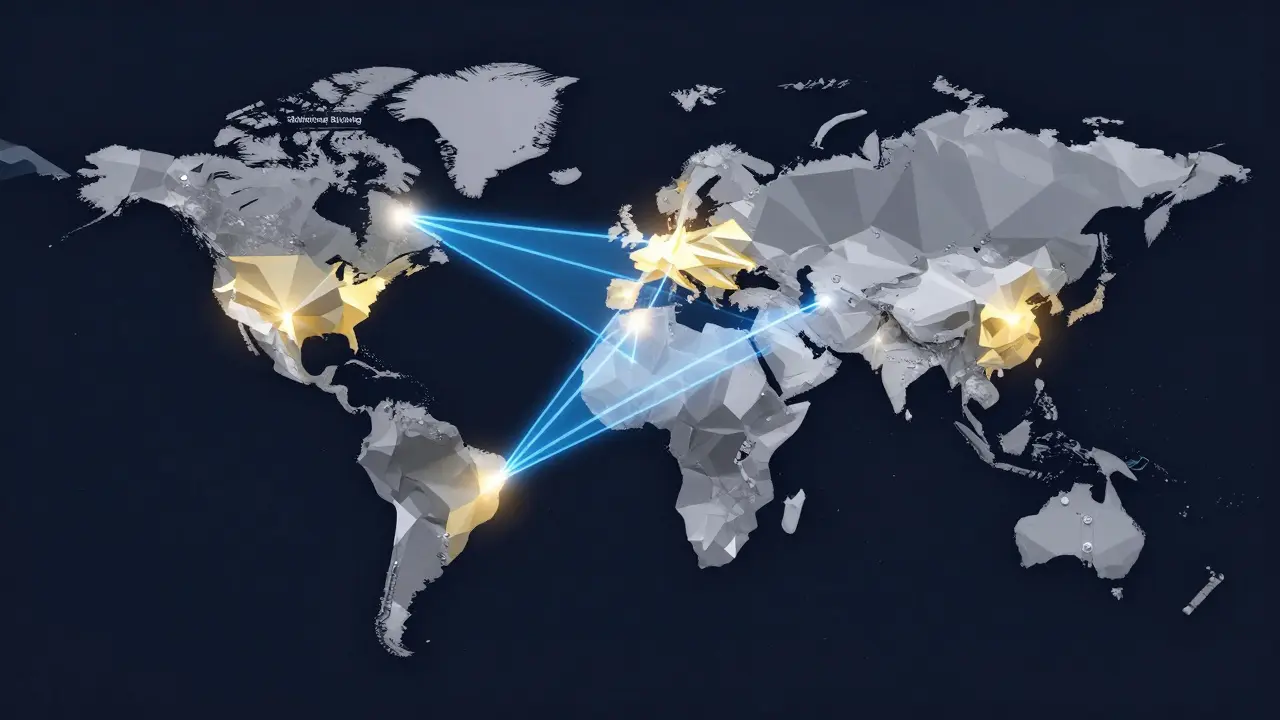
The most immediate impact of blockchain is felt in cross-border payments. Traditional banking relies on a series of intermediary banks-a process called correspondent banking-where each stop adds fees and delays. In contrast, blockchain allows for peer-to-peer settlement. According to data from BVNK, where SWIFT transfers usually take 3 to 5 business days, blockchain settlements now frequently complete in under 3 minutes, 24/7.
This speed is largely powered by Stablecoins, which are cryptocurrencies pegged to a stable asset, like the US Dollar, to minimize price volatility. These aren't just for traders anymore. By September 2025, the stablecoin supply exploded to $305 billion, with total transaction volumes exceeding $32 trillion in 2024. For a business, this means no more "floating" capital trapped in transit and a total elimination of chargeback risks, since blockchain transactions are final once confirmed.
Scaling Beyond the Hype
For years, critics pointed to high fees and slow speeds as deal-breakers. If a coffee costs $5 but the transaction fee is $20, the system is broken. However, the technical landscape shifted dramatically. Most activity has moved away from main networks to Layer 2 Solutions, such as scaling protocols like Arbitrum, Base, and Optimism that process transactions off the main chain to increase speed and lower costs.
The results are staggering. Transaction costs that averaged $24 in 2021 have plummeted to less than one cent today. This makes micro-transactions viable for the first time. We are seeing a transition from "theoretical" use cases to actual production. As of Q3 2025, 78% of enterprises surveyed by the World Economic Forum reported active blockchain deployments. It's no longer a lab experiment; it's becoming the backend of the internet of value.
| Feature | Traditional Banking (SWIFT/ACH) | Blockchain (L2/Stablecoins) |
|---|---|---|
| Settlement Time | 3-5 Business Days | Under 3 Minutes |
| Availability | Banking Hours (Mon-Fri) | 24/7/365 |
| Transaction Cost | Percentage-based + Flat fees | Sub-cent (on Layer 2) |
| Reversibility | Chargebacks possible | Immutable (Final) |
| Control | Centralized (Bank managed) | Decentralized (User/Protocol managed) |
The Trust Machine: Smart Contracts and Automation
Moving money faster is great, but the real magic happens when the money "thinks." This is where Smart Contracts come in. These are self-executing contracts with the terms of the agreement directly written into lines of code. They remove the need for a trusted third party to verify if a condition has been met.
Consider a shipping container arriving at a port. Instead of a clerk manually verifying a bill of lading and triggering a wire transfer, a smart contract can automatically release payment the second a GPS tracker confirms the ship has docked. This removes human error and fraud. In 2025, we've seen this evolve further with AI integration, where predictive analytics can trigger smart contracts based on forecasted demand or supply chain disruptions, making commerce truly autonomous.
The Institutional Pivot
The biggest skeptics are now the biggest builders. Financial giants aren't trying to kill blockchain; they're absorbing it. Mastercard's Multi-Token Network, in collaboration with Standard Chartered and Kinexys by J.P. Morgan, proves that institutional validation is here. These banks realize that the current ledger system-where every bank keeps its own private database and they spend days reconciling them-is inefficient.
Even governments are getting in on the action. The APAC region leads the way, with China's Digital Yuan processing $1.2 trillion in transactions in Q3 2025. While the EU has faced more regulatory fragmentation, the Digital Euro pilot has already processed €850 million in tests. The shift isn't just about "crypto"; it's about CBDCs (Central Bank Digital Currencies), which bring the efficiency of blockchain under the umbrella of government regulation.
The Roadblocks: Why You're Still Using a Credit Card
If blockchain is so superior, why isn't every merchant accepting it? The friction is real. Only 28% of global merchants accept cryptocurrency payments directly. The biggest hurdle is regulatory uncertainty. Only 32 of 195 countries have comprehensive crypto frameworks, leaving businesses in a legal gray area.
Then there's the "user experience" problem. While Layer 2s have fixed the cost, the onboarding process is still a nightmare for the average person. Trustpilot reviews for payment processors frequently cite complex setup and the fear of losing access to a private key. Until "sending money" is as simple as sending a text-without needing to understand what a "seed phrase" is-mainstream adoption will lag.
Moreover, we have to address the elephant in the room: security and sustainability. While 78% of transaction volume now uses energy-efficient Proof-of-Stake mechanisms, the long-term threat of quantum computing looms. If a quantum computer can crack the elliptic curve cryptography that secures blockchain, the entire system fails. It's a "long-term critical risk" that researchers are racing to solve.
Where This Is Heading
Blockchain isn't going to replace every single swipe of a credit card tomorrow. However, it is becoming the invisible infrastructure for high-value and high-complexity transactions. Gartner predicts that by 2027, 30% of cross-border payment infrastructure will be underpinned by blockchain. In healthcare, the shift is even more aggressive, with projections that 65% of data exchanges will use blockchain by 2030 to ensure privacy and compliance with laws like GDPR.
The future isn't a world where we all trade "coins" in a digital wallet. It's a world where the transaction happens instantly, securely and cheaply in the background, and we only see the result: the money arrived, the contract was fulfilled, and the trust was guaranteed by math rather than a middleman.
Is blockchain safer than traditional banking?
It depends on the type of risk. Blockchain is virtually immune to central point-of-failure hacks and unauthorized ledger changes because it is immutable. However, it introduces "user-end risk." If you lose your private keys or fall for a phishing scam, there is no "forgot password" button or bank manager to reverse the transaction. For institutions, it's safer; for inexperienced individuals, it can be riskier.
Do I need to buy Bitcoin to use blockchain transactions?
No. Most modern digital transactions use stablecoins or CBDCs (Central Bank Digital Currencies) to avoid the price swings associated with Bitcoin. You can use the efficiency of the blockchain without ever exposing yourself to the volatility of the crypto market.
How do "Layer 2" solutions actually lower fees?
Think of Layer 1 (like Ethereum) as a crowded highway. Layer 2 solutions like Arbitrum or Optimism act as side-roads. They bundle hundreds of transactions together, process them quickly off the main highway, and then send one single summary report back to the main chain. This dramatically reduces the amount of "blockspace" each individual needs to pay for.
Will blockchain replace credit cards?
Likely not entirely, but it will change how they work. Credit cards offer consumer protections and dispute resolution (chargebacks) that blockchain currently lacks. We will likely see a hybrid model where the "settlement layer" is blockchain (instant and cheap), but the "user layer" still provides the protections and familiar interfaces we use today.
Isn't blockchain too energy-intensive to be the future?
That was true for early versions. The industry has largely shifted from "Proof-of-Work" (mining) to "Proof-of-Stake" (validating). As of 2025, 78% of transaction volume is powered by these energy-efficient mechanisms, reducing the carbon footprint of digital transactions by over 99% compared to the early days of Bitcoin mining.




19 Comments
Rob Mitchell
April 13, 2026 at 21:35
L2 solutions are the real game changer here. Most people ignore the scaling part, but that's where the actual utility lives.
Agnessa Dale
April 15, 2026 at 00:10
This is so exciting! Imagine a world where we can help people in developing nations get paid instantly without those crazy bank fees. Truly a bright future for all of us!
7stargee Emmanuel Obani
April 16, 2026 at 04:14
Lmao this is just fancy talk for losing money 🙄🤡
Surender Kumar
April 16, 2026 at 13:44
yeh looks pretty cool actually.. hope the regs get sorted soon so we can all use it easy
Amanda Faust
April 17, 2026 at 18:35
everyone forgets that the oracle problem is still the biggest weak point for smart contracts because if the data feed is wrong the whole execution is trash
Samson Selleck
April 18, 2026 at 13:53
The naive assumption that Layer 2s solve the trilemma is laughable. We are merely substituting one form of centralization for another via sequencers, thereby compromising the very Byzantine Fault Tolerance that makes the underlying protocol viable. The systemic risk of liquidity fragmentation across disparate rollups is an exogenous variable that most retail observers simply lack the intellectual capacity to quantify.
Lela Singh
April 18, 2026 at 14:15
Total game-changer! The efficiency boost is absolutely electric!
Prasanna Shembekar
April 19, 2026 at 01:14
omg i literally cant even believe how slow banks are still like why do they hate us haha
Jessie Tayaban
April 19, 2026 at 16:07
I honestly think the seed phrase thing is such a huge mess!! Like who remembers a 24 word phrase?? We need way better ways to handle this or no one will ever move away from their apps lol
Rebecca Violette
April 20, 2026 at 21:13
istg i tried to send some usdc and i almost had a panic attack thinking i sent it to the wrong address... the stress is too much 😭
Emily H
April 21, 2026 at 06:22
The transition toward Proof-of-Stake represents a significant milestone in reconciling technological advancement with environmental stewardship.
Swati Sharma
April 23, 2026 at 02:31
Integrating an interoperability framework will be key for these CBDCs to avoid siloed liquidity. We need a robust cross-chain atomic swap mechanism to ensure seamless value transfer across different sovereign ledgers.
Jonathan Chamma
April 24, 2026 at 17:22
It's really just about making things easier for everyone. If we can wrap this complex tech in a friendly shell, the whole world wins.
Scott Fenton
April 26, 2026 at 02:00
The point regarding quantum computing is a critical observation. While current cryptographic standards are sufficient, the development of Shor's algorithm poses a legitimate threat to elliptic curve signatures that must be addressed through post-quantum cryptography.
Akshay Gorad
April 27, 2026 at 06:17
I agree that the institutional pivot is inevitable, though the pace of adoption will likely vary by region.
jennelle williams
April 27, 2026 at 23:09
just let the tech grow naturally. trust takes time
Chidinma Sandra okafor
April 28, 2026 at 05:35
Oh sure, because we totally trust governments to handle our money with a 'Digital Yuan' or 'Digital Euro' without spying on every single cent we spend. What a wonderful future we're building here.
Alan Seiden
April 29, 2026 at 02:43
This is absolute rubbish. The so-called 'efficiency' is a myth when you consider the volatility and the complete lack of consumer protection. The British banking system is far more reliable than some fragmented set of L2 side-roads that could vanish overnight if a developer decides to pull the plug.
Heather Warren
April 30, 2026 at 14:12
I've had a great experience using a few stablecoins for freelance work lately. It really does cut out the middleman and makes the whole process so much smoother. Definitely worth looking into for anyone doing international business!