

Legal Status of Cryptocurrencies in Russia: 2026 Regulations Guide
Imagine owning an asset that the government lets you keep in your wallet, but forbids you from using to buy a cup of coffee. That is the current reality of the cryptocurrency laws Russia is operating under. It is a strange, two-tier system where the rules depend entirely on how much money you have in the bank and whether you are trading with someone inside or outside the country.
| Activity | Status | Who is it for? |
|---|---|---|
| Owning/Buying Crypto | Legal | All citizens |
| Mining | Legal | All citizens |
| Domestic Payments | Prohibited | Everyone |
| International Trade | Legal (Regulated) | "Especially Qualified" Investors |
| Crypto Derivatives | Legal (Regulated) | Qualified Investors |
The Great Divide: Ordinary Citizens vs. Qualified Investors
If you are a regular resident of Moscow or Novosibirsk, your relationship with crypto is simple: you can buy it and hold it, but you cannot use it as money. The Bank of Russia (CBR) views private coins as "money surrogates." They believe that if people start using Bitcoin instead of the ruble, it undermines the state's control over the economy.
However, there is a massive loophole for the wealthy. The government established an experimental legal regime that allows a special class of people to actually trade and use crypto for business. To get in, you can't just be "well-off"; you have to be an "especially qualified investor." This means proving you have over ₽100 million in securities and deposits, and an annual income topping ₽50 million. For these elites, crypto isn't a forbidden tool-it's a strategic asset for international business.
Using Crypto to Bypass Sanctions
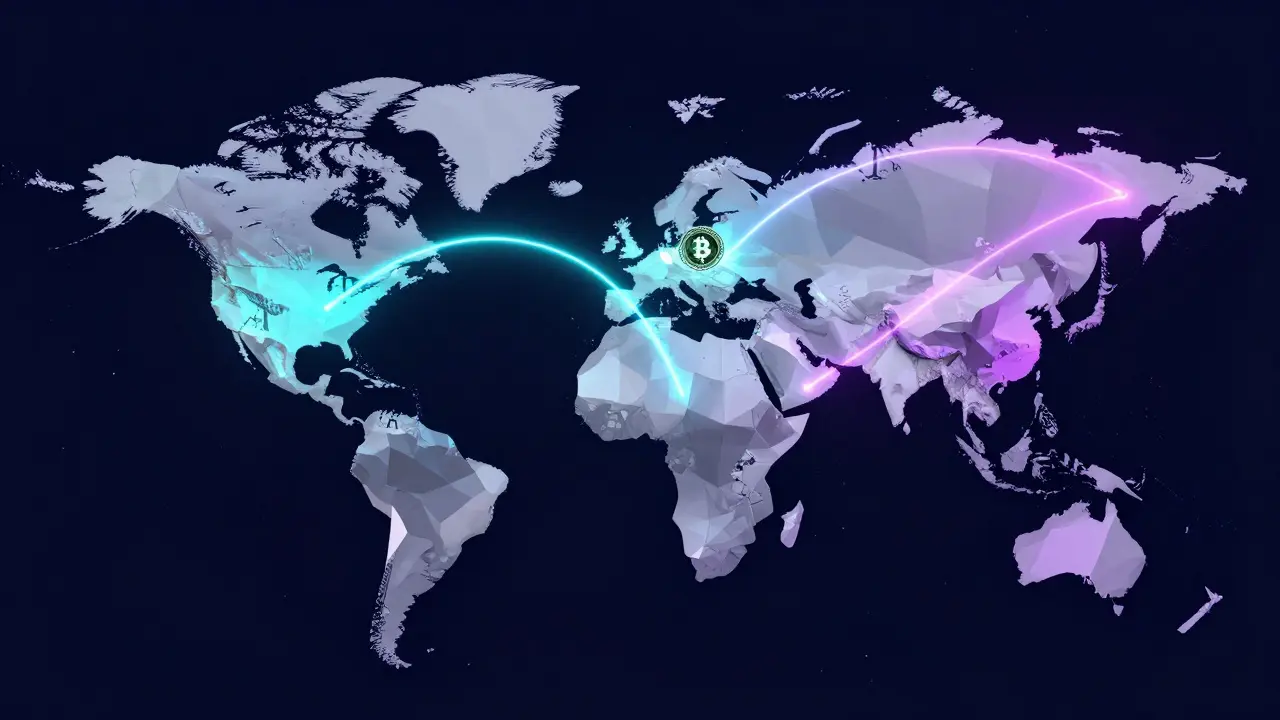
Why would a government that hates domestic crypto use it for international trade? Because it works. Following the invasion of Ukraine and the subsequent Western sanctions, Russia found itself locked out of many traditional financial systems. Cryptocurrency became the perfect "backdoor."
By 2025, crypto-facilitated international trade hit a staggering 1 trillion rubles. The government realized that while they don't want Ethereum replacing the ruble at home, they are more than happy to see it used to settle deals with foreign partners who also want to avoid Western banking monitors. It is a pragmatic move: use the technology to survive geopolitically while keeping the domestic population on a tight leash.
The Rise of the Digital Ruble
The Bank of Russia isn't just fighting crypto; they are trying to replace the need for it with their own version. The Digital Ruble is a Central Bank Digital Currency (CBDC) that is designed to give the state total visibility into every transaction. Unlike Bitcoin, which is decentralized, the digital ruble is fully controlled by the CBR.
The timeline is clear: public implementation is set for September 2026. Once this launches, the government will likely push even harder against private cryptocurrencies. The logic is simple: why let people use a volatile asset they can hide in a cold wallet when they can use a digital currency where the government sees everything?
Digital Financial Assets: The "Legal" Alternative
You might hear the term "Digital Financial Assets" (DFA) floating around in Russian legal documents. This comes from the 2021 law "On Digital Financial Assets." It is important to understand that DFAs are NOT the same as cryptocurrencies.
A DFA is essentially a tokenized right-like a digital share in a company or a claim to a payment. These are regulated, issued by authorized platforms, and tied to real-world assets. The government loves DFAs because they are centralized and taxable. While they share the same blockchain technology, the legal treatment is opposite: DFAs are welcomed; cryptocurrencies are tolerated but restricted.
Mining: The Only Truly Free Zone
Interestingly, mining remains one of the few areas where ordinary people can engage with the crypto ecosystem without fear of immediate legal repercussions. Since 2014, mining has been categorized as producing "monetary substitutes." While the government has periodically toyed with the idea of taxing it more heavily or restricting electricity use, it hasn't been banned. For many, mining is the most "legal" way to earn digital assets in Russia today.

Internal Conflict: The Treasury vs. The Central Bank
If you feel like the rules are contradictory, that's because the people making them aren't agreeing. There is a visible tug-of-war happening inside the Kremlin's economic circle.
- The Central Bank (CBR): The "hawks." They want total prohibition of private crypto to protect the ruble's sovereignty. They emphasize volatility and the risk of total loss.
- The Russian Treasury: The "doves." Led by figures like Ivan Chebeskov, they argue that Russia needs a national digital asset strategy to remain economically competitive and grow its tech sector.
This tension is why we see "experimental regimes." The Treasury gets to test how crypto can help the economy, while the Central Bank keeps the general public away from the risk.
Is it legal to own Bitcoin in Russia?
Yes, it is legal to buy, own, and sell cryptocurrency in Russia. However, you cannot use it to pay for goods or services within the country, as the ruble is the only legal tender.
What is an "especially qualified investor"?
This is a legal status granted to individuals who can prove they have over 100 million rubles in deposits or securities and an annual income exceeding 50 million rubles. Only these investors can legally engage in certain crypto transactions under the experimental legal regime.
Can I use crypto for international business in Russia?
Only if you operate within the government's experimental legal regime. This is primarily used by large corporations and highly qualified investors to bypass traditional banking restrictions for foreign trade.
When will the Digital Ruble be available?
According to the timeline approved by Russian lawmakers and signed by President Putin, the public implementation of the digital ruble is scheduled for September 2026.
Is crypto mining legal for regular people?
Yes, mining is generally legal and has been classified as the creation of monetary substitutes since 2014, making it one of the few accessible crypto activities for the general public.
Next Steps for Residents and Investors
If you are operating in this space, your strategy depends on your status. For the average person, the safest bet is to treat crypto as a long-term investment (buy and hold) rather than a payment method. Avoid using crypto for domestic payments, as the authorities are increasingly using anti-fraud laws to crack down on "gray market" trading.
For corporations, the path forward is to seek "qualified investor" status. This opens the door to legal derivatives and international settlement frameworks. Keep a close eye on the September 2026 launch of the digital ruble, as this will likely trigger a new wave of regulations regarding how private assets are converted into state digital currency.





21 Comments
Greg Reynolds
April 24, 2026 at 13:49
The distinction between DFAs and cryptocurrencies is just a legal semantic trick to maintain centralization. It's basically just tokenized debt with a fancy name.
Larry Yang
April 24, 2026 at 18:59
Imagine actually thinkng the "experimental regime" is anything other than a blatant laundry service for the oligarchs. The sheer lack of nuance in how people view these regulations is honestly exhaustng.
Kathleen Bergin
April 25, 2026 at 09:27
It's just a way for the rich to stay rich while everyone else follows the rules.
Robert Mosolygo
April 26, 2026 at 12:54
This whole digital ruble push is clearly a precursor to a full-scale social credit system. They aren't just tracking money; they are tracking behavior. Once the 2026 rollout happens, the state will have a kill-switch for your entire financial existence based on your political loyalty. It's the ultimate panopticon. They use the "sanctions" excuse to pivot to a system where anonymity is treated as a crime. If you think this is about economic efficiency, you're delusional. It's about total cognitive and material capture. The Treasury's "doves" are just the good cops in a bad-cop routine to make the transition feel inevitable rather than forced. Every single transaction will be analyzed by AI to ensure you aren't funding anything they dislike. The transition from private crypto to CBDC is the final nail in the coffin for financial privacy in the region. This is a blueprint for other authoritarian regimes to follow. The "experimental legal regime" is just the beta test for how to manage the elite while stripping the peasants of their last shred of autonomy. Trust nothing that comes from the CBR.
Sarah Fisher
April 27, 2026 at 20:40
It is fascinating how the state attempts to compartmentalize technology based on class. The dichotomy between the "qualified investor" and the common citizen reflects a deeper philosophical struggle between individual sovereignty and state control.
Benjamin Forg
April 29, 2026 at 04:23
digital ruble is just another layer of the matrix they want us in the system fully tracked no way out unless you mine in the woods
Alex Wan
April 29, 2026 at 18:33
Oh my goodness, it is simply heart-breaking to see such a divide in access to financial innovaton! We must strive to create a more inclusive enviroment where everyone can learn these complex tools together!!
Jason M
April 30, 2026 at 10:20
I completely agree with the sentiment of inclusivity! For those feeling overwhelmed, remember that the basics of holding and securing your assets are the first steps toward financial freedom. Let's keep supporting each other through these regulatory shifts!
Tony Gurley-Ward
April 30, 2026 at 19:03
The whole setup is a wild dance of contradictions! It's like the government is trying to flirt with the future while keeping it handcuffed in the basement. Totally kaleidoscopic vibe to their policy making.
Gary Lingrel
May 1, 2026 at 04:50
Typical state greed lol 🙄 they just want their cut of everything while the poor get nothing
Jennifer Taylor
May 2, 2026 at 04:38
They are just using the poor to test the digital ruble first before the rich move their money out of the country
jill huyo-a
May 3, 2026 at 18:02
I wonder if there are ways for the average person to eventually reach that qualified status through legal mining profits.
praveen subbiah
May 5, 2026 at 10:41
This is such an interesting approach to sovereignty! It shows the world that traditional banking isn't the only way to survive!! Truly a bold move!
Ali Tate
May 6, 2026 at 10:24
Imagine being so mid that you actually think the CBR has any real control over the shadow markets. Total joke.
Findlay Duncan Lyon
May 7, 2026 at 15:16
Quite a pragmatic shift.
Liz Ariza
May 9, 2026 at 04:48
Keeping your assets in cold storage is such a vibe for peace of mind! ✨ Stay safe and keep those private keys secret! 🚀
Yvette P
May 10, 2026 at 02:19
Oh, please, as if the "experimental legal regime" is some revolutionary breakthrough in fintech. In reality, it's just a thinly veiled mechanism for capital flight and regulatory arbitrage, wrapped in the tedious jargon of "qualified investors" to keep the plebeians from realizing they're being played. The synergy between the Treasury and the CBR is a comedy of errors where the only real winners are the consultants charging exorbitant fees to navigate these "gray zones." If you actually believe that the digital ruble is about "modernization" and not just a high-tech leash for the population, you've clearly never dealt with an actual sovereign wealth fund's internal politics. It's a textbook case of capturing the upside of blockchain while eliminating the decentralized ethos that actually makes it valuable. Absolute peak absurdity.
Jennifer L
May 11, 2026 at 16:02
It feels so tragic that the regular people are left out of these opportunities... I just hope everyone can find a way to stay safe and prosper despite the rules.
Sara Ellis
May 12, 2026 at 07:55
mining is cool i want to try it
Sarah Ingrams
May 13, 2026 at 22:43
hope everyone stays safe with their investments
Lisa Camp
May 15, 2026 at 16:38
GET YOUR MINING RIGS NOW! STOP WAITING FOR PERMISSION FROM THE STATE! JUST DO IT!