
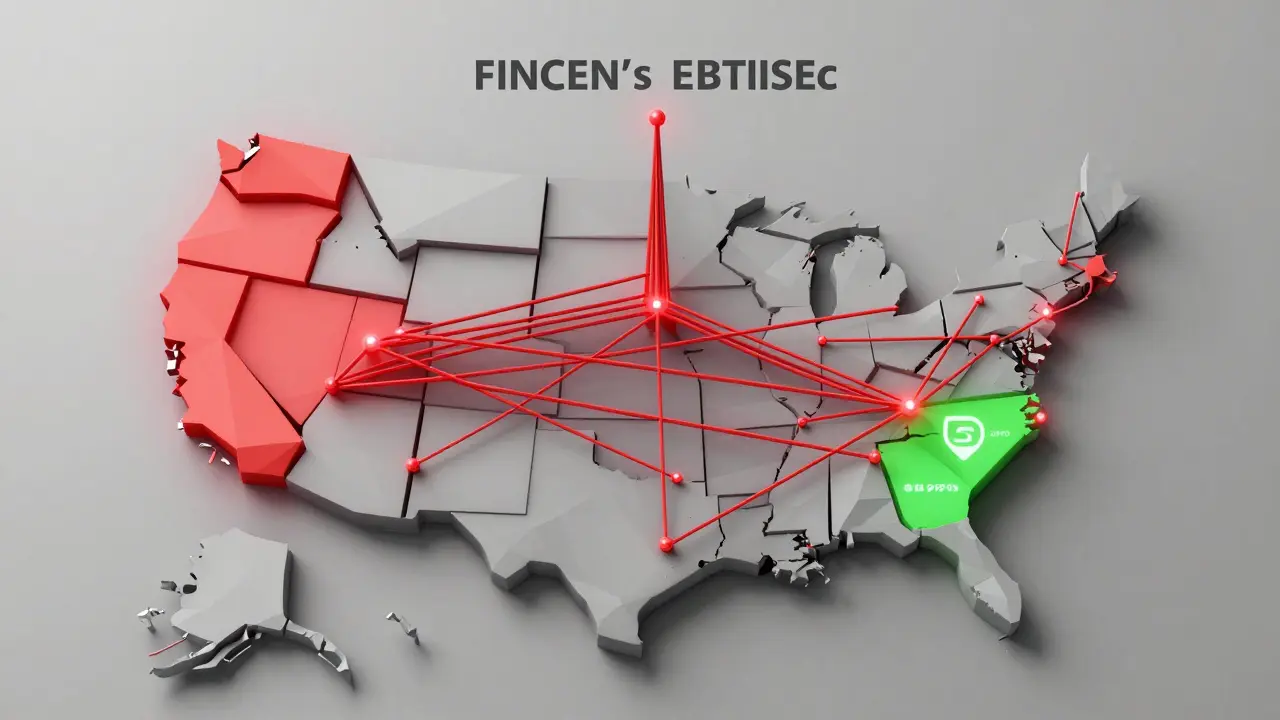
Licensing Requirements for Crypto Businesses in the U.S. in 2026
Running a crypto business in the U.S. isn’t just about building a good app or attracting users. If you’re exchanging, storing, or moving cryptocurrency, you’re operating in a legal minefield. There’s no single federal license. Instead, you’re stuck navigating a patchwork of 50 state rules, federal agencies, and overlapping regulations that can cost hundreds of thousands of dollars and take over a year to sort out. Many startups fail not because their tech is bad, but because they didn’t get the paperwork right.
What Triggers a Crypto License?
Not every crypto company needs a license. If you’re just buying and holding Bitcoin for yourself, you’re fine. But if you’re acting as an intermediary - taking crypto from one person and sending it to another, converting crypto to dollars, or holding funds for customers - you’re likely a money transmitter under U.S. law. That triggers two layers of regulation: federal and state.The federal baseline comes from FinCEN, the financial crimes unit of the Treasury Department. Since 2013, any business that exchanges or transmits cryptocurrency must register as a Money Services Business (MSB). This isn’t optional. It means filing Form 107, paying an annual fee, implementing an AML program, reporting transactions over $10,000, and keeping records for five years. You also have to file Suspicious Activity Reports if something smells off. Skip this step, and you’re risking criminal charges - not just fines.
But here’s the catch: FinCEN’s MSB registration is just the floor. Every state has its own rules. Forty-seven states and D.C. require a separate Money Transmitter License (MTL) if you’re moving crypto to or from fiat currency. Some states, like New York, go even further with their own branded license - the BitLicense.
The BitLicense: New York’s Heavy Hand
New York’s BitLicense, launched in 2015, is the strictest crypto license in the country. It applies to any business that does any of five things: receives, transmits, stores, buys/sells, or administers virtual currency - even if you’re based in Texas but serve a single New York customer. That means most major exchanges have to get it, no matter where they’re headquartered.The application isn’t a form. It’s a 100-page dossier. You need detailed business plans, cybersecurity protocols meeting NYDFS Part 500 standards, background checks on every owner and executive, financial statements showing at least $500,000 in net worth, and proof you can handle customer funds securely. The application fee alone is $5,000, and it’s non-refundable. Approval takes 180 days on average - sometimes longer. One founder on Reddit spent $750,000 over 14 months just to get approved.
Why do companies bother? Because without it, they can’t legally serve New York’s 20 million residents. And since New York is a financial hub, many businesses treat the BitLicense as a de facto national standard. If you can pass New York’s test, you’re likely compliant everywhere else.
State-by-State Chaos
Outside New York, the rules vary wildly. Wyoming is the outlier - and the favorite for startups. It created a Special Purpose Depository Institution (SPDI) charter that lets crypto firms operate like banks without full banking powers. The application takes 90 days, costs under $2,000, and doesn’t require a minimum capital reserve if you’re under $10 million in volume.California requires $250,000 in net worth. Texas doesn’t require an MTL for pure crypto-to-crypto trading. Illinois exempts purely digital platforms from licensing. Florida has a streamlined portal. Georgia requires a surety bond. And some states, like Hawaii, have so many hoops that most companies just avoid them entirely.
This isn’t just confusing - it’s expensive. According to Cornerstone Licensing’s 2024 data, the average crypto business needs 32 separate licenses to operate nationwide. The total cost? Between $500,000 and $2 million for a startup to get fully licensed. That’s not a tax. That’s a barrier to entry that crushes small players.
Who Else Is Watching?
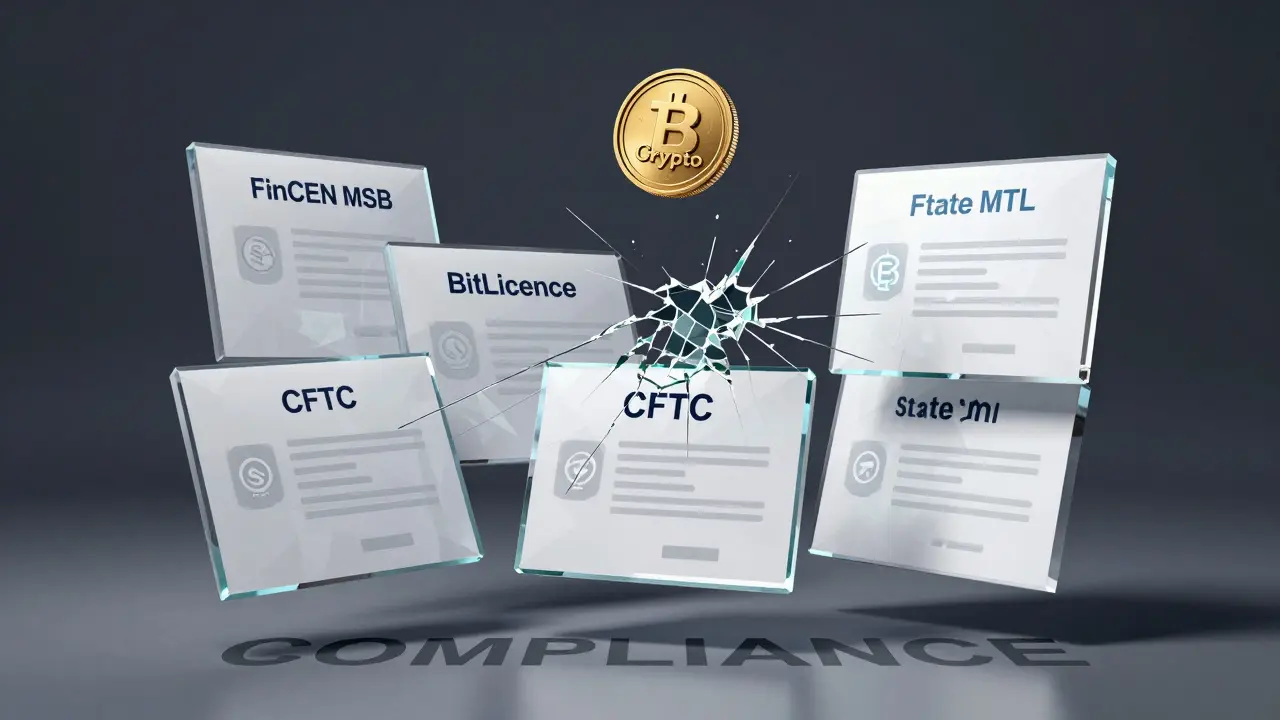
It’s not just FinCEN and state regulators. Other federal agencies have their own rules based on what you’re doing:- SEC steps in if you’re trading tokens they classify as securities - like many DeFi tokens or NFTs tied to profit-sharing. You need to register as a broker-dealer or get an exemption.
- CFTC regulates crypto derivatives - futures, options, swaps. If you’re offering those, you need to register as a futures commission merchant.
- OCC and state banking agencies oversee stablecoin issuers. If you’re backing a coin with U.S. dollars, you’re essentially running a bank.
- FINRA watches any crypto trading platforms that act like brokerages.
That means a single company might need five different licenses just to offer a simple crypto-to-fiat exchange service. One business in Chicago spent two years just figuring out which agencies had jurisdiction over their product. They still got fined for missing one.
What You Need to Apply
Getting licensed isn’t a one-time task. It’s an ongoing compliance marathon. Here’s what most states demand:- Business plan with operational procedures
- Ownership structure and background checks for all principals (including 10%+ owners)
- AML/CFT compliance program - including customer onboarding (KYC), transaction monitoring, and staff training
- Cybersecurity policy - often requiring encryption, multi-factor authentication, and penetration testing
- Financial statements proving you meet capital requirements
- Proof of banking relationships (yes, that’s a hurdle too)
- Surety bond in some states (ranging from $50,000 to $2 million)
- Application fees - $500 in some states, $5,000 in New York
And don’t forget: you’ll need to renew annually, pay renewal fees, submit updated financials, and report any changes in ownership or business model. One company in Florida missed a renewal by three weeks and lost their license - forcing them to shut down operations for six months while reapplying.
Banking: The Hidden Roadblock
Even if you get every license, you still need a bank. And most traditional banks won’t touch crypto firms. They’re scared of regulatory backlash. That’s why 73% of crypto startups struggle to find a banking partner, according to Lawrange’s 2024 survey.The solution? Specialized crypto-friendly banks. Anchorage Digital became the first federally chartered crypto bank in 2021. Others like Silvergate (before its collapse) and Signature Bank (now closed) filled the gap. Today, firms like Evolve Bank & Trust, Synapse, and Mercury serve crypto businesses. But they charge higher fees, require more documentation, and can freeze accounts if they sense risk.
Without a bank, you can’t pay employees, settle trades, or move money. No license matters if you can’t access the financial system.

What’s Changing in 2026?
The system is breaking under its own weight. Congress is finally considering the Money Transmitter Modernization Act, which would create a single federal licensing pathway. If passed, it could cut state-level requirements by 40% and reduce compliance costs by millions.Meanwhile, 23 states introduced crypto-specific laws in 2024. Wyoming, Texas, and Oklahoma are leading the charge with pro-innovation rules. Gartner predicts that by 2026, 65% of U.S. states will have joined interstate compacts to harmonize rules - a big step toward simplification.
But enforcement is tightening. The SEC filed 220% more crypto enforcement actions from 2022 to 2024. FinCEN now says DeFi platforms with centralized control must register as MSBs. That’s a game-changer for many DeFi protocols that thought they were “decentralized enough” to avoid regulation.
Real-World Outcomes
The results are clear. Licensed exchanges control 92% of U.S. trading volume. Unlicensed platforms can’t get banking, can’t attract institutional investors, and are constantly under threat of shutdown. The BitLicense has protected consumers from $2.3 billion in fraud since 2015 - but it also killed dozens of small startups that couldn’t afford the cost.On the flip side, 87 Fortune 500 companies now hold crypto licenses. That’s not a fluke. It’s a signal: if you want to play in the U.S. market long-term, compliance isn’t optional. It’s the price of admission.
How to Get It Right
If you’re starting a crypto business:- Start with FinCEN registration. Do this first. It’s non-negotiable.
- Identify your core activities. Are you moving crypto to fiat? Storing funds? Trading derivatives? Each triggers different rules.
- Target the least restrictive state first. Wyoming or Texas are better starting points than New York or California.
- Don’t try to DIY. Hire a regulatory consultant. Companies that use experts cut application time by 40%.
- Build compliance into your product from day one - not after you get sued.
- Secure a crypto-friendly bank early. It’s harder than you think.
The road is long. The rules change often. But if you treat compliance as part of your product - not a cost center - you’ll outlast the ones who don’t.
Do I need a license if I only trade crypto-to-crypto?
It depends on your state. In most states, pure crypto-to-crypto trading doesn’t require a Money Transmitter License. But you still need to register as an MSB with FinCEN if you’re running a business. Some states like Illinois exempt these platforms entirely, while others like New York still require a BitLicense if you’re facilitating trades for customers. Always check your state’s rules - and don’t assume ‘crypto-only’ means ‘license-free’.
How much does it cost to get licensed?
The total cost ranges from $500,000 to $2 million for a startup aiming to operate nationwide. This includes application fees, legal and compliance consulting, capital reserves, cybersecurity audits, and banking setup. The largest expenses are typically capital requirements (up to $500,000 in New York) and legal fees. Many companies underestimate these costs and run out of cash before approval.
Can I operate without a license if I’m not in the U.S.?
If you’re outside the U.S. but serve U.S. customers, you still need to comply. New York’s BitLicense applies to any business serving New York residents - even if you’re based in Singapore. FinCEN also has jurisdiction over foreign entities conducting transactions in U.S. dollars or involving U.S. persons. Ignoring U.S. rules can lead to asset freezes, banking bans, or criminal charges if you ever enter the country.
How long does the licensing process take?
On average, it takes 8 to 14 months. New York’s BitLicense averages 180+ days, but complex applications can take over a year. States like Wyoming can approve in 90 days. The timeline depends on how complete your application is, whether you have banking lined up, and how responsive you are to regulator requests. Many applicants lose months because they submit incomplete documents.
What happens if I operate without a license?
You risk criminal charges, asset seizures, and permanent bans from U.S. financial systems. The SEC and FinCEN have fined companies millions for unlicensed operations. In 2023, a crypto exchange based in Canada was ordered to pay $12 million after serving U.S. users without a BitLicense. Banks will freeze your accounts. Payment processors will cut you off. Your business can collapse overnight - even if your tech works perfectly.