

Red Flags in Unaudited Crypto Projects: How to Spot Scams and Save Your Money
You see a new decentralized finance (DeFi) protocol promising 10% monthly returns. The website looks slick, the team claims they are ex-Google engineers, and the community on Telegram is buzzing with hype. But there is one glaring detail missing: an audit report. In the world of blockchain, an unaudited project is like buying a house without checking if it has a foundation. It might stand for a year, or it could collapse overnight, taking your investment with it.
As we move through mid-2026, the landscape of unaudited crypto projects is blockchain initiatives that have not undergone independent security verification by third-party firms remains treacherous. While some legitimate startups launch without audits to save costs initially, many malicious actors use this gap to deploy scams. The difference between a risky early-stage project and a outright fraud often lies in specific warning signs-red flags-that any investor can spot if they know where to look.
This guide breaks down the critical indicators you must check before connecting your wallet. We will move beyond generic advice and dive into the technical and behavioral patterns that signal danger. Whether you are a seasoned DeFi user or just dipping your toes into the crypto pool, understanding these signals is your best defense against losing capital.
The Code Doesn't Lie: Technical Red Flags
The most reliable way to assess an unaudited project is to look at its code. You don't need to be a programmer to spot major issues, but you do need to know what to ask for. If a project refuses to share its source code or keeps it private, walk away immediately. Transparency is non-negotiable in trustless systems.
When the code is public, usually hosted on GitHub, look for these specific technical pitfalls:
- No Open Source Repository: If the developers claim the code is proprietary or only available via a compiled bytecode link, they are hiding something. Legitimate open-source projects publish their repositories so anyone can review them.
- Unverified Contracts on Block Explorers: Go to Etherscan (for Ethereum) or Solscan (for Solana). If the contract address shows "Unverified Contract," you cannot read the code yourself. This means the developers haven't submitted the source code to the explorer, making it impossible to verify what the code actually does.
- Ownership Not Renounced: Many unequipped projects keep "ownership" of the smart contract. This allows the developer to pause transactions, change fees, or blacklist addresses. While not always malicious, in an unaudited context, it gives the creator unilateral power over your funds.
- Copied Code with Minor Tweaks: Use tools like SolidityScan or manual comparison to see if the code is identical to known scam templates. Scammers often copy successful contracts and change the token name, leaving backdoors intact.
If you find any of these issues, the risk profile skyrockets. A project that hides its code is effectively asking you to trust them blindly, which defeats the purpose of blockchain technology.
Tokenomics That Don't Make Sense
Even if the code is clean, the economic model might be designed to enrich the creators at your expense. Tokenomics refers to the supply, distribution, and utility of a cryptocurrency. In unaudited projects, bad tokenomics are a common vehicle for "rug pulls," where developers dump their tokens on retail investors.
Ask yourself these questions about the token distribution:
- Who holds the majority? If the top 10 wallets hold more than 30-40% of the total supply, especially if those wallets are linked to the development team, you are vulnerable. They can sell all their tokens at once, crashing the price to zero.
- Are there vesting periods? Vesting locks up team and investor tokens for a set time. If the team's tokens are unlocked immediately upon launch, they have no incentive to build long-term value. They can exit liquidity and leave you holding worthless bags.
- Is the supply infinite? Some tokens have no maximum supply. Without a cap, developers can mint billions of new tokens and sell them, diluting your holdings endlessly. Check if the contract has a `mint` function that is accessible only by the owner.
- High Transaction Taxes: Be wary of tokens with high buy/sell taxes (e.g., 10-20%). Developers often use these fees to funnel money into their personal wallets under the guise of "marketing" or "development."
A healthy tokenomics structure balances incentives for holders, developers, and liquidity providers. If the math favors the creators disproportionately, it is a red flag.
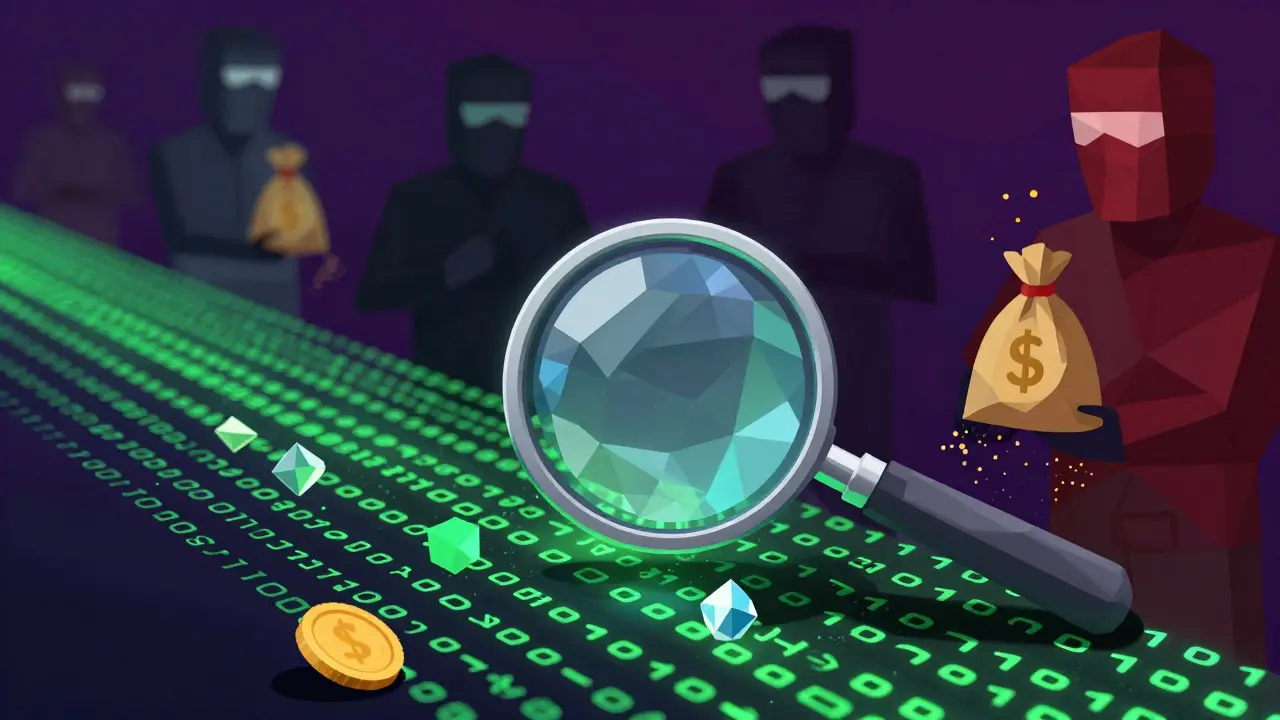
The Team and Community: Ghosts and Bots
In the absence of an audit, the reputation and behavior of the team become crucial proxies for trust. However, anonymity is common in crypto, so you need to dig deeper than just names and photos.
First, check for doxxed identities. Doxxed means the team members have publicly revealed their real identities and professional histories. While not mandatory, anonymous teams in unaudited projects carry higher risk. If they are anonymous, look for their past work. Have they built other successful protocols? Are their LinkedIn profiles consistent with their claims?
Next, examine the community. A genuine community asks hard questions, discusses features, and reports bugs. A fake community consists of bots posting generic hype like "To the moon!" or "Best project ever!" Look for these signs of artificial engagement:
- Telegram/Discord Activity: Join the chat. If everyone joins within minutes of each other, uses similar phrasing, or ignores direct questions from moderators, it is likely bot-driven.
- Social Media Followers vs. Engagement: A Twitter account with 100,000 followers but only 5 likes per post is suspicious. Real communities engage with content.
- Lack of Roadmap Updates: Does the team regularly update progress? Or do they make vague promises about "partnerships" and "mainnet launches" that never materialize?
If the community feels manufactured and the team is unreachable, you are likely dealing with a pump-and-dump scheme rather than a serious project.
Liquidity and Trading Patterns
Liquidity determines how easily you can buy or sell a token without affecting its price. In unaudited projects, liquidity management is a primary attack vector for scammers.
Check the liquidity pool on decentralized exchanges like Uniswap or PancakeSwap. Look for two critical factors:
- Locked Liquidity: Developers should lock their liquidity tokens using a service like Unicrypt or PinkLock. This prevents them from removing the liquidity (the "rug") for a set period. If liquidity is not locked, the developers can withdraw all funds at any time, leaving the token worthless.
- Liquidity-to-Market Cap Ratio: A healthy ratio is typically above 10-20%. If a token has a $1 million market cap but only $10,000 in liquidity, the price is extremely volatile. Large sells will crash the price instantly, trapping smaller investors.
Also, watch for unusual trading patterns. If the volume spikes suddenly without news, followed by a sharp drop, it may indicate wash trading (developers buying and selling to themselves to create fake volume) or a coordinated dump.
Comparison: Audited vs. Unaudited Projects
| Feature | Audited Project | Unaudited Project |
|---|---|---|
| Security Verification | Independent firm reviews code for vulnerabilities | No external verification; relies on developer honesty |
| Code Transparency | Usually open-source and verified on block explorers | May be closed-source or unverified |
| Insurance Options | Often eligible for coverage platforms (e.g., Nexus Mutual) | Rarely insurable due to unknown risk profile |
| Investor Confidence | Higher; attracts institutional and long-term holders | Lower; dominated by speculators and bots |
| Failure Rate | Lower, though not zero (audits catch logic errors, not all hacks) | Significantly higher; prone to rugs and exploits |
While audits are not a guarantee of safety-they can miss novel exploits-they provide a baseline level of due diligence. Unaudited projects lack this safety net, placing the entire burden of verification on the user.
Practical Steps for Due Diligence
If you decide to interact with an unaudited project despite the risks, follow this checklist to minimize exposure:
- Use a Burner Wallet: Never connect your main wallet containing significant assets to unaudited sites. Create a separate wallet with only the amount you are willing to lose.
- Revoke Permissions: After interacting, use tools like Revoke.cash to remove any unlimited approval allowances granted to the contract. This prevents future drains if the contract is compromised later.
- Start Small: Invest a minimal amount first. Monitor the project for a few weeks. If things look stable, consider increasing your position gradually.
- Check Multiple Sources: Don't rely on the project's website alone. Search for discussions on Reddit, Twitter, and specialized forums. Look for negative reviews or warnings.
- Verify Links: Phishing attacks are rampant. Always double-check URLs. Bookmark official links from reputable aggregators like CoinGecko or CoinMarketCap, and avoid clicking ads.
Remember, in crypto, you are your own bank. This freedom comes with responsibility. Ignoring red flags because of FOMO (Fear Of Missing Out) is the fastest way to lose money.
Can an unaudited project be safe?
Yes, but it carries significantly higher risk. Some legitimate projects launch without audits to reduce initial costs or iterate quickly. However, safety depends entirely on the integrity of the developers and the robustness of their code. Without an audit, you have no independent verification, making it harder to distinguish between a risky startup and a scam.
What is a "rug pull" in crypto?
A rug pull occurs when developers abandon a project and take the invested funds with them. This is often done by removing liquidity from the trading pool, causing the token price to drop to near zero. Investors are left with worthless tokens that cannot be sold. Unaudited projects with unlocked liquidity are prime targets for rug pulls.
How do I check if a smart contract is verified?
Go to a block explorer like Etherscan for Ethereum-based tokens. Enter the contract address. If the code tab shows "Contract Code" and "Read/Write Contract" buttons, it is verified. If it says "Unverified Contract," the source code has not been published, and you cannot inspect it for safety.
Why is locked liquidity important?
Locked liquidity ensures that the developers cannot withdraw the funds backing the token's tradeability. If liquidity is not locked, developers can remove it at any time, destroying the token's value. Locking services like Unicrypt or PinkLock bind these funds for a predetermined period, providing security for investors.
Should I invest in anonymous team projects?
Proceed with extreme caution. While some respected projects have anonymous teams, the majority of scams do as well. If the team is anonymous, ensure the code is open-source, liquidity is locked, and the community is organic. Never invest more than you can afford to lose in such projects.





15 Comments
Mekz Wheoki
June 24, 2026 at 01:47
Oh look, another guide telling people to check the code. Because clearly, the average retail investor knows how to read Solidity and spot a hidden mint function in a sea of obfuscated bytecode.
Spare me the lecture on 'transparency' when the entire industry is built on vaporware and hope. If you're dumb enough to ape into an unaudited token promising 10% monthly returns, you deserve to get rugged. It's not a scam if you knew the risk and took it anyway.
Manish Prajapat
June 24, 2026 at 23:19
I think the point about open-source repositories is crucial here. It's not just about reading the code yourself, but knowing that others can verify it too. The idea of a 'trustless' system falls apart completely if the foundation isn't visible. I've seen too many projects claim they are working on audits while secretly deploying malicious contracts. Transparency really is the only currency that matters in this space.
Skm Shubham
June 25, 2026 at 02:04
This article is basic stuff for anyone who has been in crypto for more than six months. The real issue isn't that people don't know these red flags exist; it's that greed overrides logic every single time. You can write all the guides you want, but FOMO is a stronger drug than any security warning. Most of these victims are idiots who clicked a link on Twitter because someone with a fake profile picture told them to. Don't blame the scammers for being smart; blame the investors for being stupid.
John Doe
June 25, 2026 at 06:28
It is absolutely terrifying how easy it is to lose everything in this ecosystem. I remember losing half my portfolio in one of those early DeFi summer rugs back in 2021. The pain was visceral, like watching your savings burn in slow motion. This guide is a lifeline for newcomers who have no idea what they are stepping into. Please, everyone, use a burner wallet. I cannot stress this enough. Your main wallet should never touch these sketchy contracts. Protect your peace of mind.
Rob Aronson
June 26, 2026 at 10:22
Great breakdown of the technical aspects! 🛡️ One thing I'd add regarding the 'Ownership Not Renounced' point: sometimes legitimate projects keep ownership for emergency pause functions during critical exploits. However, the key is whether there is a multi-sig governance structure or a timelock. If it's a single EOA (Externally Owned Account) holding ownership, that is indeed a massive centralization vector. Always check the contract modifiers for `onlyOwner` functions and see what they actually do. 🔍💎
Kwon Bill
June 27, 2026 at 05:30
In the broader context of global financial systems, the lack of regulatory oversight in unaudited crypto projects mirrors the wild west era of banking before the Glass-Steagall Act. We are essentially participating in a decentralized experiment where the market discipline is supposed to replace government regulation. However, as we see with these rug pulls, the information asymmetry between developers and retail investors is too high for efficient market pricing. We need standardized disclosure protocols, similar to SEC filings, even for decentralized entities. Until then, due diligence is the only shield we have against systemic fraud.
Danna Charris
June 29, 2026 at 00:51
Please stop pretending that anonymous teams are some sort of noble ideal. They are almost always scams. Real builders put their names on their work. If you are too scared to show your face, you probably have something to hide. I stick to blue-chip assets and verified protocols. The rest is noise.
Mauricio Contreras Loredo
June 29, 2026 at 21:47
Haha, yeah, good luck finding a team that doesn't vanish once the liquidity hits $1M. But hey, at least you get to feel like a genius trader for five minutes before you realize you're holding a bag of worthless pixels. Keep aping in, folks! The casino loves you! 🎲📉
dan kaffeman
July 1, 2026 at 21:40
This is exactly why America needs to ban this garbage crypto nonsense. These scammers are destroying our economy and stealing from hardworking citizens. It's a disgrace that we allow these foreign criminals to operate on our servers. We need strict laws, immediate jail time for anyone involved in a rug pull, and a complete shutdown of unregulated exchanges. Stop enabling this behavior!
Meg Gran
July 2, 2026 at 15:26
uuhh honestly most of us dont even care bout the code wtf. its all just green candles or red candles. i lost money cause i trusted a guy on telegram who said he had insider info. now im broke and angry. why do ppl lie so much? its sick. u cant trust anyone online anymore. its a jungle out there. 😤
Alexander DeVries
July 4, 2026 at 06:30
While the emotional response to losses is understandable, we must maintain a disciplined approach to risk management. The checklist provided in the article is comprehensive and adheres to best practices for cybersecurity and financial prudence. I encourage all participants to adopt a formalized strategy for wallet hygiene and contract verification. Success in this domain requires rigorous adherence to protocol, not impulsive decision-making. Stay focused and secure your assets.
Mark Corpuz
July 4, 2026 at 22:54
The distinction between audited and unaudited projects is often overstated by beginners. Audits are not guarantees; they are merely snapshots in time. Many audited projects have still suffered catastrophic breaches due to novel attack vectors that were not covered in the audit scope. Therefore, while checking for an audit is a reasonable first step, it should not be the sole determinant of safety. Continuous monitoring and community vigilance are equally important components of a robust security posture.
Steven Jacobowitz
July 5, 2026 at 04:57
I totally agree with the part about checking the tokenomics. It's crazy how many projects have infinite supply and then dump on everyone. I once bought a token that looked great on paper, but then I noticed the dev wallet held 40% of the supply. I sold immediately and watched it crash ten minutes later. Smart move, right? Yeah, definitely. Now I always check Dextools before buying anything. It saves so much headache. What tools do you guys use to check wallet holdings?
Yogendra Dwivedi
July 5, 2026 at 22:47
This is a very helpful summary for those of us who are new to the space. The section on locked liquidity was particularly enlightening. I had no idea that developers could simply withdraw the liquidity unless it was locked through a third-party service. Thank you for breaking down these complex concepts into understandable terms. It gives me more confidence to explore DeFi safely, provided I follow these guidelines strictly.
Sylvia Mossman
July 7, 2026 at 20:33
You know what? Everyone here is acting like audits make things safe. They don't. Auditors are often paid off or just incompetent. I've seen audited projects get hacked within hours of launch. The whole concept of 'security' in crypto is a myth sold to retail investors to keep them complacent. The only safe project is the one you don't invest in. But sure, keep checking your Etherscan pages like it's going to save you from the inevitable collapse of this entire Ponzi scheme.