
Russia's Crypto Banking Ban: Bitcoin Trading Workarounds and Alternatives
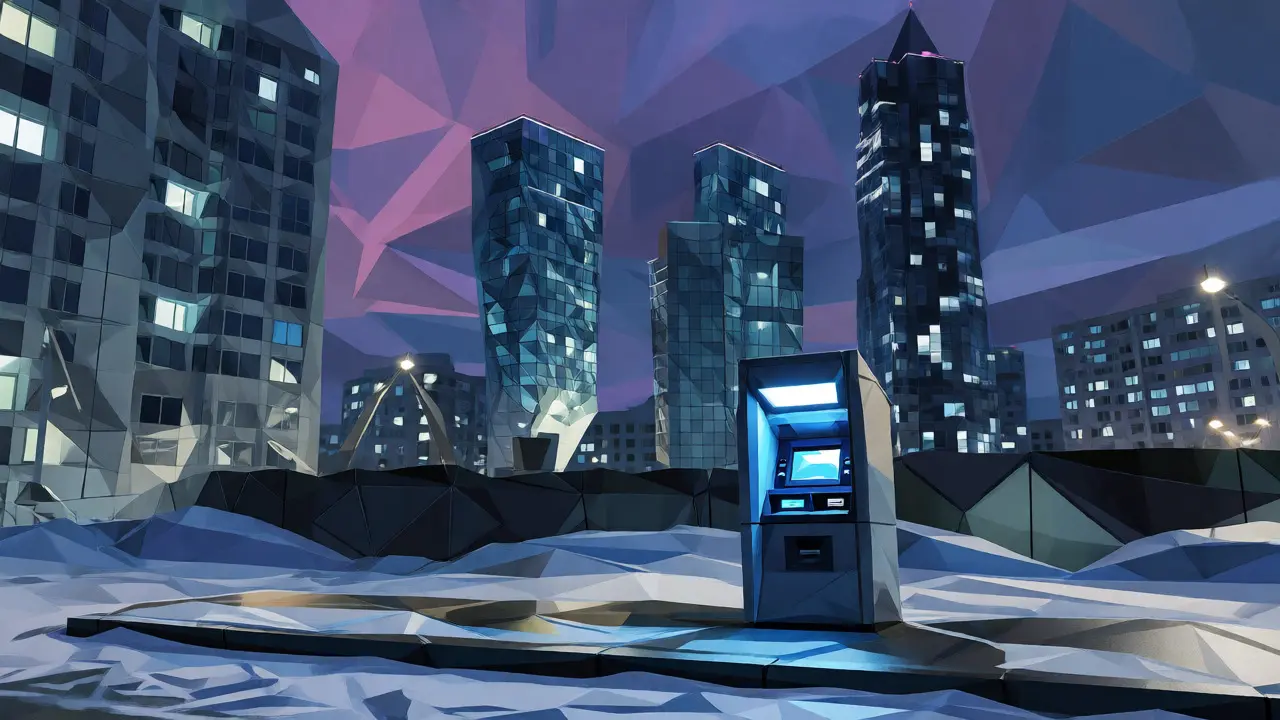
Imagine trying to buy a car with cash, but your bank freezes your account because you withdrew more than $600 in two days. That is the reality for many Russian cryptocurrency traders right now. Since September 1, 2025, new rules have hit the banking sector hard, limiting daily ATM withdrawals to 50,000 rubles (roughly $600) when banks spot suspicious activity. For people who trade Bitcoin or other digital assets using cash-heavy methods, this feels less like regulation and more like a wall.
You might wonder why this matters if you are just holding coins in a wallet. It matters because getting money out of the traditional system to buy those coins, or taking profits back into fiat currency, has become a logistical nightmare. The Central Bank of Russia (CBR) introduced these measures to fight fraud, citing over 273,000 fraud cases in just one quarter of 2025. But the side effect? A chokehold on the peer-to-peer (P2P) markets that many Russians rely on to bypass strict local exchange regulations.
| Restriction Type | Limit/Rule | Impact on Crypto Traders |
|---|---|---|
| ATM Cash Withdrawal | 50,000 RUB ($600) per 48 hours if flagged | Severely limits liquidity for P2P cash trades. |
| Qualified Investor Threshold | Portfolio >100M RUB; Income >50M RUB | Retail investors excluded from official experimental regime. |
| Mining Regions | Banned in 10 of 46 regions since Jan 2025 | Miners face difficulty liquidating earnings locally. |
| Domestic Payments | Prohibited for goods/services | Crypto cannot be used for daily purchases directly. |
Why Banks Are Flagging Your Transactions
The new monitoring system isn't just about big numbers. It looks at behavior patterns. If you suddenly change your phone number linked to mobile banking, or if you withdraw cash within 24 hours of taking out a loan, the algorithm gets nervous. It also watches for inter-account transfers exceeding 200,000 rubles. For a crypto trader, these actions are routine. You might move funds between exchanges, top up a card for online purchases, or rotate capital quickly. Under the old rules, this was fine. Now, it triggers a 48-hour freeze on large cash withdrawals.
This creates a specific problem for the "cash-out" phase of trading. Many small exchange offices in Moscow and St. Petersburg operate by handing over physical rubles for digital assets. If your buyer can only withdraw $600 at a time, they can't pay you $5,000 in one go. They have to wait, or split the transaction across multiple days and multiple people. This friction slows down the market and pushes more activity underground or offshore.
The Qualified Investor Barrier
While retail traders struggle with ATM limits, there is an official path for the wealthy. Russia established an experimental legal regime for qualified investors. To qualify, you need an investment portfolio worth more than 100 million rubles and an annual income surpassing 50 million rubles. This is a high bar. It effectively separates the market into two tiers: a regulated, institutional-friendly layer for the rich, and a gray zone for everyone else.
Digital Financial Assets (DFA) are the term used in this legal framework. Unlike fully decentralized cryptocurrencies, DFAs often involve centralized issuers and stricter reporting. The government encourages this model because it allows them to track ownership and tax revenue. However, for the average person wanting to buy Bitcoin on Binance or Bybit, this regulatory sandbox offers little help. It confirms that the state prefers controlled digital assets over free-market crypto circulation.

Workarounds: How Traders Are Adapting
So, how do you trade Bitcoin in Russia today without losing your mind? Several strategies have emerged among active traders:
- Leveraging Foreign Exchanges: There is no explicit law banning Russians from owning crypto or using foreign platforms. Most traders keep their primary holdings on international exchanges like Binance, Bybit, or OKX. They fund these accounts via cards or external wallets, avoiding the domestic banking bottleneck until the final cash-out stage.
- P2P Platform Optimization: On P2P networks, users are splitting large orders into smaller chunks. Instead of one $5,000 trade, you might see ten $500 trades. This keeps each individual transfer below the threshold that triggers aggressive bank monitoring. Some users also use different family members' accounts to spread the load, though banks are getting smarter at linking these related profiles.
- Stablecoin Bridges: Converting Bitcoin to USDT (Tether) or USDC helps. These stablecoins are easier to move between exchanges and often have better liquidity on P2P platforms. Traders convert BTC to USDT, then sell USDT for rubles in smaller, manageable batches that don't trigger the 50,000 ruble panic button.
- Physical Asset Swaps: In some circles, direct swaps of goods for crypto are gaining traction. Instead of converting crypto to rubles and then buying a laptop, some traders find sellers willing to accept crypto directly for high-value items. This bypasses the banking system entirely, though it requires finding a counterparty willing to take the volatility risk.
The Mining Dilemma
If you mine Bitcoin, the situation is even tighter. As of January 1, 2025, mining is banned in 10 out of 46 Russian regions. This includes key areas where energy costs were previously low. Miners who continue operating must find ways to monetize their output without drawing attention. Previously, many sold mined coins directly to local buyers for cash. Now, those buyers face the same withdrawal limits.
Industry experts like Evgeny Masharov suggest a solution: a dedicated crypto bank. He argues that creating a specialized banking institution, similar to models seen in Belarus, could bring shadow transactions into the light. Such a bank would handle crypto-to-fiat conversions with specific compliance protocols designed for miners and traders, rather than applying generic anti-fraud rules meant for pensioners withdrawing grocery money. Until such infrastructure exists, miners are forced to rely on international sales or hold their coins, betting on future price appreciation rather than immediate cash flow.
Global Context: Russia's Falling Adoption Rank
It is worth noting that Russia's position in the global crypto scene has shifted. According to Chainalysis, Russia dropped from 7th place in the Global Adoption Index in 2024 to outside the top 10 in 2025. This decline happened despite increased usage during the sanctions era starting in 2022. Why? Because while demand remained, the ability to easily transact diminished due to these very restrictions.
Ukraine, facing its own wartime challenges, also saw a drop in rankings. This regional trend highlights a broader truth: geopolitical instability drives interest in crypto as a store of value, but restrictive financial policies hinder its utility as a medium of exchange. For Russian citizens, crypto remains a hedge against inflation and ruble devaluation, but it is becoming harder to use it practically in daily life.
What Comes Next?
The current experimental regime is set to run through 2025, with potential modifications based on how well it curbs fraud. The Finance Ministry has hinted at easing entry requirements, recognizing that stifling adoption hurts the economy. Meanwhile, the Central Bank remains stubborn, opposing free circulation of decentralized currencies for domestic payments.
If you are planning to trade crypto in Russia, expect more scrutiny, not less. Keep detailed records of all transactions. Be prepared to explain sudden spikes in activity to your bank. And consider diversifying your exit strategies-don't rely on a single ATM or a single P2P partner. The landscape is shifting toward state-controlled infrastructure, so staying flexible is your best defense.
Is it illegal to own Bitcoin in Russia?
No, owning Bitcoin is not illegal. Russian citizens can acquire and hold cryptocurrencies. However, using them for domestic payments (buying coffee or clothes) is prohibited, and selling them involves navigating complex banking restrictions.
How does the 50,000 ruble withdrawal limit work?
The limit applies to ATM cash withdrawals over a 48-hour period if the bank flags your account for suspicious activity. It is not a blanket cap for everyone, but a targeted measure triggered by unusual patterns like rapid changes in contact info or large transfers after loans.
Can I use foreign exchanges like Binance?
Yes, there is no explicit ban on using foreign platforms. Most Russian traders use international exchanges to buy and hold crypto. The challenge arises when transferring fiat currency to/from these platforms due to domestic banking controls.
What is a Digital Financial Asset (DFA)?
A DFA is a digital right issued on a blockchain platform, recognized under Russian law. Unlike pure cryptocurrencies like Bitcoin, DFAs often have a known issuer and are subject to stricter reporting, primarily available to qualified investors.
Are crypto miners allowed everywhere in Russia?
No. As of 2025, mining is restricted in 10 out of 46 regions. Miners in permitted zones still face difficulties cashing out their earnings due to the general banking restrictions on large cash transactions.