Stealth Addresses Explained: How Privacy Coins Like Monero Hide Your Identity
Imagine sending money to a friend without anyone knowing who they are. On most blockchains, that’s impossible. Every transaction is public, linked to a permanent wallet address. But stealth addresses are cryptographic tools that generate unique, one-time receiving addresses for every transaction, breaking the link between your identity and your funds. This technology is the backbone of recipient privacy in coins like Monero (XMR).
If you’ve ever worried about your financial history being visible on a public ledger, stealth addresses offer a solution. They don’t just hide amounts or senders-they specifically mask *who* received the payment. Let’s look at how this works under the hood, why it matters, and what trade-offs you face when using it.
How Stealth Addresses Work
At their core, stealth addresses solve a simple problem: standard cryptocurrency addresses are static. If you share your Bitcoin address with one person, everyone else sees it too. Over time, all those transactions cluster around that single point, creating a map of your life.
Stealth addresses change this by generating a new, random address for each incoming payment. Here is the process:
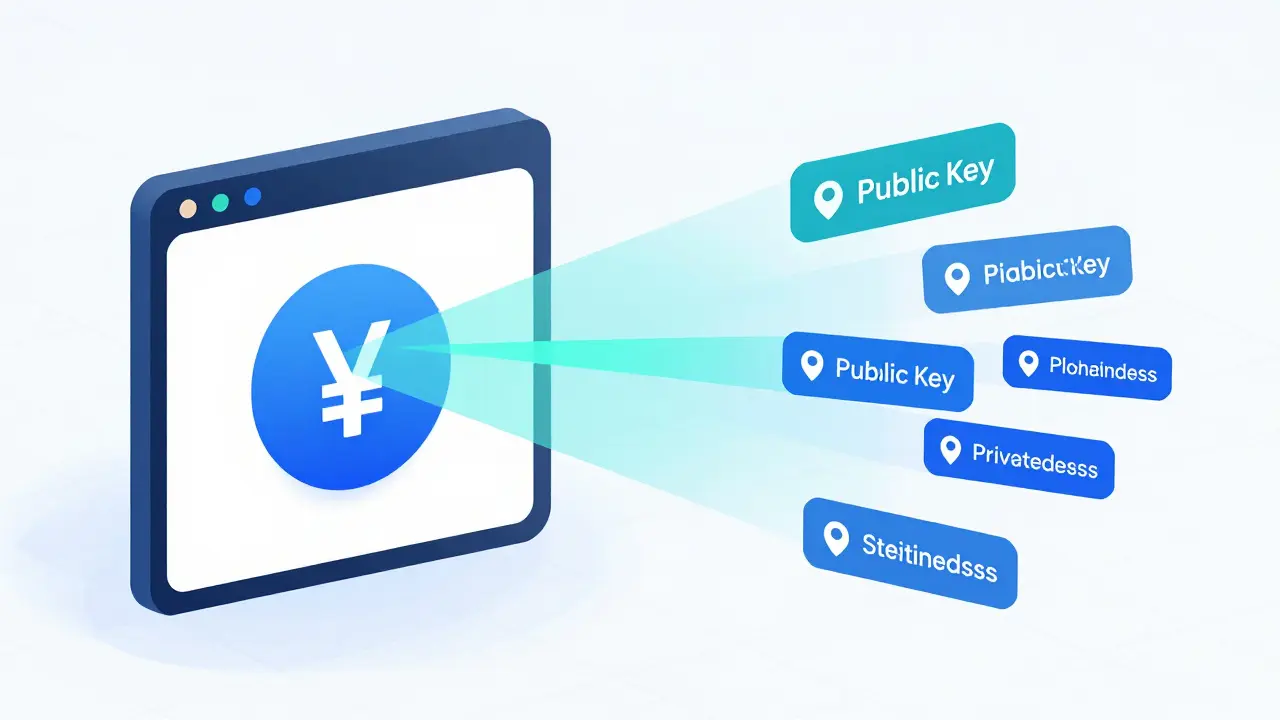
- The recipient generates two keys: a public key (A) and a secret private key (B). Only A is shared publicly.
- The sender takes the recipient’s public key (A) and combines it with a random number (r) using elliptic curve cryptography.
- This calculation creates a unique "one-time" address (P) that exists only for that specific transaction.
- The sender sends funds to P. No one can tell which public address generated P except the recipient.
The recipient scans the blockchain for outputs matching their secret key B. When they find a match, they know the funds belong to them. To an outside observer, however, the transaction looks like noise-just another transfer to an unknown address.
| Component | Function | Visibility |
|---|---|---|
| Public Key (A) | Shared with senders to create unique addresses | Public |
| Private Key (B) | Used to scan blockchain for incoming funds | Secret |
| Random Number (r) | Ensures each address is unique | Sender-only |
| One-Time Address (P) | Receives the actual funds | On-Chain |
Monero vs. Zcash vs. Dash: A Privacy Comparison
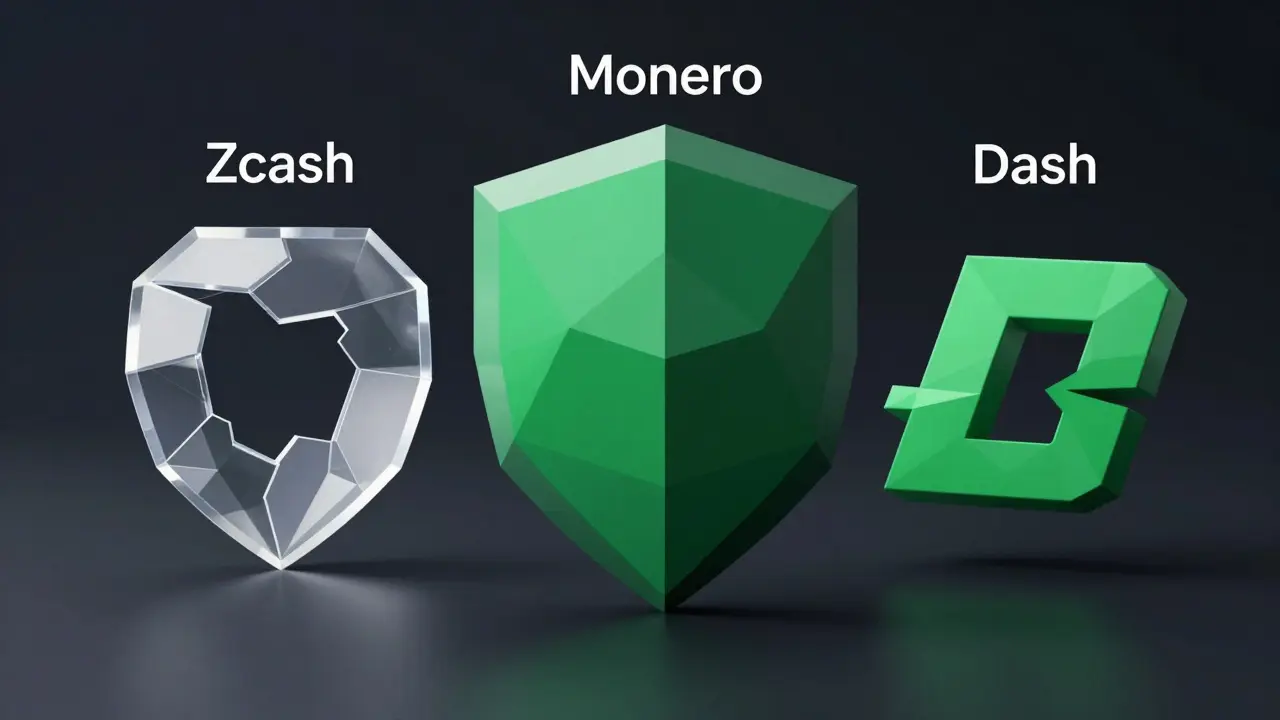
Not all privacy coins use stealth addresses. In fact, Monero is the leading cryptocurrency that mandates stealth addresses for every transaction. Other projects take different approaches, often with weaker guarantees.
Zcash uses zk-SNARKs (zero-knowledge proofs) to hide transaction details entirely. However, privacy is optional. As of late 2023, only about 3.5% of Zcash transactions used its shielded pools. Most users stick to transparent addresses, making tracing easier.
Dash relies on PrivateSend, a coin-mixing service. It doesn’t use stealth addresses. Instead, it shuffles coins between users to obscure origins. Studies have shown that up to 87% of Dash PrivateSend transactions can be traced back to their source, offering significantly less protection than Monero’s default setup.
Monero’s approach is comprehensive. It combines stealth addresses with ring signatures (to hide the sender) and RingCT (to hide the amount). Research from the University of Edinburgh found that only 12% of Monero transactions could be partially traced using advanced analytics, compared to 65% for Zcash and 98% for Dash.
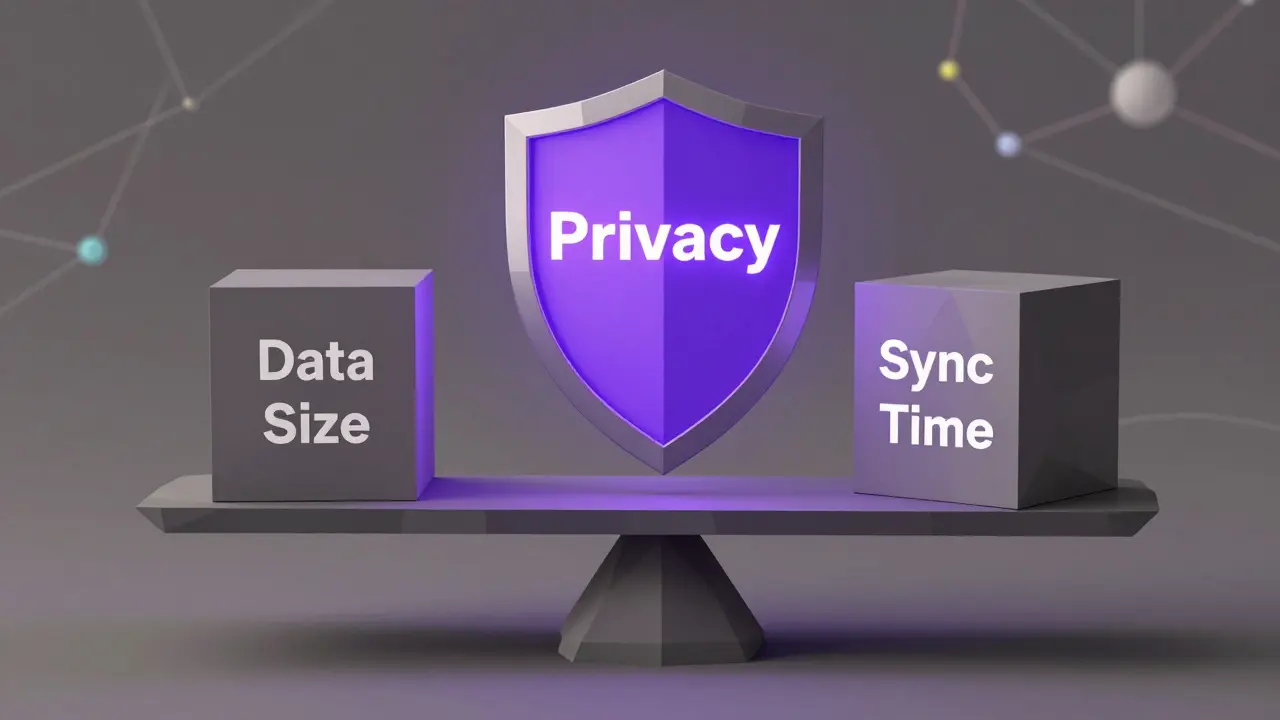
The Trade-Offs: Size, Speed, and Complexity
Privacy isn’t free. Stealth addresses introduce computational overhead and increase data storage requirements. Here is what you need to know before switching:
- Transaction Size: Monero transactions average 13.2KB, while Bitcoin transactions are often under 250 bytes. This is because stealth addresses require additional cryptographic data to be stored on-chain.
- Verification Time: Verifying a Monero block takes roughly 1.8 seconds, compared to 0.3 seconds for Bitcoin. The extra math slows down network propagation slightly.
- Wallet Sync: Because your wallet must scan the entire blockchain for potential matches to your secret key, syncing a new Monero wallet can take hours or even days on slower hardware.
These factors make stealth addresses less ideal for microtransactions where fees become prohibitive relative to the value sent. For example, sending $1 worth of Monero might incur fees that feel high compared to Bitcoin Lightning Network transfers. However, for larger payments or sensitive business dealings, the privacy premium is often worth the cost.
Regulatory Pressure and Future Viability
The landscape for privacy coins is shifting. Regulatory bodies like the Financial Action Task Force (FATF) have flagged technologies like stealth addresses as challenges for anti-money laundering (AML) compliance. In the EU, the implementation of MiCA regulations in mid-2023 led to a 22% drop in privacy coin transactions as exchanges delisted certain assets.
Despite this, demand remains strong. Adoption grew 17% year-over-year globally, with significant increases in Southeast Asia. Enterprise use cases, such as confidential B2B payments and journalist funding, continue to drive interest. Gartner rated Monero’s stealth address technology as "high viability," citing its robust developer community and proven technical effectiveness.
Looking ahead, Monero is preparing for quantum threats. Its roadmap includes lattice-based cryptography upgrades to protect against future quantum computing attacks that could break current elliptic curve encryption. This proactive stance suggests stealth addresses will remain relevant, even as regulatory scrutiny intensifies.
Getting Started with Stealth Addresses
You don’t need to be a cryptographer to use stealth addresses. Most modern wallets handle the complexity automatically.
- Choose a Wallet: Use official software like the Monero GUI or mobile apps like Cake Wallet. Avoid custodial services if maximum privacy is your goal.
- Generate Keys: Upon creation, your wallet automatically generates the necessary public and private view/spend keys. Keep your mnemonic seed phrase secure-it controls access to all derived stealth addresses.
- Share Your Address: Send your primary public address to anyone paying you. They will never see the underlying stealth address; the wallet handles the conversion.
- Use View Keys: If you need to prove receipt of payment without revealing your full balance, share your private view key. This allows the payer to verify the transaction on-chain without exposing other parts of your history.
The learning curve is moderate. Most users report grasping the basics within 20 minutes. Community resources, including Monero’s 147-page official guide and active forums, provide support for troubleshooting common issues like wallet sync delays or key management errors.
Are stealth addresses legal?
Yes, using stealth addresses is generally legal in most jurisdictions. However, regulatory bodies may scrutinize privacy coins more heavily. Always comply with local tax reporting requirements, as owning private currency does not exempt you from declaring income or capital gains.
Can stealth addresses be hacked?
The cryptography behind stealth addresses (Curve25519) is considered secure against brute-force attacks with current technology. Risks primarily come from user error, such as losing seed phrases or downloading malware-infected wallets, rather than flaws in the stealth address protocol itself.
Do stealth addresses hide transaction amounts?
No. Stealth addresses only hide the recipient's identity. To conceal the amount transferred, you need Ring Confidential Transactions (RingCT), which Monero implements alongside stealth addresses. Without RingCT, the value would still be visible on the blockchain.
Why is my Monero wallet taking so long to sync?
Because stealth addresses require scanning the entire blockchain for potential matches to your private keys, initial synchronization can be slow. This is normal behavior. Using a light node or trusted remote node can speed up the process significantly.
Can I use stealth addresses on Ethereum?
Not natively. Ethereum’s architecture is designed for transparency and smart contract execution. While some layer-2 solutions or sidechains experiment with privacy features, standard Ethereum transactions do not support stealth addresses without significant off-chain modifications.