

Swiss Bank Cryptocurrency Services and Custody: A Guide to Regulated Digital Assets
Key Takeaways
- Switzerland uses technology-neutral laws, applying existing financial rules to digital assets.
- Top players like Sygnum, Amina, and Bitcoin Suisse provide institutional-grade custody and trading.
- Security is a priority, with specialized vaults protecting against everything from hackers to electromagnetic pulses.
- Institutional demand is high, as seen by the massive volume spikes when new tokens like SUI are listed.
- Strict KYC and AML compliance make these services a safe harbor for professional investors.
The Secret to Swiss Regulatory Success
What makes Switzerland different? It's not just the secrecy-though that's part of the brand. It's the philosophy of the FINMA is the Swiss Financial Market Supervisory Authority, the regulatory body responsible for overseeing banks, insurance companies, and stock exchanges in Switzerland. Instead of scrambling to write brand-new 'Crypto Laws' that would be outdated by the time the ink dried, FINMA adopted a technology-neutral stance over five years ago.
This means that if a digital asset behaves like a payment tool, it's treated like a payment tool. If it behaves like a security, the security laws apply. This clarity gave banks the confidence to innovate without fearing a sudden regulatory crackdown. Contrast this with the US, where regulators spent 2025 simply reiterating that banks must be 'safe and sound,' while the Swiss were already executing high-level custodial strategies.
Institutional Custody: Beyond the Cold Wallet
For a retail investor, a hardware wallet is usually enough. But for a hedge fund or a corporation, the risk profile is different. You aren't just worried about losing a seed phrase; you're worried about systemic failure and sophisticated cyber warfare. This is where Bitcoin Suisse is a leading Swiss financial service provider specializing in cryptocurrency and digital asset services for institutional and private clients steps in with its specialized vaulting systems.
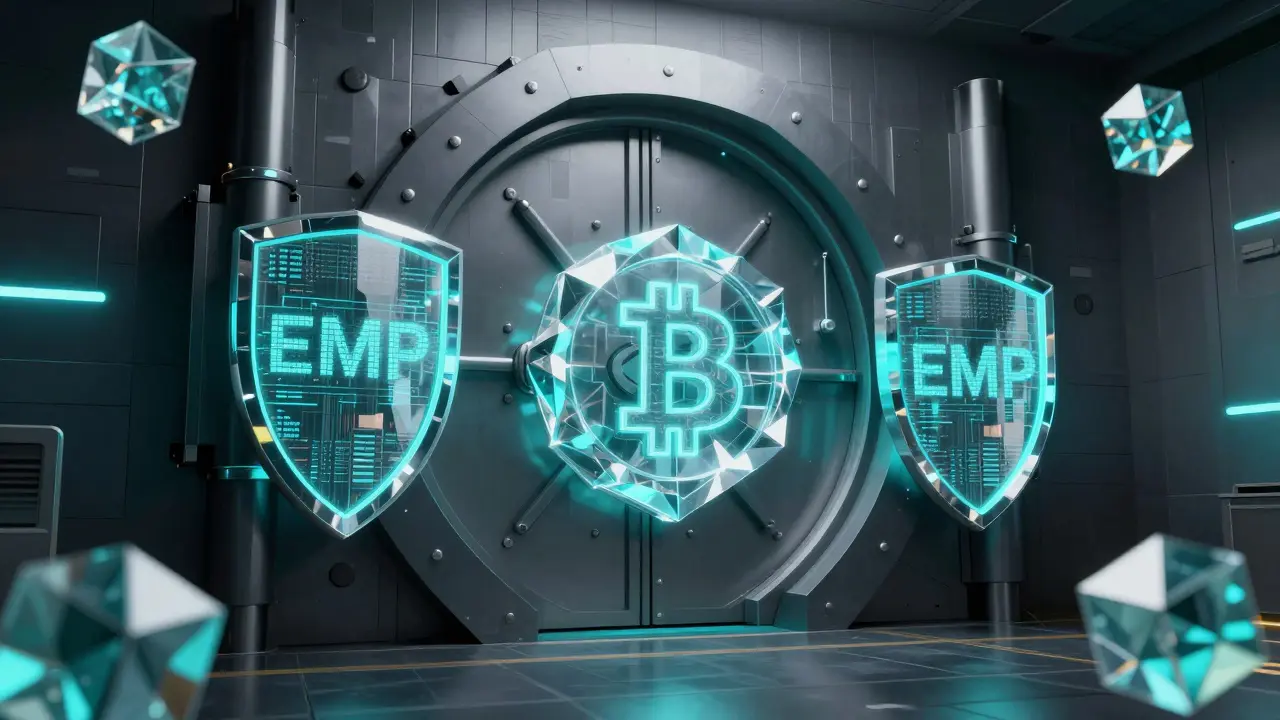
Their approach to Swiss bank cryptocurrency services isn't just about software. They use a combination of cryptographic security and physical barriers. Their vaults are designed to survive an electromagnetic pulse (EMP), and keys never leave Swiss soil. This physical and digital redundancy ensures that assets are protected against unauthorized payments and hardware malfunctions alike.
| Institution | Core Focus | Key Features | Target Audience |
|---|---|---|---|
| Sygnum Bank | Digital Asset Banking | Trading, Lending, SUI Token Support | Institutional/Professional |
| Amina Bank | Crypto-Native Banking | SUI Trading, Stablecoin Rewards | Startups, Scale-ups, Individuals |
| Bitcoin Suisse | Institutional Custody | Proprietary Vault, 40+ Blockchains | High Net Worth, Institutions |
| Swissquote | Online Wealth Management | Integrated Trading, Retail Access | Retail and Private Investors |
Expanding the Ecosystem: The Case of the SUI Token
To see how these banks actually operate in real-time, look at the events of August 2025. When Sygnum Bank is a digital asset bank that provides a regulated bridge between traditional finance and the crypto economy and Amina Bank is a regulated Swiss bank providing comprehensive cryptocurrency services including custody, trading, and lending announced support for the SUI token, the market reacted instantly. This wasn't just a retail pump; it was a flood of institutional capital.
Trading volume leaped from a daily average of 14.31 million tokens to a staggering 36.45 million. Why? Because professional investors can't just send millions of dollars to a random exchange. They need a regulated entity that provides custody and lending capabilities. The ability to borrow against SUI or hold it in a FINMA-regulated account gave buyers the confidence to defend the $3.72 support zone, eventually pushing the price up to $3.82.
The Compliance Engine: KYC and AML
If you're expecting the anonymity of a mixer or a privacy coin, you're in the wrong place. Swiss crypto banks are some of the strictest environments in the world. Every account is backed by rigorous Know Your Customer (KYC) and Anti-Money Laundering (AML) protocols.
They don't just check your ID; they verify the source of wealth for every single satoshi. Furthermore, they comply with the General Data Protection Regulation (GDPR) to ensure that while the government knows the money is clean, your personal data remains handled with European-standard privacy. This balance of transparency for the regulator and privacy for the client is a hallmark of the Swiss system.

Practical Services: Trading, Staking, and Lending
Beyond just holding assets, these banks have evolved into full-service financial hubs. Staking is a prime example. Instead of risking your keys on a decentralized validator, you can use a bank to stake major blockchains like ETH, SOL, and DOT. You get the rewards, and the bank handles the technical risk and governance voting.
For those running businesses, Amina Bank offers specialized packages for startups and scale-ups. They've even introduced stablecoin reward programs for those holding USDC or EURC. It's an attempt to bridge the gap between a traditional corporate bank account and a crypto wallet, allowing a CEO to manage their payroll and their treasury in one place.
Navigating the Path to a Swiss Account
Getting into these institutions isn't as simple as downloading an app. There's a process. First, you'll need to determine if you fit their target persona-most are looking for professional investors or corporate entities. Second, prepare a comprehensive dossier of your wealth origin.
Once you're inside, you can choose between different levels of access. Some prefer 24/7 self-service via mobile apps for quick trades, while others utilize FIX and REST APIs for low-latency, algorithmic trading. The goal is a 'single access point' where your gold, stocks, and Bitcoin all sit on one balance sheet.
Is cryptocurrency in a Swiss bank really safer than a hardware wallet?
For institutions, yes. While a hardware wallet protects against online theft, it doesn't protect against physical loss, death of the key holder, or EMPs. Swiss banks like Bitcoin Suisse provide redundant backups and physical security that a home safe cannot match, along with regulatory insurance and oversight.
Which Swiss banks are the best for institutional investors?
Sygnum and Amina Bank are highly regarded for their agility and support for new tokens (like SUI). Bitcoin Suisse is often the top choice for those prioritizing high-security, long-term custody. Swissquote is excellent for those who want a mix of traditional brokerage and crypto.
Do Swiss banks charge high fees for crypto custody?
Generally, yes. You are paying for the regulatory umbrella and the physical security. Fees typically include a monthly custody fee and a percentage of assets under management (AUM), which is significantly higher than a free self-custody wallet but lower than the cost of a catastrophic hack.
What is 'technology-neutral legislation' in the context of FINMA?
It means the law focuses on the function of the financial product rather than the technology used to create it. If a token acts like a share of a company, it's regulated under the laws for shares, regardless of whether it's on a blockchain or a piece of paper.
Can I open a Swiss crypto account from outside Switzerland?
Yes, many of these banks accept international clients, provided they meet the strict KYC and AML requirements. However, the onboarding process is much more intensive than a typical exchange and may require proof of residency and extensive wealth documentation.
Next Steps and Troubleshooting
If you're ready to move your assets into a regulated Swiss environment, start by auditing your own records. Ensure every major transfer in your history is documented; if you can't prove where your Bitcoin came from in 2017, a Swiss bank may reject your application.
For those experiencing delays in onboarding, remember that the 'slow' process is exactly why the system is secure. If you find the requirements too stringent for your current stage, consider starting with a more retail-friendly option like Swissquote before moving into the institutional vaults of Sygnum or Bitcoin Suisse.




21 Comments
Joshua Aldrich
April 7, 2026 at 18:17
basically just a fancy way to saye you're paying someone else to hold your keys... but i guess for the big money guys, the peace of mind is worth the fee. tho i still think cold storage in a physical safe is the only real way to sleep at night lol
Trish Swanson
April 9, 2026 at 13:30
EMP proof vaults!!! That's actually wild...!!!
Earnest Mudzengi
April 10, 2026 at 23:41
Wake up people! You think giving your keys to a 'regulated' bank in Switzerland is safe? That's just centralized honeypot 101. They'll use the AML laws to freeze your assets the second the globalist agenda shifts. The whole 'technology-neutral' bit is just a smokescreen for total surveillance of your satoshis. Not your keys, not your coins, period!
Hugo Lopez
April 12, 2026 at 09:25
I really appreciate the breakdown of the different banks! 🚀 It's great to see a country actually figuring out the regulatory side of things instead of just banning everything. 🇨🇭✨
Adriana Gurau
April 12, 2026 at 11:05
Imagine thinking a bank is a revolutionary move for crypto... 🙄 so basic. 💅
shubhu patel
April 13, 2026 at 09:21
It is quite fascinating to see how the Swiss have managed to integrate these digital assets into their existing legal framework without creating a completely new set of laws, and I believe this approach provides a level of stability that is desperately needed for institutional adoption to truly scale globally over the next decade.
Susan Wright
April 14, 2026 at 10:05
If you're looking at the SUI volume, remember that institutional liquidity usually leads to less volatility in the long run once the initial pump settles. It's a good sign for the token's maturity.
Sonya Bowen
April 15, 2026 at 14:47
Balance is key. Regulation provides safety, but self-custody provides freedom.
Siddharth Bhandari
April 16, 2026 at 04:35
For those wondering about the API side, the REST implementation at these banks is generally quite robust, though you'll need a corporate entity for most of the high-frequency tools.
Carol Prates
April 17, 2026 at 19:58
Omg the part about the EMP vaults is literally like some Bond movie stuff! I'm obsessed with the drama of it all lol!
Carmelita Gonzales
April 17, 2026 at 20:26
its just interesting how different cultures handle money and privacy
Nicholas Whooley
April 18, 2026 at 12:59
It would be prudent for new investors to carefully document their transaction history as suggested. Proper record-keeping is the foundation of professional wealth management.
Deepak Prusty
April 19, 2026 at 22:02
The mention of technology-neutrality is the only important part of this. Most people don't realize that the functional approach to law is far superior to prescriptive legislation because it prevents the law from becoming obsolete every time a new protocol is released.
sekhar reddy
April 20, 2026 at 09:15
SUI pump was insane!! 🚀🚀 I almost missed the entry point because I was too busy reading about these banks lol!! What a ride!!
Lauren Gilbert
April 20, 2026 at 12:02
There is a profound philosophical tension here between the desire for absolute autonomy and the need for collective security. By choosing a Swiss bank, an investor is essentially trading a piece of their digital sovereignty for the peace of mind that comes from a centuries-old tradition of financial stability. It makes me wonder if the original ethos of blockchain is being eroded or if it's simply evolving into a mature asset class that can coexist with the state. Perhaps the 'Wild West' era was always meant to be a transition period, a necessary chaos that paved the way for the structured elegance of a regulated harbor. In the end, the definition of safety is subjective; for some, it is a seed phrase buried in the backyard, and for others, it is a vault in the Alps protected by the laws of a neutral nation. This evolution reflects our own changing relationship with trust and authority in the digital age.
Diana Martín Prieto
April 21, 2026 at 12:02
I've helped a few clients set up these accounts. Just a tip: be extremely thorough with your source of wealth documents. If you have a gap in your 2017-2018 history, just be honest about it and provide whatever circumstantial evidence you have, as they appreciate transparency over perfection.
Susan Payne
April 22, 2026 at 11:51
The audacity of suggesting that retail investors should start with Swissquote as a 'stepping stone' is simply amusing. One does not simply 'step' into high-net-worth banking without the appropriate pedigree.
Suzanne Robitaille
April 22, 2026 at 21:28
The idea of a single balance sheet for gold, stocks, and Bitcoin is just so poetic! It's like the ultimate harmony of old-world wealth and new-world innovation! Truly a dream for anyone who loves order!
alex rodea
April 24, 2026 at 08:27
Keep it simple folks. Just save your money and get a good wallet first.
akash temgire
April 25, 2026 at 03:08
The fee structure for AUM is excessive.
Brooke Herold
April 27, 2026 at 00:58
Very interesting perspective on the European privacy standards.