
Utility Token Regulations and Compliance: A Practical Guide for 2026
Imagine launching a new blockchain project in Dublin only to find out six months later that your token is legally classified as a security in the US. It happens more often than you think. The line between a utility token is a digital asset designed to provide access to specific functionalities or services within a decentralized application rather than representing ownership or investment returns and a security token is blurrier than most founders realize. Getting this wrong doesn't just mean extra paperwork; it can trigger lawsuits, force you to buy back tokens, or halt your entire ecosystem. As we move through 2026, the regulatory landscape has shifted from "wait and see" to active enforcement, making compliance not just a legal checkbox but a core product feature.
This guide breaks down exactly how regulators are looking at utility tokens right now, what the EU's MiCA framework demands, and how you can structure your tokenomics to stay on the right side of the law without killing your innovation. We’ll skip the legalese where possible and focus on what actually matters for your project’s survival.
Why the Definition Matters More Than Ever
The core issue isn't about the technology; it's about the promise. Regulators don't care if your code runs on Ethereum or Solana. They care about what the token does for the holder. If the primary value proposition is "buy this, hold it, and expect it to go up because our team will work hard," you're likely selling a security. If the value comes from using the network-paying for gas, accessing premium features, or voting on governance-you're closer to a utility model.
In the United States, this distinction hinges on the Howey Test is a legal standard used by the SEC to determine if an instrument qualifies as a security based on investment of money in a common enterprise with expectation of profits from the efforts of others. For a utility token to pass, its value must grow due to network demand, not managerial effort. This means if your whitepaper says "our CEO will ensure 10% annual growth," you've failed the test before you even write a line of code. The token's utility must be real, immediate, and independent of the team's promises.
Europe has taken a different path with the Markets in Crypto-Assets (MiCA) is the first comprehensive EU regulation providing a single rulebook for crypto-assets, including classification, disclosure, and issuer requirements. MiCA explicitly recognizes utility tokens but imposes strict transparency rules. You need a clear whitepaper, audited smart contracts, and a reserve fund for certain token types. The key takeaway? In Europe, ambiguity is no longer an excuse. You have to declare what your token is upfront.
Navigating the Global Regulatory Patchwork
If you're building globally, you're dealing with a patchwork of rules that often contradict each other. Here’s how the major jurisdictions stack up in 2026:
| Jurisdiction | Primary Framework | Key Requirement for Utility Tokens | Risk Level |
|---|---|---|---|
| United States | SEC / CFTC Split (Proposed FIT Act) | Pass Howey Test; avoid promises of profit from management | High (Aggressive Enforcement) |
| European Union | MiCA Regulation | Whitepaper approval, reserve funds, clear utility description | Medium (Clear Rules, Strict Compliance) |
| United Kingdom | FCA Handbook | Assessment under Financial Services and Markets Act 2000 | Medium-High (Case-by-Case) |
| Singapore | SGX / MAS Guidelines | Project Token Offering (PTO) guidelines; functional utility required | Low-Medium (Pro-Innovation) |
Notice the trend? The US is moving toward a dual-regulator model where the SEC handles securities and the CFTC handles commodities, which could finally give utility tokens a safe harbor if they fit the commodity definition. Meanwhile, the EU is setting the global standard for transparency. If you want to operate in both, you should build to the EU standard-it’s stricter but clearer. Trying to game the US system while ignoring EU disclosure rules is a recipe for disaster.

Designing Compliant Tokenomics
Compliance starts with design, not legal review. If your tokenomics scream "investment," no lawyer can save you. Here are three practical steps to engineer a compliant utility token:
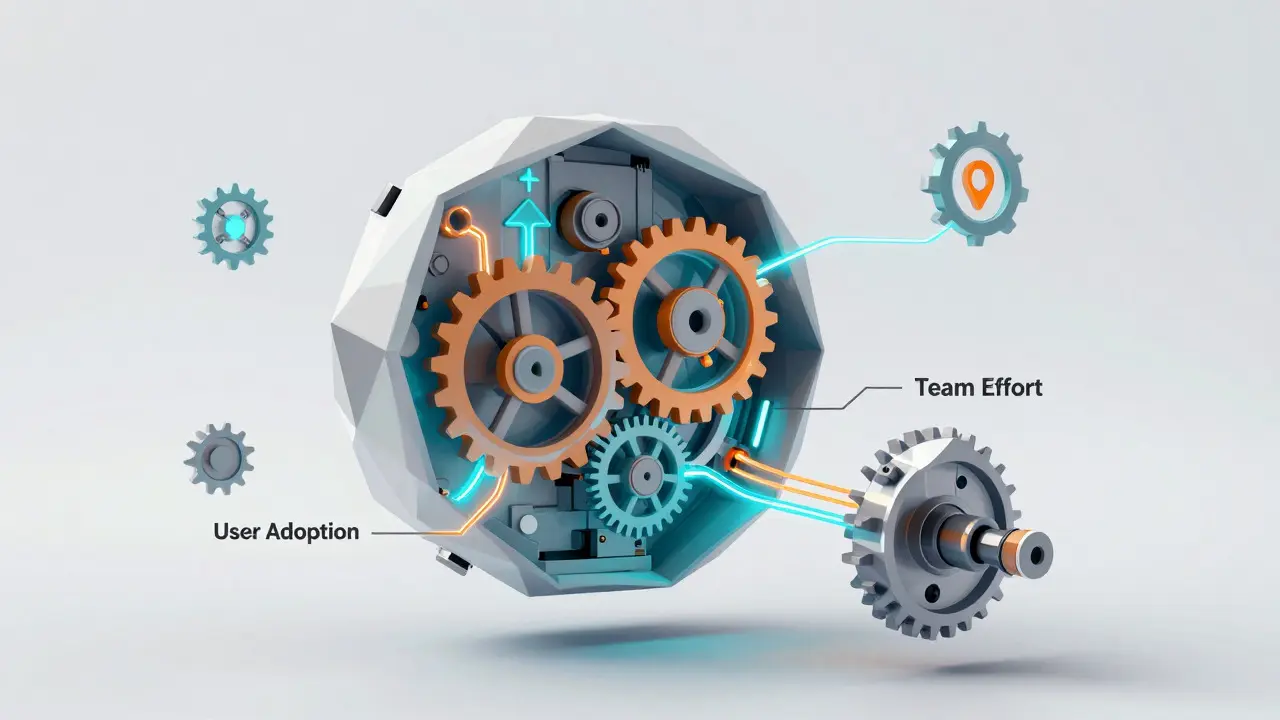
- Decouple Value from Team Effort: Ensure the token’s price appreciation is tied to user adoption, not marketing hype. Use metrics like Daily Active Users (DAU) or transaction volume as KPIs in your communications, not projected revenue.
- Implement Real Utility Immediately: Don’t wait for Phase 3 to launch the dApp. Your token needs a use case on Day 1. Whether it’s paying for storage, staking for governance rights, or accessing exclusive content, the function must exist before the sale ends.
- Avoid Passive Income Promises: Be careful with staking rewards. If staking yields are high and guaranteed, regulators may view them as dividends. Frame staking as a mechanism for securing the network or gaining governance power, not as a savings account.
Consider the Basic Attention Token (BAT) as a benchmark. BAT works because its value is directly tied to advertising spend on the Brave browser. Advertisers pay in BAT, users earn BAT for viewing ads. The value flows from the service, not from speculation about the company’s future stock price. That’s a clean utility model. Contrast this with projects that sell tokens with no live product, promising a "revolutionary platform" next year. Those are red flags everywhere.
The Role of Decentralization and DAOs
Regulators are increasingly looking at who controls the token. If one entity holds 50% of the supply and makes all decisions, it looks like a corporation issuing shares. Enter the Decentralized Autonomous Organization (DAO) is a group of people who collectively manage a treasury and make decisions via on-chain voting, often governed by smart contracts. While a DAO doesn’t automatically make a token a utility, it helps demonstrate decentralization.
To leverage this for compliance, you need genuine decentralization. This means:
- Distributed key management so no single admin can freeze wallets unilaterally.
- Governance voting where holders actually influence protocol parameters.
- Transparent treasury management with regular audits.
However, don’t fake it. Regulators can see through a "DAO