What is Decentralized Identity? A Simple Guide to User-Controlled Digital ID
You’ve probably experienced the frustration of signing up for a new service. You enter your name, date of birth, and address. Then you do it again for another site. And again. Every time, you’re handing over more data to companies that promise to keep it safe, yet breaches happen constantly. What if you could own your identity instead of renting it from tech giants or government databases? That’s exactly what decentralized identity aims to solve.
Decentralized Identity (DID) is a system where you control your personal data, not a central authority. It uses blockchain technology to let you prove who you are without revealing unnecessary details. Think of it as having a digital passport that only shows the specific page someone needs to see, rather than handing over your entire life story.
How Traditional Identity Fails Us
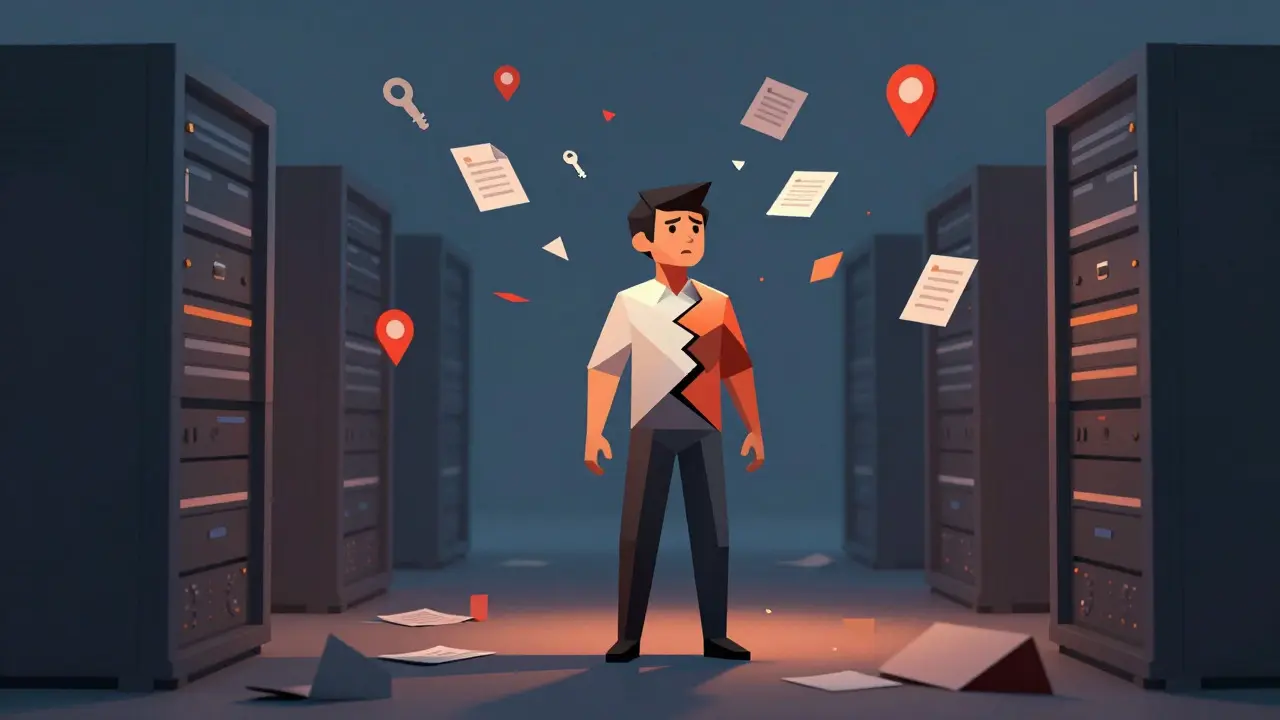
To understand why decentralized identity matters, look at how we handle identity today. Most systems are centralized. When you create an account on social media or bank with a traditional institution, they store your data in their own private servers. These servers become targets for hackers. If one company gets breached, your email, password, and sometimes even your home address are exposed.
This model creates two big problems:
- Data Silos: Your identity is scattered across dozens of platforms. There is no single source of truth that belongs to you.
- Lack of Control: You rely on these companies to protect your data. If they change their privacy policy or go out of business, your access to your own identity can be compromised.
Decentralized identity flips this script. Instead of storing your data on a company’s server, you hold it yourself. The system relies on cryptography and distributed ledgers to verify your claims without needing a middleman.
The Core Components of Decentralized Identity
DID isn’t just one technology; it’s a framework built on three key pillars. Understanding these helps clarify how the system works in practice.
The Trust Triangle: Issuers, Holders, and Verifiers
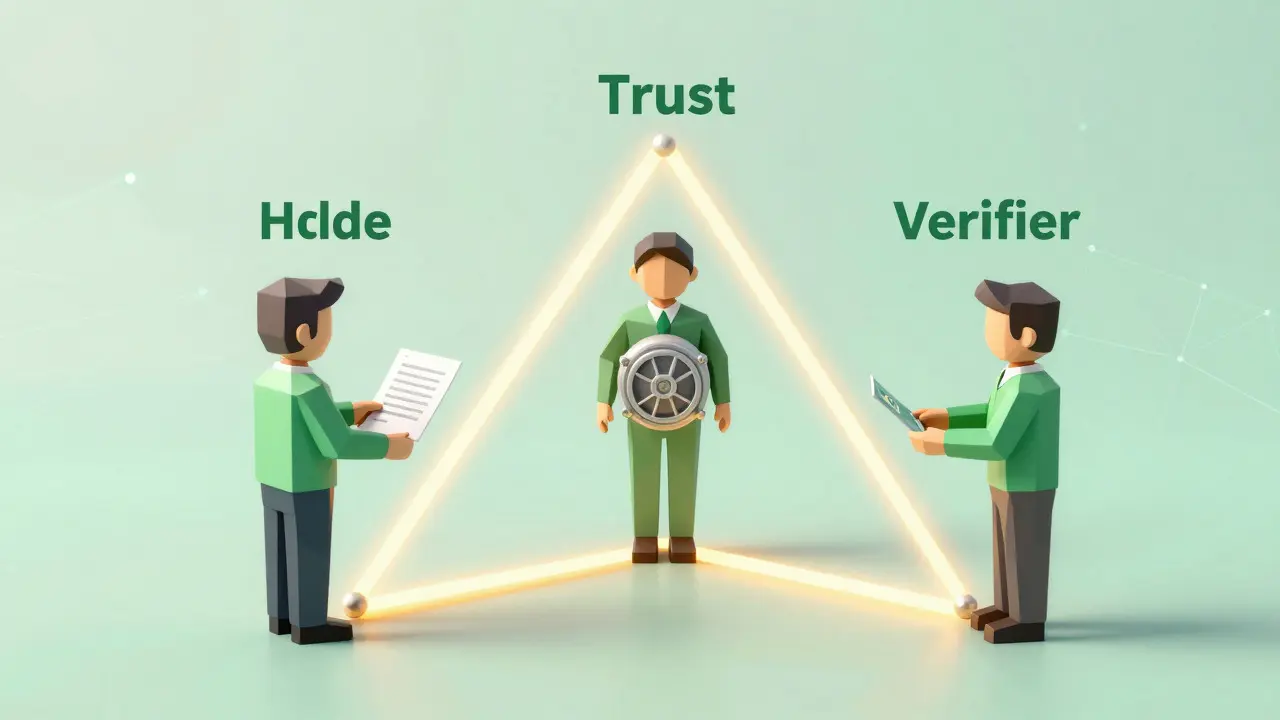
In a decentralized system, trust doesn’t come from a central database. It comes from a relationship between three parties. This is often called the "Trust Triangle."
- The Issuer: A trusted entity like a government agency, university, or employer. They create and sign the Verifiable Credential. For instance, the Department of Motor Vehicles issues a driver’s license VC.
- The Holder (You): You receive the credential and store it in your digital wallet. You decide when and where to share it.
- The Verifier: A party that needs to check your identity. This could be a bar checking your age or a bank verifying your income. The verifier checks the cryptographic signature of the credential against the issuer’s public key on the blockchain.
This structure removes the need for the verifier to call the issuer every time. The blockchain ensures the issuer’s public key is valid, and cryptography proves the credential hasn’t been altered.
Why Blockchain Is Essential
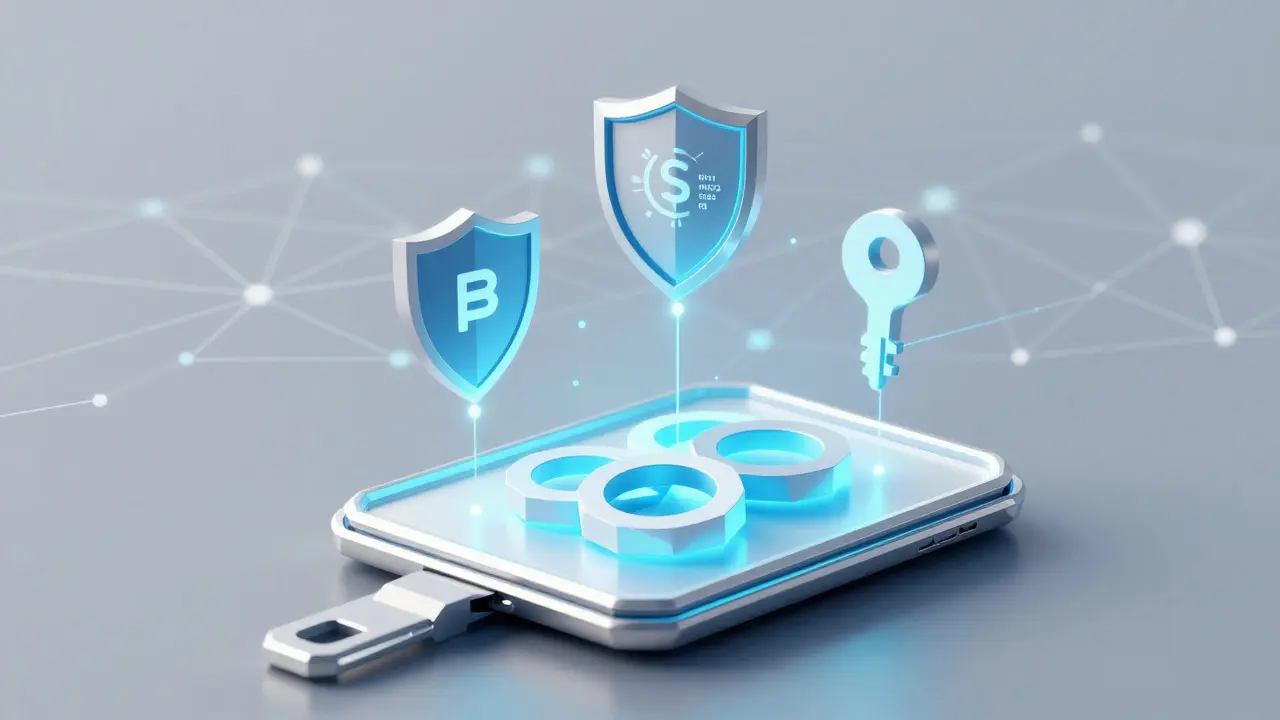
You might wonder why blockchain is necessary for identity. After all, can’t we just use better passwords? Blockchain provides four critical functions that traditional databases cannot match:
- Immutability: Once a DID is registered on the ledger, it cannot be changed or deleted by anyone except the owner. This prevents identity theft through record alteration.
- Decentralization: There is no single point of failure. If one server goes down, your identity remains accessible because the ledger is distributed across many nodes.
- Transparency: Anyone can verify that a credential was issued by a legitimate authority without seeing the underlying data.
- Interoperability: Because DIDs follow W3C standards, your identity can work across different apps and services, regardless of which blockchain they use.
Most importantly, blockchain allows for Zero-Knowledge Proofs. This advanced cryptographic technique lets you prove a statement is true without revealing the data itself. For example, you can prove you are over 21 years old without showing your exact birthdate or your mother’s maiden name.
Self-Sovereign Identity (SSI): Taking Full Control
A closely related concept is Self-Sovereign Identity (SSI). While DID is the technical standard, SSI is the philosophy. SSI means you have complete autonomy over your digital presence. You don’t need permission from Facebook, Google, or Apple to exist online. You carry your reputation and credentials with you from service to service.
In an SSI world, if you want to switch banks, you don’t start from scratch. You take your verified credit history and identity proofs with you. This reduces friction for users and lowers costs for businesses, as they spend less money on Know Your Customer (KYC) processes.
Real-World Use Cases
Decentralized identity isn’t just theory. Several sectors are already piloting these systems:
| Industry | Use Case | Benefit |
|---|---|---|
| Healthcare | Patient medical records | Patients control who sees their history; doctors get instant access to verified data. |
| Finance | Banking onboarding | Faster KYC checks; reduced fraud; customers reuse existing verified identities. |
| Education | Digital diplomas | Employers instantly verify degrees; eliminates fake resumes. |
| Government | E-voting and civic services | Secure, anonymous voting; streamlined access to public benefits. |
Challenges to Adoption
Despite its potential, decentralized identity faces hurdles. The biggest challenge is user experience. Managing private keys and understanding digital wallets can be confusing for non-technical users. If you lose your seed phrase, you might lose access to your identity forever. Solutions like social recovery wallets are emerging to help, but the barrier to entry remains high.
Another issue is interoperability. While W3C standards exist, different blockchains and wallet providers may not communicate seamlessly. A credential issued on one platform might not be easily readable by a verifier on another. Industry groups are working hard to bridge these gaps, but full compatibility takes time.
Finally, there is the question of legal recognition. Governments need to accept digital signatures and VCs as legally binding documents. Many countries are updating laws to support this, but global consensus is still developing.
The Future of Digital Identity
We are moving toward a future where your digital identity is as portable as your physical wallet. Decentralized identity gives you the power to choose who sees your data and for how long. It reduces the risk of massive data breaches because there is no central honey pot of information to steal.
As blockchain technology matures and user-friendly wallets become common, DID will likely become the standard for online authentication. It shifts the balance of power from corporations back to individuals, creating a more private and secure internet.
Is decentralized identity completely anonymous?
Not necessarily. Decentralized identity offers pseudonymity and selective disclosure. You can remain anonymous by sharing only the minimum required proof (like being over 18) without revealing your name. However, if you choose to link your real-world identity to your DID, it becomes identifiable. The key is that you decide what to reveal.
What happens if I lose my digital wallet?
If you lose access to your private keys, you may lose access to your stored credentials. However, your DID itself remains on the blockchain. Newer wallet solutions offer "social recovery" features, allowing trusted contacts to help you regain access. Always back up your seed phrases securely.
Who issues Verifiable Credentials?
Trusted third parties issue VCs. These can include governments (for passports), universities (for degrees), employers (for work history), or banks (for financial standing). The issuer signs the credential cryptographically, ensuring its authenticity.
Is decentralized identity expensive to implement?
For users, it is often free or low-cost. For organizations, initial setup requires integrating with blockchain infrastructure and developing wallet interfaces. However, it can reduce long-term costs by streamlining KYC processes and reducing fraud management expenses.
How does DID differ from Single Sign-On (SSO)?
SSO relies on a central provider (like Google or Facebook) to authenticate you across multiple sites. If that provider bans you or suffers a breach, your access is affected. DID is user-controlled. You hold your identity, and no single company can revoke your existence across the web.