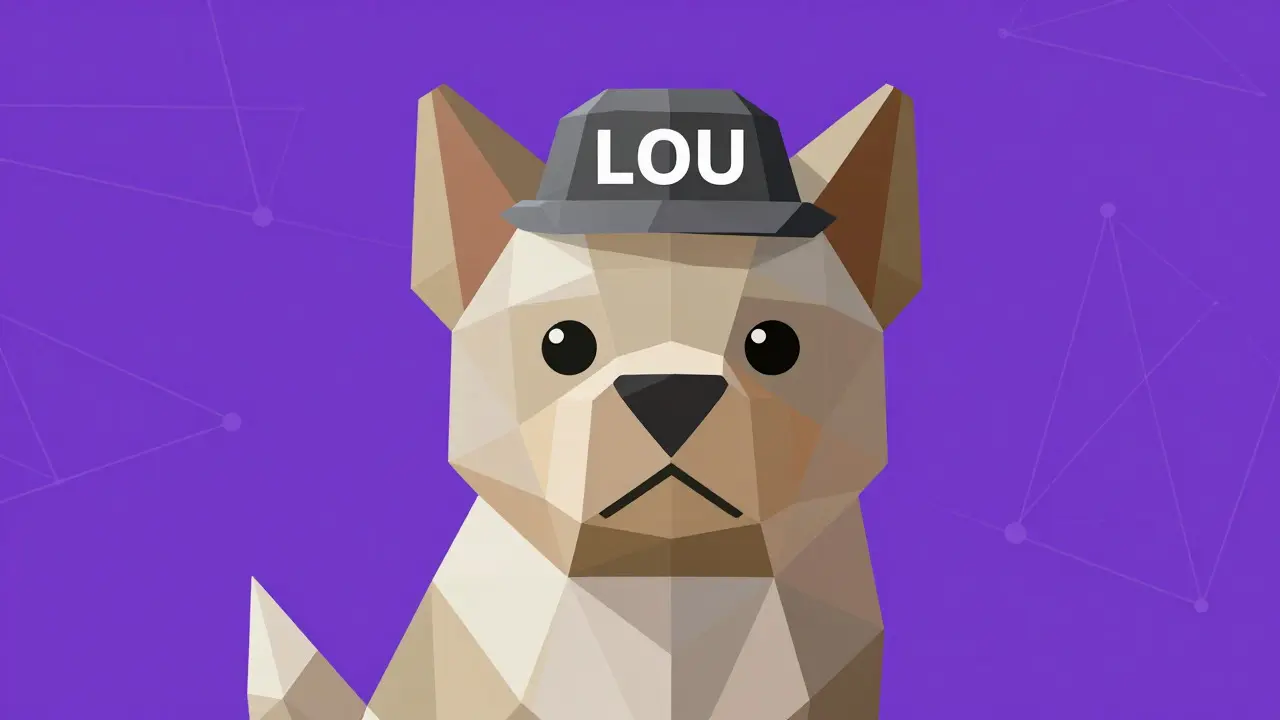
What Is Lou (LOU) Crypto? A Deep Dive Into the Solana Meme Coin
You’ve probably seen it on your feed: a dog wearing a hat. If you follow the crypto world, that image screams Dogwifhat (WIF), the Solana meme coin that made millions out of thin air. But now there’s a copycat called Lou (LOU). It looks similar, it lives on the same blockchain, and it promises the same kind of wild ride. The question is, is it just another fleeting joke, or is there actual value here?
Here is the short answer: Lou (LOU) is a high-risk, micro-cap meme cryptocurrency launched on the Solana blockchain via the pump.fun platform. It has no utility, no known team, and almost zero liquidity compared to major coins. You are buying into a community narrative, not a technology. Before you spend even a dollar, you need to understand exactly what you are getting into-and why most people lose money on tokens like this.
The Quick Facts: What Is Lou (LOU)?
Let’s strip away the hype. Lou is a digital token with no function other than speculation. It was created using pump.fun, a popular launchpad for Solana meme coins that allows anyone to create a token in minutes without writing code or raising venture capital. This "fair launch" model means there was no presale for insiders, but it also means there is no guarantee of quality.
| Attribute | Details |
|---|---|
| Blockchain | Solana (SPL Token) |
| Type | Meme Coin / Speculative Asset |
| Launch Platform | pump.fun |
| Utility | None (Pure speculation) |
| Team | Anonymous |
| Market Status | Micro-cap (Extremely low liquidity) |
The inspiration comes directly from the Dogwifhat phenomenon. WIF proved that internet culture could drive massive financial value. Lou attempts to ride that coattails by adopting a similar aesthetic-a dog with headwear. However, unlike WIF, which built a massive brand and marketing engine, Lou remains an obscure token with minimal visibility outside of niche crypto forums.
Price, Liquidity, and The "Zero Market Cap" Problem
If you look up the price of LOU today, you might see numbers like $0.000234 or $0.000098. These fractions of a penny look cheap, but they are misleading. The real story is in the volume and market cap.
Data aggregators like Livecoinwatch and Crypto.com show that LOU trades with incredibly low volume-often around $1,000 USD in a single day. To put that in perspective, major cryptocurrencies trade billions daily. With only $1,000 moving around, a single person selling $500 worth of LOU could crash the price by 50% instantly. This is called thin liquidity.
More concerning is the reported market capitalization. Some sources list it as effectively $0. This usually happens when the circulating supply is unknown or untracked. Without knowing how many tokens exist, you cannot calculate the Fully Diluted Valuation (FDV). You don’t know if there are 1 million tokens or 1 trillion. If there are trillions, your small investment buys you nothing of significance. If there are few, the price volatility will be insane. This lack of transparency is a major red flag.

Lou (LOU) vs. LOULOU vs. LULU: Don't Mix Them Up
This is where most beginners get burned. The crypto space is full of tokens with similar names designed to confuse investors. You must verify the contract address before buying anything.
- Lou (LOU): The subject of this article. A tiny, illiquid Solana meme coin launched on pump.fun. High risk, low data.
- LOULOU: Also a Solana meme coin, but significantly larger. It has a circulating supply of 1 billion tokens and higher trading volumes (over $1.6 million in 24 hours at peak times). It is distinct from LOU.
- LULU: A completely different project on the Binance Smart Chain (BSC), inspired by Pepe the Frog. Not related to Solana or dogs.
Always double-check the ticker symbol and the blockchain network. Buying LOULOU instead of LOU because you misread the chart is a common mistake that costs traders time and money.
How to Buy Lou (LOU) Safely
Because LOU is so small, you likely won’t find it on major exchanges like Coinbase or Binance. Your options are limited to decentralized exchanges (DEXs) or smaller centralized platforms like LBank.
- Get a Solana Wallet: Download Phantom or Solflare. These are the standard wallets for the Solana ecosystem.
- Buy SOL: Purchase Solana (SOL) on a major exchange and transfer it to your wallet. You will need SOL to pay for transaction fees (gas).
- Connect to a DEX: Use Jupiter Aggregator or Raydium. Connect your wallet to the platform.
- Find the Contract Address: Search for "LOU" but do not click the first result. Verify the contract address against a reliable source like DexScreener or the official LBank listing page. One wrong character means you buy a scam token.
- Swap for LOU: Set your slippage tolerance high (often 1-5% for volatile tokens) and execute the swap.
If you prefer a centralized experience, check if LBank is available in your region. They have listed LOU, allowing you to trade it with USDT or other fiat-on-ramp pairs, which simplifies the process for those uncomfortable with DeFi interfaces.

The Risks: Why Most Micro-Caps Fail
Let’s be honest about the odds. For every Dogwifhat that succeeds, thousands of pump.fun tokens go to zero. Here is why LOU is risky:
No Utility: LOU doesn’t offer staking rewards, governance rights, or access to a product. Its value is purely based on whether more people want to buy it than sell it. When the hype dies, the price follows.
Anonymous Team: There is no doxxed founder. No company name. No legal entity. If the developers decide to dump their holdings, there is no one to hold accountable. While "fair launch" prevents pre-mines, it doesn’t prevent the creator from holding a large percentage of the supply in private wallets.
Extreme Volatility: With such low volume, prices can swing 20-30% in minutes. This isn’t investing; it’s gambling. Only allocate money you are fully prepared to lose entirely.
Is There Any Future for Lou?
Currently, there is no roadmap. No whitepaper. No announced partnerships. The future of LOU depends entirely on community momentum. If the Solana meme coin sector heats up again, and if the "dog with a hat" narrative resurfaces, LOU could see a speculative spike. But this is unpredictable.
For long-term viability, a token needs development. Does LOU plan to build a game? An NFT collection? A charity fund? As of now, there is no evidence of any such plans. Until then, treat LOU as a lottery ticket, not an asset.
Is Lou (LOU) a good investment?
LOU is extremely high-risk. It lacks utility, has anonymous creators, and suffers from very low liquidity. It should only be considered a speculative gamble with money you can afford to lose completely, not a serious investment.
What is the difference between LOU and LOULOU?
They are two different tokens. LOULOU is a larger, more liquid Solana meme coin with a defined supply of 1 billion tokens. LOU is a much smaller, obscure token with unclear supply data and near-zero market cap. Do not confuse them.
Where can I buy Lou (LOU)?
You can buy LOU on decentralized exchanges like Raydium or Jupiter using a Solana wallet, or on the centralized exchange LBank. Always verify the contract address to avoid scams.
Does Lou (LOU) have a whitepaper?
No. Like many pump.fun meme coins, LOU does not have a formal whitepaper, technical documentation, or a published roadmap. It is driven purely by community sentiment.
Why is the market cap of LOU listed as $0?
This usually indicates that the circulating supply is unknown or not properly tracked by data aggregators. Without accurate supply data, the market capitalization cannot be calculated reliably, signaling a lack of transparency.