
What is ROCK (ROCK) crypto coin? The truth behind the low-cap token
There’s a crypto coin called ROCK (ROCK) that shows up in search results and on a few small exchanges. But if you’re thinking it’s the next big thing, you’re likely misunderstanding what you’re looking at. The truth? ROCK isn’t a project. It’s a ghost.
What exactly is ROCK (ROCK)?
ROCK (ROCK) is a token with a 1 billion supply, trading around $0.000047 as of January 2026. That’s less than half a cent. It has a market cap of just $86,000. For comparison, Bitcoin trades at over $60,000 per coin with a market cap of $1.2 trillion. ROCK doesn’t even register on the same scale.
What makes it weirder is that the same ticker symbol is used by at least two other completely unrelated tokens. One is called Rock (RKT), a project that raised $27 million in 2018 with a real team - Nick Cowan, Philip Young, and William Rawley. Another is BlackRock (ROCK), listed on CoinSwitch as a Solana-based coin. None of these are the same. But because they all use similar names, people get confused. You might think you’re buying into something promising, but you’re not.
Why does ROCK have no clear background?
There’s no whitepaper. No team. No website. No GitHub. No roadmap. No Twitter account with more than a handful of followers. No Telegram group. No Discord server. Nothing.
Most crypto projects, even the sketchy ones, at least try to look legit. They publish a document explaining how the token works. They name their founders. They post updates. ROCK does none of that. It’s like someone typed ‘ROCK’ into a coin generator, hit create, and walked away.
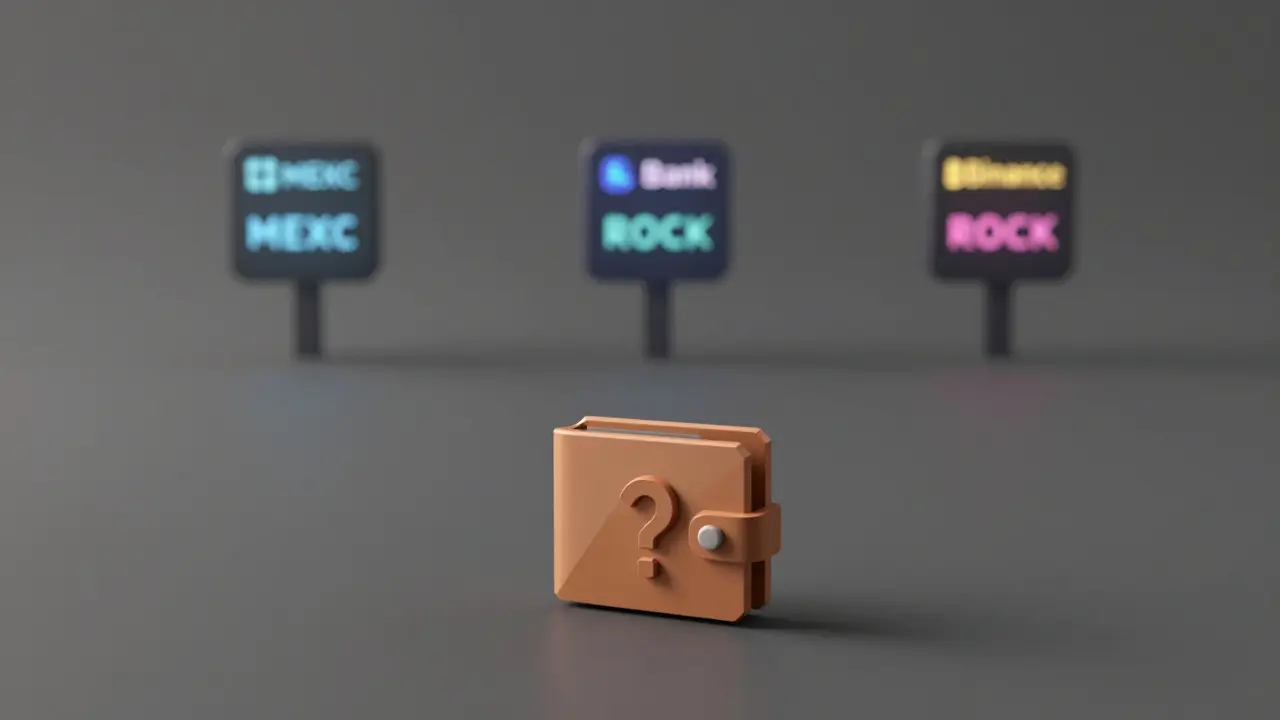
Its entire existence seems to be based on listing it on a few low-volume exchanges - MEXC, LBank, and Binance (though Binance says it has zero circulating supply, which contradicts other data). That’s not a sign of growth. That’s a sign of neglect.
How has ROCK performed?
ROCK hit its peak on September 10, 2024, at $0.004452. That’s almost 98% higher than where it sits now. Since then, it’s been a slow bleed. It dipped to $0.00007540 in May 2025 and has barely moved since. The 24-hour trading volume? Around $51,000. That’s less than what a single whale might move in Bitcoin in five minutes.
Even within the meme coin space - where volatility and low liquidity are common - ROCK is at the bottom. It’s outperformed by other meme coins during market dips, but that’s like saying a rock is doing better than a sinking ship. It’s not an achievement. It’s just not sinking as fast.
Where can you buy ROCK?
You can find it on MEXC, LBank, and Binance - but only if you know exactly where to look. On Binance, it’s listed under a confusing name that says ‘0 circulating supply,’ which makes no sense unless the platform’s data is wrong. On CoinGecko, it’s ranked #7227. On LBank, it’s #8453. That means it’s among the 0.5% smallest coins tracked by market cap.
There’s no easy way to buy it. No popular wallet supports it by default. No guide tells you how to add it to MetaMask or Trust Wallet. No contract address is published in any official source. You’d have to manually enter the token address from a sketchy forum or an unverified listing. And even then, you’d be risking your funds on a token with no liquidity, no support, and no future.
Is ROCK a scam?
It’s not officially labeled a scam. There’s no evidence of a rug pull. No one stole funds from a smart contract. But that’s not because it’s safe. It’s because no one cared enough to steal from it.
ROCK doesn’t have a community. It doesn’t have developers. It doesn’t have a use case. It doesn’t even have a reason to exist beyond being listed on an exchange. It’s a digital placeholder. A ticker symbol with no substance. People who bought it at its peak are stuck. People who buy it now are betting on nothing.
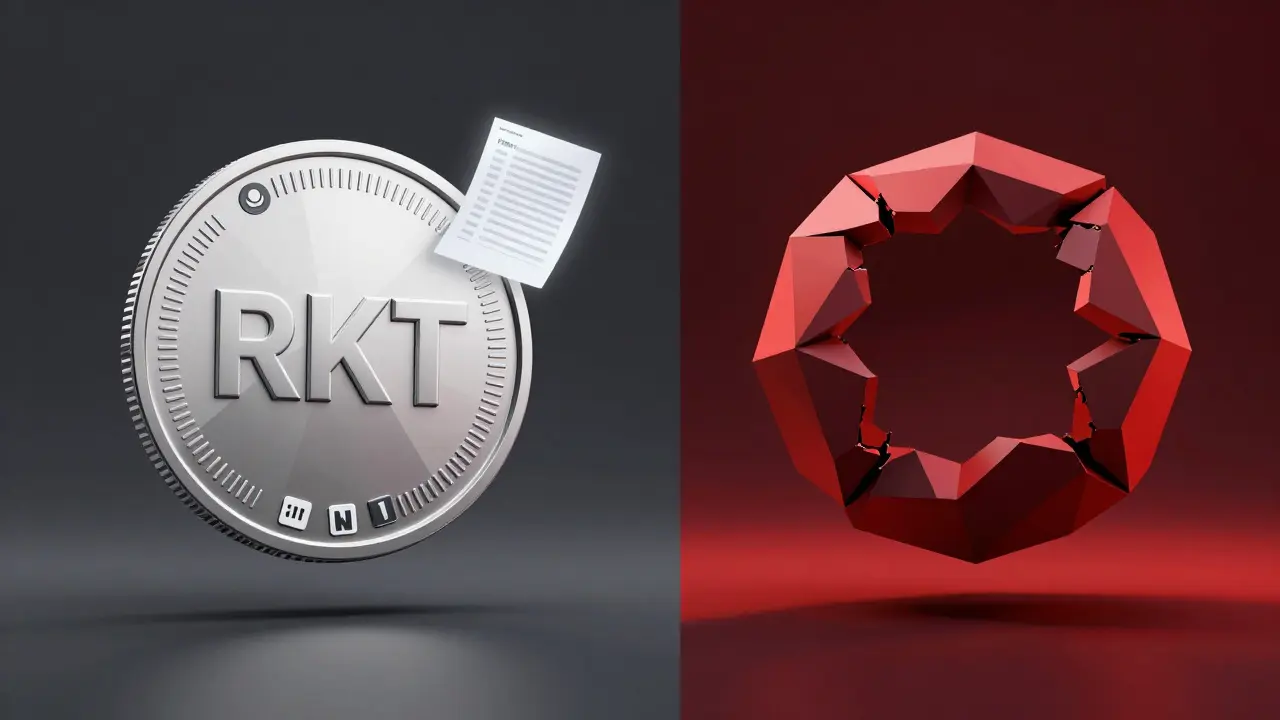
Compare this to Rock (RKT), the 2018 ICO project with real funding and a known team. Even though RKT is obscure now, at least it had a beginning. ROCK has no beginning. No middle. No end. Just a price chart that’s been flatlining for months.
Should you invest in ROCK?
No.
If you’re looking for a long-term investment, ROCK is the opposite of that. If you’re looking for a short-term gamble, the odds are stacked against you. The trading volume is too low to enter or exit cleanly. Slippage will eat your profits. There’s no news, no updates, no catalysts. Even if the whole crypto market surges, ROCK won’t move with it - because no one’s watching.
There are thousands of coins with real teams, real code, and real use cases. You don’t need to chase a name that’s been abandoned. You don’t need to risk your money on a coin that can’t even be properly tracked across platforms.
What should you do instead?
If you’re interested in low-cap coins, look for ones with:
- A published whitepaper
- A team with LinkedIn profiles or public track records
- Active GitHub commits
- Trading volume over $1 million daily
- At least one major exchange listing
ROCK has none of these. It’s not a hidden gem. It’s a warning sign.
Don’t let the name fool you. ‘ROCK’ sounds solid. But solid rocks don’t vanish from the market. Solid rocks don’t have zero documentation. Solid rocks don’t have a 98% crash and no one caring enough to explain why.
ROCK is a ghost. And ghosts don’t make money. They just haunt your portfolio.
Is ROCK (ROCK) a real cryptocurrency?
Technically, yes - it exists as a token on some blockchains and is listed on minor exchanges. But it has no team, no whitepaper, no roadmap, and no community. It lacks the fundamental traits of a legitimate project. It’s a ticker symbol with no substance behind it.
What’s the current price of ROCK (ROCK)?
As of January 2026, ROCK trades at approximately $0.00004748, according to CoinGecko. Prices vary slightly across exchanges, with Binance showing $0.000054, but these differences reflect low liquidity and inconsistent data, not real market value.
Can I buy ROCK on Coinbase or Binance?
You can find ROCK on Binance and some smaller exchanges like MEXC and LBank, but not on Coinbase. Even on Binance, the listing is confusing - it shows a $0 market cap despite having a circulating supply elsewhere. This suggests poor data handling or a dormant listing. Buying it is possible, but extremely risky due to low liquidity.
Why is ROCK’s market cap so low?
ROCK’s market cap is low because it has no demand. With only $51,000 traded in 24 hours and a total supply of 1 billion tokens, the price stays near zero. There’s no real use case, no community, and no reason for people to hold or buy it. It’s essentially a dead asset with a ticker symbol.
Is ROCK the same as Rock (RKT)?
No. Rock (RKT) is a completely different project that raised $27 million in 2018 with a known team. It’s not the same as the ROCK token trading at $0.000047. They share a similar name, but that’s where the similarity ends. Confusing them is a common mistake that can lead to buying the wrong token.
What happened to ROCK’s all-time high?
ROCK reached its peak of $0.004452 on September 10, 2024. Since then, it has lost 98% of its value. There’s no public explanation for the crash. No announcement, no update, no reason given. It simply faded out, which is typical of low-effort meme coins that rely on hype, not fundamentals.
Can I store ROCK in MetaMask or Trust Wallet?
You can manually add the token address to MetaMask or Trust Wallet if you find it on a blockchain explorer - but there’s no official contract address published anywhere. Adding it blindly is risky. Even if you can store it, you won’t be able to sell it easily due to lack of liquidity and exchange support.
Is ROCK a good investment for 2026?
No. ROCK shows no signs of development, community growth, or market interest. Its price has been flat for months, trading volume is negligible, and there’s zero public communication from any team. It’s not an investment. It’s a gamble on nothing.
If you’re looking for crypto opportunities, focus on projects with transparency, activity, and real users. ROCK isn’t one of them. It’s a relic of the wild west days of crypto - when anyone could launch a token and hope for a lucky pump. That era is over. And ROCK didn’t survive it.

17 Comments
Matthew Kelly
January 23, 2026 at 14:15
Honestly? This is the kind of post I wish more people would write. I almost bought ROCK last year thinking it was some underground gem. Glad I didn't. 🙏
steven sun
January 25, 2026 at 02:36
rocks dont move but they dont dissapear either lol
carol johnson
January 26, 2026 at 22:48
I can't believe people still fall for this. 🤦♀️ It's not a coin, it's a digital ghost story. I feel bad for anyone who lost money on this. Like... why??
Chidimma Catherine
January 27, 2026 at 01:51
This is why we need financial literacy in schools. In Nigeria, many young people are chasing tokens like ROCK because they see price charts and think it's opportunity. But without structure, it's just gambling with digital pieces of paper.
Arielle Hernandez
January 27, 2026 at 05:32
The most alarming detail here is not the price or the market cap-it's the complete absence of any attributable ownership or governance. In blockchain, transparency isn't optional; it's foundational. ROCK fails at the most basic tenet of decentralized systems: accountability. There is no entity, no contract audit, no community consensus. It is a spectral asset, existing only in the liminal space between exchange listings and oblivion.
Darrell Cole
January 27, 2026 at 07:17
The notion that ROCK has any legitimacy is a dangerous delusion. It is not a crypto project. It is a statistical artifact. The fact that it trades at all suggests systemic failures in listing protocols and investor education. One cannot invest in a vacuum. One cannot build wealth on a name and a ticker. The entire premise is fundamentally unsound and should be treated as a public health warning
Melissa Contreras López
January 27, 2026 at 12:22
I love how you broke this down. Seriously. So many people think 'low price = high potential' but you just showed why that’s a trap. It’s like buying a house with no foundation and calling it a 'steal'. You're not saving money-you're just waiting for the walls to fall. Keep writing stuff like this 💪
Shamari Harrison
January 29, 2026 at 02:45
I’ve seen this pattern too many times. Low-cap tokens with zero documentation get listed on niche exchanges, get a tiny pump from bots, then vanish. The real scam isn’t the rug pull-it’s the illusion of opportunity. People think they’re being smart by getting in early. They’re just the last ones holding the bag.
Ryan Depew
January 30, 2026 at 06:24
Honestly I laughed when I saw ROCK on MEXC. I thought it was a joke token. Then I checked the volume and realized... people are actually trading this. Like, what are they thinking? I've seen better projects with 10% of this supply and no traction.
Nathan Drake
January 30, 2026 at 08:16
There’s something almost poetic about ROCK. A token with no purpose, no voice, no future. It doesn’t even have the dignity of being a failed project-it’s a non-event. We assign meaning to symbols, and here, the symbol is empty. Maybe that’s the real lesson: not all things that glow are fire. Sometimes they’re just static.
Barbara Rousseau-Osborn
January 31, 2026 at 20:32
If you bought ROCK you deserve to lose your money. No whitepaper? No team? No excuse. This isn't crypto. This is a casino run by idiots. And you're the sucker
Clark Dilworth
February 1, 2026 at 07:09
The structural arbitrage here is fascinating. ROCK exists as a fungible token on multiple chains, yet lacks any on-chain governance or utility function. Its liquidity is non-existent, its order book depth negligible, and its market depth is functionally zero. The fact that it’s listed on Binance-albeit with conflicting metadata-suggests a failure in the exchange’s due diligence protocol. This isn’t a meme coin. It’s a compliance blind spot.
Nadia Silva
February 3, 2026 at 05:22
I don't get why anyone even looks at this. It's not even a meme. It's just... there. Like a broken sign on an abandoned road. You don't stop to figure out what it meant. You just keep driving.
Tammy Goodwin
February 4, 2026 at 10:56
I used to think low-cap meant opportunity. Then I lost $800 on something called 'BANANA' that had a Discord with 12 members and a website made in 2017. ROCK is just the next version of that. I wish I'd found this post before I made the same mistake.
Taylor Mills
February 4, 2026 at 13:45
USA has the best crypto regulation. If this was listed in europe they'd shut it down in a week. This is why americans keep getting scammed. No oversight. No accountability. Just pump and dump with a new name.
Mike Stay
February 5, 2026 at 10:45
The psychological mechanism at play here is the availability heuristic: the mere existence of a ticker symbol, however meaningless, triggers a cognitive association with legitimacy. The human mind seeks patterns, and in the absence of data, it invents narratives. ROCK exploits this. It is not a failure of technology, but of perception. The market does not price assets; it prices stories. And ROCK has none.
Sara Delgado Rivero
February 5, 2026 at 15:50
I dont know why people still fall for this crap its not even a joke anymore its just sad