
Why Nigeria Leads Global P2P Crypto Adoption Despite Restrictions
Nigeria isn't just participating in the global cryptocurrency market; it is arguably leading it. While many developed nations treat crypto as a speculative asset class or a niche investment, Nigerians use it as essential financial infrastructure. The reason? It works when traditional systems fail. In 2024, Nigeria ranked second globally in crypto adoption according to Cornell Business analysis, and despite shifting indices placing it sixth in late 2025 by Chainalysis metrics, the sheer volume of peer-to-peer (P2P) transactions tells a different story. Between July 2023 and June 2024 alone, Nigerian users moved over $59 billion in cryptocurrency. This isn't hobbyist behavior. This is survival.
The narrative often focuses on the restrictions-the bans, the banking blocks, the regulatory uncertainty. But those restrictions are precisely why Nigeria’s P2P ecosystem is so robust. When you block the front door, people build windows. And in Nigeria, they built skyscrapers. Let’s look at how a country with severe macroeconomic challenges became the world’s classroom for decentralized finance.
When Banks Say No, P2P Says Yes
To understand Nigeria’s dominance, you have to look back at 2017. That was the year the Central Bank of Nigeria (CBN) issued circulars instructing commercial banks to cease all cryptocurrency transactions. On paper, this should have killed the market. Instead, it forced innovation. Without access to bank accounts for fiat-to-crypto conversion, traders turned to direct person-to-person exchanges.
This shift created a sophisticated underground economy that eventually surfaced into mainstream platforms. Users needed a way to buy Bitcoin without triggering bank alerts. They used mobile money transfers, cash deposits, and intricate trust networks. By 2020, approximately 32% of participating Nigerians were using cryptocurrencies, with Bitcoin/Naira becoming the most traded pair in the country. The total transaction volume hit $400 million that year, putting Nigeria third globally behind only the United States and Russia.
The beauty of this system lies in its resilience. Traditional banking infrastructure in Nigeria is uneven. About 36% of adults remain unbanked, and many more are underbanked. Foreign remittances through Western Union or MoneyGram can cost up to 8% per transaction. P2P crypto trading slashes those fees by 60-80%. For a small business owner in Lagos importing goods from China, or a family in Abuja receiving support from relatives in London, the savings aren’t marginal-they’re life-changing.
Economic Pressure Cooker: Inflation and Currency Devaluation
You cannot separate Nigeria’s crypto adoption from its economic reality. Since 2016, the naira has lost more than three-quarters of its value against the US dollar. In 2023, inflation surged past 24%. Holding cash in your pocket feels like holding ice in midsummer-it disappears quickly.
Cryptocurrencies offer a hedge against this devaluation. When the local currency wobbles, stablecoins like USDT (Tether) and assets like Bitcoin provide stability. This isn’t about getting rich quick; it’s about preserving wealth. Consider the typical Nigerian salary earner. If their monthly income buys fewer groceries every month due to inflation, converting a portion of that income into USD-pegged crypto preserves purchasing power. It’s a rational response to irrational monetary policy.
This dynamic creates a self-reinforcing cycle. As more people adopt crypto to protect their savings, liquidity increases. Higher liquidity makes trading easier and cheaper, which attracts more users. By 2025, an estimated 22 million Nigerians-roughly 10% of the population-were expected to engage with digital assets. That penetration rate surpasses most developed economies where crypto is viewed primarily as an investment toy rather than a utility tool.
From Underground to Institutional: The Regulatory Thaw
For years, the relationship between Nigerian regulators and the crypto industry was adversarial. But resistance had unintended consequences. The informal P2P markets grew so large they couldn’t be ignored. Tax revenues were missed, capital flight accelerated, and consumer protection issues arose from unregulated actors.
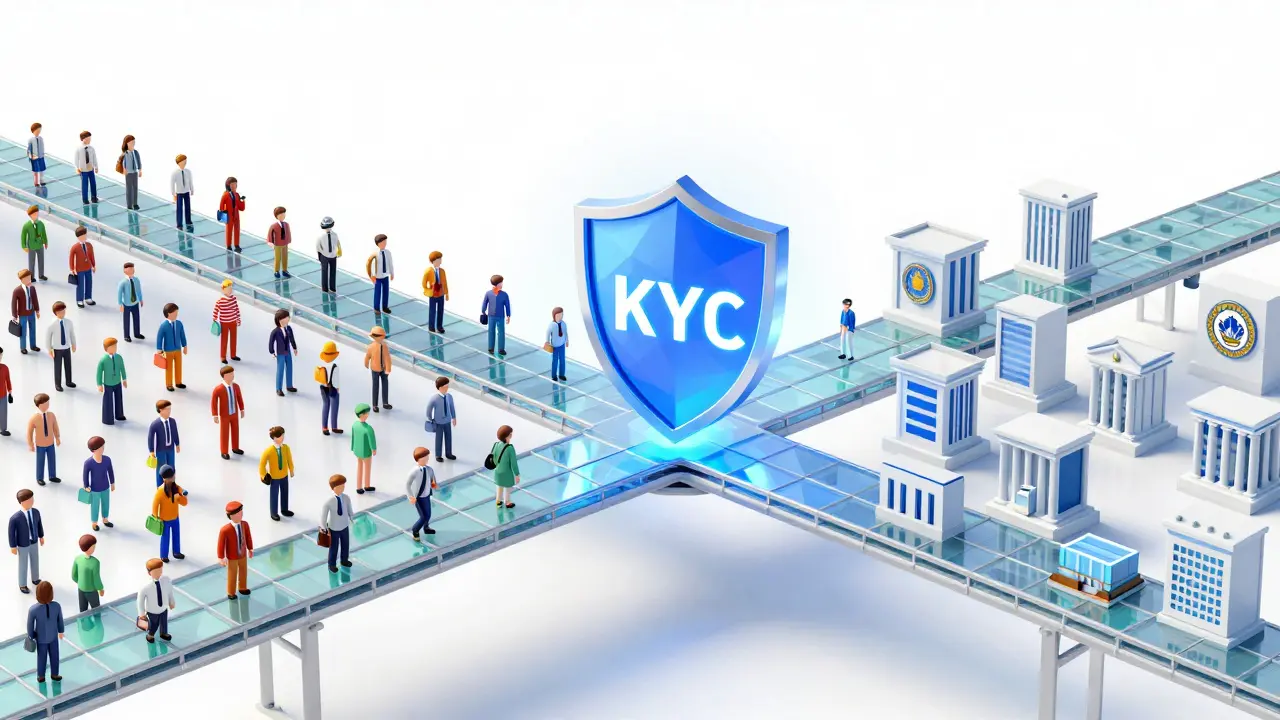
The turning point came in late 2023. The CBN lifted its ban on banks servicing crypto businesses. This wasn’t a sudden change of heart but a pragmatic acknowledgment of reality. Licensed exchanges could now operate openly, integrate with traditional banking systems, and comply with Know Your Customer (KYC) standards. Investor confidence soared.
In 2025, the landscape shifted further with the enactment of the Investments and Securities Act. This legislation recognized digital assets as financial securities, providing a legal framework for trading and custody. More importantly, the Nigeria Inter-Bank Settlement System (NIBSS) partnered with Zone’s blockchain network to modernize interbank settlements. This move reduced fraud risks and increased transparency, bridging the gap between grassroots P2P trading and institutional-grade infrastructure.
This evolution mirrors a broader trend in emerging markets. Regulation doesn’t always kill innovation; sometimes, it legitimizes it. Nigeria’s transition from a shadow economy to a regulated market offers a blueprint for other developing nations grappling with similar financial shortcomings.
How P2P Trading Actually Works in Nigeria
If you’ve never tried P2P trading, it might sound risky. You’re buying digital currency from a stranger online. How do you know they’ll release the crypto after you send the naira? The answer lies in escrow services provided by major platforms.
Here’s how a typical transaction unfolds:
- Listing Creation: A seller posts an offer to sell USDT for naira at a specific price, specifying payment methods (bank transfer, OPay, Palmpay, etc.).
- Order Placement: A buyer initiates the trade. The platform locks the seller’s crypto in escrow-a secure holding area neither party can touch yet.
- Payment Transfer: The buyer sends naira directly to the seller’s bank account via mobile app or wire transfer. Crucially, this happens outside the exchange’s control.
- Confirmation: The seller confirms receipt of funds. Only then does the platform release the crypto from escrow to the buyer’s wallet.
- Dispute Resolution: If something goes wrong-say, the seller claims non-payment-the platform intervenes, reviewing chat logs and bank statements to resolve the conflict.
Platforms like Quidax, Patricia, and Luno dominate this space locally, while international giants like Binance adapt their interfaces for Nigerian users. Documentation quality varies, but top exchanges offer guides in English and local languages. Community support is immense, with Telegram groups and WhatsApp channels serving as real-time help desks. Newcomers typically achieve basic proficiency within 2-4 weeks, though mastering advanced strategies takes months.
| Platform | Key Feature | User Base Focus | Regulatory Status |
|---|---|---|---|
| Quidax | Local language support | Retail traders | Licensed under ISA 2025 |
| Patricia | Comprehensive education resources | Beginners & intermediates | Compliant with CBN guidelines |
| Luno | Strong security reputation | Institutional & high-net-worth | Early regulator engagement |
| Binance P2P | Highest liquidity | Global & local arbitrageurs | Operates under international license |
Overcoming Skepticism and Security Challenges
Adoption didn’t happen overnight. Early associations with scams like Bitconnect, OneCoin, and MMM damaged public perception. Many Nigerians initially viewed crypto as a Ponzi scheme. Overcoming this stigma required massive community-led education efforts.
Today, user feedback highlights satisfaction with P2P platforms’ ability to facilitate international commerce and preserve savings. However, concerns persist. Platform security remains paramount. Phishing attacks, fake support agents on social media, and fraudulent listings are common threats. Users must learn to verify seller reputations, check completion rates, and avoid sharing private keys.
The learning curve is steep but manageable. Successful traders develop habits: using hardware wallets for long-term storage, enabling two-factor authentication, and diversifying across multiple platforms. Community mentorship plays a huge role here. Local meetups and YouTube tutorials demystify complex concepts, turning skeptics into advocates.
The Future: Hybrid Models and African Leadership
Nigeria’s trajectory suggests a hybrid future. Grassroots P2P trading will continue alongside regulated institutional infrastructure. Fintech companies like Moniepoint, which achieved unicorn status in 2025 with a $1 billion valuation backed by Google, demonstrate how crypto and blockchain can integrate into daily financial life. These firms don’t replace banks; they augment them, offering faster, cheaper alternatives for payments and remittances.
Analysts predict Nigeria could become Africa’s largest crypto economy by transaction volume within two years. Demographic trends favor this outcome. With a young, tech-savvy population eager for digital solutions, demand will outstrip supply. Infrastructure development, including blockchain-integrated settlement systems, supports scalability.
Yet risks remain. Regulatory reversals are possible if political winds shift. International pressure regarding anti-money laundering compliance could tighten constraints. Competition from central bank digital currencies (CBDCs), such as the eNaira, may fragment the market. However, the fundamental drivers-inflation hedging, remittance efficiency, and financial inclusion-are too strong to ignore.
Nigeria’s story proves that restrictions don’t stop innovation; they redirect it. By embracing P2P crypto, Nigerians haven’t just adapted to economic hardship-they’ve engineered a more resilient financial system. For other emerging markets watching closely, the lesson is clear: when traditional finance fails, decentralized alternatives rise.
Is P2P crypto trading legal in Nigeria?
Yes. After lifting its ban in late 2023, the Central Bank of Nigeria allowed banks to service crypto businesses. The 2025 Investments and Securities Act further legalized digital assets as financial securities, providing a clear regulatory framework for P2P trading platforms.
Why do Nigerians prefer P2P over centralized exchanges?
P2P trading offers better rates, lower fees, and flexibility in payment methods. It also bypasses some banking restrictions and provides direct access to foreign currencies like USDT, which serves as a hedge against naira devaluation.
What are the biggest risks of P2P trading?
Primary risks include fraud from fake sellers, phishing scams, and platform security breaches. Users mitigate these by verifying seller reputations, using escrow services, enabling two-factor authentication, and avoiding sharing sensitive information.
How does crypto help with inflation in Nigeria?
Stablecoins pegged to the US dollar allow users to preserve purchasing power when the naira loses value. By converting local currency into crypto during periods of high inflation, individuals protect their savings from rapid devaluation.
Which cryptocurrencies are most popular in Nigeria?
Bitcoin remains the most traded asset, followed by Tether (USDT) for stability, and Ripple (XRP) for cross-border transactions. Dash and Ethereum also see significant usage depending on specific use cases like privacy or smart contracts.


19 Comments
John Doe
June 16, 2026 at 12:52
It is absolutely staggering to witness the sheer resilience of a population forced to innovate under such oppressive economic conditions. The narrative here isn't just about technology; it is about human survival in its purest, most desperate form. When institutions fail their citizens, the people do not simply perish; they adapt, they create, and they thrive in the shadows until the light can no longer be ignored.
Terry Hyland
June 17, 2026 at 06:57
This whole crypto thing is just a front for money laundering and global control. You think these banks are stupid? They know exactly what is happening. It is all part of the plan to steal your privacy and track every single transaction you make. Do not fall for this propaganda that says it is freedom. It is slavery with better marketing.
Monica Pathammavong
June 19, 2026 at 06:00
I mean look at the stats though right? Like 59 billion dollars is a lot of money but you have to ask why are they using P2P so much? Is it because the banks are bad or is it because the people are just lazy and want easy money? I bet half of them are getting scammed by fake sellers on telegram groups lol. Also the grammar in this article is kinda sus.
Tim Lefebvre
June 19, 2026 at 22:26
hey guys i actually trade on binance p2p sometimes and yeah the fees are way lower than western union for sure. my uncle sends me money from uk and if he uses bank transfer it takes forever and loses value. with usdt it is instant. just make sure you check the seller rating always tho dont trust strangers blindly ok
Manish Prajapat
June 21, 2026 at 03:51
The philosophical implication of decentralized finance in emerging markets is profound. It represents a shift from trust in institutions to trust in code and community consensus. Nigeria's experience serves as a case study for how necessity drives technological adoption faster than any marketing campaign ever could. The resilience shown here is commendable.
Danna Charris
June 22, 2026 at 06:04
Please stop romanticizing poverty. Using crypto because your currency is worthless is not an achievement; it is a symptom of state failure. If you had functional banking infrastructure, you would not need to rely on volatile digital assets managed by anonymous servers. It is inefficient and risky.
Fede Faith
June 23, 2026 at 10:39
Look, I get the skepticism, but you have to see the practical side. For someone trying to save a little extra cash against inflation, stablecoins are a lifesaver. I helped a friend set up her first wallet last year and she was so relieved to finally feel like she had some control over her savings. It is not about getting rich; it is about stability.
Josh Dodson
June 24, 2026 at 08:10
thats awesome stuff! i love seeing how tech helps people out. just remember to use 2fa always and maybe a hardware wallet if you can afford it. dont keep all your eggs in one basket buddy. stay safe out there!
Suman Patil
June 25, 2026 at 20:20
Let’s talk about the jargon here for a sec. We are seeing a massive shift in liquidity pools and arbitrage opportunities specifically in the African market. The integration of blockchain with traditional settlement systems like NIBSS is a game changer for scalability. This is not just retail trading; this is institutional-grade infrastructure being built from the ground up by grassroots demand.
Kumaran sowkarpet
June 25, 2026 at 22:05
Hello friends :) As someone who has followed the fintech space in India and Africa closely, I can say this trend is very similar to what we saw with UPI initially. People found a way around the friction. In Nigeria, it is P2P crypto. It is beautiful to see how communities support each other through WhatsApp groups and local meetups. Keep learning and stay safe! :)
Mauricio Contreras Loredo
June 27, 2026 at 09:21
Sure, it is 'innovation'. Or maybe it is just people realizing that the government cannot be trusted with their money. Who cares which one it is? The result is the same: less middlemen, more speed. But don't expect the suits in Washington to admit that their system is broken. They will call it a threat to national security instead.
sreeja boora
June 29, 2026 at 06:35
While Nigeria shows interesting developments, one must consider the regulatory frameworks that ensure financial stability. Unregulated markets often lead to capital flight and lack of consumer protection. It is imperative that nations prioritize sovereign monetary policy over speculative digital assets to maintain economic integrity.
Grace Newman
June 29, 2026 at 18:14
One must question the true motives behind this sudden acceptance of cryptocurrency by central banks. Is it truly for the benefit of the citizens, or is it a mechanism for deeper surveillance and control? The lifting of bans coincides with increased data collection capabilities. Be wary of the illusion of freedom provided by these digital ledgers.
Annemarie Fitzgerald
July 1, 2026 at 09:40
Oh please, another article praising the 'resilience' of the poor. It is tragic really. The existential dread of watching your life savings vanish due to inflation is something only the privileged can ignore. And now they call it 'adoption'? It is desperation dressed up as innovation. Typical western media bias ignoring the suffering underneath.
Abby Sivertsen
July 1, 2026 at 15:06
I have traveled to Lagos and seen this firsthand. The energy is incredible. People are hustling in ways that would break a person in New York. But let's be real, the scams are rampant too. You have to have thick skin. It is a wild west out there. Respect to those who navigate it successfully.
Benjamin Eisen
July 3, 2026 at 12:36
Great points everyone. I am curious about the long term effects on the younger generation. Will this create a more financially literate society or just a more speculative one? I hope it leads to better education overall. We should encourage more open discussions about risk management.
Kenneth Riley
July 5, 2026 at 07:16
You are all missing the forest for the trees. This is not about 'helping' people. It is about the inevitable collapse of fiat currency systems globally. Nigeria is just the canary in the coal mine. The elites know this is coming and they are positioning themselves accordingly. Wake up sheeple. The matrix is crumbling.
ravi mahla
July 7, 2026 at 01:54
Haha, nice try with the doom and gloom. But seriously, if you can make money while others panic, why not? Just kidding. But really, the tech is cool. I wish we had such active communities here. Maybe we should start a group chat. Who is in?
Mark Brunschwiler
July 8, 2026 at 23:47
I feel so empty reading this. All this talk of money and technology, but where is the soul? Where is the connection? We are trading our humanity for digits on a screen. It makes me sad. Truly sad. Why can we not just hold hands and share our bread instead of worrying about exchange rates?