

Are Crypto Payments Allowed in Nigeria? The 2026 Legal Reality
Can you legally accept Bitcoin or Ethereum as payment in Nigeria? The answer isn’t a simple yes or no - it’s layered, changing, and now firmly grounded in law. As of January 2026, crypto payments are allowed in Nigeria - but only if you follow the rules. This isn’t the wild west anymore. The government has stepped in, set clear boundaries, and created a system where legitimate crypto businesses can operate - and where scams get shut down fast.
It’s Legal, But Not Legal Tender
Nigeria doesn’t treat Bitcoin or other cryptocurrencies as official money. You can’t use them to pay your taxes, buy a government bond, or settle a public utility bill. The naira is still the only currency the state recognizes for those purposes. But that doesn’t mean crypto is banned. In fact, Nigerians traded over $92 billion in crypto between July 2024 and June 2025 - more than any other country in the world. People use it for remittances, savings, online shopping, and even paying freelancers. The demand was always there. Now, the law has caught up.The Big Change: Investments and Securities Act (ISA) 2025
The game shifted in March 2025 when President Tinubu signed the Investments and Securities Act (ISA) 2025. This law didn’t just tweak rules - it rewrote the playbook. For the first time, cryptocurrencies were officially recognized as securities under Nigerian law. That means they’re now regulated like stocks and bonds, not treated as illegal gambling or uncontrolled digital cash. The Securities and Exchange Commission (SEC) became the main regulator. Every crypto exchange, wallet provider, or payment processor that handles Nigerian users must now register with the SEC and get a license. If you’re running a crypto business in Nigeria, you’re no longer flying under the radar. You’re subject to audits, reporting, and strict compliance checks.Who’s Licensed? And Who’s Not?
A few Nigerian platforms got approved early. Quidax and Busha were among the first to pass the SEC’s vetting process in late 2024. These are now the only crypto services you can confidently use if you want to stay on the right side of the law. They’re required to follow anti-money laundering rules, verify user identities, and keep records of every transaction. But here’s the catch: international platforms like Binance, Kraken, or Coinbase aren’t automatically allowed. If they don’t apply for and receive a Nigerian license, they’re operating illegally in the country. Many users still access them - but they’re doing so at their own risk. The SEC has already started cracking down on unlicensed platforms, freezing accounts and blocking websites.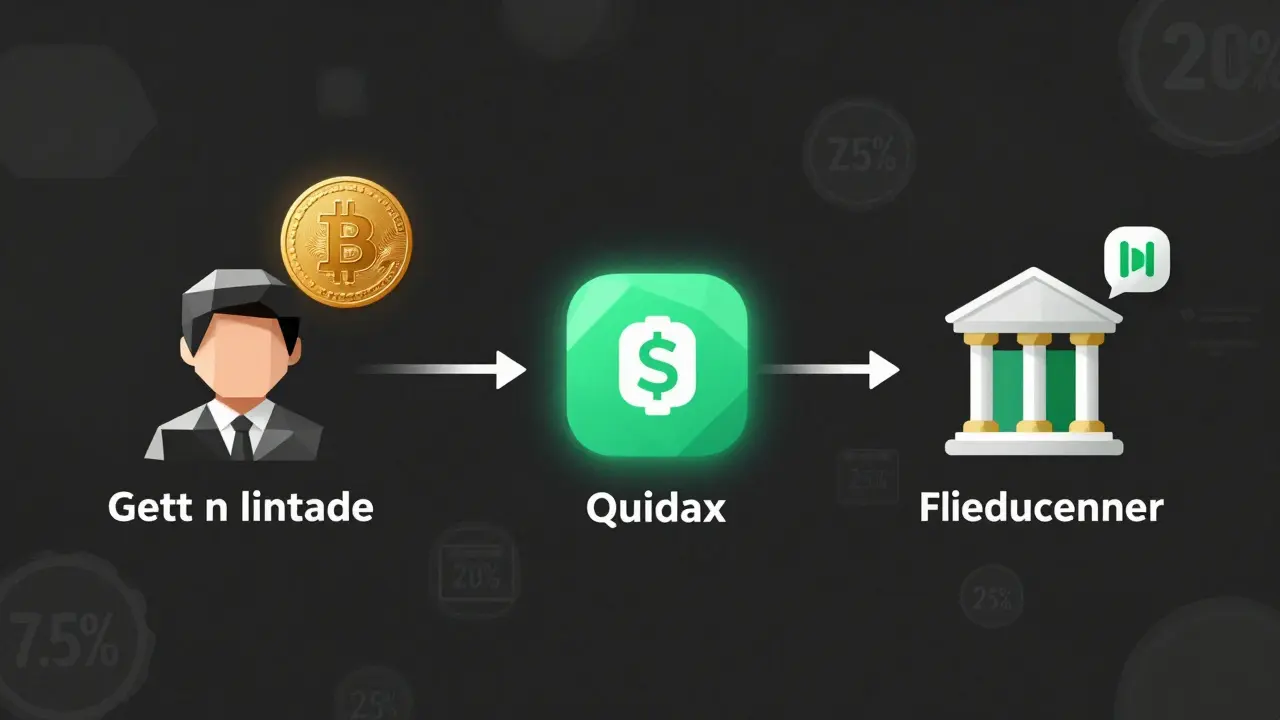
Banks Can Now Work With Crypto Companies
Back in 2021, the Central Bank of Nigeria (CBN) told banks to cut off crypto businesses. That caused chaos. People couldn’t deposit or withdraw naira from their crypto wallets. The ban pushed trading underground and made everything slower. That changed in December 2023. The CBN reversed course and issued new guidelines allowing banks to serve SEC-licensed crypto firms. Now, if you’re using Quidax or another licensed exchange, you can link your bank account. You can deposit naira, cash out profits, and even get paid in crypto - all without your bank freezing your account. This is huge. It means crypto payments are becoming part of the real financial system - not just a side hustle.Taxes Are Now Official - And They Start January 2026
If you made money from crypto in 2025, you might have thought you didn’t owe taxes. That changed on January 1, 2026. The Nigerian Tax Administration Act (NTAA) 2025 came into force, and crypto is now officially taxable. Here’s how it works:- You don’t pay tax just for holding Bitcoin or Ethereum.
- You pay tax when you sell, trade, or cash out - any time you make a profit.
- Individuals pay personal income tax on crypto gains, up to 25% depending on your total income.
- Businesses pay corporate tax: 20% if you earn between ₦25 million and ₦100 million annually, 30% if you earn more.
- And if you run a crypto exchange or payment service, you must charge 7.5% VAT on transaction fees.
What’s Still Banned?
Just because crypto is legal doesn’t mean everything goes. The SEC and NFIU have made it clear: fraud won’t be tolerated. Here’s what’s still illegal:- Ponzi schemes disguised as crypto investments (like “Bitcoin Millionaire” programs)
- Unlicensed crypto exchanges operating without SEC approval
- Using crypto to launder money or hide illegal funds
- False advertising - claiming your crypto product is “guaranteed to double your money”






15 Comments
Kelley Ramsey
January 14, 2026 at 03:52
This is such a refreshing update! I’ve been watching Nigeria’s crypto journey for years, and it’s finally starting to look like a real financial ecosystem-not just chaos with blockchain stickers on it. The SEC licensing is a game-changer, and the bank integration? Pure genius. People can actually build businesses now, not just gamble in the dark.
Also, the tax rules are surprisingly reasonable. 25% max? That’s less than some U.S. states. And charging VAT on exchange fees? Smart. It makes the system self-sustaining. Someone’s actually thinking ahead here.
jim carry
January 16, 2026 at 03:52
Let me be clear: this is not freedom. This is corporate capture dressed up as regulation. The SEC is now a gatekeeper for crypto, and guess who gets to pay the $500,000 compliance fee? The little guys. The big players? They’ll just buy licenses and turn into banks in disguise. This isn’t progress-it’s rebranding colonial control with a blockchain logo.
Katrina Recto
January 17, 2026 at 16:43
Finally someone in Africa got crypto right. No more shady apps. No more freezing accounts. If you’re doing it clean, you’re covered. Period.
Tre Smith
January 19, 2026 at 05:52
While the regulatory framework is commendable on paper, the implementation risks systemic inefficiencies. The absence of standardized accounting protocols for crypto-to-naira conversions introduces material misstatement risks for SMEs. Furthermore, the 7.5% VAT on transaction fees contradicts the OECD’s digital services tax guidelines, potentially exposing Nigeria to WTO disputes. Historical precedent suggests that regulatory overreach in emerging markets often leads to capital flight-see Venezuela 2019. The data shows a 47% drop in user growth post-regulation in similar jurisdictions.
Ritu Singh
January 20, 2026 at 16:44
They say it’s legal but who really controls the SEC? The IMF? The World Bank? They forced this on Nigeria to control the flow of money. Look at the timing-right after the dollar surged. This isn’t about regulation. It’s about surveillance. Your wallet is now a tracking device. And don’t get me started on the tax system-they’re going to use this to build a digital ID grid. They already have your phone number. Now they have your crypto history. This is the new slavery. Blockchain is not freedom. It’s a trap.
kris serafin
January 21, 2026 at 07:12
YES! 🎉 Finally some clarity! Quidax and Busha are legit now? That’s huge. I’ve been using them for months and was scared I’d get raided. Also, banks finally cooperating? Big win. I sent $300 in USDT to my cousin in Lagos last week-converted in 4 minutes. No drama. No frozen account. Just clean, fast, legal money. This is what crypto should be. 👏
Jordan Leon
January 21, 2026 at 12:11
There’s a quiet dignity in how Nigeria approached this. Not with panic, not with prohibition-but with structure. It’s not about banning innovation. It’s about anchoring it. The fact that they recognized crypto as securities rather than currency shows deep understanding. This isn’t imitation. It’s evolution. And for a country that’s been burned before, that restraint is heroic.
Rahul Sharma
January 21, 2026 at 20:45
Good news for small traders. Now you can work with bank. No more fear. But remember: keep record. Every buy, every sell. Even small trade. Tax is real now. Use Excel or free app. Don’t wait till April. You will regret. Also, only use Quidax or Busha. Other app? Risk your money. Not worth it. Stay safe. 💪
Gideon Kavali
January 22, 2026 at 08:48
Let’s be real-this is a victory for African sovereignty! Nigeria didn’t wait for the West to tell them what to do. They built their own rules, their own system, and they’re enforcing it. No more begging for permission. No more accepting foreign platforms that don’t care about their people. This is what real independence looks like. The U.S. and EU are still stuck in crypto denial. Nigeria? They’re leading. 🇳🇬🔥
Allen Dometita
January 22, 2026 at 15:04
Bro this is wild. I used to send crypto to my aunt in Nigeria and she’d have to wait 3 days to get naira. Now? She cashes out in 10 minutes and buys rice the same day. That’s life-changing. And taxes? Fine. I’d rather pay 20% and not get my account locked. This is the future. Chill. Trust the system. It’s working. 🙌
Brittany Slick
January 24, 2026 at 13:44
There’s something beautiful about how this unfolded-not loud, not flashy, but steady. Like a river carving its path. No fanfare, no crypto bros screaming ‘to the moon,’ just people building, transacting, surviving. And now the law finally caught up to the heartbeat of the people. I’m not Nigerian, but I feel proud for them. This is how change should happen.
greg greg
January 26, 2026 at 11:55
It’s worth noting that the Investments and Securities Act 2025’s classification of cryptocurrencies as securities is not merely a legal technicality-it fundamentally redefines the fiduciary obligations of all market participants, including wallet providers and payment processors, who are now subject to the same disclosure, reporting, and anti-fraud provisions as traditional securities firms. This creates a precedent that could influence the EU’s MiCA framework and even the SEC’s own stance in the U.S., where the Howey Test remains ambiguously applied. The Nigerian model, while tailored to local context, offers a template for jurisdictions grappling with the tension between innovation and investor protection, particularly in economies with high informal sector participation and underdeveloped financial literacy infrastructure. Moreover, the reversal of the CBN’s 2021 banking ban signals a remarkable pivot in central banking philosophy, where monetary policy now explicitly accommodates decentralized financial instruments rather than treating them as existential threats-an evolution that could serve as a case study in adaptive governance for emerging markets globally.
Sherry Giles
January 26, 2026 at 23:33
They’re lying. The SEC is a front. The real power is with the CIA and the IMF. They’re using this to track every crypto transaction and build a global surveillance network. The ‘licensed platforms’? They’re all connected to the same data center in Frankfurt. Your wallet isn’t yours anymore. You’re being mapped. And the tax system? It’s a trap to get everyone to register their identity. Soon, you won’t be able to buy bread without a government crypto ID. This isn’t progress. It’s the beginning of the digital police state.
Andy Schichter
January 28, 2026 at 15:32
Oh wow. Nigeria made crypto legal. Groundbreaking. Next they’ll invent the wheel. Meanwhile, the rest of the world is moving on to DeFi 3.0 and tokenized real estate. Nigeria’s still figuring out if they can use a QR code without breaking the law. Congrats. You’re the slowest adopter with the most paperwork.
Caitlin Colwell
January 29, 2026 at 20:28
This actually gives me hope. Not because it’s perfect, but because it’s honest. People are getting paid. Families are getting money across borders. The system isn’t perfect, but it’s trying. That’s more than most countries do.