
How Moroccans Use Crypto for International Payments Despite the Ban
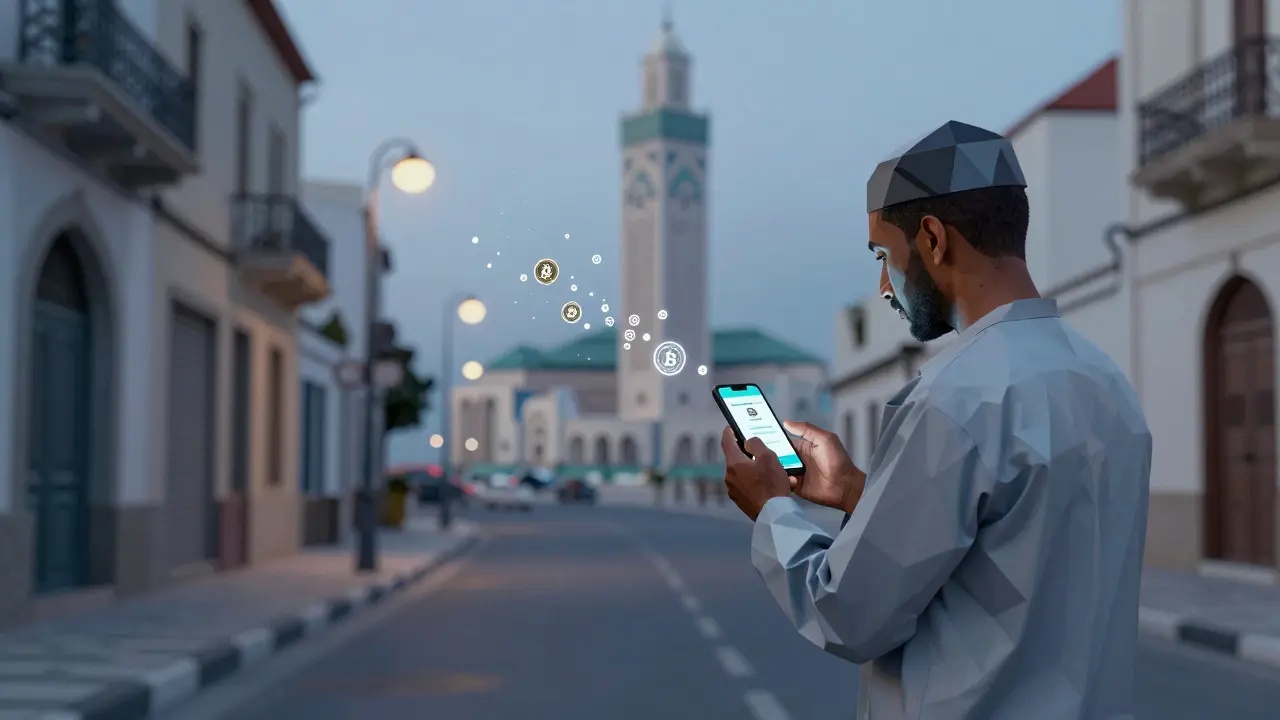
Most people assume that if a government bans something, it disappears. But in Morocco, that’s not how it works with cryptocurrency. Even though the Central Bank of Morocco (Bank Al-Maghrib) outlawed all crypto transactions in November 2017, millions of Moroccans still use digital currencies to send money abroad. Why? Because the traditional system just doesn’t work for them.
The Ban That Didn’t Stick
In 2017, Morocco’s Ministry of Economy and Finance made it clear: no Bitcoin, no Ethereum, no stablecoins. The official reasons? Money laundering, volatility, no consumer protection, and violations of foreign exchange laws. On paper, it looked like a clean break from unregulated finance. But on the ground, it was a disconnect. Moroccans with family abroad - especially in Europe - still needed to send money home. Traditional remittance services like Western Union and MoneyGram charge up to 10% in fees. Banks take days. And sometimes, they just refuse to process transfers altogether.So people turned to crypto. Not because they loved Bitcoin’s price swings. Not because they were speculators. But because it was faster, cheaper, and harder to block. A worker in France sending 500 euros to his sister in Casablanca can now convert it to USDT on a peer-to-peer platform, send it via a Telegram group, and have her cash it out at a local exchange kiosk in less than an hour. No bank approval. No paperwork. No waiting.
How It Actually Works
There’s no official app. No licensed exchange. It’s all underground. Here’s how it flows:- A Moroccan living in Spain logs into a P2P crypto platform like Paxful or LocalBitcoins.
- He finds a buyer in Morocco willing to pay in cash for USDT or BTC.
- He sends the crypto from his wallet to the buyer’s public address.
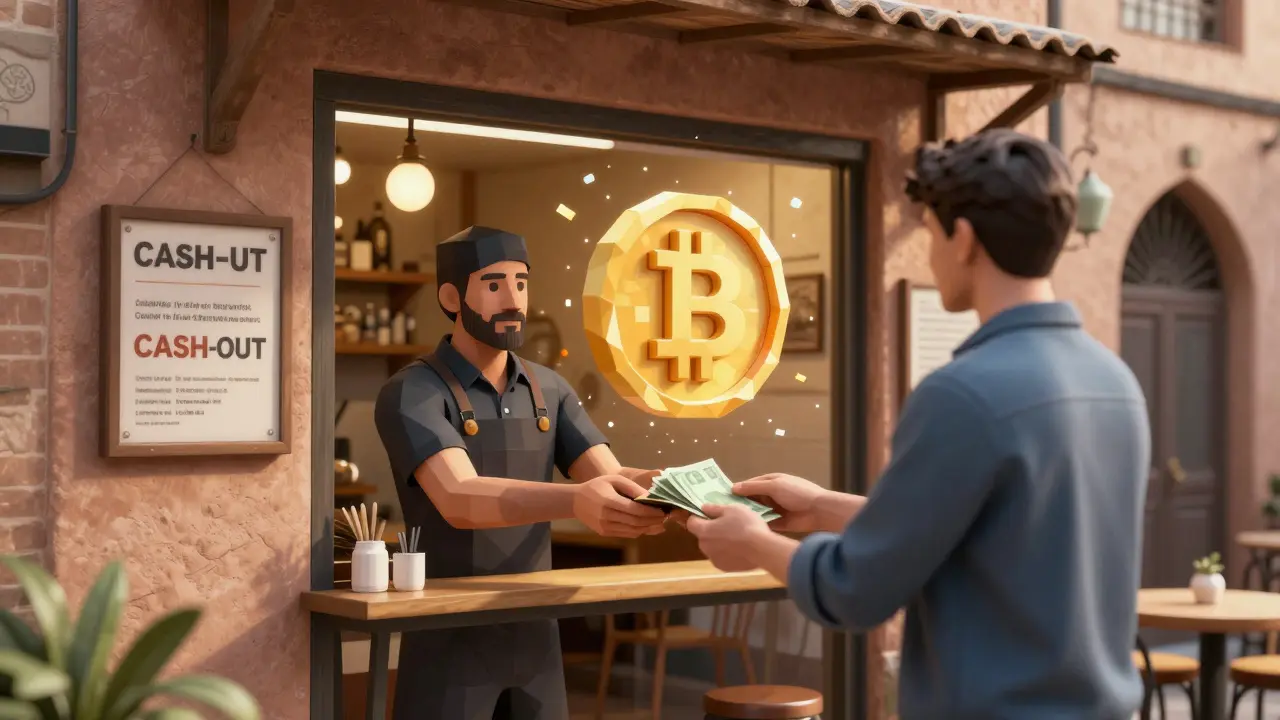
- The buyer shows up at a local shop - often a mobile phone repair stall or a small café - and hands over Moroccan Dirhams.
- The transaction is done. No bank involved. No government record.
These shops have become informal crypto cash-out points. They don’t advertise. They don’t have signs. But everyone in the neighborhood knows who to go to. Some even have WhatsApp groups where buyers and sellers coordinate prices and times. The fees? As low as 1-3%. That’s a huge drop from the 8-10% charged by traditional remittance companies.
Why Crypto Beats Banks
For Moroccans, crypto isn’t about getting rich. It’s about getting paid. Here’s what it solves:- Foreign exchange limits: Moroccan banks restrict how much dirham you can convert to euros or dollars. Crypto bypasses this entirely.
- Slow processing: Bank transfers between Morocco and Europe can take 5-7 days. Crypto? Under 30 minutes.
- Bank refusals: Many banks flag remittances from certain countries as “high risk.” Crypto doesn’t care where you’re from.
- Diaspora demand: Over 5 million Moroccans live abroad. That’s nearly 15% of the country’s population. They send over $8 billion home each year. Crypto is quietly eating into that market.
A 2024 survey by a local research group found that 38% of Moroccans with family overseas had used crypto for remittances at least once. Among those under 35, the number jumped to 62%. This isn’t fringe behavior. It’s mainstream adaptation.
The Central Bank’s Quiet Shift
Here’s the twist: Bank Al-Maghrib isn’t ignoring crypto. It’s building its own version.In 2025, the central bank announced it was finalizing a draft law to legalize and regulate cryptocurrencies. Not to encourage them. But to control them. At the same time, it’s working with the IMF and World Bank to develop a national digital currency - a CBDC - specifically designed for cross-border payments. This isn’t Bitcoin. It’s a government-controlled digital dirham, trackable, reversible, and tied to the central bank’s rules.
Why? Because they’ve realized: you can’t stop crypto. But you can replace it. If people want fast, cheap international payments, why not give them a version that’s safe, legal, and under state control?
They’re also teaming up with Egypt’s central bank. Both countries share similar economic pressures - large diasporas, high remittance volumes, and rigid banking rules. A joint CBDC corridor between Cairo and Rabat could become Africa’s first regulated digital remittance highway.

The Hidden Cost: No Safety Net
But here’s the dark side. When you use crypto in Morocco, you’re on your own. If a P2P buyer disappears after you send the crypto? No recourse. If a local shop gets raided and your cash is seized? No insurance. If your wallet gets hacked? No customer service line. The central bank makes it clear: you are entirely on your own.There have been cases. A man in Marrakech sent 12,000 dirhams worth of USDT to a “trusted” buyer. The buyer vanished. He lost everything. No police report helped. No bank could reverse it. He had no legal claim.
That’s the trade-off. Speed and savings come with zero protection. For many, it’s worth it. For others, it’s a gamble they can’t afford to lose.
What’s Next?
The 2025 draft law suggests Morocco is moving from outright ban to regulated acceptance. But not because crypto is popular. Because it’s unavoidable. The underground market is projected to hit $292.4 million by 2026. That’s not a glitch. That’s a system.The real question isn’t whether Moroccans will keep using crypto. They already are. The question is: will the government let them do it legally - and safely - or will it keep playing cat-and-mouse with millions of ordinary people trying to support their families?
One thing’s certain: as long as banks are slow and expensive, crypto will find a way. In Morocco, it already has.





15 Comments
Charrie VanVleet
February 19, 2026 at 08:46
This is actually one of the most hopeful things I've seen in a while. People finding ways to help their families despite broken systems? That’s human ingenuity right there. 💪❤️
Scott McCrossan
February 19, 2026 at 09:24
So let me get this straight - you’re glorifying an illegal black market because it’s ‘cheaper’? Wow. Next you’ll say we should legalize drug deals because they’re faster than pharmacy wait times.
Sasha Wynnters
February 20, 2026 at 05:30
There’s a quiet revolution happening here - not with blockchain tech, not with decentralization, but with dignity. People refusing to be held hostage by bureaucratic inertia. Crypto isn’t the hero here; it’s the tool. The real story? The unyielding will of the diaspora to keep their kin from starving. That’s the algorithm no one coded.
Ruby Ababio-Fernandez
February 21, 2026 at 23:48
Morocco banning crypto? Good. Let them suffer. We don’t need some underground network running on Telegram scams.
Jenn Estes
February 22, 2026 at 02:17
It’s cute how people think ‘cheaper’ justifies bypassing laws. You don’t get to opt out of financial regulation just because you don’t like the fees. It’s not a coupon code.
sruthi magesh
February 22, 2026 at 21:22
CBDC? Please. This is just the IMF’s Trojan horse. They’re not regulating crypto - they’re burying it under a shiny government app that tracks every sip of coffee you buy. Wake up.
Kyle Tully
February 24, 2026 at 00:27
I mean honestly this is beautiful. People are building their own financial system from the ground up - no banks, no red tape, just trust between strangers in a café in Casablanca. It’s like a modern-day barter system but with USDT. I’m not even mad. I’m inspired. We should all be doing this
george chehwane
February 24, 2026 at 23:41
The central bank’s pivot to a CBDC is the ultimate capitulation. They didn’t win. They surrendered. The underground market didn’t break - it forced the institution to evolve. That’s power. That’s systemic disruption via necessity. The real crypto isn’t Bitcoin. It’s the collective refusal to be disenfranchised.
Rajib Hossaim
February 25, 2026 at 07:57
I respect the resilience of the Moroccan diaspora. However, I believe that formal financial inclusion through education and infrastructure development is a more sustainable path than underground networks. Technology should serve everyone, not just those willing to take risks.
Beth Erickson
February 25, 2026 at 12:09
So let me get this straight - you’re saying people are risking their life savings because banks are slow? Bro. Just open a PayPal. Or use Wise. Or hell, even Venmo. Stop romanticizing crime
Jeremy Fisher
February 26, 2026 at 17:35
I’ve spent years in North Africa and I can tell you - this isn’t unique to Morocco. In Tunisia, Egypt, even Algeria - you see the same thing. Local shops with WhatsApp groups, cash handoffs in back alleys, people using crypto not to get rich but to keep their kids fed. It’s not a glitch in the system. It’s the system working the way it should - human to human, without permission. The banks are dinosaurs. And dinosaurs don’t feed families.
AJITH AERO
February 27, 2026 at 15:04
Lmao. They banned crypto. So people made a black market. Shocking. Next you’ll tell me people started making their own bread when the bakery closed. Newsflash: if you ban something, people will do it anyway. That’s not innovation. That’s basic survival.
Angela Henderson
February 28, 2026 at 12:02
I read this whole thing and just sat there thinking - wow. People are doing what they have to do. No fancy tech talk. No crypto bros. Just a guy in France sending money so his sister can pay rent. That’s it. It’s so simple it hurts. And the fact that the government is now trying to copy it? That’s almost poetic. Like they finally got it... but too late to be the ones leading it.
Geet Kulkarni
March 1, 2026 at 09:07
This is why I love blockchain. 🌍✨ It’s not about decentralization - it’s about dignity. When institutions fail, humanity adapts. And isn’t that the most beautiful form of technology? The human heart, running on USDT. 💖🪙
Paul David Rillorta
March 2, 2026 at 15:45
CBDC? LOL. They’re not building a digital dirham. They’re building a surveillance grid. Every transaction. Every transfer. Every coffee bought with crypto? Logged. Tagged. Flagged. This isn’t regulation - it’s digital handcuffs. And they’re calling it progress. The dystopia is real, folks. And it’s coming with a government logo.