
C-Trade Crypto Exchange Review: Fees, Risks, and What’s Missing in 2026
Have you ever heard of a crypto exchange that pays you to trade? It sounds too good to be true, doesn’t it? That is exactly the hook C-Trade is a cryptocurrency exchange platform known for its unique negative maker fee structure and network-only withdrawal costs. If you are scrolling through trading platforms in 2026 looking for an edge, C-Trade might have popped up on your radar. But before you deposit your savings, we need to talk about what this platform actually offers-and more importantly, what it hides.
The promise is simple: lower costs for active traders and no hidden withdrawal charges. The reality is far more complex. While the fee structure is genuinely innovative, the lack of transparency regarding security, regulation, and user history raises serious red flags. This review cuts through the marketing noise to tell you whether C-Trade is a legitimate opportunity or a risky gamble with your capital.
The Fee Structure: A Double-Edged Sword
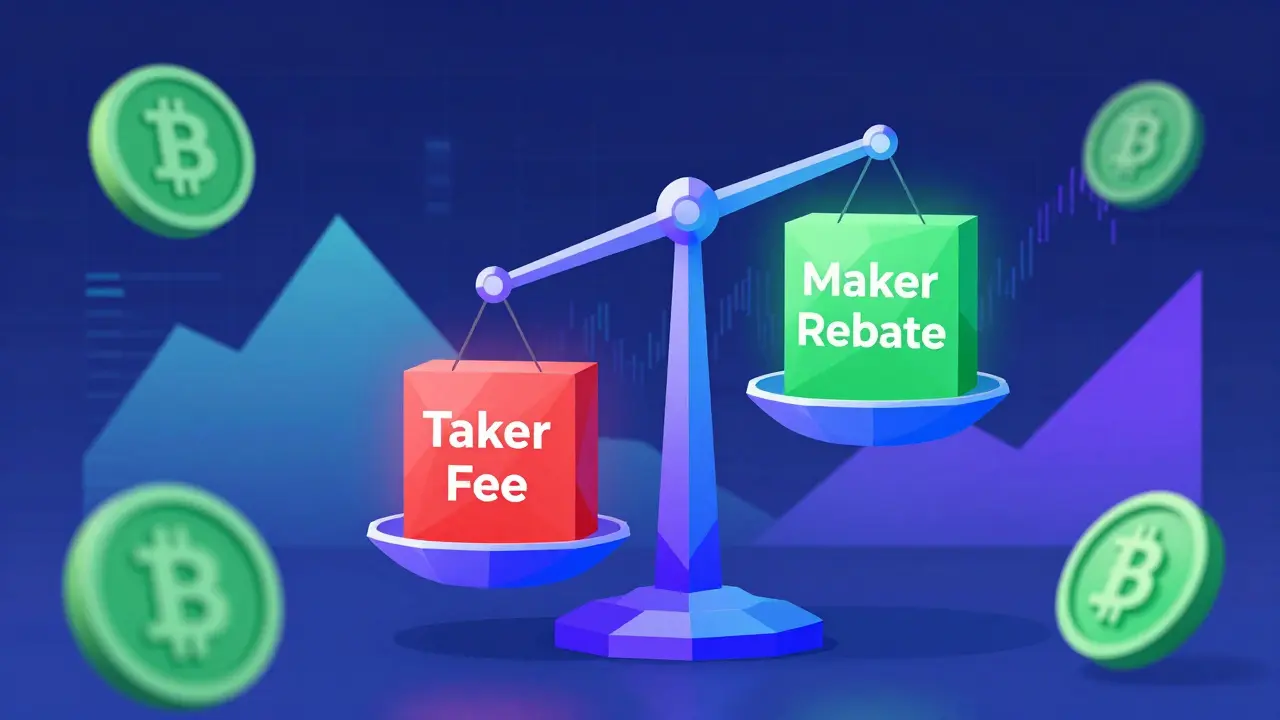
Let’s start with the headline feature. C-Trade operates on a maker-taker model that flips the script on traditional exchanges. Most platforms charge everyone. C-Trade charges takers but pays makers. Here is how it breaks down:
- Taker Fee: 0.075% per order. This applies when you execute a trade immediately against an existing order in the book (e.g., market orders).
- Maker Fee: -0.025%. This is a rebate. When you place a limit order that sits in the order book until someone else takes it, you get paid.
To put this in perspective, if you buy $1,000 worth of Bitcoin as a maker, you don’t just pay zero fees. You receive a $2.50 credit back into your account. For high-frequency traders and algorithmic bots, this is incredibly attractive. It incentivizes liquidity provision, which theoretically leads to tighter spreads and better prices for everyone.
However, compare this to the industry standard. The global average taker fee hovers around 0.0591%, while maker fees average 0.0215%. By charging 0.075% for takers, C-Trade is roughly 27% more expensive than the average exchange for aggressive traders. If you are a retail investor who mostly uses market orders to buy and hold, you will bleed money compared to using a platform like Binance or Kraken. The negative maker fee is a carrot, but the taker fee is a stick.
| Fee Type | C-Trade Rate | Industry Average | Verdict |
|---|---|---|---|
| Taker Fee | 0.075% | 0.0591% | Above Average (Expensive) |
| Maker Fee | -0.025% (Rebate) | 0.0215% | Below Average (Profitable) |
| Withdrawal Policy | Network Fee Only | Fixed + Network Fee | Consumer Friendly |
Withdrawals: No Hidden Exit Fees
One area where C-Trade shines is transparency in withdrawals. Many exchanges lure users in with low trading fees only to nickel-and-dime them when they try to move their funds. They add a "service fee" on top of the blockchain gas fee. C-Trade does not do this.
They charge exclusively the blockchain network fee required to process the transaction. If the Ethereum network is congested and gas prices spike, you pay that cost. If the network is quiet, you pay less. There is no markup from the exchange. According to data from Cryptowisser.com, the industry average for Bitcoin withdrawals includes a fixed exchange fee plus the network cost, often totaling around 0.00053 BTC. C-Trade’s approach typically results in lower total costs because they pass the actual variable cost directly to you without padding it for profit. This is a significant win for users who frequently move assets between cold storage and hot wallets.

The Elephant in the Room: Lack of Information
Here is where the excitement needs to cool down significantly. When reviewing any financial platform, fees are only half the story. Security, regulation, and track record are the other half. With C-Trade, these details are conspicuously absent.
I have spent hours digging through available sources, and here is what I found-or rather, what I didn’t find:
- Regulatory Status: There is no clear information on which jurisdictions regulate C-Trade. In 2026, operating without visible regulatory compliance is a massive risk. Are they registered with the FCA in the UK? The SEC in the US? The Central Bank of Ireland? Without this, your funds have no legal protection if the platform fails.
- Security Audits: Major exchanges publish regular smart contract audits and proof-of-reserves reports. C-Trade has no public record of independent security assessments. How do you know your private keys are secure? How do you know they aren’t commingling user funds?
- User Community: Established exchanges have thousands of reviews on Trustpilot, active subreddits, and Twitter communities discussing outages or features. C-Trade is virtually silent. There are no major user complaints, but there are also no celebrations. This suggests either a very new launch or a platform with extremely limited adoption.
- Liquidity Depth: A negative maker fee is useless if there is no one on the other side of the trade. Without published volume metrics, we cannot verify if C-Trade has sufficient liquidity to handle large orders without slippage.
This silence is deafening. In the crypto world, obscurity is often a warning sign. Legitimate platforms compete on trust and transparency. C-Trade competes solely on a mathematical incentive that benefits professional market makers, while leaving retail users exposed to unknown operational risks.
Who Is C-Trade Actually For?
Based on the fee structure and the lack of retail-friendly features, C-Trade appears tailored for a specific niche: sophisticated algorithmic traders and market makers. These are entities that can write code to continuously provide liquidity, capture the -0.025% rebate, and manage the risk of inventory holding. For them, the higher taker fee is irrelevant because they rarely take liquidity.
For the average person-let’s call them "Alice," who wants to buy $500 of Ethereum every month to save for retirement-C-Trade is likely a poor choice. Alice will use market orders (taker fees), paying above-average rates. She gains no benefit from the maker rebate. Meanwhile, she assumes the risk of trading on a platform with unverified security and regulatory standing. The risk-reward ratio simply does not align.

Safer Alternatives for Retail Traders
If you are looking for a reliable place to trade crypto in 2026, consider sticking with established platforms that offer competitive fees without sacrificing transparency. Here are three alternatives that balance cost, security, and usability:
- Binance: The global leader in volume. Offers tiered fees that drop significantly as your trading volume increases. Highly liquid, regulated in multiple jurisdictions, and supports hundreds of assets.
- Kraken: Known for exceptional security and customer support. Their fee structure is transparent, with maker fees starting at 0.16% and taker fees at 0.26%, but they offer strong educational resources and fiat on-ramps.
- Coinbase Advanced Trade: Ideal for beginners who want simplicity. Fees are slightly higher than Binance but still reasonable, and the platform is fully compliant with US regulations, offering peace of mind for those prioritizing safety over micro-optimizing fees.
These platforms may not pay you to trade, but they provide the infrastructure, insurance, and legal frameworks that protect your capital. In crypto, preserving your principal is more important than saving a fraction of a percent on fees.
Final Verdict: Proceed with Extreme Caution
C-Trade offers a fascinating economic model. The negative maker fee is a clever way to bootstrap liquidity, and the network-only withdrawal policy is consumer-friendly. However, innovation in fees does not compensate for a lack of fundamental trust signals. Without verified regulatory status, public security audits, or a proven track record, C-Trade remains a high-risk proposition.
If you are a professional trader with robust risk management systems and the ability to absorb total loss, you might experiment with small amounts to test their liquidity. For everyone else, the potential rewards do not justify the unknown risks. Stick to regulated, transparent exchanges where your money is protected by law, not just by a promising fee schedule.
Is C-Trade a safe exchange?
There is insufficient public evidence to confirm C-Trade's safety. The platform lacks publicly available security audits, regulatory disclosures, and user reviews. In the crypto industry, transparency is key to trust. Without these elements, users face significant counterparty risk.
What are the trading fees on C-Trade?
C-Trade charges a taker fee of 0.075% and offers a maker rebate of -0.025%. This means you pay to take liquidity from the order book but get paid to provide liquidity via limit orders.
Does C-Trade charge withdrawal fees?
C-Trade does not charge additional service fees for withdrawals. Users only pay the underlying blockchain network fees required to process the transaction. This is generally cheaper than exchanges that add fixed markups.
Who should use C-Trade?
C-Trade is best suited for professional market makers and algorithmic traders who can leverage the negative maker fee structure. Retail investors who primarily use market orders will face above-average fees and higher risk due to the platform's lack of transparency.
Is C-Trade regulated?
There is no publicly verifiable information regarding C-Trade's regulatory status. Users should exercise extreme caution as unregulated exchanges do not offer legal recourse in case of fraud or insolvency.
How does C-Trade compare to Binance?
Binance offers higher liquidity, broader regulatory compliance, and extensive security measures. While C-Trade has a unique maker rebate, Binance provides a safer environment for most users with competitive fees that scale with volume.
Why is there so little information about C-Trade?
The lack of information suggests C-Trade may be a new, niche, or region-specific platform. Established exchanges actively promote their security and compliance. Obscurity in the crypto space often indicates limited adoption or higher risk.
Can I make money with the C-Trade maker rebate?
Only if you are a sophisticated trader capable of providing continuous liquidity. The -0.025% rebate requires high volume and precise execution strategies. For casual traders, the costs of taking liquidity outweigh the benefits of making it.