

Cambodia Banking Restrictions on Crypto: The 2025 Rules You Need to Know
Imagine trying to send money to a friend in Phnom Penh using Bitcoin, only to have your bank account frozen for two weeks. This isn't a hypothetical nightmare scenario; it’s the reality for many users navigating Cambodia’s strict financial landscape in 2025. If you’ve tried to use platforms like Binance or Coinbase recently, you’ve likely hit a wall. Access to these offshore exchanges was blocked by the Telecommunication Regulator of Cambodia (TRC) in late 2024, and the banks are watching every move you make.
The rules have changed drastically since the early days of crypto adoption. What used to be a gray area is now a tightly controlled zone governed by the National Bank of Cambodia (NBC) and the Securities and Exchange Regulator of Cambodia (SERC). Understanding these restrictions is no longer optional-it’s essential for keeping your funds safe and your accounts open.
The New Two-Tier System: Group 1 vs. Group 2
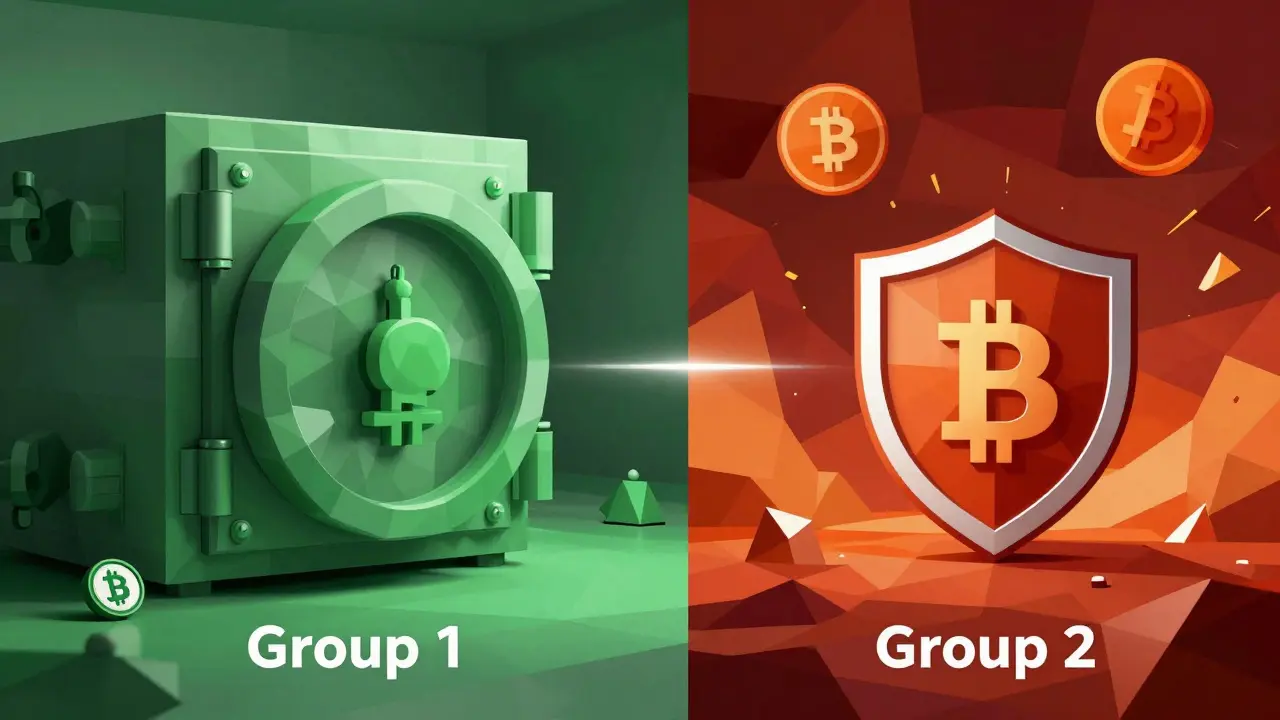
To understand what you can and cannot do, you first need to know how the regulators classify digital assets. In January 2025, the NBC implemented Prakas B7-024-735, which introduced a clear two-tier classification system. This framework dictates exactly how banks can interact with crypto.
Group 1 Assets include tokenized securities and approved stablecoins that are fully backed by traditional assets. Think of these as the "safe" options. Banks are allowed to hold and invest in these assets, but there are strict limits. A bank can only hold Group 1 assets up to 15% of its Tier 1 capital. They also need prior approval from the NBC before making any moves.
Group 2 Assets cover everything else-Bitcoin, Ethereum, and other unbacked cryptocurrencies. Here’s the hard line: commercial banks are expressly prohibited from holding Group 2 assets on their balance sheets. They cannot buy Bitcoin for themselves. However, they *can* provide services related to these assets, such as custody or exchange conversions, but only if they have specific NBC approval and follow rigorous compliance protocols.
| Feature | Group 1 (Tokenized/Stablecoins) | Group 2 (Bitcoin/Ethereum) |
|---|---|---|
| Bank Ownership Allowed? | Yes (up to 15% of Tier 1 Capital) | No |
| Service Provision (Custody/Exchange) | Allowed with NBC Approval | Allowed with NBC Approval & Strict AML |
| Backing Requirement | Fully backed by traditional assets | Unbacked/Volatile |
| Risk Profile | Lower | High |
Why Are the Rules So Strict? The Scam Center Crisis
You might wonder why Cambodia went from being a crypto-friendly hub to one of the most restrictive in Southeast Asia. The answer lies in the rise of online scam centers. For years, criminal organizations operated out of Cambodia, tricking victims into investing in fake crypto schemes. These scams were often tied to forced labor and human rights abuses.
The turning point came in September 2024 when the U.S. Department of the Treasury’s Office of Foreign Assets Control (OFAC) sanctioned key figures, including Ly Yong Phat and his L.Y.P. Group. The sanctions highlighted how virtual currency investments were being used to launder money from these illicit operations. In response, the Cambodian government cracked down hard. The TRC blocked access to 16 major offshore exchanges, including Binance and OKX, because they operated without proper local licensing.
This wasn’t just about protecting consumers from volatility; it was about national security and international reputation. By tightening the screws, the NBC aims to cut off the funding lines for these criminal networks. However, this has created a chilling effect on legitimate crypto users who find themselves caught in the crossfire.
How Banks Enforce Restrictions: The Auto-Flagging Problem
If you’re a regular user, the enforcement mechanism is where things get tricky. Banks don’t just look at whether an exchange is licensed; they monitor transaction patterns. The NBC requires all Crypto Asset Service Providers (CASPs) to implement real-time monitoring systems that detect red flags defined by the Financial Action Task Force (FATF).
Here’s what happens in practice: if you try to use Peer-to-Peer (P2P) trading platforms, your bank account is at risk. Users on forums like Reddit have reported having their Wing Money or ABA accounts frozen for 14 days after making just three small transactions totaling $150. The auto-flagging systems used by banks are blunt instruments. They often cannot distinguish between a legitimate P2P trade and money laundering activity.
Once flagged, you face a bureaucratic nightmare. You may need to provide extensive documentation to prove the source of funds. Trustpilot reviews for major mobile wallets show low ratings specifically for crypto-related services, with complaints citing "excessive documentation requirements." The average processing time to unfreeze an account or approve a new crypto service request can take 15 days or more.
The Licensed Path: Royal Group Exchange and Bakong
Is there a legal way to trade crypto in Cambodia? Yes, but the options are limited. As of early 2025, only a handful of entities have received authorization under the SERC’s FinTech Regulatory Sandbox. The most notable is the Royal Group Exchange, which is the sole licensed platform for retail crypto trading.
Using Royal Group Exchange means going through a rigorous verification process. You’ll need your national ID, proof of address, and potentially additional documents depending on your transaction volume. Once verified, you can convert between USDT and Riel or USD, but there are daily caps-typically around $5,000 per day. The fees are relatively low at 0.8%, but the convenience comes with the cost of regulatory scrutiny.
Another pillar of the ecosystem is Project Bakong. Launched in 2020 with support from Japan’s JICA, Bakong is a blockchain-based payment system that connects 62 banks and thousands of merchants. While Bakong itself doesn’t allow direct trading of Bitcoin, it serves as the infrastructure for regulated crypto-fiat conversions. It processes millions of transactions daily, offering a stable alternative to volatile crypto markets.
For businesses, Bakong offers a lifeline. AgriTech startups like RiceX have successfully secured funding through stablecoin-denominated loans via NBC-approved channels. The approval process takes about 10 days, but the regulatory certainty is worth it for companies looking to operate legally.
Impact on Financial Inclusion and Costs
The strict restrictions have had unintended consequences for ordinary Cambodians. Cambodia has a large unbanked population, particularly in rural areas. Before the crackdown, some turned to crypto as a way to access financial services. Now, those doors are closing.
According to World Bank data, 68% of rural Cambodians lack access to formal financial services. With crypto alternatives restricted, they are left with fewer options. Meanwhile, the cost of remittances remains high. Cross-border payments via traditional banking take 3-5 business days and cost around 6.8% of the transaction value. In contrast, neighboring countries like Vietnam have integrated blockchain solutions that reduce costs to 4.2% and speed up transfers to 24 hours.
This competitive disadvantage hurts Cambodia’s fintech sector. Experts estimate that the restrictive approach could cost the economy $1.2 billion in missed fintech investment by 2027. Innovation is stifled because developers and investors are wary of the regulatory uncertainty.

What Comes Next? 2025-2026 Outlook
If you think the rules will loosen up soon, think again. The NBC’s roadmap for 2025-2026 points toward even tighter control. Director General Chea Serey has stated clearly that no Cambodian bank will facilitate transactions with unlicensed offshore exchanges, regardless of where those exchanges are based.
New measures include mandatory real-time transaction monitoring for all crypto-fiat conversions. The NBC is also expanding restrictions on P2P platforms, aiming to eliminate the gray market entirely. Additionally, the government is pushing forward with its own Central Bank Digital Currency (CBDC) pathway, leveraging Bakong. Governor Chea Chanto has indicated that private cryptocurrencies will not be recognized as legal tender until the CBDC achieves full stability.
International pressure continues to mount. Recent reports show a surge in illicit flows involving sanctioned entities, prompting the U.S. Treasury to consider further sanctions. This global context ensures that Cambodia will maintain its cautious stance, prioritizing financial stability over crypto innovation.
Practical Tips for Navigating the Landscape
So, what should you do if you want to engage with crypto in Cambodia?
- Stick to Licensed Platforms: Use only SERC-authorized exchanges like Royal Group Exchange. Avoid P2P platforms connected to your primary bank account.
- Separate Your Accounts: If you must use offshore exchanges, consider using a separate bank account or e-wallet that you don’t rely on for daily expenses. Be prepared for potential freezes.
- Document Everything: Keep detailed records of all transactions, including invoices and chat logs. If your account gets flagged, this evidence will be crucial for appeals.
- Monitor Regulatory Updates: The rules change frequently. Follow official announcements from the NBC and SERC to stay compliant.
- Consider Stablecoins: If you need a store of value, stick to Group 1 assets like approved stablecoins, which face fewer restrictions than volatile cryptocurrencies.
Cambodia’s banking restrictions on crypto are not going away anytime soon. They are a deliberate strategy to combat crime and stabilize the financial system. While this creates friction for users, understanding the rules helps you navigate the landscape safely and legally.
Can I use Binance in Cambodia?
No, access to Binance and other major offshore exchanges like Coinbase and OKX has been blocked by the Telecommunication Regulator of Cambodia (TRC) since December 2024. Using these platforms may result in your bank account being frozen if transactions are detected.
Which crypto exchanges are legal in Cambodia?
As of early 2025, the Royal Group Exchange is the primary licensed platform authorized by the Securities and Exchange Regulator of Cambodia (SERC). Other Bakong-based platforms may also offer services under strict supervision.
Why did my bank freeze my account for crypto transactions?
Banks use auto-flagging systems to detect suspicious activity, including P2P trades. Even small transactions can trigger a freeze if they match red flag indicators set by the National Bank of Cambodia. You will need to provide documentation to prove the legitimacy of the funds to unfreeze your account.
Can Cambodian banks hold Bitcoin?
No, commercial banks are prohibited from holding Group 2 assets like Bitcoin on their balance sheets. They can only hold Group 1 assets (tokenized securities/stablecoins) up to 15% of their Tier 1 capital with prior NBC approval.
What is Project Bakong?
Project Bakong is Cambodia’s blockchain-based payment system launched in 2020. It connects banks and merchants to facilitate fast, low-cost digital payments. While it doesn’t directly trade crypto, it serves as the infrastructure for regulated crypto-fiat conversions and is part of the country’s CBDC strategy.





18 Comments
Jessie Smith
July 6, 2026 at 15:25
its not just about the scams, its about control. they want you to feel like a criminal for trying to own your own money. the whole two-tier system is just a fancy way of saying 'we only trust what we can touch'.
people forget that bitcoin was designed exactly for this kind of oppression. now they are building walls around it because they know it works.
Drew M
July 7, 2026 at 19:47
Wow, this is actually terrifying 😱😱 I had no idea it got this bad so fast! The part about accounts being frozen for just $150 transactions is insane 🤯🤯 It feels like living in a dystopian novel where every move is watched 👀👀 We really need to be more careful out there folks! 💔💔
Deep Rahman
July 9, 2026 at 18:46
I have been thinking about this situation for a long time and it seems to me that the government is trying to protect people from themselves but in doing so they are taking away their freedom which is something that is very important in our lives today especially when we consider the future of finance and how it will affect us all in the years to come because if we do not have freedom then we do not have anything at all really.
Melissa Beckwith
July 10, 2026 at 02:01
The distinction between Group 1 and Group 2 assets is fundamentally flawed because it assumes that stability equates to safety, which is a fallacy often perpetuated by those who benefit from the status quo. Furthermore, the reliance on auto-flagging systems demonstrates a lack of sophistication in regulatory enforcement, leading to collateral damage for legitimate users who are merely attempting to exercise their financial autonomy within the bounds of the law as they understand it, albeit imperfectly.
Josephine Finlayson
July 10, 2026 at 03:56
It is truly unfortunate that such strict measures are necessary; however, one must acknowledge the severe impact of scam centers on the nation's reputation. Perhaps there is room for dialogue between regulators and legitimate crypto enthusiasts to find a middle ground that ensures security without stifling innovation? Let us hope for a balanced approach in the future!
Tuan Nguyen
July 11, 2026 at 03:21
The inefficiency of the current banking infrastructure is glaring. They claim to be modernizing with Bakong, yet they treat Bitcoin like a virus. This is not regulation; it is incompetence masked as security. The real issue is that the local banks cannot compete with decentralized protocols, so they beg for state protection.
Nick G
July 12, 2026 at 12:45
As someone who has observed the cultural shifts in Southeast Asia regarding digital currency, it is clear that fear drives policy more than logic. The narrative of 'scam centers' is used to justify a blanket ban that hurts the average citizen who simply wants to send remittances home without losing half the value to fees. It is a tragedy of unintended consequences.
Brad Semp
July 14, 2026 at 01:08
The semantic distinction drawn between tokenized securities and unbacked cryptocurrencies is legally precarious. By prohibiting commercial banks from holding Group 2 assets while allowing them to provide custody services, the National Bank of Cambodia creates a liability paradox. If a custodian fails, who bears the loss? The regulatory framework appears to have overlooked this critical nuance in fiduciary responsibility.
Korn Arrieta
July 15, 2026 at 02:23
This is typical bureaucratic overreach. They freeze accounts because they are lazy and use automated tools instead of actual investigation. The fact that they target P2P trades specifically shows they know exactly where the real economy is happening and hate it. Stop using offshore exchanges if you want to keep your money safe, or better yet, stop trusting banks entirely.
Jackie D
July 15, 2026 at 02:53
i mean, its kinda crazy how they blocked binance but still let royal group exchange operate. like, why is one ok and the other not? it feels super arbitrary. i guess we just gotta roll with it and hope our accounts dont get flagged for no reason lol.
Ruth Williams
July 15, 2026 at 19:59
One must adhere to the law, regardless of personal sentiment towards cryptocurrency. The restrictions are in place for national security reasons, and those who choose to ignore them are acting irresponsibly. There is no excuse for facilitating illicit activities under the guise of 'financial freedom'.
Sophie Nakasako
July 16, 2026 at 01:16
I wonder if the introduction of the CBDC will actually solve these issues or just create another layer of surveillance? It seems like the government is doubling down on control rather than fostering trust. Maybe we should look at how other countries are handling this balance between security and accessibility?
Kristy Morrow
July 16, 2026 at 21:33
everyone says its for security but really its just greed. they want to control the money flow. the scam center thing is just an excuse. if you think otherwise you are naive. the system is rigged against you always has been.
John Harman
July 17, 2026 at 21:38
Look, the reality is simple. If you live in Cambodia, you follow Cambodian rules. The banks are scared because they lost control. But yeah, freezing accounts for small amounts is stupid. Just use cash or stick to the licensed stuff. Don't complain if you break the rules.
Antony Lopez
July 18, 2026 at 12:49
Foreign influence is ruining our local markets. These offshore exchanges bring nothing but trouble and crime. We should be proud of our own Royal Group Exchange. Why do people always look abroad for solutions when our own institutions are trying to build a secure future? It’s disrespectful to the efforts of our regulators.
Kat Barr
July 19, 2026 at 02:36
Oh my gosh!! 😲😲 This is so stressful!! I hope everyone stays safe and keeps their docs handy!! 📝📝 Remember to breathe and stay calm!! 💖💖 We can get through this together!! ✨✨
Logan Edmison
July 19, 2026 at 22:16
its weird how they say bakong is safe but its still blockchain. isnt that teh same tech? maybe they just dont get it. or maybe they do and thats why they are scared. idk man just seems fishy to me.
Michelle Walker
July 21, 2026 at 01:02
Stop whining. You wanted decentralization. Now you have regulation. Deal with it. The banks are right to flag suspicious activity. If you are clean, prove it. If you are not, you deserve to lose your money.