
CCBTC Exchange Review 2026: Is It Safe, Legit, or a Scam?
Walking into the world of cryptocurrency trading feels like stepping onto a high-stakes poker table where the house rules change every few minutes. You’ve got your big-name exchanges like Binance and Coinbase that everyone knows, but then there are the smaller, quieter platforms. One name that occasionally pops up in search results is CCBTC. If you’re reading this, you’ve probably seen an ad, heard a whisper on a forum, or found it while looking for obscure trading pairs. The immediate question isn’t just "what is it?" but rather, "is my money safe there?" In the current landscape of 2026, where regulatory scrutiny is tighter than ever, choosing the right platform is about more than just low fees-it’s about survival.
What Exactly Is CCBTC?
To understand whether CCBTC is worth your trust, we first need to pin down what it actually is. According to public records from major aggregators like CoinMarketCap, CCBTC is a centralized cryptocurrency exchange (CEX) that launched on July 1, 2018. It claims to be based in Singapore, a jurisdiction known for having some of the most robust financial regulations in Asia. Being a centralized exchange means that a single company controls the ledger, manages user funds, and facilitates trades between buyers and sellers. This is different from decentralized exchanges (DEXs) like Uniswap, where smart contracts handle the process without a middleman.
The launch date of 2018 places CCBTC in the midst of the last major crypto bull run. Many exchanges started during that period, but only a fraction survived the subsequent bear markets and regulatory crackdowns. The fact that CCBTC still appears in databases suggests it is operational, but "operational" doesn’t automatically mean "reliable." We need to dig deeper into its infrastructure, security, and reputation to see if it’s a legitimate tool for traders or a risky venture.
The Singapore Connection: Regulatory Reality Check
One of the biggest selling points for any exchange claiming a Singapore base is the perceived safety of its regulatory environment. Singapore’s Monetary Authority (MAS) has been a pioneer in crypto regulation, implementing strict guidelines under the Payment Services Act (PSA). For an exchange to operate legally in Singapore today, it typically needs to hold a license from the MAS.
Here is where things get tricky with CCBTC. While data sources list Singapore as its location, finding clear, verifiable proof of a current MAS license specifically for CCBTC can be challenging. Many offshore entities register shell companies in friendly jurisdictions without actually operating their core business there. This is a common red flag in the crypto industry. If CCBTC is not fully licensed by the MAS, users might have fewer legal protections if something goes wrong. Always check the official MAS register before depositing significant funds. If an exchange hides its regulatory status, treat it with extreme caution.
Security Protocols: How Safe Are Your Funds?
In 2026, security is non-negotiable. After years of high-profile hacks-from FTX’s collapse to various DEX exploits-traders know that self-custody is ideal, but when using a CEX, you rely entirely on their security measures. Standard industry practices include cold storage (keeping the majority of funds offline), two-factor authentication (2FA), and regular third-party audits.
For CCBTC, specific details on their security architecture are scarce in public domains. Most reputable exchanges publish "Proof of Reserves" (PoR) reports, which allow users to verify that the exchange holds enough assets to cover all user liabilities. As of now, CCBTC’s presence in PoR initiatives led by firms like Chainalysis or independent auditors is minimal or nonexistent. Without transparent Proof of Reserves, you are essentially trusting the exchange’s word that your Bitcoin or Ethereum is actually there. This lack of transparency is a significant risk factor compared to larger competitors who make this data publicly available monthly.

Fees, Liquidity, and Trading Experience
Let’s talk about the practical side: trading. When you log into an exchange, you care about three things: how much you pay in fees, whether you can actually buy/sell at the price you want (liquidity), and how easy the interface is to use.
Fee Structure: Most CEXs operate on a maker-taker model. Makers (who add liquidity by placing limit orders) usually pay lower fees, while takers (who remove liquidity by market orders) pay more. Without detailed, up-to-date fee schedules easily accessible on CCBTC’s main page, it’s hard to compare them against giants like Kraken or Bybit. Hidden fees, such as high withdrawal charges or spread markups, are common traps on smaller platforms.
Liquidity Depth: Liquidity refers to how many orders are waiting in the book. High liquidity means you can trade large amounts without moving the price significantly. Smaller exchanges often suffer from low liquidity. If you try to sell a large amount of BTC on CCBTC, you might find yourself slipping through multiple price levels, effectively paying more than expected. For active day traders, this slippage can eat profits quickly.
User Interface: Reviews of similar mid-tier exchanges often cite clunky interfaces, slow loading times, and poor mobile app performance. If CCBTC hasn’t invested heavily in UX/UI updates since 2018, new users may find the experience frustrating compared to the sleek, intuitive designs of modern platforms.
Comparison: CCBTC vs. Established Competitors
To put CCBTC in perspective, let’s look at how it stacks up against established players. This comparison highlights why many traders prefer sticking to well-known names unless they have a specific reason to use a niche exchange.
| Feature | CCBTC | Binance / Kraken / Coinbase |
|---|---|---|
| Regulatory Clarity | Unclear / Limited Public Info | High (Licensed in US/EU/Asia) |
| Proof of Reserves | Not Prominently Published | Regular Audits & Public Reports |
| Liquidity | Low to Moderate | Very High |
| Supported Coins | Limited Selection | 300+ Assets |
| User Support | Variable Response Times | 24/7 Multi-channel Support |
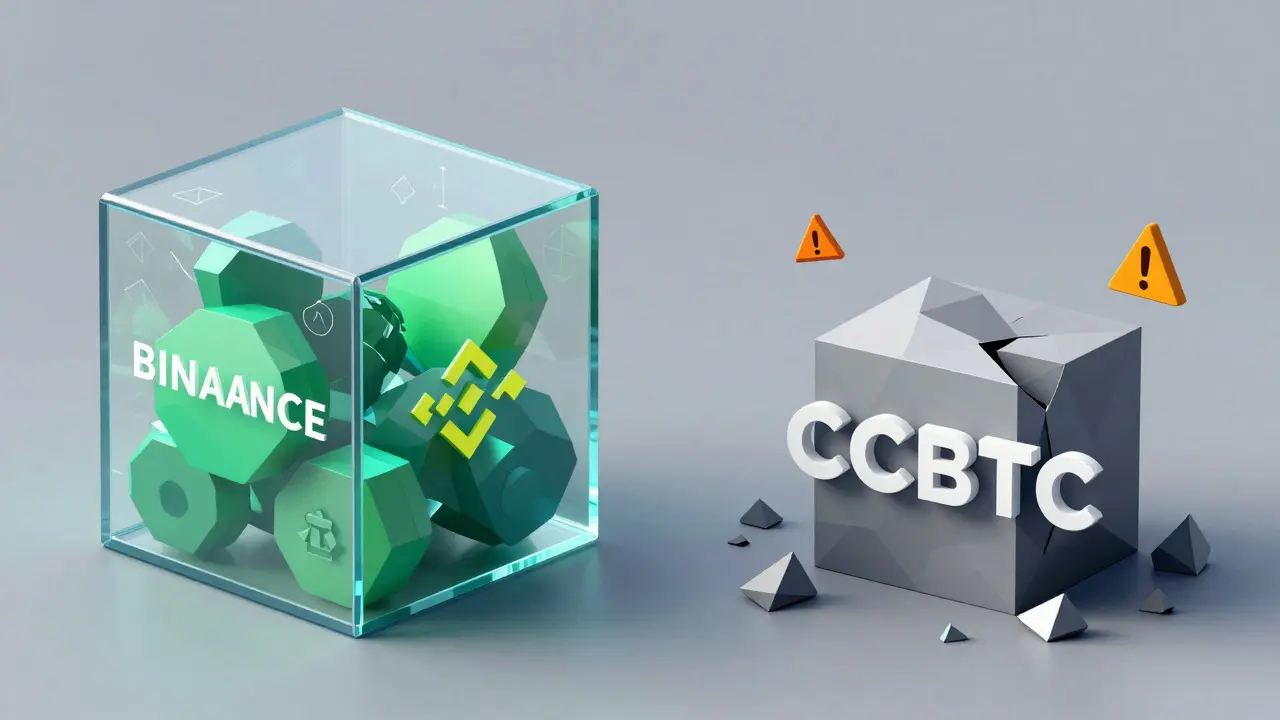
The table above illustrates a common pattern. Larger exchanges invest millions in compliance, security, and liquidity providers. Smaller ones like CCBTC may offer novelty or access to very specific altcoins, but they carry higher counterparty risk. If you don’t need a specific token only listed on CCBTC, there is little incentive to move your funds there.
Red Flags to Watch Out For
Before you create an account, keep these warning signs in mind. The crypto space is rife with scams, and while CCBTC appears to be a legitimate entity from 2018, vigilance is key.
- Aggressive Marketing: If you’re being bombarded with ads promising "guaranteed returns" or "exclusive bonuses," step back. Legitimate exchanges rarely promise profits.
- Poor Online Reputation: Search for recent reviews on Trustpilot, Reddit, or Twitter. Look for patterns of complaints regarding withdrawn funds, frozen accounts, or unresponsive support. A few bad reviews are normal; hundreds of identical complaints are not.
- Lack of Transparency: Who owns the exchange? Where is the headquarters really located? If the "About Us" page is vague or empty, that’s a problem.
- Withdrawal Issues: The true test of an exchange is how fast and easily you can get your money out. Delays in withdrawals are often the first sign of financial trouble.
Verdict: Should You Use CCBTC in 2026?
So, is CCBTC a scam? Based on available data, it doesn’t appear to be a outright fraud in the sense of a Ponzi scheme that vanishes overnight. However, it falls into a gray area of "high-risk, low-transparency" exchanges. For the average trader in 2026, the opportunity cost of using CCBTC is high. You are giving up the security, liquidity, and regulatory protection of major platforms for marginal benefits that may not even exist.
If you are an advanced trader looking for a specific arbitrage opportunity or a rare altcoin pair not found elsewhere, CCBTC might serve a niche purpose. In that case, treat it like a hot wallet: keep only the minimum amount needed for trading and withdraw profits immediately to a hardware wallet. Never store long-term holdings on CCBTC.
For beginners or those seeking a reliable place to buy and hold Bitcoin, Ethereum, or stablecoins, stick to the top-tier exchanges. The peace of mind provided by verified Proof of Reserves and clear regulatory licensing is worth the slightly higher fees. In crypto, safety isn’t just a feature; it’s the foundation.
Frequently Asked Questions
Is CCBTC a legitimate exchange?
CCBTC appears to be a legitimate centralized exchange that has been operating since 2018. However, "legitimate" does not always mean "safe" or "well-regulated." It lacks the extensive public verification and regulatory clarity of major exchanges like Coinbase or Kraken, making it a higher-risk option for storing large amounts of capital.
Where is CCBTC headquartered?
Public records indicate that CCBTC is based in Singapore. Singapore is a major hub for cryptocurrency businesses due to its progressive regulatory framework. However, users should verify if the exchange holds a current license from the Monetary Authority of Singapore (MAS) to ensure full legal protection.
Does CCBTC offer Proof of Reserves?
As of the latest available information, CCBTC does not prominently publish regular, independently audited Proof of Reserves (PoR) reports. This makes it difficult for users to verify that the exchange holds sufficient assets to cover all customer balances, increasing counterparty risk.
How do CCBTC fees compare to other exchanges?
Detailed fee structures for CCBTC are not as widely documented or competitive as those of major global exchanges. Users should expect standard maker/taker fees, but beware of potential hidden costs like high withdrawal fees or wide bid-ask spreads, which are common on platforms with lower liquidity.
Is it safe to leave money on CCBTC long-term?
It is generally not recommended to leave significant amounts of cryptocurrency on any centralized exchange long-term, especially one with less transparency than market leaders. For long-term holding, experts advise using a hardware wallet (like Ledger or Trezor) where you control the private keys, eliminating the risk of exchange insolvency or hacking.