
Sweden Ends Crypto Mining Tax Breaks: What It Means for Miners
Imagine moving your business to a country because they promised you cheap electricity and almost no taxes. You build your infrastructure, hire staff, and start making money. Then, overnight, the government removes those benefits and slaps you with a massive new fee just for using power. This isn’t a dystopian novel; it’s what happened to cryptocurrency miners in Sweden.
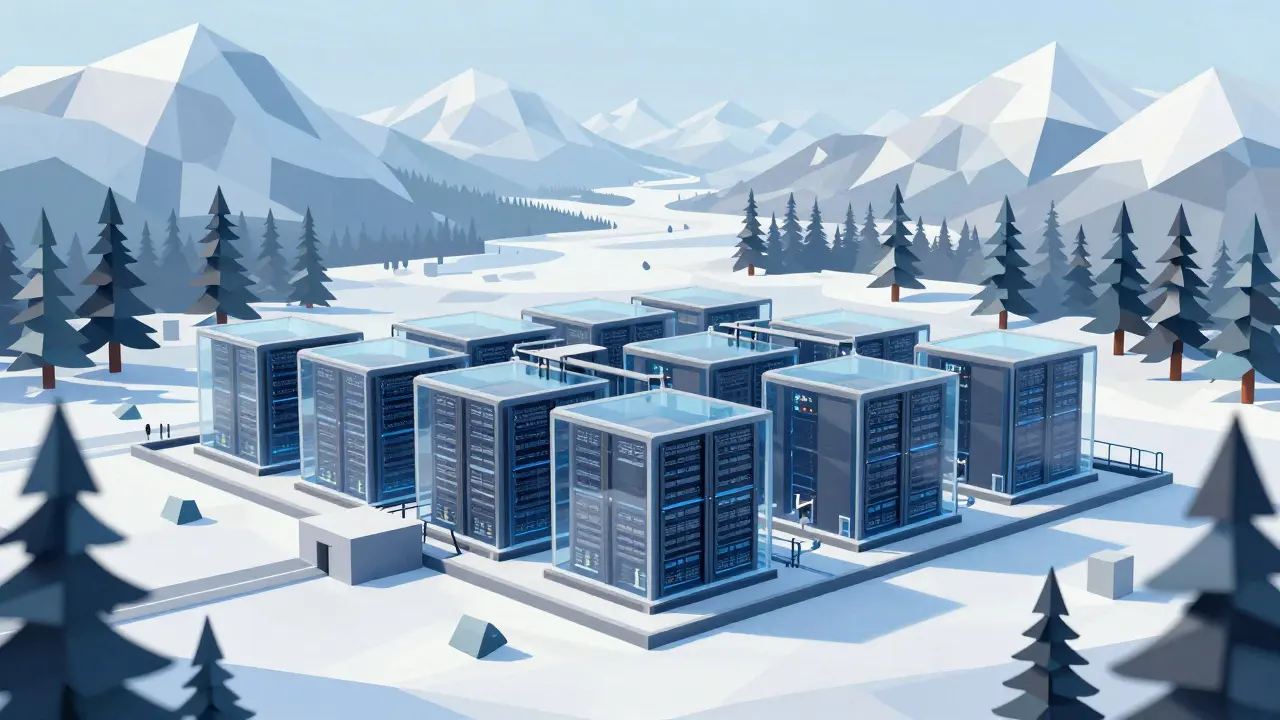
In 2017, Sweden opened its doors wide to data centers, offering a generous 98% tax reduction that made it one of the most attractive places in Europe for digital infrastructure. Tech giants like Microsoft, Amazon, and Facebook rushed in, drawn by the cool climate and abundant hydroelectric power. But by 2023, the mood had shifted dramatically. The Swedish government didn’t just remove the incentives; they implemented punitive measures specifically targeting cryptocurrency mining.
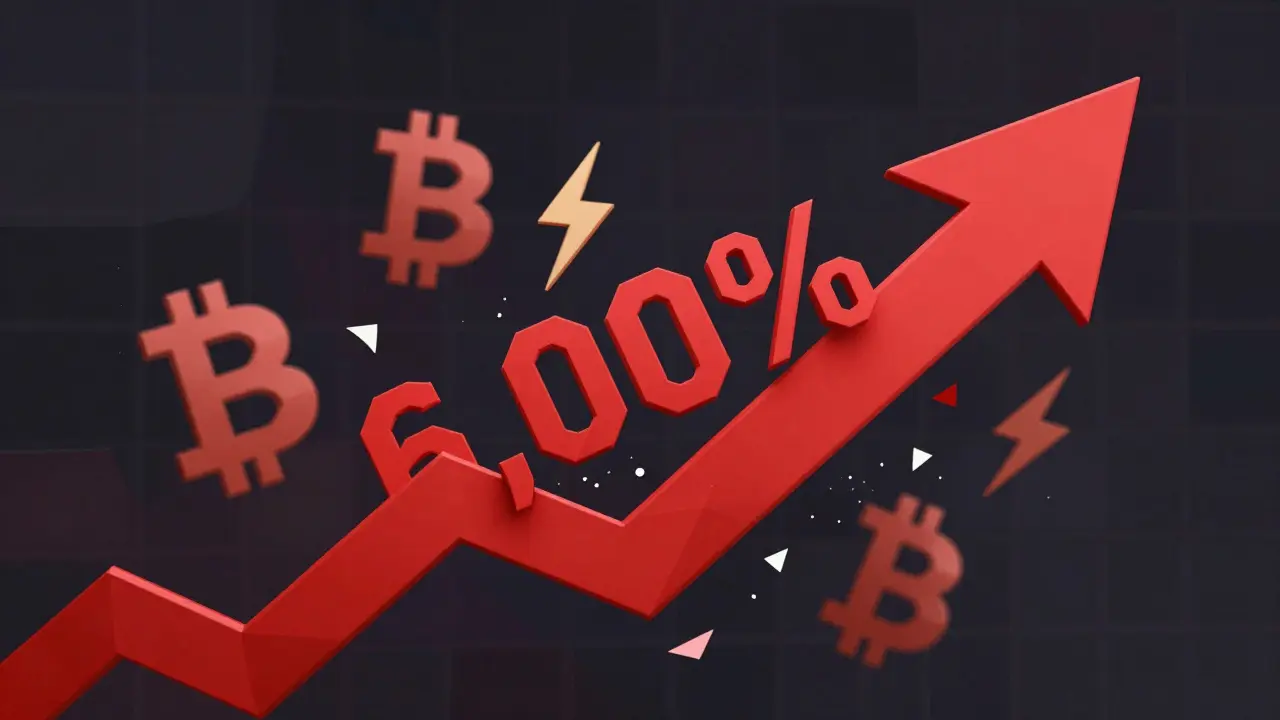
The 6,000% Energy Tax Hike
To understand why this matters, you need to look at the numbers. Before July 2023, the energy tax for data centers was negligible-just SEK 0.006 (about $0.0006) per kilowatt-hour. That tiny figure kept operations profitable even when market prices fluctuated. Then came the budget announcement in November 2022, which set the stage for a seismic shift.
Starting in July 2023, that tax jumped to SEK 0.36 (approximately $0.035) per kilowatt-hour. Let’s repeat that: a 6,000% increase. For an industry where margins are often thin and electricity is the primary cost driver, this wasn’t just a bump; it was a knockout blow. While traditional data centers still operate under different classifications or can pass costs to customers, Bitcoin miners faced a unique problem. Their revenue depends entirely on the price of Bitcoin and their efficiency. If the cost of power exceeds the value of the coins mined, the operation loses money instantly.
This change effectively erased the economic viability of mining in Sweden. Even the most efficient ASIC hardware-the specialized machines used to mine Bitcoin-could not generate enough profit to cover the new tax burden. Industry analysts noted that for mining to remain profitable under these conditions, Bitcoin prices would need to skyrocket by hundreds of percent, a scenario that simply hasn’t materialized.
From Haven to Hostile: Why Did Sweden Change?
You might wonder why a country that actively courted tech investment would turn so hostile. The answer lies in a mix of economic disappointment and past grievances. During the 2018 cryptocurrency market crash, many mining companies in Sweden went bankrupt. However, they didn’t just disappear quietly. They left behind unpaid energy bills, causing substantial disruption for local energy providers and municipalities.
The Swedish government concluded that crypto mining offered minimal contribution to the broader economy. Unlike traditional data centers that support cloud services, streaming platforms, and enterprise software, mining operations were seen as consuming vast amounts of energy without creating significant local jobs or long-term economic stability. According to analysis from GRN Energy, policymakers felt that public tax incentives should go to industries that provide more tangible benefits to society.
This perspective aligns with growing European concerns about energy consumption. With the conflict in Ukraine driving up energy prices across the continent, governments became increasingly sensitive to how electricity was being used. Sweden decided that subsidizing crypto mining was no longer politically or economically defensible.
The Exodus of Miners
When the tax hike took effect, the reaction was swift. Mining operators didn’t wait to see if they could adapt; they packed up and left. Reports from late 2023 indicate that virtually all large-scale commercial mining operations in Sweden had either shut down or relocated. The country, once described by CoinDesk as "the last remaining stronghold of bitcoin miners in Europe," saw its active capacity drop from approximately 150 megawatts to near zero.
Where did they go? Many moved to jurisdictions with friendlier policies. Some headed to Kazakhstan, while others found refuge in parts of Canada and several U.S. states like Texas, which actively compete for mining investment through favorable regulatory frameworks and stable energy grids. These regions offer the low-cost renewable energy and political support that Swedish miners had enjoyed before the policy reversal.
For the operators who stayed, the situation was dire. Companies faced stranded assets-purpose-built facilities and expensive equipment that suddenly lost their value. Liquidating hardware locally fetched poor prices due to oversupply, while relocating involved high shipping costs and logistical nightmares. The rapid implementation timeline gave operators little time to plan, leading to widespread financial distress within the community.
How Sweden Compares to Other Regions
To put Sweden’s actions into context, it helps to compare them with other major mining hubs. Here’s how the landscape looks:
| Region | Tax Incentives | Energy Policy | Regulatory Stance |
|---|---|---|---|
| Sweden | Eliminated | Punitive (6,000% tax hike) | Hostile |
| Norway | Limited | Stable, no specific penalties | Neutral |
| El Salvador | Generous | Subsidized geothermal energy | Pro-Crypto |
| Texas, USA | Various rebates | Market-driven, grid-friendly | Supportive |
| Kazakhstan | Low taxes | Cheaper than EU, but volatile | Competitive |
As you can see, Sweden stands out as an outlier. While Norway has similar natural advantages like hydroelectric power, it has not implemented comparable tax penalties. El Salvador has gone further than any nation by adopting Bitcoin as legal tender and encouraging mining with state-backed energy. In contrast, Sweden’s approach represents one of the most aggressive uses of tax policy to eliminate an entire industry sector.

Impact on the Local Grid and Environment
One argument often made against crypto mining is its impact on the electrical grid. Large mining farms consume power equivalent to small towns. When these operations shut down abruptly, it creates imbalances. In Sweden, the sudden departure of miners forced regional power distributors to adjust their models quickly. On one hand, this freed up energy for other consumers during a period of tight supply. On the other hand, it highlighted the volatility of relying on speculative industries for grid management.
Environmental advocates have mixed feelings. While Sweden prides itself on green energy, the sheer volume of electricity used by miners raised questions about sustainability. By removing mining, the government aimed to prioritize residential and industrial users. However, critics argue that this doesn’t solve the root issue-it just pushes the carbon footprint elsewhere, potentially to countries with dirtier energy mixes.
What This Means for the Future of Crypto Regulation
Sweden’s decision serves as a case study for other governments considering how to handle cryptocurrency mining. It demonstrates that tax policy can be a powerful tool for shaping industrial activity. If a country wants to discourage mining, it doesn’t need to ban it outright; it can simply make it economically unviable.
For investors and miners, the lesson is clear: regulatory risk is real. No matter how favorable conditions seem today, political winds can change rapidly. Diversifying locations and staying informed about legislative trends is crucial. As we move through 2026, the global mining landscape continues to fragment, with operations clustering in friendly jurisdictions and fleeing hostile ones.
If you’re involved in the crypto space, keep an eye on emerging regulations. The era of unchecked growth is over, and compliance is now a core part of the business model. Sweden’s story shows that even established havens can become hostile grounds in the blink of an eye.
Why did Sweden eliminate crypto mining tax incentives?
Sweden eliminated incentives because the government viewed crypto mining as providing minimal economic benefit relative to its high energy consumption. Past experiences with bankrupt miners leaving unpaid bills also influenced the decision to stop subsidizing the industry.
How much did the energy tax increase for data centers in Sweden?
The energy tax increased by 6,000%, rising from SEK 0.006 to SEK 0.36 per kilowatt-hour. This drastic hike made mining operations economically unsustainable.
Where did Swedish crypto miners relocate after the tax changes?
Many miners relocated to jurisdictions with more favorable policies, such as Kazakhstan, parts of Canada, and U.S. states like Texas, which offer competitive energy prices and supportive regulations.
Is crypto mining completely banned in Sweden?
No, crypto mining is not explicitly banned. However, the punitive tax structure makes it commercially unviable for large-scale operations, effectively ending the industry in the country.
How does Sweden's policy compare to other European countries?
Sweden’s approach is among the harshest in Europe. Neighboring countries like Norway have not implemented similar tax penalties, maintaining a more neutral stance toward mining operations.
What was the original tax incentive offered by Sweden?
In 2017, Sweden introduced a 98% tax reduction for data centers to attract technology investments, leveraging its cool climate and hydroelectric power.






15 Comments
Russ Fincham
July 6, 2026 at 03:35
Let's be real, this was inevitable. The Swedish government finally realized they were subsidizing a digital casino that offered zero tangible economic return beyond speculative gains for a handful of wealthy operators. It’s not about 'hostility' towards innovation; it’s about basic fiscal responsibility and energy allocation. When you have a finite resource like hydroelectric power, prioritizing residential heating and industrial manufacturing over hashing SHA-256 algorithms is the only logical move. The article frames this as a betrayal, but it’s actually a correction of market distortions created by short-sighted incentives.
Linda Hilliard
July 6, 2026 at 07:39
Oh, please. Do try to keep up with the geopolitical realities, darling. :P Sweden didn't just 'change its mind'; they corrected a catastrophic policy error born out of naive techno-optimism. The notion that crypto mining contributes to the 'broader economy' is laughable when you consider the massive unpaid bills left behind by bankrupt entities. These aren't pioneers; they are energy vampires draining the grid while offering nothing but volatility. One must appreciate the sheer audacity of expecting a sovereign nation to subsidize your gambling addiction indefinitely. Truly, the ignorance on display here is staggering. :-/
Winston Lacewing
July 7, 2026 at 16:14
This is absolutely heartbreaking for the workers involved! 😢💔 Think of the families who lost their homes because the government decided to punish them for supporting an industry! It’s so unfair how politicians play with people's lives like chess pieces. I can’t even imagine the stress those miners must be under right now. It feels like a personal attack on everyone who believed in the promise of cheap energy. We need more empathy, not more taxes! 🙏✨
Kristine Lawson
July 9, 2026 at 03:51
I find it deeply troubling that the narrative here suggests any moral failing on the part of the Swedish state. To imply otherwise is to ignore the fundamental social contract between citizens and their government. Energy resources are public goods, not private commodities to be exploited by transient corporations. Furthermore, the idea that these miners were 'victims' is preposterous; they engaged in high-risk speculation with full knowledge of regulatory risks. One cannot simultaneously demand tax breaks and then feign outrage when the political will shifts. It is simply bad faith.
Tawny Holmes
July 10, 2026 at 19:38
They moved to Texas. Problem solved. Stop crying about it.
Jessie Smith
July 12, 2026 at 12:31
The whole situation is a microcosm of the larger societal decay we're witnessing. Sweden tried to be the cool kid on the block, inviting the crypto bros in with open arms, only to realize they were just leeches. But let's not pretend the alternative is better. Moving to Texas or Kazakhstan just means shifting the environmental burden to places with less oversight. It's a global game of musical chairs where the music is the sound of burning fossil fuels (or wasted hydro). We're all doomed anyway, might as well enjoy the ride while the ASICs hum. lol
Drew M
July 13, 2026 at 22:18
Wow, what a wild ride this has been! 🎢🤯 I mean, who could have predicted that a country would basically say 'bye bye' to an entire industry overnight? It’s crazy to think about all those servers just sitting there, useless. But hey, at least the grid is happier now! 😊🌱 I guess we’ll see if Texas can handle the load without melting down. Fingers crossed! 🤞✨
Mark Tuason
July 14, 2026 at 11:30
While the emotional responses are understandable, it is important to view this through a lens of regulatory evolution. Governments are tasked with balancing competing interests, and in this case, they chose stability over speculation. This does not necessarily reflect poorly on the industry itself, but rather highlights the need for clearer long-term frameworks. Perhaps other nations can learn from this experience to create more sustainable policies that benefit both investors and local communities.
Ella Collinson
July 15, 2026 at 07:05
The inefficiency of Proof-of-Work is the core issue here, not just the tax policy. From a technical standpoint, the energy expenditure per transaction is astronomically high compared to traditional financial systems or even Proof-of-Stake alternatives. The Swedish decision merely exposed the fragility of a business model reliant on arbitrage opportunities in energy markets. It is a classic example of market failure where externalities (grid strain) were not priced in correctly until the political cost became too high.
Ray Arney
July 16, 2026 at 13:18
I get where everyone is coming from. It's tough when rules change suddenly. But I think we should focus on how we can adapt. Maybe there are ways to make mining more efficient or use excess energy better. Let's work together to find solutions instead of just blaming each other.
Andrew Schneider
July 17, 2026 at 12:29
Oh, boo hoo! Poor little miners! 😭📉 Like the rest of us don't pay taxes! This is exactly why I love watching these tech elites cry. They built their castles on sand and now the tide is coming in. Go ahead, move to Texas and pollute the air there! See if I care! 🙄💅 The drama is delicious. Keep posting your sad stories, it gives me something to laugh at during my lunch break. 🍿😂
Eric Braddock
July 17, 2026 at 23:37
You guys are missing the bigger picture. This isn't just about taxes. It's about control. The governments are scared of decentralized currency because it threatens their monopoly on money creation. By making mining unprofitable, they are trying to strangle Bitcoin at the roots. It's a coordinated effort across Europe to crush the revolution. Wake up sheeple! The next step will be banning wallets entirely. They want you to stay poor and dependent on the banking system. Don't let them win!
Nick G
July 18, 2026 at 18:14
It is truly fascinating to observe how different cultures approach technological integration. In many parts of the world, community consensus drives policy, whereas in Western democracies, legislative bodies often react to economic pressures after the fact. I believe we can learn from this by fostering more dialogue between tech innovators and policymakers before such drastic measures are taken. Understanding the cultural context of energy usage in Scandinavia versus North America reveals much about our differing values regarding sustainability and individual enterprise. Perhaps a middle ground exists where we respect both environmental concerns and entrepreneurial spirit.
Nick Wengel
July 19, 2026 at 11:29
Sweden did what they thought was best for their people. Other countries do what they think is best for theirs. It's not good or bad, just different. Some places like crypto, some don't. Miners move where they are welcome. That's how business works.
Hamza k
July 20, 2026 at 19:26
The sheer audacity of leaving unpaid bills behind is what really gets me. It’s like showing up to a dinner party, eating all the food, trashing the kitchen, and then running out the back door without paying the host. These weren't just 'business failures'; they were breaches of trust with the local communities that hosted them. The dramatic exit wasn't just a business relocation; it was a slap in the face to the municipalities that opened their doors. No wonder the mood shifted so fast. You don't treat your hosts like that and expect an invitation back.