
Crypto Exchange Restrictions for Russian Citizens in 2026
Since 2022, Russian citizens have faced one of the strictest crypto environments in the world. It’s not that crypto is illegal - owning Bitcoin or Ethereum isn’t against the law. But using it? That’s where things get complicated. What started as vague rules has turned into a system designed to keep ordinary Russians out of the crypto market while giving a narrow path to the wealthy and state-connected traders. If you’re a regular citizen in Russia trying to buy or trade crypto today, you’re fighting an uphill battle - and the rules change faster than you can adapt.
What’s Actually Banned - And What’s Allowed
The Russian government made its first real move in January 2021 when it banned using cryptocurrency as payment for goods or services. That didn’t stop people from holding it - just from spending it like cash. But after Western sanctions hit in 2022, the rules got much harsher. The Central Bank of Russia (CBR) began treating crypto like a threat to financial stability, not an asset. They didn’t ban ownership, but they made it nearly impossible to use banks, ATMs, or payment apps to interact with crypto. Your Sberbank account? It can’t send money to Binance. Your Tinkoff card? It’ll get blocked if you try.
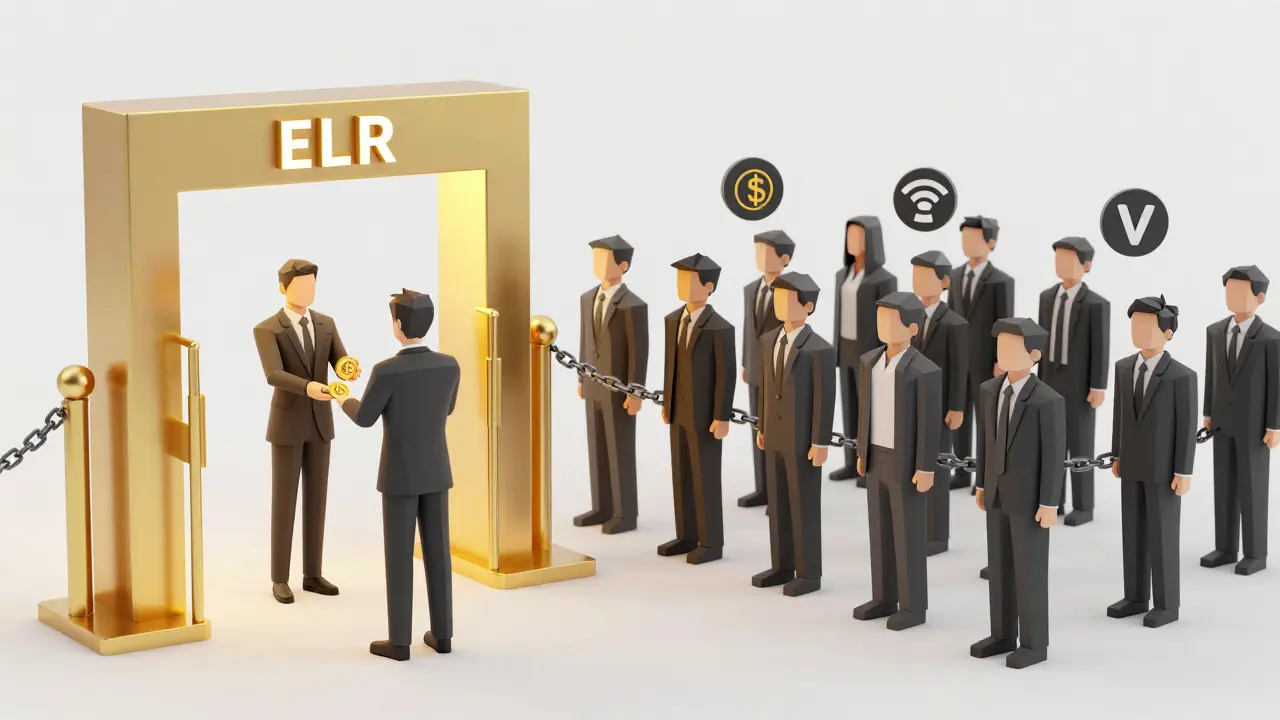
Here’s the twist: the government didn’t shut down crypto entirely. Instead, they created a backdoor. In 2023, they launched the Experimental Legal Regime (ELR), which lets a handful of approved companies - mostly state-linked or sanctioned exporters - use crypto for international trade. Think of it like a VIP lane: only those with enough connections, capital, or political ties can use it. Everyone else? Locked out.
The High-Income Filter: Who Gets In
For regular Russians, the only legal way to access crypto is through a special classification: highly qualified investor. Sounds fancy, right? Here’s what it actually means. To qualify, you need either:
- A personal investment portfolio worth at least 100 million rubles (about $1.1 million USD)
- Or an annual income of over 50 million rubles (around $550,000 USD)
That’s not a typo. You need to be in the top 0.1% of earners just to get a shot at buying Bitcoin legally. Most Russians earn less than 1 million rubles a year. This isn’t regulation - it’s exclusion. The CBR doesn’t want you trading crypto. They want you to keep your money in rubles, even if inflation eats away at it.
How Exchanges Are Blocking Russian Users
Global platforms like Binance and Coinbase didn’t wait for Russian law to act - they moved first. After sanctions hit, they started freezing accounts, blocking logins from Russian IP addresses, and requiring extra ID checks. As of 2025, Coinbase has frozen over 25,000 Russian accounts. Binance now demands proof of address from Russian users - something most people can’t provide without a foreign passport or utility bill from another country.
Trustpilot reviews tell the story: Coinbase has a 2.1/5 rating from Russian users. Binance is at 2.8/5. The top complaints? Accounts locked without warning. KYC rejections. Withdrawals stuck for weeks. Many users say they’ve been asked to submit documents from countries they’ve never visited - just to prove they’re not “sanctioned.”
The Black Market: P2P Trading and VPNs
With banks and exchanges shutting the door, Russians turned to P2P platforms like LocalBitcoins and Paxful. These sites let people trade crypto directly - no bank involved. You pay in cash, through a friend, or via a third-party service. But it’s risky. The Central Bank warned in June 2023 that frequent small trades could lead to your bank account being frozen. And if you’re caught using a VPN to access blocked exchanges? You might not face jail time, but your internet provider could throttle your connection or report you.
According to Chainalysis, P2P trading volume in Russia jumped 217% between 2022 and 2025. That’s not growth - that’s desperation. Most of these trades happen in Telegram groups or private chats. No oversight. No protection. No recourse if you get scammed.
Why This System Is Failing
On paper, Russia’s approach makes sense: stop capital flight, protect the ruble, and prevent sanctions evasion. But in practice? It’s falling apart. Eighty-seven percent of Russian crypto transactions now happen outside any regulated system. That means:
- Money laundering is easier, not harder
- People are using untraceable wallets and mixers
- Offshore exchanges profit while Russian users lose
Meanwhile, the EU’s 19th Sanctions Package in 2025 specifically targets “dirty Russian crypto” schemes - meaning even the P2P traders are now under international scrutiny. The system isn’t protecting Russia - it’s just pushing its citizens into more dangerous corners of the crypto world.
What’s Changing in 2026
There’s been a small signal of change. In October 2025, the Bank of Russia announced banks could finally operate in crypto - but only under strict limits. They can hold crypto assets, but only up to 1% of their total capital. They can offer custody services, but not trading. It’s a tiny crack in the wall, but it’s not for you. It’s for institutions that already have access to foreign markets.
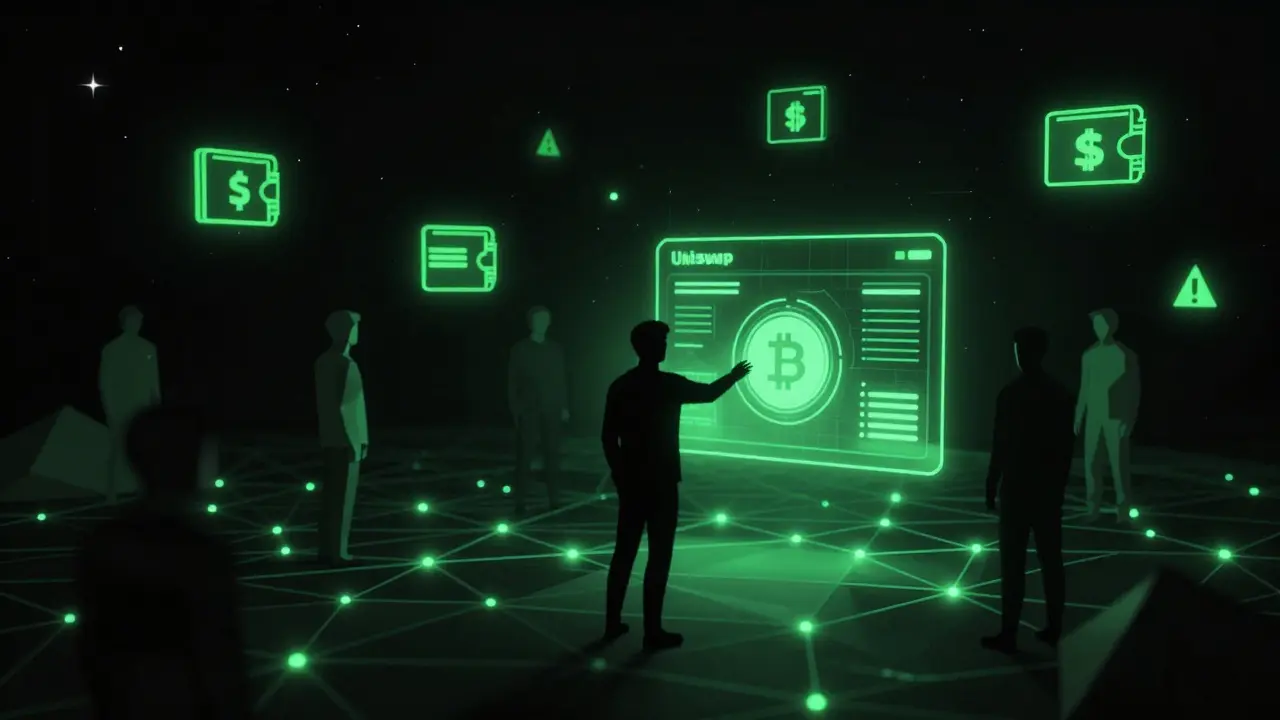
Some experts think DeFi might be Russia’s real future. Platforms like Uniswap or Aave don’t require KYC. You don’t need a bank account. You just need internet access. And that’s exactly what millions of Russians are turning to - even if it means risking their funds on unregulated protocols.
Bottom Line: Who Wins, Who Loses
This isn’t about technology. It’s about control. Russia’s crypto policy isn’t designed to protect citizens - it’s designed to keep power in the hands of the elite. Ordinary people can’t buy crypto legally. They can’t sell it easily. They can’t withdraw their money without jumping through impossible hoops. Meanwhile, sanctioned companies and wealthy investors use crypto to move billions across borders - with government blessing.
If you’re a Russian citizen trying to use crypto today, you’re either:
- Rich enough to meet the 100 million ruble threshold
- Connected enough to use the ELR loophole
- Or risking your bank account on P2P trades
There’s no middle ground. No safe path. And no sign that the rules will loosen anytime soon. The government doesn’t want you to succeed - it just wants you to stop trying.





13 Comments
Heather James
March 14, 2026 at 10:22
This is wild. They didn’t ban crypto-they just made it a luxury item for oligarchs. Like, congrats, you’re rich enough to be allowed to gamble with your own money. Meanwhile, normal folks are stuck using Telegram bots and hoping their friend’s cousin’s uncle doesn’t ghost them after a P2P trade. 🤷♀️
Sarah Hammon
March 16, 2026 at 05:30
i just read this and i’m shook. how is this even legal? it’s like they’re saying ‘you can own bitcoin but you can’t touch it unless you’re already in the top 0.1%’… that’s not regulation, that’s class warfare with a blockchain twist. also typo: ‘100 million rubles’ not ‘100 milllion’ 😅
iam jacob
March 17, 2026 at 01:33
so let me get this straight... the government is fine with billionaires moving crypto across borders but if i try to buy 0.1 BTC to hedge against inflation, i get flagged by sberbank? that’s not security. that’s control. and honestly? kinda pathetic. 🤦♂️
Jesse Pals
March 18, 2026 at 09:43
P2P trading up 217%?? that’s not growth that’s survival mode 😭 people are literally using cash in alleyways and Telegram DMs to keep their savings alive. i’ve seen friends lose thousands because someone vanished after a trade. no recourse. no law. just vibes and a prayer. we need better systems, not more walls
Diane Overwise
March 20, 2026 at 02:16
Ah yes. The Russian government’s brilliant strategy: ban crypto for the people, bless it for the oligarchs. Truly, democracy in action. One can only assume the Central Bank is now running a private crypto club with velvet ropes and a bouncer named Putin. 🙃
Ann Liu
March 21, 2026 at 08:14
The ELR loophole is a textbook case of regulatory capture. When policy is designed to benefit a narrow class of actors under the guise of financial stability, it ceases to be regulation and becomes rent-seeking. The CBR’s actions are not economically rational-they are politically motivated.
Dionne van Diepenbeek
March 22, 2026 at 07:55
Imagine being told you can’t use Bitcoin unless you have a million dollars then wondering why everyone’s on p2p and using vpns like it’s a sport
Graham Smith
March 23, 2026 at 03:33
The structural inefficiencies here are staggering. By disincentivizing retail participation while institutionalizing sanctioned actors, the CBR is effectively creating a two-tiered asset class with asymmetric liquidity. The market is being artificially bifurcated, which violates the fundamental tenets of capital allocation efficiency. Also, DeFi is the only viable path forward-permissionless protocols are the antithesis of centralized control.
Jerry Panson
March 23, 2026 at 08:04
This policy is not only unjust, it is unsustainable. The state’s attempt to monopolize control over financial access is fundamentally at odds with the decentralized nature of cryptocurrency. It will not succeed. It only drives innovation underground and erodes public trust in institutions. The real risk here is not capital flight-it’s institutional irrelevance.
Katrina Smith
March 24, 2026 at 00:37
wait so if i’m poor i’m not allowed to be a crypto bro? how ironic. i thought bitcoin was supposed to be for the people. guess that’s just a marketing slogan now. lol. 🤡
Anastasia Danavath
March 24, 2026 at 08:49
so rich people get crypto access and the rest of us get to risk our life savings on some guy named Vlad who says he’ll send btc if we send rubles to his mom’s account... yep. classic. 🤡💸
anshika garg
March 24, 2026 at 23:50
This is the quiet tragedy of our time. People aren’t just losing access to technology-they’re losing the belief that fairness exists. Crypto was supposed to be the great equalizer. Now it’s just another mirror reflecting how deep the divide has become. I don’t know if the system can be fixed. But I know we can’t stop talking about it.
Bruce Doucette
March 25, 2026 at 17:25
You think this is bad? Try being a normal person in any country where the elite own the rules. Welcome to capitalism, buddy. Crypto didn’t change anything-it just showed you how rigged the game was all along. Now go cry into your ruble.