
What Are Smart Contracts on Blockchain? A Simple Breakdown
Imagine signing a contract, but instead of a lawyer or bank holding it, the agreement runs itself - no middlemen, no delays, no room for cheating. That’s what a smart contract is. It’s not a legal document you print and sign. It’s code. Pure, unchangeable code, running on a blockchain, doing exactly what it was told to do - and only when the rules are met.
How Smart Contracts Actually Work
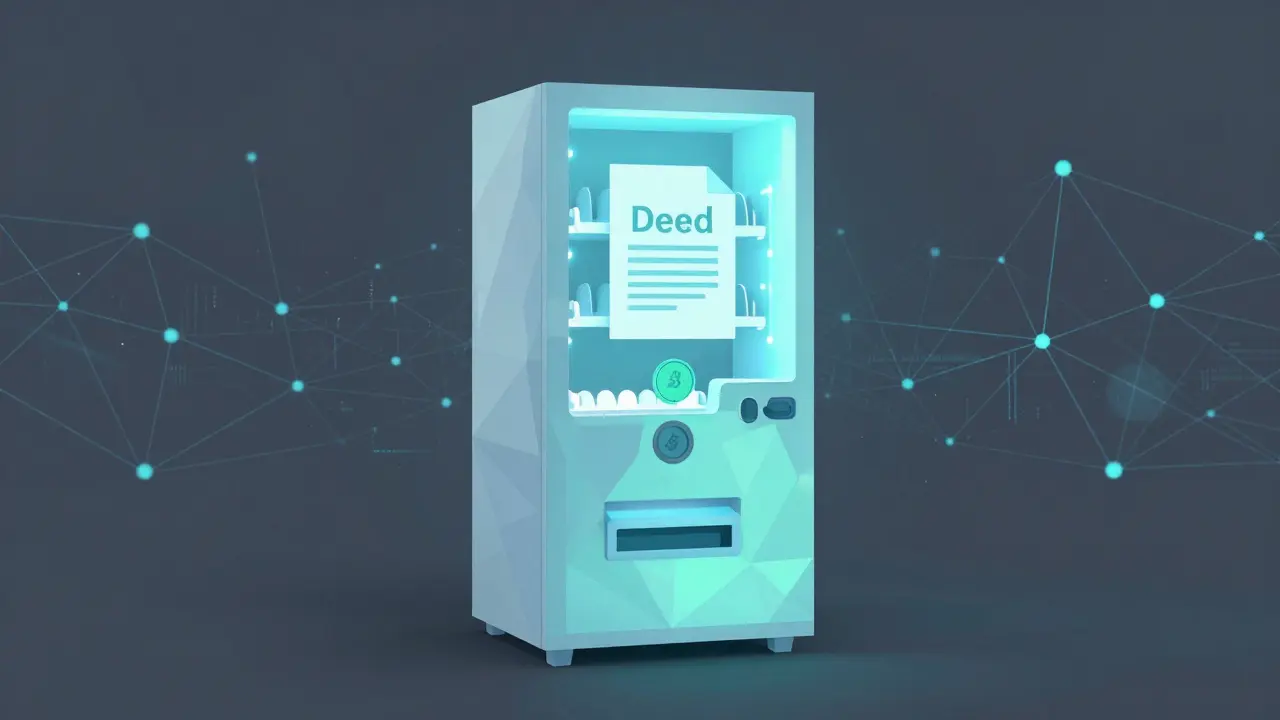
Think of a vending machine. You put in $2, select a snack, and out comes your chip. No clerk needed. No arguing about whether you paid. The machine follows a simple rule: if money is inserted and button is pressed, then release product.
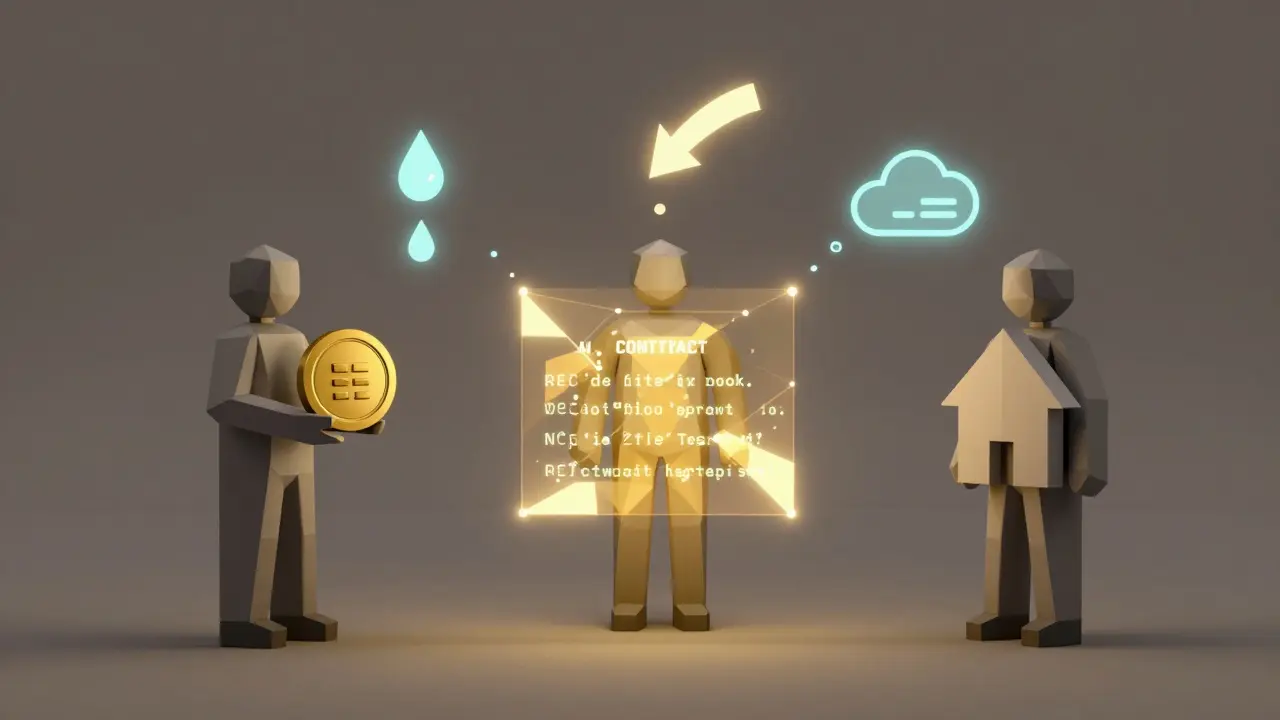
Smart contracts work the same way - but for anything digital. If payment is received by 5 PM on Friday, then release the digital deed to the house. If the weather forecast shows rain tomorrow, then pay out the crop insurance. If the shipment arrives at the warehouse and scans in, then release the final payment to the supplier.
These rules are written in code - usually in languages like Solidity (for Ethereum) or Michelson (for Tezos). Once the code is uploaded to the blockchain, it’s copied across thousands of computers worldwide. No single person controls it. No one can change it. And every time the conditions are met, the network checks, confirms, and executes the action automatically.
Why Blockchain Makes Smart Contracts Possible
Smart contracts don’t work on regular servers. They need blockchain because of three things: transparency, immutability, and decentralization.
- Transparency: Anyone can look at the code. You don’t have to trust the other party - you can check the rules yourself.
- Immutability: Once deployed, the contract can’t be edited. No backdoor. No last-minute changes. What you see is what you get.
- Decentralization: No bank, no court, no government is needed to make it happen. The network of computers enforces the rules.
This is why smart contracts are so powerful. They let two strangers - maybe in different countries, never met, no shared legal system - make a deal that’s guaranteed to be carried out. No paperwork. No waiting. No disputes over whether someone “really meant” to pay.
Where Are Smart Contracts Used Today?
Smart contracts aren’t just for crypto traders. They’re already changing how real businesses operate.
- DeFi (Decentralized Finance): Borrowing, lending, and earning interest without banks. Platforms like Aave and Compound use smart contracts to match lenders with borrowers and automatically calculate interest.
- Insurance: If a flight is delayed by more than 3 hours, a smart contract can automatically pay out your travel insurance - no forms, no calls, no waiting weeks.
- Real Estate: Buying a house? The deed transfers the moment the full payment clears. No title company needed.
- Supply Chains: A shipment of coffee beans gets scanned into a warehouse. The smart contract checks the temperature logs, confirms the delivery date, and pays the farmer instantly.
- Gaming & NFTs: When you buy a digital item in a game, the smart contract ensures you own it - not the game company. You can sell it, trade it, or move it to another game - because the code says you can.
These aren’t hypotheticals. They’re live right now. Companies like IBM, Maersk, and even some national governments are testing or using smart contracts to cut costs and speed things up.
What Platforms Run Smart Contracts?
Not all blockchains can run smart contracts. Bitcoin has very basic ones - mostly just sending money. But the real power came with Ethereum, launched in 2015.
Ethereum is still the most popular platform for smart contracts. It’s where most DeFi apps, NFT marketplaces, and DAOs live. Its language, Solidity, is the most widely taught and used.
But other blockchains are catching up fast:
- Solana: Faster and cheaper than Ethereum - great for high-volume apps like gaming or trading.
- Cardano: Built with peer-reviewed research, focused on security and long-term stability.
- Polkadot: Lets different blockchains talk to each other, so smart contracts can work across networks.
- Tezos: Uses Michelson and has a built-in way to upgrade its own code without hard forks.
Each has trade-offs. Ethereum is the most proven but can be expensive during busy times. Solana is fast but has had outages. Cardano is slow to launch new features but aims for bulletproof code.
The Big Catch: Code Is Law
Smart contracts are perfect - until they’re not.
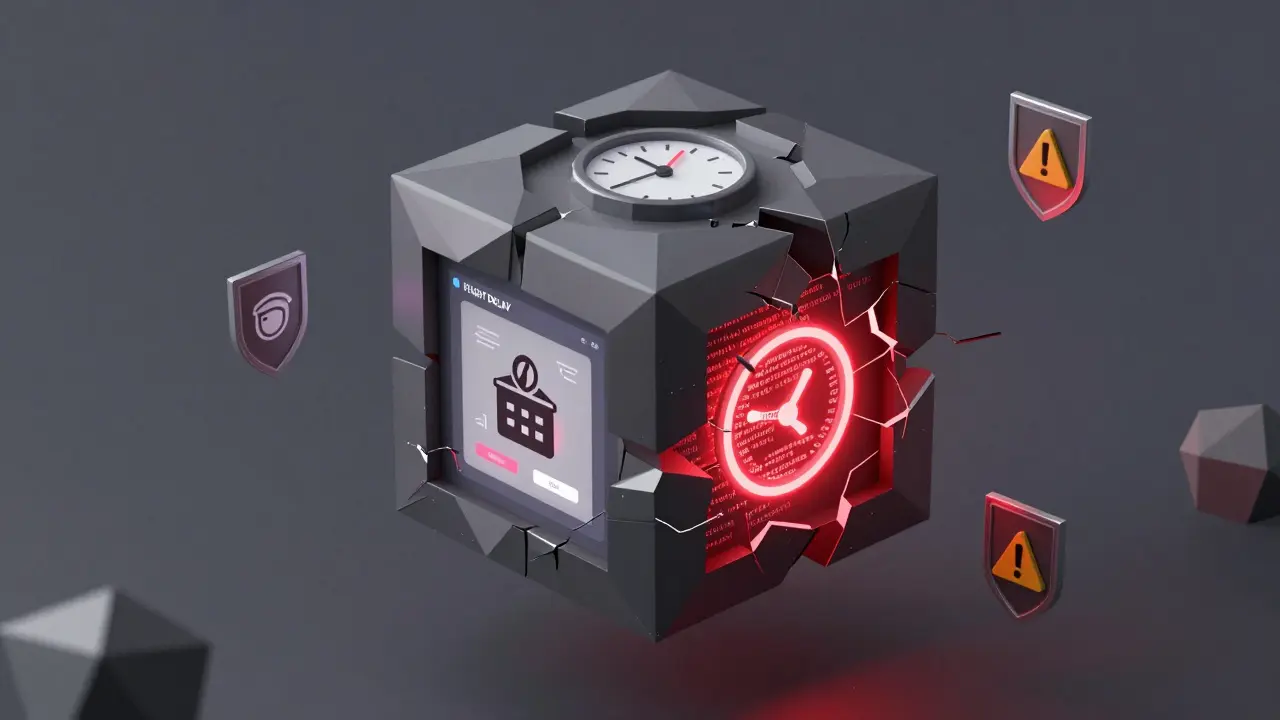
Because they run automatically and can’t be changed, any mistake in the code is permanent. If the logic has a flaw, the contract will execute it - even if it’s a disaster.
The infamous DAO hack in 2016 stole $60 million because a loophole in the code let someone drain funds. It wasn’t a hack of the blockchain - it was a hack of the contract’s design. The community had to hard-fork Ethereum to undo it.
That’s why smart contracts need to be:
- Thoroughly tested - like a pilot runs a plane through every possible emergency.
- Audited by experts - companies like CertiK and OpenZeppelin review code before deployment.
- Simple where possible - more complex code = more places for bugs to hide.
Smart contracts don’t replace lawyers - they replace the paperwork. But they still need smart people writing them.
What’s Next for Smart Contracts?
The next wave isn’t just about more contracts - it’s about smarter ones.
- Cross-chain contracts: A contract on Ethereum triggers a payment on Solana. No bridges. No middlemen.
- Oracles: These are trusted data feeds that bring real-world info (like weather, stock prices, flight status) into the blockchain so contracts can react to it.
- AI + Smart Contracts: Imagine a contract that adjusts loan terms based on your spending habits - verified automatically.
- Government use: Estonia already uses blockchain for land titles. More countries are testing voting, identity, and tax systems with smart contracts.
Healthcare is next. Imagine your medical records are only released when a smart contract confirms you’ve given consent - and only to doctors you’ve approved.
These aren’t sci-fi. They’re being built right now.
Do You Need to Understand Code to Use Them?
No. You don’t need to write code to use a smart contract.
When you buy an NFT on OpenSea, swap tokens on Uniswap, or stake ETH on Lido - you’re interacting with smart contracts. The app you’re using hides the code behind a simple button.
But if you’re thinking about creating one - or putting real money into a DeFi protocol - you need to know what you’re signing up for. Always check if the contract has been audited. Look for a green checkmark or a report from a known security firm.
Never trust a contract just because it’s labeled “decentralized.” Trust the code. And if you can’t read it, find someone who can.


14 Comments
Tyler Porter
December 24, 2025 at 15:39
Wow, this is so cool! It’s like a vending machine for contracts-put in the right info, get the right result. No drama, no waiting, no ‘I thought we meant something else!’-just pure, clean automation. I love it. Seriously, this is the future, and it’s already here.
And the best part? You don’t need a lawyer to make it work. Just code. And a little bit of faith in machines. 😅
Steve B
December 25, 2025 at 08:48
One must ponder, however, whether the illusion of autonomy in these so-called ‘smart’ contracts does not, in fact, mask a deeper dependency on centralized infrastructure-nodes, miners, validators-all still beholden to human design and, therefore, human error. The blockchain may be immutable, but the minds behind the code remain tragically fallible. Is this liberation-or merely a new cage with fewer keys?
Jake Mepham
December 26, 2025 at 08:17
Let me tell you-this isn’t just tech, it’s a revolution in trust. Think about it: in countries where banks are unreliable or corrupt, smart contracts let people do business without needing to trust anyone. A farmer in Kenya gets paid the second his coffee arrives. No middleman skimming 20%. No delays. No excuses.
And it’s not just crypto bros using this. Maersk ships containers with smart contracts tracking every step. Estonia’s voting system runs on it. Even your insurance payout for a delayed flight? Automated. No forms. No calls. Just code doing what it’s told.
Yeah, bugs happen-DAO hack, I know-but we’ve learned. Audits, formal verification, simpler code. It’s getting better every day. This isn’t hype. It’s happening. And you’re already using it, even if you don’t realize it.
Next stop? Your medical records. Only released when YOU say so. No hospital bureaucracy. Just you, your data, and a contract that can’t be overridden. That’s power. That’s freedom.
Jordan Renaud
December 26, 2025 at 18:20
There’s something deeply poetic about code replacing paperwork. We spent centuries building systems to manage trust between strangers-lawyers, notaries, courts, banks. And now, we’re replacing them with logic that doesn’t sleep, doesn’t get tired, doesn’t lie.
It’s not perfect. But maybe that’s the point. We don’t need perfection. We need reliability. And this? This is the most reliable thing we’ve ever built.
It’s not magic. It’s mathematics. And mathematics doesn’t care who you are. It just works.
Luke Steven
December 27, 2025 at 17:58
Smart contracts are like ghosts in the machine-silent, exact, and unyielding. They don’t forgive. They don’t negotiate. They just… execute.
I like that. There’s a quiet dignity in that. No shouting, no lawyers, no ‘I’ll pay you next week.’ Just: if A, then B.
And yeah, sometimes the code screws up. But that’s not the code’s fault. It’s ours. We wrote it wrong.
Still… I’d rather trust a bug in code than a lie in a handshake.
Also, 👍
Janet Combs
December 28, 2025 at 13:47
i just used uniswap the other day and had no idea i was using a smart contract lol. it just worked. like magic. but then i read about the dao hack and got scared. like… what if i accidentally sent my life savings to a glitch? 😭
Dan Dellechiaie
December 28, 2025 at 18:44
Oh wow, another ‘blockchain will save the world’ sermon. Let me guess-you also think NFTs are digital art and DeFi is ‘financial freedom’? Please. Smart contracts are just glorified IF-THEN statements wrapped in hype. The fact that people pay $100 in gas fees to swap tokens while real people starve? That’s not innovation. That’s capitalism with a blockchain sticker on it.
And don’t get me started on ‘audits.’ A $5000 audit from CertiK doesn’t mean squat if the contract has a logic flaw in line 487. You think they test for every edge case? Nah. They test for what’s profitable. The rest? Burned.
Radha Reddy
December 30, 2025 at 06:25
This is truly remarkable. In my country, we often struggle with delays in property transfers and payment disputes. The idea that a contract can execute automatically, without human interference, brings hope. I admire how this technology respects both precision and fairness.
Though I wonder-how do we ensure accessibility for those without technical literacy? The beauty of this system should not be reserved only for those who understand Solidity.
Sarah Glaser
December 30, 2025 at 15:33
Smart contracts are the ultimate equalizer. No matter your nationality, wealth, or social status-if the code says you’re owed something, you get it. No exceptions. No favors. No backroom deals.
That’s not just efficient. That’s just.
And yes, mistakes happen. But every mistake teaches us something. We’re learning how to build better. And that’s the point of progress.
roxanne nott
January 1, 2026 at 05:41
Everyone’s acting like this is new. It’s not. It’s just automated escrow with extra steps. And the ‘code is law’ thing? That’s a death sentence waiting to happen. You think a DAO hack was bad? Wait till a smart contract freezes someone’s life savings because a timestamp was off by one second. Then we’ll see how ‘decentralized’ this really is. Spoiler: it’s not.
Rachel McDonald
January 2, 2026 at 22:25
Ugh. Another ‘blockchain is the future’ post. You people are so naive. You think code can replace human judgment? LOL. What happens when the weather oracle lies? Or the price feed gets manipulated? You’re handing over your money to a bot written by some 19-year-old in a basement. And you call that progress? 😒
Collin Crawford
January 3, 2026 at 06:45
It is imperative to note that the foundational premise of smart contracts-namely, the notion of absolute immutability-is not only philosophically untenable but also technologically unsustainable. The Ethereum network itself has undergone multiple hard forks to rectify code-based failures. This undermines the very premise of immutability. One must therefore conclude that the entire paradigm is predicated upon a rhetorical fallacy: the illusion of incorruptibility.
Jayakanth Kesan
January 5, 2026 at 00:33
Love this breakdown! In India, we’ve got so many problems with delays in payments and paperwork. Imagine if farmers got paid the moment their crop reached the market-no middlemen, no delays. This isn’t just tech, it’s justice. Keep sharing stuff like this!
Also, I just used a smart contract to send money to my cousin abroad. Took 2 minutes. No fees. No questions asked. Mind blown. 🙌
Tyler Porter
January 6, 2026 at 05:31
^^^ YES! That’s the real win. Not the crypto price. Not the NFTs. It’s the 70-year-old farmer in Kerala who finally gets paid on time. That’s the future we’re building.
And yeah, the tech’s messy. But we’re fixing it. Every day. One line of code at a time.