

Understanding Transparency in Blockchain Networks
When you hear "blockchain," you might think of Bitcoin or Ethereum. But what makes these networks actually work? It’s not magic. It’s transparency. Unlike banks or databases controlled by a single company, blockchain lets anyone see what’s happening - and verify it for themselves. No hidden ledgers. No backroom deals. Just a public record that can’t be changed. That’s the core idea behind transparency in blockchain networks.
What Transparency Really Means on a Blockchain
Transparency here doesn’t mean everyone sees your name or personal details. It means every transaction is recorded and visible to anyone on the network. If Alice sends 0.5 BTC to Bob, that transaction isn’t private. It’s stored in a block, linked to the one before it, and copied across thousands of computers worldwide. You can look it up. You can check the time, the amount, the addresses involved - and confirm it’s real. This isn’t just about openness. It’s about trust without a middleman. In traditional finance, you trust your bank because they say so. On a blockchain, you don’t need to trust anyone. You just need to verify. The system is built so that if someone tries to alter a past transaction, the entire chain breaks. Every node checks every block. If one doesn’t match, it gets rejected.How Transparency Is Built Into the System
There are four key pieces that make blockchain transparency work:- Decentralization: No single server holds the data. Thousands of computers (nodes) each keep a full copy of the ledger. If one goes down, the rest keep going.
- Immutability: Once a block is added, you can’t edit it. Change even one number in a transaction, and the cryptographic hash of that block changes. That breaks the link to the next block, and the whole chain becomes invalid.
- Public Accessibility: Anyone with an internet connection can read the blockchain. Tools like Etherscan let you search for any transaction on Ethereum. You don’t need permission.
- Consensus Rules: Before a transaction gets added, the network agrees it’s valid. This isn’t done by a CEO or regulator - it’s done by code and the majority of participants.
Think of it like a public spreadsheet that updates itself in real time and can’t be deleted. Every change is logged, time-stamped, and verified by the crowd.
Smart Contracts: Automation With Accountability
Transparency gets even more powerful with smart contracts. These are self-executing programs stored on the blockchain. They run automatically when conditions are met - no human needed. For example, imagine a rental agreement coded as a smart contract. The tenant sends rent in crypto on the 1st of the month. The contract checks the blockchain: Did the payment arrive? Is the date correct? If yes, it unlocks the digital key to the apartment. If not, nothing happens. No landlord, no property manager, no dispute. Because the code is public, anyone can audit it. You can see exactly what triggers the payment. No hidden fees. No loopholes. This kind of automation removes guesswork and human error - and makes accountability unavoidable.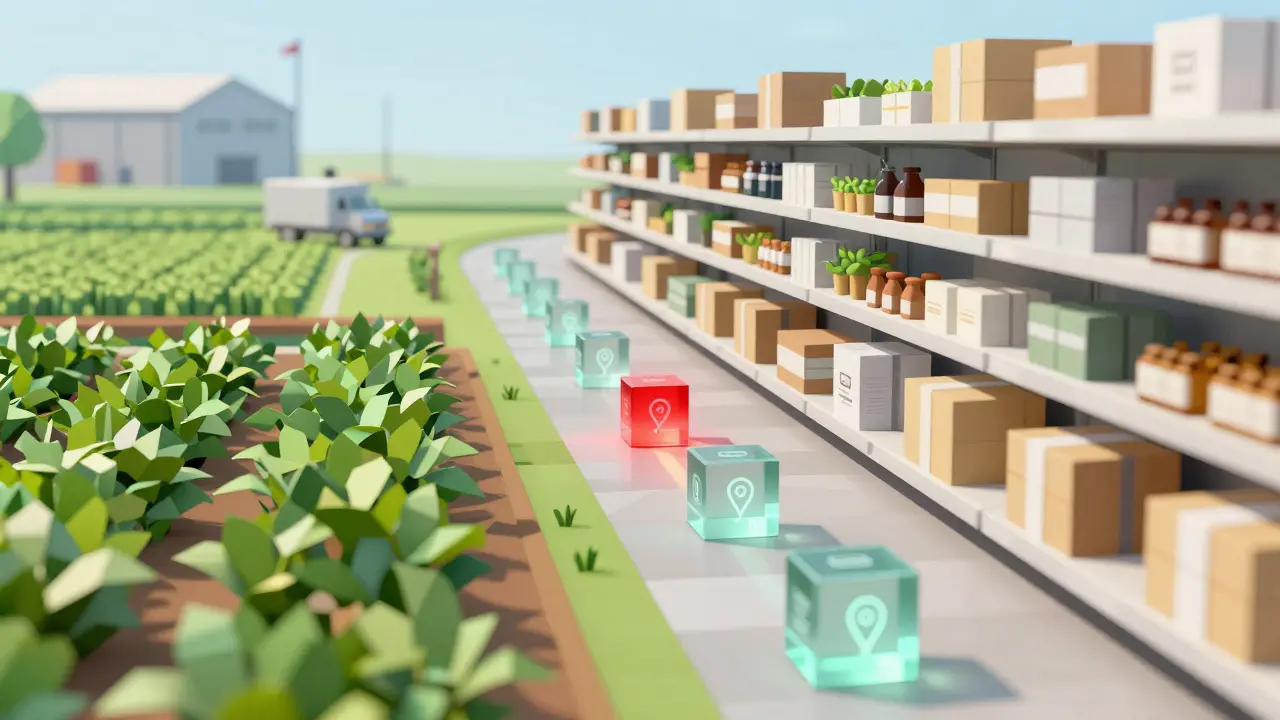
Consensus Mechanisms: Who Gets to Decide?
Not all blockchains are the same. Some use Proof of Work (like Bitcoin), where miners solve complex math puzzles to add blocks. Others use Proof of Stake (like Ethereum), where validators are chosen based on how much crypto they hold and are willing to "stake" as collateral. Then there’s Delegated Proof of Stake (DPoS), used by networks like EOS and Cardano. Here, token holders vote for a small group of delegates (usually 20-100) to produce blocks on their behalf. These delegates are incentivized to act honestly - if they cheat, voters can remove them. Rewards are shared with voters, creating a feedback loop that encourages good behavior. The key point? Transparency isn’t just about seeing transactions. It’s about seeing how decisions are made. Who validates? How are they chosen? Can they be replaced? These questions are answered openly in the code.Why Transparency Matters in Real Life
You might think, "So what? I don’t trade crypto." But transparency is already changing industries. In supply chains, companies like Walmart and Maersk use blockchain to track food from farm to shelf. If there’s a contamination scare, instead of guessing where the problem started, they can trace it back to the exact farm, truck, and warehouse in seconds. That’s transparency saving lives and money. In corporate governance, boards can use blockchain to record votes and decisions. No more "I didn’t know that was approved" or "the minutes got lost." Every vote is permanent, public, and verifiable. Shareholders can check exactly how decisions were made - and who voted which way. Even charities are using it. The United Nations tested a blockchain system to distribute aid to refugees. Donors could see exactly where their money went - down to the date, location, and item received. No more claims of corruption. Just proof.The Balance: Transparency vs. Privacy
But here’s the catch: total transparency isn’t always right. What if you’re a business tracking proprietary data? Or a person who doesn’t want their financial history public? That’s why newer blockchains like Zcash and Monero use zero-knowledge proofs. They prove a transaction is valid without revealing the sender, receiver, or amount. It’s still transparent in structure - the network verifies everything - but the details stay hidden. Most public blockchains like Bitcoin and Ethereum are moving toward a middle ground. They keep transactions public but use techniques like address mixing and ring signatures to obscure patterns. It’s not perfect, but it’s a practical compromise.
What Happens When Transparency Breaks?
Transparency only works if the rules are followed. If a group controls more than 50% of the network’s computing power (a 51% attack), they could theoretically alter the chain. That’s rare on big networks like Bitcoin - too expensive and too visible. But on smaller chains, it’s happened. In 2022, the Ronin Network bridge was hacked because validators were compromised. The attack worked because the system didn’t have enough independent nodes. Transparency didn’t save it - poor design did. This shows: transparency isn’t magic. It needs good architecture. A transparent system with weak consensus rules is just a public ledger with holes.Where Blockchain Transparency Is Headed
The future isn’t about making everything public. It’s about making the right things visible to the right people. We’re seeing more hybrid systems: public blockchains for audit trails, private chains for sensitive data. Think of it like a company’s financial statements - public to regulators, private to employees. Smart contracts are getting smarter. They’re now being linked to real-world data feeds (oracles) to trigger payments based on weather, shipping delays, or stock prices. All of it recorded on-chain. That means insurance claims, supply chain penalties, or even carbon credits can be automated - and fully auditable. Governments are starting to test blockchain for land registries, voting, and tax collection. Estonia already uses it for health records. The goal? Reduce fraud, cut bureaucracy, and rebuild public trust.Final Thought: Transparency Is the New Trust
For centuries, we trusted institutions because they had authority. Now, we’re starting to trust systems because they’re transparent. You don’t need to believe a bank. You can check the numbers yourself. That’s a quiet revolution. It’s not about replacing people. It’s about giving everyone the tools to verify what’s true. And in a world full of misinformation, that’s not just useful - it’s essential.Can I see every transaction on a blockchain?
Yes, on public blockchains like Bitcoin and Ethereum, every transaction is visible to anyone. You can search addresses, view balances, and track the history of every coin using tools like Etherscan or Blockchain.com. However, the real-world identity behind an address is usually hidden unless someone links it themselves.
Does transparency mean no privacy on blockchain?
No. Transparency and privacy aren’t opposites. Public blockchains show transaction details, but not necessarily who you are. You can use new privacy tools like zk-SNARKs (used in Zcash) or coin mixing services to hide your identity while still proving the transaction is valid. Some networks even let you choose what to reveal - useful for businesses that need to audit without exposing trade secrets.
How do smart contracts improve transparency?
Smart contracts make rules automatic and visible. Instead of relying on someone to pay you on time, the contract pays you automatically when conditions are met. Because the code is stored on the blockchain, anyone can review it. There’s no hidden clause. No dispute over terms. What you see is what executes.
Can blockchain transparency prevent fraud?
It doesn’t prevent fraud by itself, but it makes it much harder to get away with. Once a transaction is on the chain, altering it requires controlling most of the network - which is expensive and obvious. Fraudulent behavior leaves a permanent trail. That’s why institutions like banks and governments are adopting blockchain: it shifts fraud from hidden to exposed.
Is blockchain transparency only for cryptocurrencies?
No. While crypto brought blockchain into the spotlight, transparency is now used in supply chains, voting systems, medical records, and even real estate. Any process that needs trust, auditability, and accountability can benefit. For example, tracking organic food from farm to store or verifying that a company met its carbon reduction targets - all using blockchain records.





28 Comments
Danyelle Ostrye
January 9, 2026 at 06:22
Transparency is cool and all but let’s be real - most people don’t care about blockchain unless it saves them money or time. I’ve seen folks get lost in the tech and forget the actual use case.
Bottom line: if it doesn’t solve a real problem, it’s just a fancy spreadsheet.
Mujibur Rahman
January 9, 2026 at 13:12
Transparency in blockchain isn’t transparency - it’s visibility with zero accountability for the actors behind the addresses. You think seeing a transaction is enough? Nah. You need identity verification, not just hash chains.
Bitcoin’s pseudonymity is a bug, not a feature. And don’t get me started on how DeFi protocols exploit this to launder money under the guise of ‘decentralization’.
Real transparency means knowing who you’re transacting with, not just that the numbers add up. The whole ‘trustless’ thing is just a marketing slogan for regulatory arbitrage.
Jennah Grant
January 10, 2026 at 05:28
Actually, the way you framed transparency as ‘seeing transactions’ misses the bigger picture. It’s not about who sent what - it’s about how the rules are enforced without central authority.
The real innovation is consensus as a social contract encoded in code. That’s the paradigm shift - not the public ledger itself.
People keep conflating transparency with privacy, but they’re orthogonal. You can have both - Zcash proves it. The challenge is UX, not tech.
Dennis Mbuthia
January 10, 2026 at 22:32
Ohhhhh so now we’re all supposed to be thrilled because some crypto bros made a public ledger??
Let me get this straight - you’re telling me that instead of trusting a bank with FDIC insurance, we’re supposed to trust a bunch of anonymous miners in a basement in Kazakhstan who run rigs powered by coal??
And you call THAT progress??
Blockchain doesn’t fix corruption - it just moves it to the cloud and adds a fancy UI.
And don’t even get me started on Ethereum gas fees - that’s not transparency, that’s extortion.
USA invented the internet, not this crypto nonsense. Get back to work.
Dave Lite
January 12, 2026 at 18:09
Yessss this is exactly why I love blockchain - it’s not about the tech, it’s about the *trust model* 🤝
Imagine if your landlord couldn’t raise your rent without 60% of tenants voting on it. That’s what smart contracts enable.
And yeah, I know people say ‘but you can’t see who’s behind the address’ - but guess what? Neither can your bank teller see your full financial history. Privacy isn’t the enemy - opacity is.
Tools like zk-SNARKs are game-changers. You can verify a transaction without knowing the details - like a notary stamp that says ‘valid’ without showing the contract.
Also - if you’re still using Coinbase to store your crypto, you’re doing it wrong 😅
Becky Chenier
January 13, 2026 at 22:05
While the technical architecture of blockchain offers compelling advantages in auditability, the social implications remain underexamined.
Transparency, in this context, may inadvertently exacerbate surveillance capitalism by normalizing perpetual visibility.
It is not inherently liberatory - it is merely a new vector for data extraction.
One must interrogate not only the protocol, but the incentive structures that govern its adoption.
Staci Armezzani
January 14, 2026 at 04:37
Love this breakdown - seriously, you nailed the balance between tech and real-world impact.
One thing I’d add: transparency only works if people can *use* it. Most folks can’t read a blockchain explorer. So we need tools that translate that data into plain English - like a ‘transaction history’ view for grandma.
Also, the supply chain examples? Game changer. I work with a food co-op that’s testing this - farmers love it because they get paid faster, and customers feel connected to their food.
It’s not about crypto. It’s about trust rebuilt, one verified transaction at a time. 💪
jim carry
January 15, 2026 at 09:38
You think transparency is the solution? Let me tell you what real transparency looks like: when your ex posts your private messages on Twitter and says ‘look how manipulative you are’ - that’s transparency.
Blockchain is just digital gaslighting with a whitepaper.
You want accountability? Go sue someone. Don’t let a bunch of anonymous miners decide your fate.
This isn’t innovation - it’s a cult with a ledger.
Veronica Mead
January 17, 2026 at 03:05
It is imperative to recognize that the purported transparency of blockchain networks constitutes a form of epistemological hegemony - a structural privileging of algorithmic verifiability over contextual human judgment.
By rendering all transactions visible, the system implicitly devalues privacy as a civil liberty, instead reconfiguring it as a technical inefficiency to be optimized.
One must therefore question whether such a paradigm truly serves democratic ends, or merely facilitates the commodification of social trust.
Furthermore, the reliance upon cryptographic consensus mechanisms presupposes a level of technical literacy that is neither universal nor equitable.
Transparency, untempered by justice, is merely surveillance with a blockchain logo.
Gideon Kavali
January 18, 2026 at 23:29
Transparency? HA! You mean like when the government says ‘we’re auditing the budget’ and then you find out they just changed the font on the PDF?
Blockchain doesn’t fix corruption - it just makes it look fancy.
And don’t even get me started on how 90% of ‘blockchain projects’ are just glorified Excel sheets with a token attached.
Real transparency means Congress can’t hide spending - not some crypto bros trading NFTs while the system burns.
USA needs real reform, not this crypto theater.
Also - gas fees are a SCAM. Paying $50 to send $10? That’s not innovation - that’s robbery.
greg greg
January 20, 2026 at 22:49
Okay, so let’s say I accept all this - transparency, immutability, decentralization - fine. But what happens when the code has a bug? Like the DAO hack? Or when the consensus algorithm gets gamed by whales? Or when the majority of nodes are controlled by one mining pool in China? Then what? Is the blockchain still transparent if the truth is being manipulated by a small group with enough hash power? And if the answer is ‘yes, because the code says so’ - then we’re not talking about transparency anymore, we’re talking about faith in math. And math doesn’t have morals. People do. So who’s accountable when the math goes wrong? And who gets to fix it if no one owns the system? And if no one owns it, then who’s responsible when it breaks? And if no one’s responsible, then what’s the point of transparency if it doesn’t lead to justice? I’m not saying it’s useless - I’m saying we’re skipping the hardest part: the human layer.
Denise Paiva
January 22, 2026 at 07:06
Transparency? More like performative openness for people who think seeing a hash is the same as understanding justice.
Blockchain doesn’t make things fair - it just makes the fraud harder to hide while making the system more complex for the average person.
Also - ‘public ledger’? Cool. So now my grocery bill is visible to everyone? Thanks, I guess.
Next you’ll tell me I should post my salary on Twitter for ‘accountability’.
What a joke.
Sarbjit Nahl
January 22, 2026 at 12:53
Transparency is an illusion. The blockchain sees everything - yet no one sees the miner who controls 51%. No one sees the VC who owns 30% of the tokens. No one sees the developer who backdoors the contract.
What you call transparency is merely distributed obscurity.
True transparency requires accountability - and accountability requires identity.
Without identity, blockchain is just a mirror that reflects nothing but noise.
Paul Johnson
January 23, 2026 at 22:19
Blockchain is just crypto bros trying to look smart while ignoring basic economics
you think transparency stops fraud? lol
theft still happens
scams still happen
people still get ripped off
all you did was make it harder to trace who actually did it
and now you gotta pay $100 in fees to send $5
thanks for nothing
Meenakshi Singh
January 24, 2026 at 02:51
Transparency =/= security. Just because you can see the transaction doesn’t mean you can stop it.
Also - 90% of ‘transparent’ chains are just centralized with extra steps.
And don’t get me started on how ‘public’ blockchains are used to launder money from ransomware.
So you’re proud of a system that lets criminals operate in plain sight?
👏👏👏
Also - gas fees are a pyramid scheme disguised as innovation.
Also - why do you think Ethereum’s validators are mostly institutional? Because the little guy can’t afford to play.
Transparency? More like ‘transparency for the rich’.
Kelley Ramsey
January 25, 2026 at 23:39
This is so exciting!! I just learned about blockchain last week and now I get it 😍
It’s like a digital diary that everyone can read but no one can erase - and that’s AMAZING!
I’m going to use this to track my plant watering schedule! 🌱💧
Also - can we make a blockchain for my cat’s nap times? I think he’s lying about how long he slept 😅
Michael Richardson
January 26, 2026 at 21:56
Oh wow. So we’re all supposed to be impressed that you made a public spreadsheet?
Bravo. You win the 2024 ‘Most Overhyped Tech’ award.
Meanwhile, actual industries - like banking, logistics, voting - are still running on Excel and fax machines.
But sure, let’s worship a decentralized ledger like it’s the second coming.
Also - ‘trustless’? More like ‘trust everyone except the people who built it’.
Sabbra Ziro
January 26, 2026 at 21:57
Love how you broke this down - seriously, this is one of the clearest explanations I’ve read.
One thing I’d add: transparency only matters if people have the tools to use it.
Most folks don’t know how to read a blockchain explorer - and that’s not their fault.
We need more education, not more jargon.
Also - the supply chain example? That’s the future. Imagine knowing your coffee was grown ethically, shipped sustainably, and paid fairly - all verified on-chain. That’s powerful.
Let’s not get lost in the tech. Let’s focus on the impact.
Krista Hoefle
January 27, 2026 at 03:14
Transparency? More like a public diary for crypto nerds.
Also - why do people think ‘immutable’ means ‘good’?
What if I accidentally send my rent to the wrong address?
Too bad. Can’t undo it.
Thanks blockchain.
Also - I’m pretty sure the ‘consensus’ is just the richest 1% voting for themselves.
And ‘smart contracts’? More like ‘dumb contracts that can’t be fixed’.
Next up: blockchain voting. So we can all watch our democracy get hacked in real time.
Emily Hipps
January 29, 2026 at 00:05
This is so cool!! I never thought about how blockchain could help charities - I just donated to one that uses it and I could see exactly where my $20 went 🥹
It’s like magic… but real!
And the fact that it’s open for anyone to check? That’s hope.
Keep going - this is the kind of change we need 💪❤️
Jessie X
January 30, 2026 at 15:21
Transparency doesn't mean much if no one understands it
Most people see a hash and think it's a typo
Also why is everyone so obsessed with seeing everything
Some things should be private
Like my bank account
Or my medical records
Or my Netflix history
Just saying
Kip Metcalf
January 31, 2026 at 09:20
Yeah, I get it - it’s like a public notebook everyone can see.
But honestly? I just want my bills to be cheaper.
Does this make my electricity bill lower?
Does it make my rent go down?
Then I don’t care.
Frank Heili
February 2, 2026 at 01:16
One thing people miss: transparency doesn’t fix bad incentives. If the people running the nodes are paid in tokens, they’ll do whatever keeps the token price up - even if it hurts the network.
Transparency reveals the problem - but doesn’t solve it.
You need good governance, not just a public ledger.
And governance? That’s still messy. Humans are still involved.
Blockchain doesn’t remove politics - it just moves it into the code.
And code? Code can be gamed.
So don’t worship the ledger. Watch who’s writing it.
Natalie Kershaw
February 2, 2026 at 18:32
Okay I just had the BEST idea - what if we used blockchain to track volunteer hours for community projects?
You get a token for every hour you help clean the park or tutor kids - and it’s public so everyone can see your impact.
No more ‘I did my part’ lies - just real proof.
And you could even trade them for local discounts at cafes or gyms!
Imagine that - trust built through action, not just code.
Let’s do this. I’ll start a group.
Mujibur Rahman
February 3, 2026 at 23:35
Of course you think smart contracts are magic - until you’re the one who got screwed by a bug.
That’s not accountability. That’s automated injustice.
And you think the ‘public code’ fixes it? Lol. No one reads the code. No one audits it. And even if they did - who’s liable when it fails?
Transparency without recourse is just theater.
And theater doesn’t pay your rent.
Danyelle Ostrye
February 5, 2026 at 01:50
Yeah, and most people don’t even know what a smart contract is.
They just hear ‘automatic’ and think ‘free money’.
Then they lose everything.
Transparency doesn’t help if you don’t understand what you’re seeing.
Staci Armezzani
February 7, 2026 at 00:30
Exactly - and that’s why we need better education, not just better tech.
Imagine if every school taught kids how to read a blockchain explorer like they teach them to read a bank statement.
Then transparency wouldn’t be a buzzword - it’d be a tool.
And yeah, bugs happen - but that’s why we need open audits, not secrecy.
Transparency isn’t the end goal. It’s the starting point.
Frank Heili
February 8, 2026 at 19:50
Also - who’s auditing the auditors?
There are maybe 5 firms in the world that do smart contract audits.
And they’re paid by the same devs who wrote the code.
So who’s really watching the watchers?
Transparency is useless if the gatekeepers are part of the problem.