Diversifying Across Blockchain Sectors: Where to Invest Beyond Crypto
Most people think blockchain is just about Bitcoin and Ethereum. But that’s like thinking the internet is just about email. Blockchain has grown into something far bigger - and the real opportunity isn’t in betting on one coin. It’s in spreading your focus across blockchain sectors that are solving real problems, not just trading price charts.
Why Diversifying Across Blockchain Sectors Matters
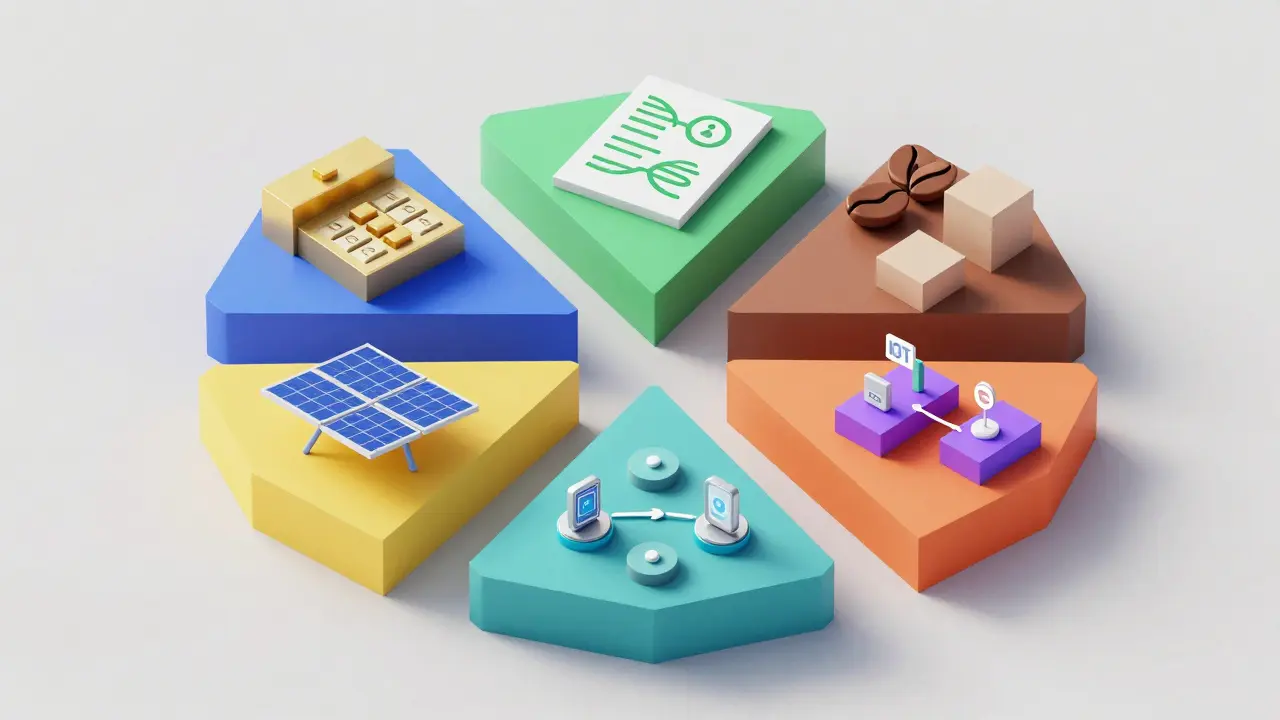
Back in 2021, everyone was chasing DeFi yields. Then the market crashed, and a lot of people lost money not because blockchain failed - but because they put everything into one bucket. The truth is, blockchain isn’t one industry. It’s a toolkit being used in finance, healthcare, energy, logistics, and even education. Some sectors are booming. Others are quietly building the infrastructure of tomorrow. If you’re only watching crypto prices, you’re missing the bigger picture.
By 2025, the global blockchain market hit $31.18 billion. By 2032, it’s expected to hit $1 trillion. That kind of growth doesn’t come from one use case. It comes from dozens of industries adopting blockchain for their own needs. Diversifying across these sectors isn’t just smart investing - it’s how you survive the next market shakeup.
Finance Still Leads - But It’s Not the Only Game
Let’s be clear: finance still owns the biggest slice of the blockchain pie. In 2025, the Banking, Financial Services, and Insurance (BFSI) sector held 24% of the market share. Financial services alone make up 40% of total blockchain revenue. Why? Because blockchain cuts out middlemen. Cross-border payments that used to take days now settle in minutes. Transactions that cost $50 through banks now cost $0.10 on a blockchain. Companies like Ripple and Stellar are already doing this at scale.
But here’s what most people don’t realize - even in finance, diversification matters. You’ve got traditional banks testing private blockchains. Then there’s DeFi, where users lend, borrow, and trade without banks at all. And now, central banks are launching their own digital currencies. China’s Digital Yuan, the EU’s Digital Euro pilot, and over 15 other countries are testing CBDCs. If you’re only investing in Bitcoin, you’re ignoring the fact that the entire financial system is being rebuilt on blockchain - and it’s not all decentralized.
Healthcare: The Quiet Revolution
Imagine your medical records aren’t stuck in a hospital’s outdated system. Instead, they’re stored on a blockchain. Only your doctors, pharmacists, and insurers - with your permission - can access them. No more filling out forms. No more lost files. No more waiting days for test results to be shared.
This isn’t science fiction. Hospitals in Estonia and the U.S. are already using blockchain to manage patient data securely. The healthcare blockchain market is growing faster than any other sector - projected to be the fastest-growing segment through 2030. Why? Because of regulations like GDPR and HIPAA. Traditional databases are too risky. Hackers love centralized records. Blockchains? They’re tamper-proof. And they let patients control who sees their data.
MIT and the University of Nicosia are even issuing diplomas on blockchain. Employers can verify degrees instantly. No more calling schools or waiting for mailed transcripts. That’s the kind of real-world impact blockchain is having - and it’s barely scratched the surface.
Real Estate: Fractional Ownership Is Here
Buying a house used to mean saving for years, getting a mortgage, and dealing with mountains of paperwork. Now, platforms like Atlant and Propy are letting you buy a fraction of a property - for as little as $100 - using blockchain tokens.
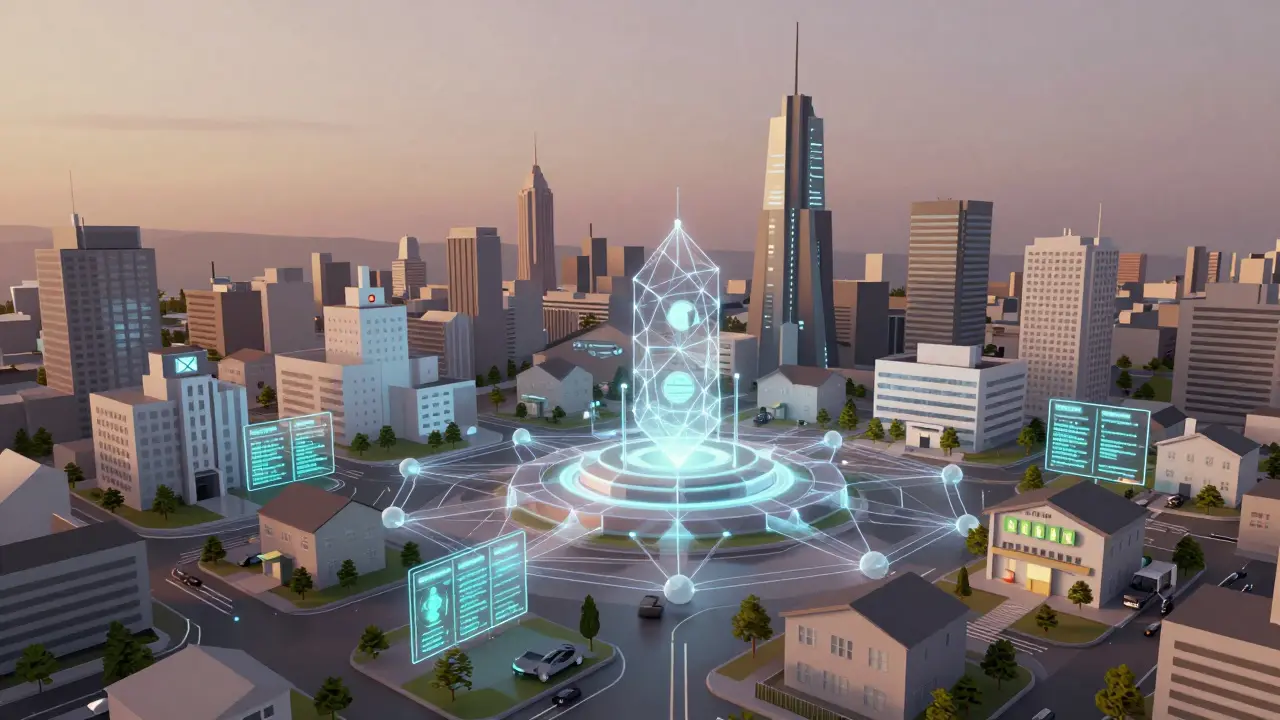
This is called tokenization. Every property is turned into digital shares. You don’t own the whole building. You own 0.5% of it. And you can sell that share anytime, like trading stock. Sweden and Georgia are already using blockchain for land registries. Fraud drops. Speed increases. Transparency soars.
For investors, this opens up access to real estate that was once only for the wealthy. For homeowners, it means faster sales and fewer middlemen. And for the system? It means records that can’t be altered or lost. This isn’t speculation - it’s infrastructure being rebuilt.
Energy: Peer-to-Peer Power Trading
What if your solar panels didn’t just power your home - they also sold extra electricity to your neighbor? That’s exactly what Powerledger and other platforms are doing. Homeowners with solar panels generate energy. Instead of sending it back to the grid for pennies, they sell it directly to others nearby using blockchain.
The system tracks every kilowatt in real time. Payments happen automatically. No utility company needed. In Australia and parts of the U.S., people are already earning money this way. The energy sector’s blockchain adoption is growing fast because it solves two big problems: wasted renewable energy and inefficient billing.
And it’s not just solar. Blockchain is being used to track carbon credits, manage grid demand, and even automate payments for electric vehicle charging stations. The future of energy isn’t just cleaner - it’s decentralized.
Supply Chain and Retail: Tracking What You Buy
Ever wonder where your coffee beans came from? Or if that “organic” label is real? Blockchain lets you know. Companies like Walmart and Nestlé now use blockchain to track food from farm to shelf. If there’s a contamination, they can find the exact batch in seconds - not weeks.
In retail, blockchain reduces fraud and returns. Newegg, the tech retailer, accepts Bitcoin in 73 countries. That’s not just a gimmick - it’s about cutting payment processing fees and reaching customers in places where banks don’t serve well. The global blockchain in retail market hit 5.4 million users in 2024 and is growing at 41.3% yearly. That’s not noise. That’s adoption.
And it’s not just big companies. Small brands are using blockchain to prove authenticity. Luxury goods, pharmaceuticals, even art - all being tagged and tracked on immutable ledgers. Counterfeit goods? They’re getting harder to fake.

IoT and Smart Devices: The Invisible Blockchain
Here’s something most people don’t think about: your smart thermostat, your electric car, your fridge - they’re all becoming blockchain users.
The IoT sector is expected to grow at a 46.56% CAGR. Why? Because devices need to pay each other. Your car pays for parking. Your smart meter pays for electricity. Your drone pays for airspace data. These aren’t big transactions - they’re micro-payments, happening automatically, every second. Traditional payment systems can’t handle that. Blockchain can.
Companies like IOTA and Helium are building networks where devices transact without humans. It’s not flashy. But it’s foundational. The next wave of blockchain isn’t about apps you open - it’s about systems you don’t even notice.
What Skills Do You Need to Get Involved?
You don’t need to be a coder to benefit from blockchain diversification. But you do need to understand what’s happening in each sector.
- In finance, learn about regulatory compliance and stablecoins like USDC.
- In healthcare, understand HIPAA and data privacy standards.
- In real estate, study tokenization and fractional ownership platforms.
- In energy, look into peer-to-peer trading apps like Powerledger.
- In supply chain, see how companies track goods with blockchain.
The tools vary. The principles don’t. Look for projects that solve real problems - not just ones that promise high returns. The ones with actual users, real partnerships, and clear use cases are the ones that will last.
What’s Next? The Big Picture
By 2030, experts predict over 81% of top public companies will be using blockchain in at least one area. That’s not a guess - it’s a trend backed by data. The companies that win won’t be the ones betting on one coin. They’ll be the ones building across multiple sectors.
Blockchain-as-a-Service (BaaS) platforms like Microsoft Azure Blockchain and Amazon Managed Blockchain are making it easier than ever for businesses to adopt without hiring a team of developers. That means adoption will accelerate. And with it, the number of viable blockchain sectors will keep growing.
Don’t wait for the next crypto bull run. The next big opportunity isn’t in speculation - it’s in systems. In data. In supply chains. In energy grids. In health records. These aren’t side projects. They’re the future of how the world runs.
Is diversifying across blockchain sectors safer than just investing in Bitcoin?
Yes - because Bitcoin is just one asset. Blockchain sectors represent real-world applications with different risk profiles. If crypto crashes, healthcare or supply chain blockchain projects may keep growing. Diversifying spreads your risk across industries that don’t move in sync. It’s like owning stocks in tech, healthcare, and energy - not just tech.
Which blockchain sector has the highest growth potential right now?
Healthcare is growing the fastest, with a projected CAGR over 40% through 2030. That’s because of strict data laws, aging populations, and the need for secure, instant access to medical records. Energy and IoT are close behind, thanks to decentralized grids and automated microtransactions. Finance still leads in revenue, but healthcare is the most dynamic.
Can regular people invest in blockchain sectors like healthcare or energy?
Absolutely. You don’t need to build the tech to invest in it. Look for publicly traded companies using blockchain in these areas - like IBM in healthcare or Powerledger in energy. You can also buy tokens from platforms that tokenize real assets, like real estate or renewable energy projects. Many are open to small investors with as little as $100.
Are there risks in diversifying across blockchain sectors?
Yes. Each sector has its own challenges. Healthcare has strict regulations. Energy needs infrastructure. Real estate faces legal hurdles. Some projects are still experimental. The key is to avoid putting all your money into early-stage startups. Focus on companies with real customers, proven pilots, and clear revenue models. Avoid hype. Look for traction.
How do I start diversifying my blockchain exposure?
Start by picking two sectors that interest you - say, finance and real estate. Research one project in each: maybe a stablecoin platform and a tokenized property platform. Put a small amount into each. Learn how they work. Then add one more - like healthcare data or energy trading. Over time, build a portfolio that mirrors real-world adoption, not just crypto trends.