
Tracking Charity Funds with Blockchain: How Donors Can See Every Penny Go
When you give money to a charity, do you ever wonder what really happens to it? Too often, donors hear vague promises - "your gift helped feed 100 families" - but have no way to verify it. There’s no receipt. No trail. Just hope. Blockchain changes that. It doesn’t just track charity funds - it makes every dollar visible, unchangeable, and verifiable in real time.
Why Traditional Charity Tracking Fails
Most charities still rely on paper records, bank transfers, and quarterly reports. By the time a donor sees a summary, the money has already passed through multiple middlemen: payment processors, administrative teams, regional offices. Each step adds delay, cost, and room for error - or worse, fraud. A 2023 investigation by a nonprofit watchdog found that 18% of charities in the U.S. couldn’t provide clear documentation linking donations to specific projects. Even well-known organizations sometimes mix funds across programs. A donation meant for clean water might end up paying for office rent. Without transparency, trust erodes. And when trust drops, giving drops too.How Blockchain Solves the Problem
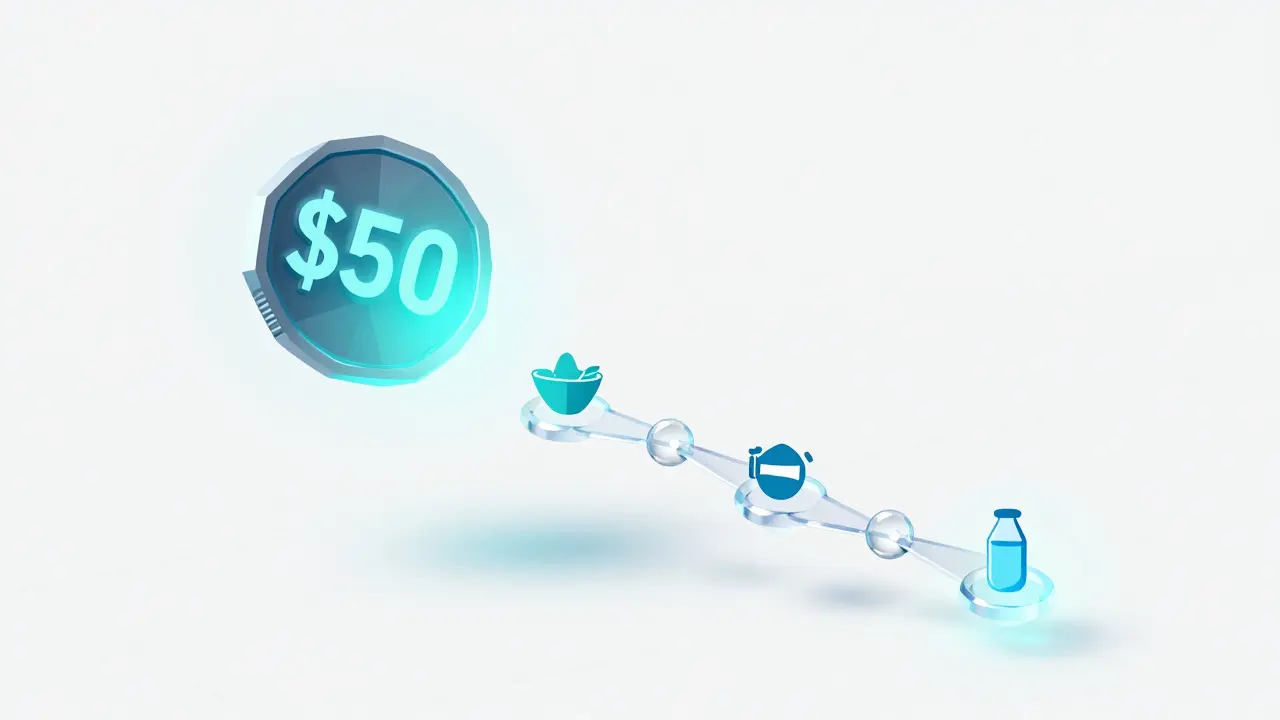
Blockchain is a digital ledger that records every transaction in a chain of blocks. Once written, it can’t be altered. That’s the key. When a charity uses blockchain to track funds, every donation gets a permanent, public record. Here’s how it works in practice:- You donate $50 via a blockchain platform. The transaction is recorded instantly on the public ledger.
- A smart contract is a self-executing program that automatically triggers actions when conditions are met. It’s programmed to release funds only when a charity submits verified receipts - like a photo of food being delivered or a signed invoice from a supplier.
- Every time the charity spends money, the transaction is added to the chain. You can see it. Not in a report. In real time.
- Even goods donations are tracked. If you donate used clothing, the platform logs the pickup, the warehouse receipt, the shipping label, and the final delivery to the shelter.
Platforms like Firefly Giving take this further. They charge zero transaction fees and use AI to screen nonprofits based on financial health and past impact. You’re not just donating - you’re choosing verified, high-performing charities.
Real-World Example: LUXARITY’s Blockchain Model
One of the clearest examples is LUXARITY, a platform that sells pre-owned luxury goods. Here’s the process:- You buy a used designer bag for $300.
- At checkout, you’re given a unique PIN tied to a specific cause - say, education in rural Kenya.
- Part of the sale (say, $75) is automatically allocated to that cause via a smart contract.
- Within hours, you get a notification: "$75 received by partner NGO in Nairobi. Receipt uploaded. Funds allocated to school supplies."
- Two weeks later, you receive a photo of children using those supplies - with a timestamp and location hash recorded on the blockchain.
This isn’t marketing. It’s proof. And it’s stored forever. No one can delete it. No one can fake it.

The BECP Framework: A Standard for Trust
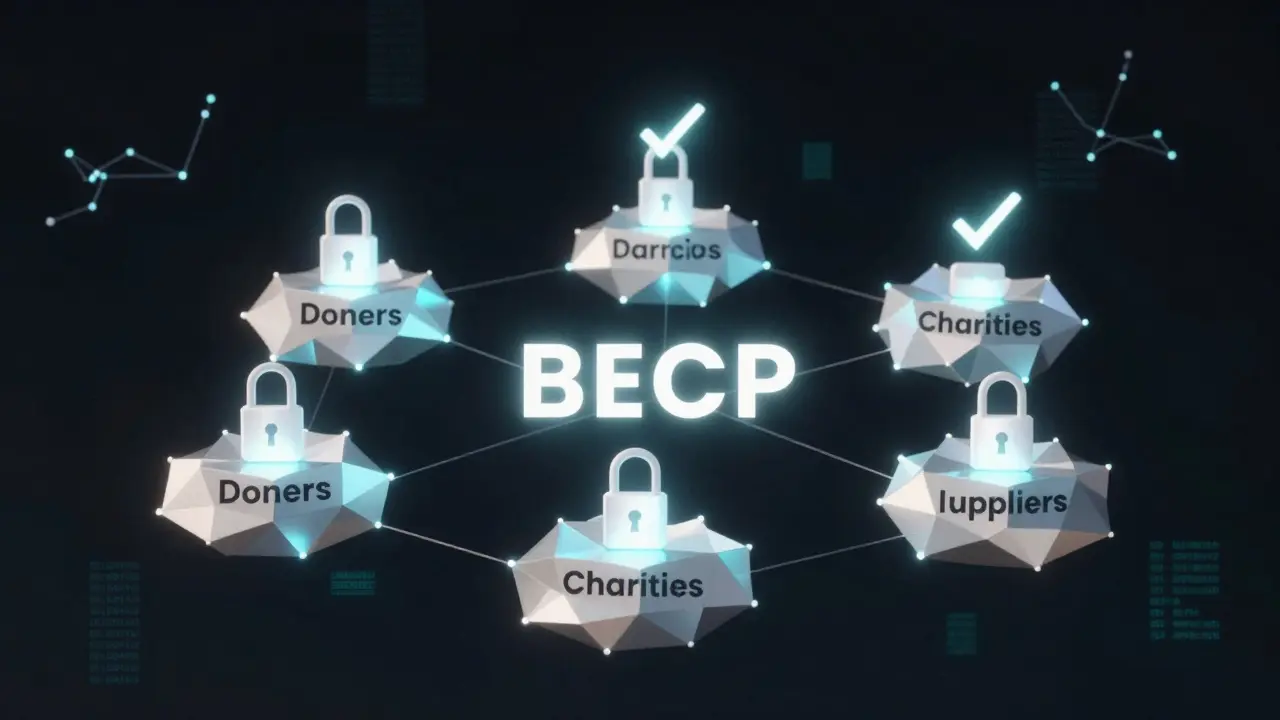
To prevent chaos, some organizations are building shared standards. The BECP (Blockchain Enabled Charity Process Framework) is one such system. It doesn’t just track money - it tracks people.- Every nonprofit, supplier, and donor must register with verified identities.
- Only approved addresses can receive or send funds.
- Documents - like invoices, delivery receipts, or project reports - must be digitally signed and linked to transactions.
- If a receipt doesn’t match the transaction, the system flags it.
This prevents fraud at every level. A charity can’t claim they bought 1,000 meals if the supplier’s invoice shows 500. The blockchain knows. And so do you.
What You Can Track - and What You Can’t
Blockchain doesn’t magically solve every problem. Here’s what it handles well:- Monetary donations: From $1 to $100,000 - every transfer is visible.
- Goods donations: Clothing, medicine, equipment - tracked from pickup to delivery.
- Project milestones: "$20,000 released after 5 wells drilled" - verified with GPS and photos.
- Tax documentation: Automatic generation of IRS-compliant records for donors.
What it doesn’t do:
- Measure long-term impact: Blockchain tells you where the money went. It doesn’t tell you if the school improved test scores next year. That still needs human evaluation.
- Replace human judgment: You still need to choose which charities to support. Blockchain just gives you better data to make that choice.
Challenges and Limitations
This isn’t perfect. There are real hurdles:- Digital literacy: Not everyone knows how to use a wallet like MetaMask. Some platforms now offer fiat on-ramps - letting you donate with a credit card while still recording on-chain.
- Scalability: Public blockchains like Ethereum can get slow and expensive during high traffic. Newer chains like Polygon or Solana are faster and cheaper, making them better for charity use.
- Adoption: If only 5% of charities use blockchain, most donors won’t see the benefit. Widespread use needs more nonprofits to adopt it - and donors to demand it.
Still, the trend is clear. In 2024, over 120 nonprofits in Europe and North America began using blockchain for donation tracking. That number is expected to triple by 2027.
Why This Matters for You
If you give to charity, this changes everything. No more guessing. No more "trust us". You can now see exactly how your money moves - from your account, to the NGO, to the people who need it.And it’s not just about peace of mind. It’s about accountability. When donors can verify impact, charities are forced to perform better. That’s the real power of blockchain: it doesn’t just track money - it raises the bar for everyone.
More than 60% of donors under 35 now say they’ll only give to charities that offer transparent tracking. That’s not a trend. It’s a new standard.
Can I track my donation if I use a credit card?
Yes. Platforms like Firefly Giving and LUXARITY allow you to donate with a credit card, but still record the transaction on the blockchain. Your payment is converted into cryptocurrency on the backend, and the blockchain record is created immediately. You get the same transparency - just without needing crypto upfront.
Do charities need technical expertise to use blockchain?
Not anymore. Platforms now offer plug-and-play dashboards that look like standard nonprofit software. Charities just need to upload receipts, link bank accounts, and verify their identity. The blockchain runs in the background. No coding required.
Is blockchain donation tracking secure?
Yes - more secure than traditional systems. Blockchain records are encrypted, immutable, and distributed across thousands of computers. A hacker can’t delete a transaction or alter a receipt. Even if a charity’s internal system is breached, the blockchain record stays intact. That’s why experts call it the most tamper-proof donation system ever built.
Can I see where my donation went if I gave anonymously?
Yes. You can donate anonymously and still track your gift. The blockchain doesn’t require your name - just your wallet address. If you keep that address, you can revisit the transaction anytime. Many platforms let you generate a private link to view your donation history without logging in.
Are blockchain donations tax-deductible?
Yes. Platforms that comply with IRS guidelines automatically generate official donation receipts with timestamps, amounts, and charity EINs. These are legally valid for tax purposes. Some even export them as PDFs or sync with tax software like TurboTax.
Where This Is Headed
In five years, blockchain tracking won’t be a feature - it’ll be the norm. Donors will expect it. Regulators will require it. Charities that don’t adopt it will lose funding.The next step? Integrating blockchain with AI to predict impact. Imagine getting a notification: "Your $100 donation helped prevent 3 cases of malnutrition. Based on past data, this project has a 92% success rate." That’s not science fiction - it’s already being tested.
For now, the simplest thing you can do is ask charities: "Do you track donations on blockchain?" If they say no - ask why. And if they say yes - ask to see the record. You’ve earned that right.



23 Comments
Beth Erickson
February 15, 2026 at 17:38
This blockchain charity stuff is just another Silicon Valley fantasy. Real charities need cash flow not crypto ledgers. I gave to a food bank last year and they used my donation to buy 2000 lbs of rice. Did they send me a blockchain receipt? No. Did I feed hungry people? Yes. Stop overcomplicating compassion.
Jeremy Fisher
February 16, 2026 at 18:39
I appreciate the vision here but let’s be real - blockchain transparency sounds great until you realize most nonprofits in developing countries don’t even have reliable internet. You’re asking a rural clinic in Malawi to run a smart contract when they’re still using paper ledgers and hand-copied receipts. The tech is cool but the infrastructure gap is massive. We need to build bridges before we deploy blockchains.
Anandaraj Br
February 18, 2026 at 15:40
Blockchain? Please. I’ve seen how these platforms work. They’re just fancy fronts for crypto scams. You think your $50 donation to ‘LUXARITY’ really went to Kenya? Nah. It got converted to ETH, dumped on Binance, and the ‘NGO’ was a shell company registered in the Caymans. The photos? AI generated. The timestamps? Fake. Wake up people
AJITH AERO
February 18, 2026 at 15:58
So you’re telling me I need to trust a blockchain more than a human being? Cool. Next you’ll say my toaster is more reliable than my mom.
Angela Henderson
February 18, 2026 at 23:17
I like the idea. I really do. I’ve donated before and never knew where the money went. It felt like throwing coins into a well. This way, at least I know if my donation got used for food or just office chairs. Still, I worry about people who don’t have smartphones. What happens to them? Are they just left out now?
Paul David Rillorta
February 20, 2026 at 07:45
Blockchain tracking? HA. That’s just the government’s way of monitoring your donations so they can tax them later. And don’t tell me about ‘immutable records’ - you think the NSA doesn’t have a backdoor to every public ledger? They’ve been mining crypto since 2015. This is just surveillance with a feel-good filter. I’m donating cash to my neighbor’s lemonade stand next time.
Lauren Brookes
February 21, 2026 at 18:15
It’s fascinating how we’re trying to solve a trust problem with technology. But trust isn’t built by logs and hashes - it’s built by relationships. Maybe instead of tracking every penny, we should be investing in charities that have local teams on the ground who know the people they serve. A photo of a child with school supplies doesn’t mean the child learned to read. That takes time. That takes care. That takes humans.
Chris Thomas
February 21, 2026 at 19:04
The BECP framework is a step in the right direction, but it’s still woefully underdeveloped from a governance standpoint. You need Byzantine Fault Tolerance mechanisms integrated with KYC-AML protocols to ensure regulatory compliance across jurisdictions. Also, the gas fees on Ethereum L1 make this economically infeasible for micro-donations. You’d be better off deploying on Polygon with ERC-20 wrapped tokens and off-chain validation via IPFS pinning for metadata integrity.
James Breithaupt
February 23, 2026 at 10:53
I’ve worked with several NGOs that adopted blockchain systems. The UX for staff was a nightmare. They had to learn wallet management, private key security, and blockchain explorers just to log a receipt. It took 6 months of training. Most just gave up and went back to Excel. Tech should serve people - not the other way around.
Andrew Edmark
February 24, 2026 at 14:46
I love this idea so much 💙 I’ve donated to charities before and felt so powerless. Knowing I can see my $10 go from my card to a school in Nepal? That’s the kind of connection we need. Keep pushing this. The world needs more transparency, not less. You’re doing amazing work 🙌
Dominica Anderson
February 26, 2026 at 07:58
Blockchain for charity? How quaint. Real philanthropy doesn’t need a ledger. It needs sacrifice. You want proof? Give anonymously. Give without seeing. That’s integrity.
sruthi magesh
February 27, 2026 at 13:30
This is just western tech imperialism. You think blockchain will solve poverty? You think a ledger can feed a child? India has been running community kitchens since 1947. We didn’t need a blockchain. We needed compassion. Now you want to digitize our hunger? How colonial.
Nova Meristiana
February 28, 2026 at 22:21
Oh wow. So now we’re supposed to trust a decentralized ledger more than a human? What’s next? AI judges? Robot priests? I’ll stick to giving cash to a guy on the corner. At least I can see his eyes when he says thank you.
Aileen Rothstein
March 2, 2026 at 05:26
I’ve been donating for years and never knew what happened to my money. This changes everything. I just gave $75 to a clean water project and saw the well being drilled in real time. I cried. Not because it was techy - because I finally felt like I mattered. This isn’t just about money. It’s about dignity.
Jennifer Riddalls
March 2, 2026 at 17:45
I think this is really cool. I’m not super techy but I like that I can see where my stuff goes. I donated some clothes last month and got a pic of them being handed out. That made me feel good. Not because it was blockchain. Because I knew they went to someone who needed them. That’s all that matters
Kyle Tully
March 4, 2026 at 02:59
You know what’s worse than fraud? People who think a blockchain solves moral failure. If a charity is stealing money, it’s not because they lack a ledger. It’s because they’re bad people. You can’t code ethics. You can’t hash integrity. This is a placebo for the guilt-ridden middle class.
Ian Plunkett
March 5, 2026 at 00:56
I’ve been skeptical of blockchain for charity until I saw a UK-based shelter use it to track food parcels. My donation of £20 went directly to a family in Glasgow. I got a timestamped photo of them receiving it. No middlemen. No delays. Just humanity. I’ve since donated three times. This isn’t hype. It’s healing.
yogesh negi
March 5, 2026 at 03:29
I work with rural NGOs in India and we just started using a blockchain-based system last year. At first, the staff were scared. But now? They’re proud. A woman in Bihar just sent us a photo of her daughter holding a book we funded. The blockchain recorded it. She didn’t know what blockchain meant - but she knew her daughter’s future changed. That’s the real win.
Nikki Howard
March 6, 2026 at 02:47
The regulatory implications of immutable donation records are profound. Under AML Directive 6, any blockchain-based donation platform must now comply with FATF Travel Rule. This necessitates originator and beneficiary verification for transactions exceeding €1000. Without this, the system is legally non-compliant and exposes donors to liability. This article is dangerously naive.
Sasha Wynnters
March 6, 2026 at 18:36
Blockchain doesn’t solve trust - it commodifies it. You turn compassion into a transaction log. You turn human suffering into a data point. I’d rather give to someone I know, or even just drop cash in a hat. At least then, I’m not turning love into a blockchain NFT.
george chehwane
March 7, 2026 at 01:34
Smart contracts? Please. You think a machine can decide if a child needs shoes? You think an algorithm knows when a school is failing? This isn’t transparency. It’s algorithmic paternalism wrapped in crypto jargon. Real impact needs messy, human judgment - not immutable logs.
Charrie VanVleet
March 8, 2026 at 17:26
I just donated $50 to a shelter using this system. Saw the food get delivered. Saw the staff sign the receipt. Saw the timestamp. I cried. Not because I’m emotional - because for the first time, I didn’t feel like a sucker. Thank you for making giving feel real again. 🙏💛
Beth Erickson
March 8, 2026 at 17:52
I’m replying to Jeremy because he’s right about infrastructure. But here’s the thing - we don’t need to wait for everyone to have smartphones. Use SMS. Use USSD. Use local kiosks. The blockchain record can be generated from a simple phone call. The tech is flexible. The will isn’t. Stop using ‘lack of access’ as an excuse for inaction.