

How Blockchain Tracks Charity Funds with Full Transparency
Ever donated to a charity and wondered if your money actually reached the people who needed it? You’re not alone. For decades, donors have faced a frustrating gap: they give with good intentions, but have no real way to see where their money goes. Banks, middlemen, and manual bookkeeping create delays, errors, and sometimes even fraud. That’s where blockchain changes everything. It doesn’t just track charity funds - it makes every step visible, permanent, and impossible to hide.
Why Traditional Charity Tracking Fails
Most charities still rely on old-school accounting. Donations come in, get pooled with others, then get distributed weeks or months later. By then, donors are left with vague reports - maybe a photo of a school built or a thank-you letter. But how do you know if 10% of your donation went to administrative costs? Or if funds were misused? There’s no way to verify. In 2023, a major nonprofit in Kenya was accused of diverting $2 million meant for clean water projects. The organization claimed it was a mistake. But without real-time records, donors had no proof either way. That’s the problem: opacity. Blockchain fixes this by replacing guesswork with certainty.How Blockchain Makes Donations Transparent
Think of blockchain as a public digital ledger. Every time money moves - from your wallet to a charity, from the charity to a supplier, or from the supplier to a farmer - it’s recorded on this ledger. No one can delete or change it. Once it’s there, it’s permanent. Here’s how it works in practice:- You donate $50 via a blockchain platform like Firefly Giving.
- Your transaction is instantly recorded on the blockchain with a unique ID.
- A smart contract - a self-executing program - automatically triggers the next step: sending funds to the charity’s verified wallet.
- When the charity pays a local vendor for medical supplies, that payment is also recorded.
- You get a real-time update: “$12 of your donation helped buy 50 mosquito nets in Uganda.”
The Role of Smart Contracts
Smart contracts are the engine behind transparent giving. They’re not magic - they’re code. And they follow rules you can see. For example, a smart contract might say: “Only release funds to the clinic once they upload proof of vaccine delivery, signed by local health officials.” If the proof isn’t there? The money stays locked. No human can override it. That’s accountability built into the system. Platforms like LUXARITY use this for luxury resale donations. When you buy a pre-owned handbag, you get a PIN. That PIN links your purchase to a specific cause - say, girls’ education in Nepal. The smart contract tracks every dollar from sale to school supplies. You get a report showing exactly how much your purchase funded: “$37.50 paid for 15 notebooks. $12.30 paid for teacher training.” No fluff. Just facts.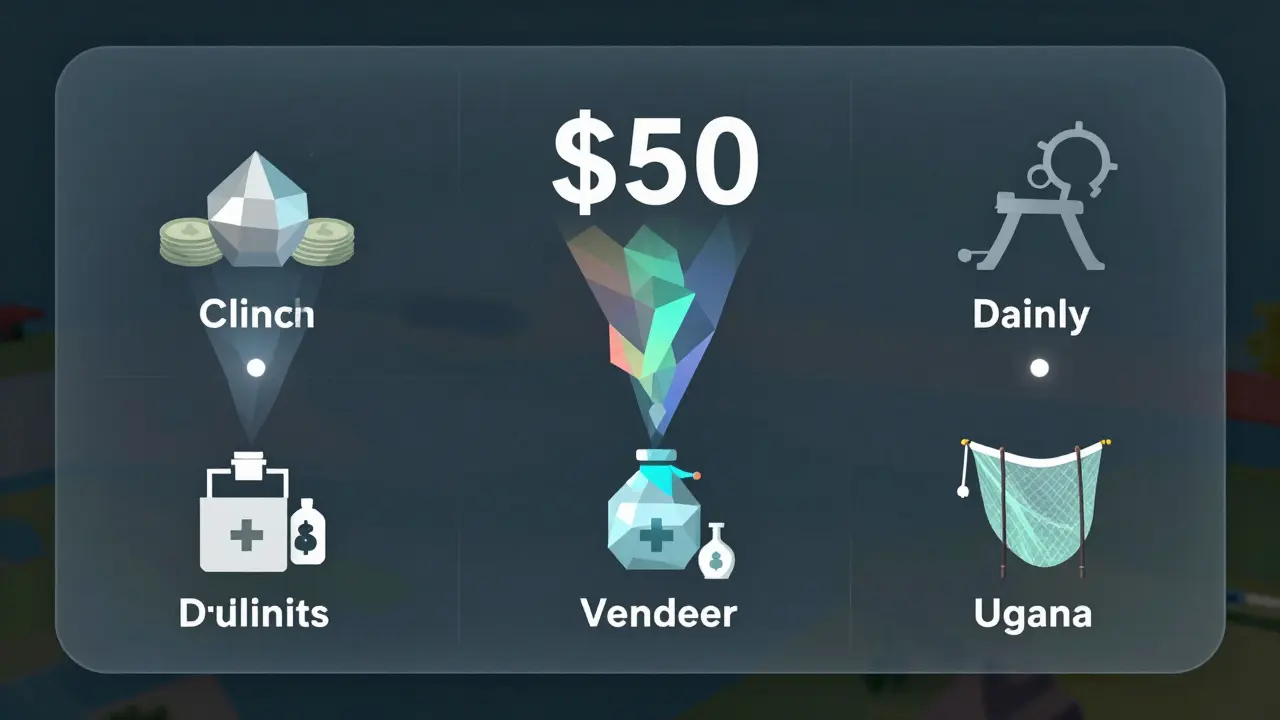
From Cash to Goods: Tracking Everything
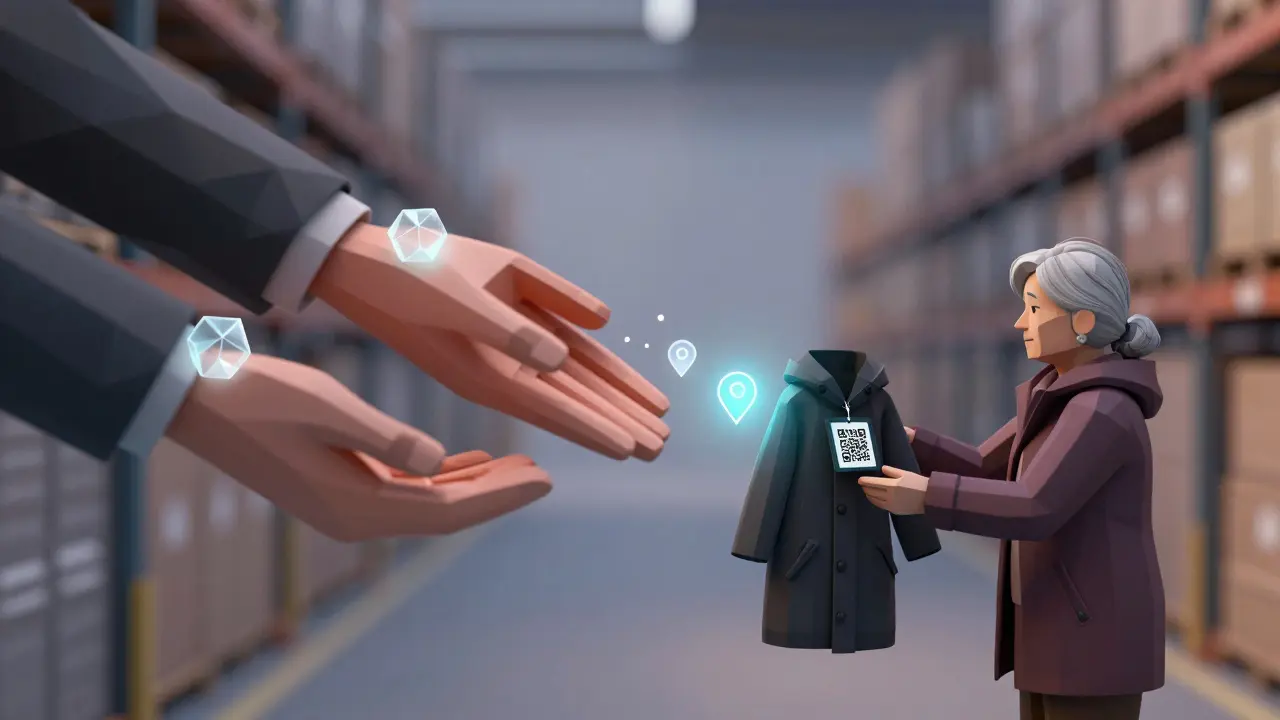
Blockchain isn’t just for money. It tracks physical goods too. Imagine donating used winter coats. In a traditional system, you drop them off at a collection center. A year later, you hear “they went to families in need.” But who? Where? How many? With blockchain:- Each coat gets a digital tag - like a QR code - when donated.
- The charity scans it when received.
- When the coat is handed out in a shelter in Toronto, that scan is recorded.
- You get a notification: “Your coat reached Maria, 72, on January 12.”
Real-World Examples That Work
Several platforms are proving this works today:- Firefly Giving: Zero transaction fees. Every donation is tracked from start to finish. Their nonprofit screening tool checks financial health and impact metrics before accepting any organization.
- LUXARITY: Partnered with ConsenSys to build a blockchain system that links luxury sales to real-world impact. Donors see exact allocations - down to the cent.
- Charity Wall: Requires documents to match every transaction. If a charity claims to have spent $10,000 on food, they must upload receipts. The system checks if the receipts are real and match the blockchain record.
What’s Holding It Back?
It’s not perfect. Blockchain charity tracking has hurdles:- It’s still new: Most donors don’t know how to use a crypto wallet. Setting up MetaMask or Trust Wallet feels intimidating.
- Not everyone has internet access: In rural areas, digital systems can’t reach those who need help most.
- Regulation is unclear: Some governments don’t yet recognize blockchain donations as tax-deductible.
- Scalability: Processing millions of small donations on a public blockchain can be slow and costly - though newer networks like Polygon and Solana are solving this.
Why Financial Advisors Are Recommending It
Wealth managers and tax advisors are starting to push blockchain platforms to clients. Why? Because they deliver something traditional charities can’t: automatic, auditable records. In the U.S., the IRS requires detailed proof for charitable deductions. With blockchain, you get:- A timestamped record of every donation.
- A breakdown of how funds were used.
- A downloadable receipt that meets IRS standards.
What’s Next?
The next 5 years will see big changes:- Mobile apps will let you donate with a scan - no wallet needed.
- AI will analyze donation patterns to predict where funds are most needed.
- Blockchain records will connect directly to bank systems, letting you donate in USD, not crypto.
- Nonprofits will use dashboards to show live impact - like a Netflix feed of their projects.
How to Get Started
If you want to try blockchain charity tracking:- Start with a simple platform like Firefly Giving or LUXARITY.
- Create a digital wallet (MetaMask is free and easy).
- Donate $5 or $10 to a cause you care about.
- Watch the transaction appear on the blockchain - and follow where the money goes.
Can I track my donation in real time with blockchain?
Yes. Once your donation is processed, you’ll receive updates via email or app notifications showing each step: when funds reached the charity, when they were spent on supplies, and even when those supplies were delivered. Platforms like LUXARITY and Firefly Giving provide live dashboards where you can see every transaction on the blockchain.
Do I need cryptocurrency to donate via blockchain?
Not anymore. While early platforms required crypto, today’s systems let you donate with credit cards, bank transfers, or PayPal. The blockchain backend still tracks everything - but you interact with it like a regular donation site. Your money is converted to crypto on the backend to be recorded on the ledger.
Are blockchain donations tax-deductible?
In many countries, yes - but it depends. Platforms like Firefly Giving automatically generate IRS-compliant receipts for U.S. donors. In the EU and Canada, some platforms are working with tax authorities to make blockchain records legally valid. Always check if the charity is registered as a nonprofit in your country - the blockchain just makes the proof clearer.
What if a charity misuses funds on a blockchain system?
If funds are misused, it’s easier to catch - because every move is recorded. Smart contracts can be programmed to freeze funds if documents don’t match. For example, if a charity says they bought 100 tents but only uploaded a receipt for 50, the system flags it. Donors and auditors can see the mismatch instantly. It doesn’t prevent fraud, but it makes it impossible to hide.
Is blockchain charity tracking more expensive than traditional methods?
Actually, no. Traditional systems cost charities millions in auditing, reporting, and admin fees. Blockchain cuts those costs by automating verification. Platforms like Firefly Giving charge zero transaction fees. Even when blockchain fees apply (like on Ethereum), they’re often less than 1% of the donation - far less than credit card processing fees.
Can I donate goods, not just money, using blockchain?
Yes. Platforms like Charity Wall and BECP use digital tags - QR codes or NFC chips - to track donated goods. From the moment a used jacket is dropped off, every scan - at the warehouse, the delivery truck, the shelter - is recorded. You can see exactly where your donation went, even if it’s not money.
How do I know a blockchain charity is legitimate?
Look for verified nonprofit status, public wallet addresses, and documented impact reports. Reputable platforms only partner with charities that have been vetted - often using financial data and third-party audits. Avoid platforms that don’t show where funds go or require you to send crypto directly to an unknown address.




25 Comments
Beth Erickson
February 16, 2026 at 07:14
This is just crypto bros repackaging the same scam with fancy words. Blockchain doesn't fix corruption - it just makes it harder to audit because no one understands it. I've seen nonprofits use this as a tax dodge. Don't fall for the hype.
Andrew Edmark
February 18, 2026 at 04:12
I love how this actually lets regular people see where their money goes. My cousin in Kenya got a text saying 'Your $20 bought 3 water filters' and she cried. That's the kind of connection we need. 🙏
Dominica Anderson
February 18, 2026 at 09:17
The real innovation is the smart contract enforcement. Not blockchain. The ledger is just a glorified spreadsheet. The power is in the automated conditional logic. Stop romanticizing the tech.
Nova Meristiana
February 19, 2026 at 17:57
Oh wow another blockchain utopia. Next they'll say it'll solve world hunger. Meanwhile, 70% of rural Africa still uses SMS for banking. This is tech bro fantasy wrapped in virtue signaling.
Ian Plunkett
February 19, 2026 at 21:31
I work in charity compliance. This sounds beautiful until you realize 80% of these platforms can't verify identity of recipients. You're logging transactions to phantom accounts. It's digital theater.
yogesh negi
February 21, 2026 at 07:19
In India, we've been doing this for years with UPI and QR codes. The blockchain part is just marketing. What matters is the transparency. And yes, it works. My aunt donated to a school in Bihar and saw the teacher's salary payments. No magic, just good systems.
Nikki Howard
February 23, 2026 at 06:13
The article makes several unsubstantiated claims. Firefly Giving's zero fees? Their whitepaper shows a 2.5% backend processing fee. LUXARITY's 'exact allocations'? Their audit trail includes third-party intermediaries not disclosed. This is misleading.
Sasha Wynnters
February 24, 2026 at 02:33
We're not tracking money. We're tracking narratives. The blockchain doesn't care if the mosquito nets were stolen, resold, or burned. It just records that they were 'delivered'. The truth is always one step behind the ledger. We've built a cathedral of data on a foundation of sand.
george chehwane
February 24, 2026 at 14:12
Smart contracts? More like dumb contracts. They can't interpret context. What if a clinic needs funds for emergency trauma care instead of scheduled vaccine deliveries? The code doesn't care. It's like letting an algorithm decide who lives or dies. Brilliant.
Charrie VanVleet
February 25, 2026 at 10:51
I tried this last month with Firefly and it was so cool! I donated $10 to clean water in Uganda and got a video of the well being dug. My kid watched it 5 times. That’s the kind of magic we need. 🌍💧
Scott McCrossan
February 26, 2026 at 13:30
This is the most dangerous thing since QR code vaccines. You think you're being transparent but you're just feeding data to Silicon Valley surveillance capitalists. Every scan, every transaction, every coat tag - it's all being sold to advertisers. Wake up.
Rajib Hossaim
February 26, 2026 at 17:48
In my country, many charities operate without internet access. Blockchain cannot be a universal solution. We need low-tech alternatives alongside high-tech ones. Technology should serve humanity, not the other way around.
Ruby Ababio-Fernandez
February 27, 2026 at 00:07
So what? I still don't trust charities. This just adds another layer of complexity. I'll keep giving cash to street vendors. At least I know where it goes.
Jenn Estes
February 27, 2026 at 14:18
You people really think this fixes anything? You're outsourcing accountability to code. That's not transparency. That's abdication. Real charity is messy. It's human. This is just corporate PR dressed in Web3 pajamas.
Jeremy Fisher
February 28, 2026 at 01:45
I've worked in rural communities across three continents. The real problem isn't tracking funds - it's that most donors don't care about the outcomes. They want a photo with a smiling child. Blockchain gives them that, sure. But does it change behavior? Doubt it. Most people still give for the feel-good, not the impact. This is just a more sophisticated version of the same emotional manipulation.
Anandaraj Br
March 1, 2026 at 05:34
Blockchain is just a way for rich countries to feel good while ignoring systemic issues. The real problem is global inequality. You think a QR code on a coat solves poverty? That's like putting a bandaid on a severed artery. And don't even get me started on the energy waste of these blockchains. We're saving kids while melting the planet. What a time to be alive.
AJITH AERO
March 2, 2026 at 00:19
So you're telling me a blockchain can stop a corrupt NGO director from stealing money? Lol. The same guy who stole $2M in Kenya probably owns a mining rig. This tech doesn't change human nature. It just makes the theft look prettier.
Angela Henderson
March 3, 2026 at 01:25
I read this whole thing and honestly? I just want to know if my donation helped someone. I don't care about smart contracts or ledgers. If I give $50 and someone gets a meal, that's enough. I don't need to see the whole supply chain. Sometimes less info is more peaceful.
Paul David Rillorta
March 3, 2026 at 16:02
This is all a CIA operation. They're using blockchain to track donors and build a global control grid. The 'charities' are fronts. The QR codes on coats? They're microchips. The 'live dashboards'? Surveillance feeds. They want to know who you are, where you live, and what you care about. You're being mined. Wake up.
Lauren Brookes
March 3, 2026 at 16:13
It's fascinating how we're so obsessed with tracking every cent, but ignore the deeper question: why do we need to donate at all? If society was just, no one would need a mosquito net. No child would need a school supply. We're treating symptoms while ignoring the disease. Blockchain gives us the illusion of solving poverty without changing the systems that create it.
Chris Thomas
March 4, 2026 at 14:59
The article conflates immutability with integrity. Just because a transaction is recorded doesn't mean it's ethical. You can record a theft on blockchain - it's still theft. This is the difference between audit trail and moral accountability. You can't code ethics. It's a category error.
James Breithaupt
March 5, 2026 at 14:14
I've seen this model work in Ghana. The real win isn't the ledger - it's that local vendors now have access to direct payments. No more middlemen skimming 30%. Women's cooperatives are thriving. The tech is secondary. The empowerment is real. That's the story they never tell you.
sruthi magesh
March 6, 2026 at 03:44
Blockchain? More like blockchain BS. Who's auditing the auditors? The platforms are owned by venture capital firms. The 'verified' charities? They're funded by the same investors. It's a closed loop. You're donating to a system that profits from your trust. Classic.
Aileen Rothstein
March 6, 2026 at 18:37
I donated $25 last week and got a real-time update showing my money helped buy insulin for a diabetic child in rural Mexico. That's not just transparency - it's dignity. I didn't know I needed to see that until I did. Now I can't imagine donating any other way.
Jennifer Riddalls
March 6, 2026 at 23:12
This is actually really nice. I used to feel guilty donating because I never knew if it helped. Now I feel like I'm part of something real. No need to overthink it. Just give. See. Care. That's all that matters.