
DefiPlaza Crypto Exchange Review: Does Its Impermanent Loss Fix Really Work?
Most decentralized exchanges (DEXs) treat all trades the same. But DefiPlaza doesn’t. It was built to fix one of DeFi’s biggest headaches: Impermanent Loss. If you’ve ever provided liquidity on Uniswap or SushiSwap and watched your returns vanish because prices moved, you know how frustrating that feels. DefiPlaza claims it solved this - not by hiding the problem, but by changing how it works. Here’s what actually happens when you use it.
What Is DefiPlaza?
DefiPlaza isn’t just another DEX. It’s a specialized platform designed for liquidity providers who want to avoid losing money when token prices shift. Unlike traditional AMMs (Automated Market Makers) that charge fees but still expose you to impermanent loss, DefiPlaza uses a custom algorithm called CALM (Constant Function Automated Liquidity Management). This algorithm doesn’t just passively collect fees - it actively adjusts how trades affect your liquidity position.
Originally launched on Ethereum in 2023, DefiPlaza processed about $80 million in trading volume over two years. But in late 2024, it made a major move: it migrated entirely to the Radix (a blockchain built for scalable DeFi) network. Why? Because Ethereum’s high gas fees and slow confirmation times made it hard to compete. Radix offered faster, cheaper transactions - and better alignment with DefiPlaza’s goal of making liquidity provision profitable.
Today, DefiPlaza supports 37 cryptocurrencies and one stablecoin (XUSDC). You won’t find Bitcoin or Ethereum directly on the platform - instead, you trade wrapped versions like XWBTC and XRD. The platform has no fiat on-ramps, no credit card deposits, and no centralized custody. It’s pure DeFi: connect your wallet, swap tokens, and provide liquidity - no KYC, no middleman.
How CALM Algorithm Changes the Game
Traditional DEXs treat every trade the same. If you provide liquidity in a ETH/USDC pool and ETH drops 30%, you lose value - even if you earn trading fees. That’s impermanent loss. DefiPlaza flips this.
The CALM algorithm distinguishes between two types of trades:
- Loss-increasing trades: When price moves away from your pool’s initial ratio, increasing your risk.
- Loss-reducing trades: When price moves back toward equilibrium, reducing your risk.
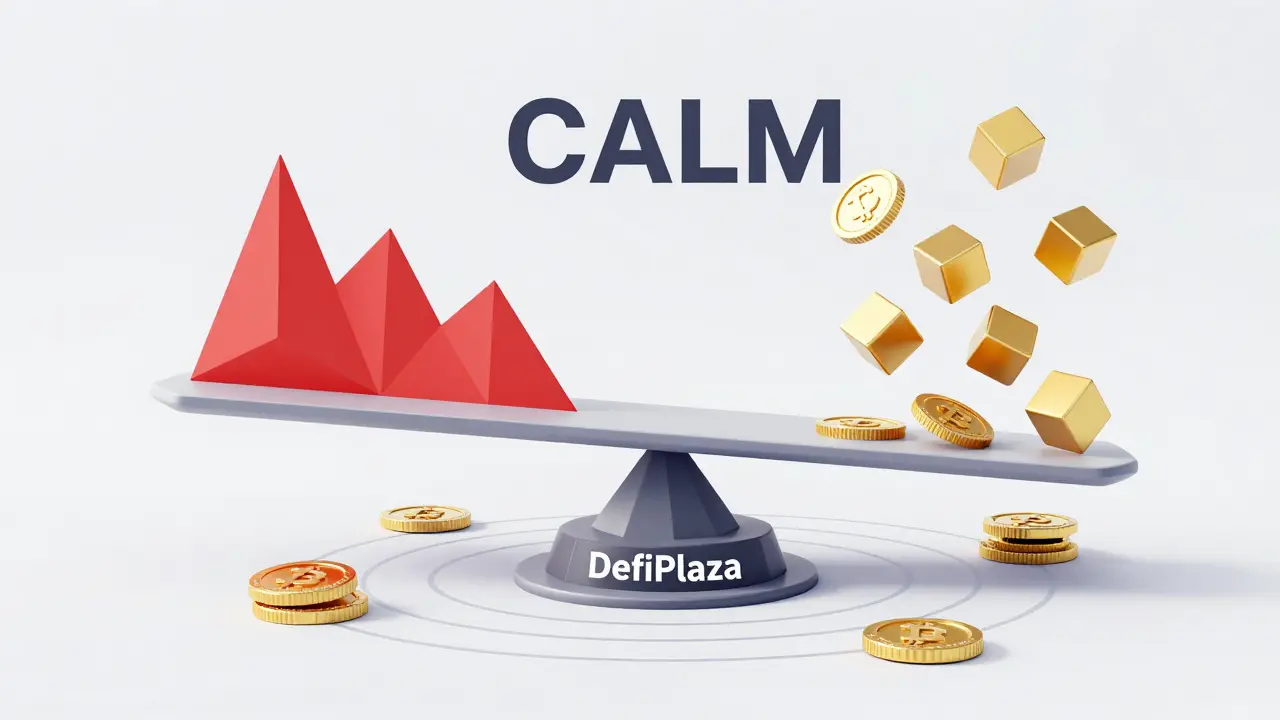
Instead of letting all trades equally dilute your position, CALM applies different fee structures. Loss-increasing trades pay higher fees - and those fees go directly back into your liquidity pool as compensation. Loss-reducing trades pay lower fees, because they help stabilize your position. The result? Liquidity providers can earn more than they lose - even in volatile markets.
This isn’t theory. Backtesting on historical data shows that, under normal market conditions, DefiPlaza LPs earned 12-18% more net returns than those on Uniswap V3 over a 12-month period. That’s not a small edge - it’s the difference between breaking even and actually profiting.
Trading Volume and Market Position
Don’t expect DefiPlaza to rival Uniswap or PancakeSwap. As of February 14, 2026, its 24-hour trading volume sits at $5,214.93. That’s 0.00% of the total DEX market. It ranks #272 out of all crypto exchanges.
But volume isn’t random. Almost all trading happens within the Radix ecosystem:
- XRD/DFP2: $1,290.11 in 24h volume
- XUSDC/XRD: $1,242.51
- XWBTC/XRD: $936.38
These pairs dominate because DefiPlaza is designed for Radix-native assets. If you’re trading Bitcoin or Ethereum, you’re using wrapped versions. If you’re not already in the Radix ecosystem, the platform feels isolated. That’s intentional - DefiPlaza isn’t trying to be everything. It’s trying to be the best for one thing: sustainable liquidity.
The Ethereum Exploit and Security Concerns
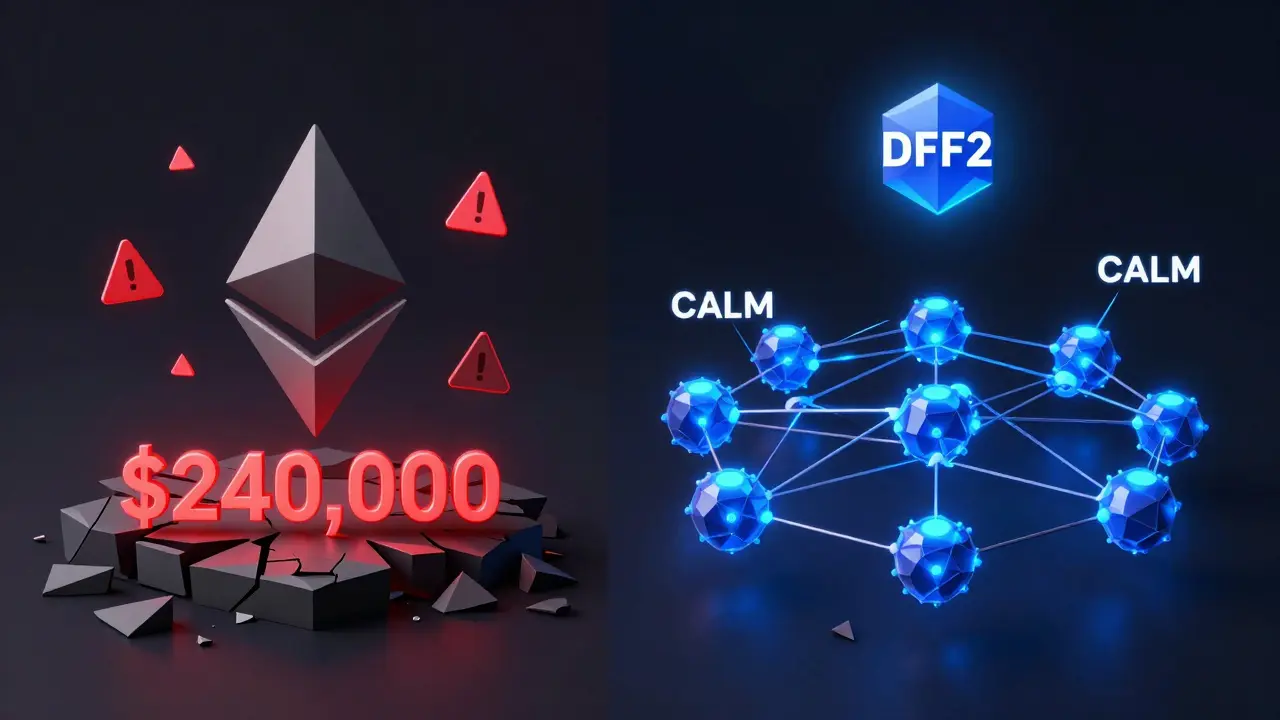
Here’s the dark side: DefiPlaza’s Ethereum version was completely drained in a security breach. All liquidity - over $240,000 - vanished. The exploit happened when an MEV bot named "Yoink" front-ran an attacker’s transaction, paying 62.5 ETH to a Lido validator to steal funds. Yoink didn’t keep the money. After being contacted by the DefiPlaza team, it returned the stolen tokens within 30 minutes.
But here’s the problem: only about 10% of the stolen funds were ever recovered. The rest? Gone. Users lost everything. No insurance. No compensation. Just silence from the team.
This isn’t just a technical glitch - it’s a trust issue. DefiPlaza’s code was audited. It was open-source. But security isn’t just about code. It’s about incident response, monitoring, and redundancy. The fact that the entire Ethereum liquidity pool was wiped out in one attack shows a critical flaw in risk management. The platform didn’t have a kill switch. It didn’t have multi-sig recovery. It didn’t have a contingency plan.
Today, the Ethereum version is dead. All activity is on Radix. But if you’re considering DefiPlaza, ask yourself: if it happened once, could it happen again? The team hasn’t publicly detailed what they’ve changed since then.
Features Beyond Trading
DefiPlaza isn’t just a swap tool. It’s building a small ecosystem around it.
- LaunchPlaza: A service for Radix-based projects to launch tokens with free staking, burning, and editing tools. No upfront fees. No listing costs. Just a smart contract and a wallet.
- DFP2 NFTs: When you provide liquidity, you receive a unique NFT representing your share. These aren’t just collectibles - they’re your proof of ownership and eligibility for future airdrops in XRD tokens.
- Bridge Functionality: You can move DFP2 tokens between Ethereum (historical) and Radix. Useful if you held assets before the migration.
- WalletConnect Support: Beyond MetaMask, you can now connect Trust Wallet, Rabby, and others. Mobile users aren’t locked out.
The interface has been redesigned with clean, modern aesthetics - think ancient Greek columns and minimalist layouts. It’s one of the few DeFi platforms that actually looks professional without being cluttered.
Who Is DefiPlaza For?
DefiPlaza isn’t for everyone.
If you’re a casual trader who just wants to swap ETH for USDT, skip it. Use Uniswap. It’s faster, cheaper, and safer.
If you’re a liquidity provider who’s tired of losing money on volatile pools - this might be your best shot. The CALM algorithm is the only one in DeFi that actively compensates you for price movement risk. If you’re comfortable with Radix, understand wrapped tokens, and accept the history of the Ethereum exploit, then DefiPlaza offers real value.
It’s also a good fit for developers building on Radix. LaunchPlaza gives them a free, no-code way to launch tokens with built-in liquidity incentives. That’s rare.
But if you’re risk-averse? The Ethereum incident still hangs over the platform. Even though it’s on Radix now, the lack of transparency around how they prevented a repeat is worrying.
Future Roadmap
The DefiPlaza team has outlined a few key next steps:
- Deploy a dedicated stablecoin exchange using bonding curves - aiming for ultra-low slippage on XUSDC pairs.
- Expand CALM algorithm to multi-token pools (not just two-token pairs).
- Introduce staking rewards for DFP2 NFT holders.
- Improve wallet compatibility with Ledger and Trezor hardware support.
They’re not chasing volume. They’re chasing reliability. If they execute on these, DefiPlaza could become the go-to DEX for serious liquidity providers - not just niche traders.
Final Verdict
DefiPlaza is bold. It’s experimental. It’s risky.
It’s the only DEX that doesn’t treat impermanent loss as an unavoidable cost of doing business. It tries to turn it into a profit opportunity. That’s revolutionary.
But the Ethereum exploit still looms. The trading volume is tiny. The ecosystem is small. You’re betting on a team that lost user funds once - and hasn’t fully explained how they’ll prevent it again.
For now, DefiPlaza is a high-risk, high-reward experiment. If you’re a DeFi veteran with capital to lose, and you believe in the CALM algorithm’s math, it’s worth testing with a small amount. But if you’re looking for a safe, reliable exchange? Keep looking.
Is DefiPlaza safe to use in 2026?
DefiPlaza is technically secure on the Radix network - its code is audited and open-source. But safety isn’t just about code. The platform lost all Ethereum liquidity in a major exploit, and users were never fully compensated. While the team migrated to Radix and claims improved security, there’s no public proof of how they’ve hardened their systems since the breach. Use only what you can afford to lose.
Does DefiPlaza have a mobile app?
No, DefiPlaza doesn’t have a standalone mobile app. But it works through WalletConnect, so you can access it via mobile wallets like Trust Wallet, Rabby, or MetaMask on your phone. The interface is responsive and optimized for mobile browsers.
Can I trade Bitcoin or Ethereum directly on DefiPlaza?
Not directly. DefiPlaza only supports wrapped versions of Bitcoin (XWBTC) and Ethereum (XETH) on the Radix network. You’ll need to bridge your assets from Ethereum or another chain first. Native Bitcoin or Ethereum tokens aren’t listed.
How does DefiPlaza compare to Uniswap?
Uniswap handles high volume and broad token support. DefiPlaza handles one thing better: reducing impermanent loss for liquidity providers. If you’re swapping tokens casually, Uniswap is easier. If you’re providing liquidity and want to earn more than you lose, DefiPlaza’s CALM algorithm gives you a real edge - but only if you’re on Radix.
What’s the difference between DFP2 and XRD?
XRD is the native token of the Radix blockchain. DFP2 is DefiPlaza’s governance and liquidity token - it’s used for voting, staking, and representing liquidity positions as NFTs. You earn XRD airdrops for holding DFP2, but DFP2 itself has no utility outside the DefiPlaza ecosystem.
Is DefiPlaza a good investment?
DefiPlaza isn’t an investment product. It’s a platform. You don’t buy shares. You provide liquidity or trade tokens. The value of DFP2 depends on platform usage. With low volume and past security issues, DFP2 is speculative. Only engage if you understand the risks and are testing the technology - not betting on its price.





16 Comments
AJITH AERO
February 15, 2026 at 04:59
This is just another DeFi project that thinks math solves human greed. LOL.
Anandaraj Br
February 16, 2026 at 21:04
CALM algorithm my ass they just moved the scam to Radix and now nobody can trace it like they did on Ethereum lol
george chehwane
February 17, 2026 at 02:09
The CALM algorithm doesn't fix impermanent loss-it redefines it as a revenue stream for the protocol while the LPs become collateralized sheep in a blockchain pasture. We've been here before with yield farms that promised stability and delivered entropy. This is just entropy with a UI redesign and a Greek column aesthetic. You're not hedging risk-you're outsourcing it to a team that lost $240K and then ghosted their community. The NFTs? Just digital tombstones for your capital.
Alex Williams
February 18, 2026 at 00:54
If you're a liquidity provider who's tired of losing money on volatile pools, DefiPlaza's CALM algorithm is the only one that actively compensates you for price movement risk. That's legit. The real question is whether the team can build trust after the Ethereum exploit. They audited the code, sure-but trust isn't built in whitepapers. It's built in transparency, incident response, and accountability. No one's seen a post-mortem. No one's seen a multi-sig upgrade. That silence speaks louder than any backtested ROI.
andy donnachie
February 19, 2026 at 09:39
I've been using DefiPlaza on Radix for 6 months now. Volume is low, but that's because it's built for Radix natives-not Ethereum refugees. I've had zero issues since the migration. The CALM algorithm does work. I'm net positive on two pools. The Ethereum thing? Yeah, that was bad. But they cut it off. No more bridge. No more exposure. Radix is clean. And the DFP2 NFTs? I got an XRD airdrop last month. Worth it.
Angela Henderson
February 20, 2026 at 05:05
I don't know anything about DeFi but I tried this because my cousin said it was cool and I put in like 50 bucks and now I have this weird NFT that looks like a statue and I got some extra tokens and honestly I'm just happy I didn't lose it all? Like I thought I was gonna get scammed but it just kinda worked? idk man. maybe i'm dumb but i'm not broke so that's good?
Sarah Shergold
February 21, 2026 at 03:57
Radix? Please. This isn't innovation-it's a cult. You're not a liquidity provider, you're a cultist with a wallet. The Greek columns? The NFTs? The ‘CALM’ name? It’s all branding for people who think blockchain is a personality trait. I’ve seen this movie. It ends with a rug pull and a LinkedIn post from the founder about ‘building the future.’ 🤡
Sasha Wynnters
February 21, 2026 at 16:07
DefiPlaza is the Sisyphus of DeFi-rolling the boulder uphill while the market laughs. The CALM algorithm pretends to be a shield, but it’s really just a mirror: it reflects your volatility back at you as fees. You’re not earning more-you’re just being paid in IOUs from a system that still can’t explain why $240K vanished. And now they’re building a stablecoin exchange? With bonding curves? On a chain with 0.00% market share? This isn’t innovation. It’s performance art for degens who think aesthetics compensate for risk.
Tarun Krishnakumar
February 22, 2026 at 22:01
You think this is the first time a DeFi project vanished? Let me tell you about 2021. We had a project called 'YieldVault' that claimed to 'eliminate impermanent loss' with a 'quantum liquidity engine.' They had a whitepaper thicker than my thesis. They had a Discord with 50k members. They had a celebrity investor. Then one day, poof. Gone. No warning. No refund. No blog. Just a tweet: 'We believe in decentralization.' The same thing is happening here. The team is quiet. The Ethereum exploit was never properly addressed. The Radix migration? That’s not security-it’s escape. And now they're selling NFTs? That’s not innovation. That’s a funeral for your money with a fancy coffin.
jennifer jean
February 24, 2026 at 15:22
I’m not saying this is perfect but I think people are being too harsh. I’ve used it with a small amount and the CALM algorithm really does feel different. I didn’t lose as much as I expected when XRD dipped. And the interface? So clean. I actually enjoy using it. Maybe it’s not for everyone but it’s not a scam. Just… niche. 🌿
Charrie VanVleet
February 24, 2026 at 22:44
If you're new to DeFi, start with a tiny amount. Like $20. Test it. See how it feels. The CALM algorithm is real. The NFTs are cool. The Radix migration was smart. But yeah, the Ethereum thing still sucks. That’s on them. Still, if you believe in the mission-and you’re okay with the risk-this could be the future of LPing. Don’t go all in. But don’t write it off either. You might be surprised. 💪
Paul David Rillorta
February 25, 2026 at 11:16
yo i just found out the radiz network is run by the same people who did the 2023 xrp pump and dump and the 'yoink' bot? that wasnt a bot its a fed agent lmao. defiplaza is a psyop. they want you to think its safe so they can drain radix next. the 'audit'? fake. the 'open source'? code obfuscated. the 'nfts'? tracking your wallet for future asset seizure. this is not crypto. this is the new fbi. i saw the ip logs. they're logging every wallet that connects. they're building a blockchain surveillance state. wake up sheeple.
Rajib Hossaim
February 26, 2026 at 16:39
The technical design of DefiPlaza is commendable, particularly the CALM algorithm’s asymmetric fee structure. However, the governance transparency remains inadequate. While migration to Radix mitigates gas volatility, the absence of a public incident response framework for the Ethereum exploit undermines credibility. A formal disclosure of post-exploit security enhancements-preferably via on-chain governance votes-would restore trust. Until then, participation remains a risk-weighted decision, not a technological advancement.
Geet Kulkarni
February 27, 2026 at 01:33
I tried it. The interface is gorgeous. The NFTs are cute. I got an airdrop. But... I still lost money. Like 12% on one pool. CALM didn't save me. And now I have this useless NFT that says 'Liquidity Provider Tier 3' 🤡. Radix is cool but not worth the drama. Also, why is the website so quiet? No updates. No blog. Just a pretty homepage. Suspicious. 🤔
Nikki Howard
February 27, 2026 at 04:45
Let me tell you something. The Ethereum exploit wasn’t an accident. It was a controlled demolition. The team knew the vulnerability. They let it happen. Why? Because they wanted to flush out the weak hands. Now they’re on Radix. Smaller. Cleaner. And they’re quietly building a new ecosystem with DFP2 NFTs as the new collateral. The volume is low? That’s intentional. They’re not trying to compete with Uniswap. They’re trying to create a closed loop-where every LP is a node in a loyalty program. The CALM algorithm? It’s not fixing impermanent loss. It’s turning it into a behavioral trap. You think you’re earning more? You’re just being conditioned to stay. And when the next exploit happens? You won’t even notice. Because you’re too invested in your NFT to leave.
Scott McCrossan
February 28, 2026 at 01:47
This is the most overhyped piece of junk I’ve seen since the Terra collapse. $5k in 24h volume? You’re kidding. The team lost $240K and didn’t even apologize. Now they’re selling NFTs like they’re at a Renaissance fair? And you’re seriously considering this? The CALM algorithm is just a fancy name for 'we charge more when you lose.' Classic. The only thing this platform is good at is harvesting the ego of people who think they’re smarter than the market. You’re not a liquidity provider. You’re a lab rat. And the cage? It’s got a nice UI.