

Future of AML in Blockchain: How AI and Regulation Are Reshaping Crypto Compliance
Blockchain Transaction Risk Calculator
Transaction Risk Assessment
Calculate the risk level of your cryptocurrency transaction based on key factors recognized by blockchain AML systems.
How it works: This calculator uses key AML indicators from industry standards like FATF Travel Rule and blockchain analytics firms. It's not a substitute for professional AML services but helps you understand risk factors.
Risk Assessment Results
What This Means
Transaction details will appear here after calculation.
Money laundering used to rely on cash, shell companies, and offshore banks. Now, it’s moving to blockchain. In 2025, AML in blockchain isn’t just a buzzword-it’s a necessity. Criminals exploit pseudonymous transactions, privacy coins, and DeFi protocols to move billions undetected. But the tools to fight back are evolving faster than ever. This isn’t about stopping crypto. It’s about making it safe for everyone who uses it.
Why Blockchain Changes Everything for AML
Traditional AML systems were built for banks, not blockchains. They checked transactions in batches, waited days for data, and relied on human reviewers to spot red flags. That’s too slow. Blockchain moves in real time. Every transaction is recorded permanently across thousands of nodes. That’s a goldmine for compliance-if you know how to use it. The key advantage? Immutability. Once a Bitcoin or Ethereum transaction is confirmed, it can’t be erased or altered. That means investigators can trace funds back to their origin, even if they passed through multiple wallets. Unlike paper trails that get shredded, blockchain trails last forever. But here’s the catch: not all wallets are created equal. Some are tied to real identities through exchanges. Others? Totally anonymous. That’s where the real battle begins.How AI Is Turning Blockchain Data Into Action
AI isn’t just helping with AML-it’s rewriting the rules. In 2023, 62% of financial firms used AI for detecting suspicious activity. By 2025, that number hit 90%. Why? Because machine learning can spot patterns humans miss. Think of it like this: a human might notice someone sends $5,000 to five different wallets every week. But an AI can spot that same pattern across 10 million transactions, and also notice that those wallets all received funds from a known darknet market six months ago. That’s not coincidence. That’s laundering. AI models now reduce false positives by up to 40%. That’s huge. Before, compliance teams spent 70% of their time chasing ghosts-legitimate transactions flagged as suspicious. Now, they focus on real threats. And it’s getting smarter. Large language models are being trained to read blockchain transaction notes, smart contract code, and even social media chatter linked to wallet addresses. If someone tweets about moving crypto to avoid taxes, and then a matching transaction appears on-chain, AI connects the dots.Regulation Is Catching Up-Fast
Governments aren’t sitting still. In June 2025, the U.S. House Committee on Financial Services pushed the GENIUS Act, forcing stablecoin issuers to follow the same rules as banks under the Bank Secrecy Act. That means they must verify users, report suspicious activity, and keep records. No more loopholes. The SEC and CFTC also joined forces in September 2025 to align definitions, reporting standards, and capital rules for crypto. Before, a product could be legal in one state and illegal in another. Now, they’re trying to create one clear rulebook. Europe is ahead. Nearly 42% of financial institutions there already use blockchain-based AML tools. The U.S. follows at 35%. Asia-Pacific lags at 28%, mostly due to fragmented regulations. The Financial Action Task Force (FATF), the global AML watchdog, now requires all crypto exchanges to collect sender and receiver info for transactions over $1,000. That’s called the “Travel Rule.” Many platforms resisted. Now, they’re complying-or shutting down.
Where Blockchain AML Still Falls Short
Don’t get it twisted. Blockchain AML isn’t a magic bullet. It struggles in three big areas. First: privacy coins. Monero, Zcash, and others are designed to hide sender, receiver, and amount. No amount of AI can crack that without breaking the core privacy principle. Regulators are pushing for bans or strict controls, but enforcement is nearly impossible. Second: DeFi. When you swap tokens on Uniswap or lend on Aave, there’s no KYC. No ID. No name. Just a wallet. That’s the whole point. But it’s also a loophole for bad actors. Some DeFi protocols now integrate on-chain identity verification, but adoption is slow. Third: cross-border chaos. A wallet in Singapore sends crypto to one in Nigeria, which then flows to a mixer in Panama. Who enforces the rules? No single agency has global power. That’s why collaboration between agencies is critical-and still rare.Real-World Adoption: What Users Are Saying
Companies like Chainalysis, Elliptic, and TRM Labs dominate the blockchain AML space. Banks, exchanges, and even hedge funds use their tools. But adoption isn’t smooth. One major U.S. exchange spent 14 months integrating a blockchain monitoring system. They trained 80 compliance staff. The result? Better SARs, fewer regulatory fines. But the first six months were chaos. False positives spiked. Staff were overwhelmed. User satisfaction scores for blockchain AML tools average 3.2 out of 5. Traditional AML systems? 4.1. Why? Because old systems are predictable. New ones are messy. Reddit and LinkedIn groups are full of complaints: “Our system flags every small transfer from a mixer.” “We can’t tell if a wallet is a legitimate trader or a criminal.” “Training takes too long.” The fix? Better data. More context. And smarter AI that understands real-world behavior, not just transaction patterns.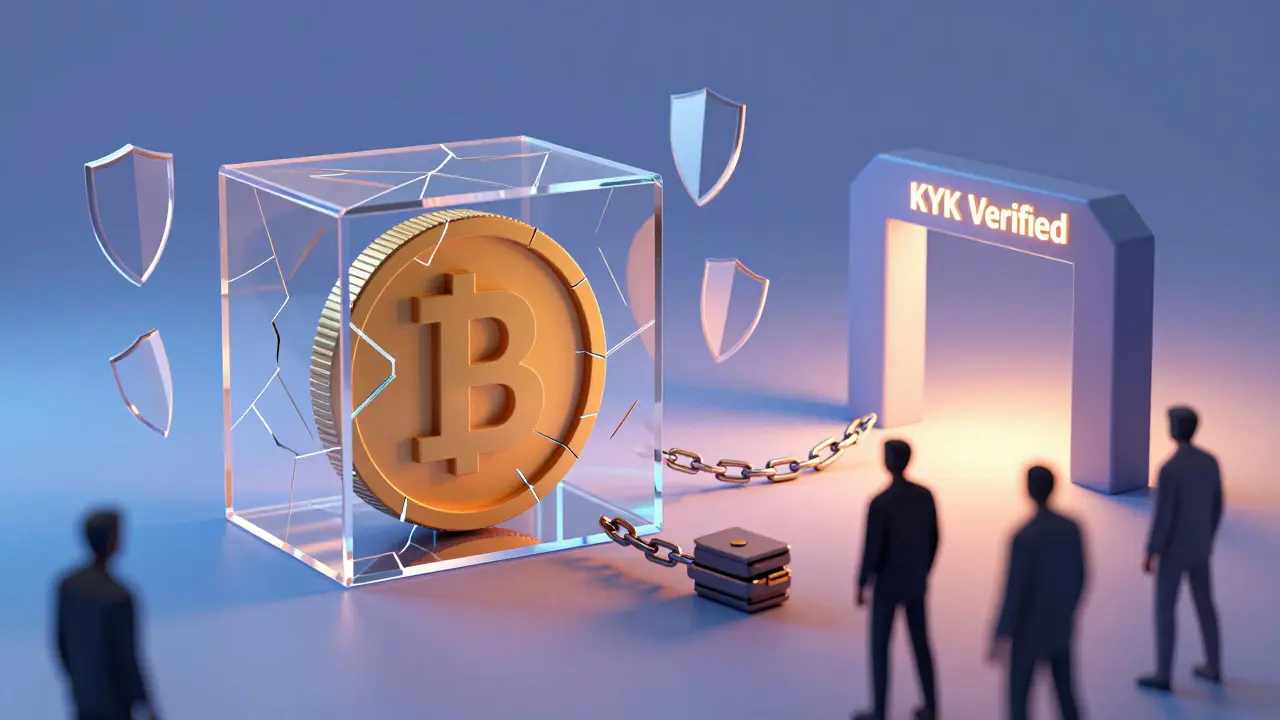
Who’s Using This-and Who’s Not
Large institutions are leading the charge. Banks with crypto desks, Coinbase, Kraken, Binance (where legally allowed), and institutional asset managers all use blockchain AML tools. Why? Because they face fines of millions if they don’t. Smaller exchanges? Many still rely on manual checks. Some don’t even verify users properly. That’s why regulators are cracking down hard on unlicensed platforms. Individuals? Only crypto consultants and high-net-worth investors use standalone blockchain AML tools. For most people, it’s invisible. You just deposit your ETH. The system does the rest. The gap is widening. Institutions that adopt early gain trust, lower costs, and attract more customers. Those that delay? Risk shutdowns or massive penalties.The Road Ahead: What’s Coming by 2027
By 2027, blockchain AML won’t be optional. It’ll be standard. Every financial institution handling digital assets will need it. Here’s what’s next:- Unified dashboards: One platform monitoring both bank transfers and blockchain transactions side by side.
- On-chain identity: Wallets linked to verified IDs without giving up control-think self-sovereign identity on blockchain.
- Automated DeFi compliance: Smart contracts that auto-flag risky behavior and freeze funds if rules are broken.
- Global data sharing: Regulators sharing blockchain analytics across borders through secure, encrypted networks.
Getting Started: What You Need to Know
If you’re running a crypto business, here’s your checklist:- Know your local laws. The U.S., EU, and UK have different rules.
- Choose a vendor with proven track record-Chainalysis, Elliptic, or TRM Labs.
- Train your team. Compliance officers need to understand blockchain basics.
- Integrate with your existing KYC/AML system. Don’t build in isolation.
- Expect 12-18 months for full rollout. It’s not a quick fix.
Is blockchain AML effective against all types of crypto crime?
No. Blockchain AML works best on transparent chains like Bitcoin and Ethereum, where transaction histories are public. It struggles with privacy coins like Monero and Zcash, where transaction details are hidden. It also has limits in DeFi, where users interact without identity verification. While it can trace funds across exchanges and identify known bad actors, it can’t stop anonymous peer-to-peer transfers unless users are identified upfront.
Do I need blockchain AML if I’m just holding crypto?
If you’re only holding crypto in your own wallet and not trading, sending, or using exchanges, you don’t need to worry about blockchain AML tools. But if you use any exchange, DeFi platform, or crypto service, they’re required to use AML systems-and your activity is monitored. Your transactions may be flagged if they match known suspicious patterns, even if you’re innocent.
How do regulators know which wallets belong to who?
Exchanges and regulated platforms collect your ID when you sign up. When you send crypto from your exchange wallet to another address, that wallet is linked to your identity. Blockchain analytics firms use this data to trace funds across the network. Even if you move crypto to an unregulated wallet, if it ever touches a regulated platform again, the trail can be picked up.
Can AI really detect money laundering better than humans?
Yes, in most cases. Humans are slow and prone to bias. AI can analyze millions of transactions in seconds and spot complex patterns-like layering, structuring, or funneling funds through dozens of wallets. AI reduces false positives by up to 40%, letting humans focus on real threats. But AI isn’t perfect. It needs human oversight to interpret context, especially when dealing with new or evolving tactics.
What happens if I use a privacy coin like Monero?
Using privacy coins doesn’t make you illegal-but it raises red flags. Most regulated exchanges block Monero and Zcash deposits. If you try to convert Monero back to Bitcoin or USD through a compliant platform, your transaction will likely be flagged or rejected. Some jurisdictions are moving toward banning privacy coins entirely. You risk losing access to your funds or triggering a regulatory investigation.
Will blockchain AML kill crypto anonymity?
Not entirely. Anonymity on public blockchains still exists for basic transactions. But the era of completely untraceable crypto is ending. Regulators and exchanges are making it harder to move large sums without identification. True anonymity is now limited to small, peer-to-peer transfers outside regulated systems. For most users, the goal isn’t anonymity-it’s safety and compliance.
How much does blockchain AML software cost?
Costs vary widely. Small exchanges might pay $5,000-$20,000 per year for basic monitoring. Large institutions pay $100,000 to over $1 million annually, depending on transaction volume and features. Many vendors offer tiered pricing based on the number of wallets monitored, transaction speed, and integration depth. Some also charge per SAR filed. It’s an investment, but fines for non-compliance can be 10x higher.
Can I trust blockchain AML companies with my data?
Reputable vendors like Chainalysis and Elliptic use encrypted, zero-knowledge systems that don’t store your personal data unless required by law. They analyze on-chain patterns, not your name or address. But if you use a platform that integrates their tools, your exchange still holds your KYC info. Always ask how data is stored, who has access, and whether they comply with GDPR or similar privacy laws.






17 Comments
Anselmo Buffet
December 12, 2025 at 14:12
This is actually way less scary than people make it out to be. The tech is just catching up to how money moves now.
Kathryn Flanagan
December 13, 2025 at 13:08
I just want to say that if you're new to this whole blockchain AML thing, don't panic. It's not about spying on you. It's about making sure the system doesn't get used by bad actors. Think of it like seatbelts in cars. You don't like them, but you're glad they're there when something goes wrong. Most people who use crypto legally have nothing to worry about. The tools are getting smarter, yes, but they're also getting better at telling the difference between a normal trader and someone trying to hide stolen money. It's not perfect, but it's a lot better than it was five years ago. And honestly? The fact that we're even talking about this means we're moving in the right direction. We're not trying to kill privacy. We're trying to protect the good stuff from the bad apples. And that's something we can all agree on, right?
Claire Zapanta
December 14, 2025 at 11:39
Oh, so now the government gets to track every single transaction you make? Brilliant. Next they'll be scanning your brain for 'suspicious thoughts'. This isn't compliance. It's digital authoritarianism dressed up in corporate jargon. And don't tell me about 'criminals'-they'll always find a way. The only people getting crushed are honest users who just want to move their money without being interrogated by algorithms.
JoAnne Geigner
December 15, 2025 at 22:27
I really appreciate how this breaks down the real challenges… but I also wonder if we’re building a system that’s so rigid it’ll crush innovation? I mean, what happens when a grandmother sends $200 to her grandson in another country using a privacy coin because she doesn’t trust banks? Is she now a suspect? I think we need to design with empathy, not just efficiency.
Sarah Luttrell
December 16, 2025 at 05:36
Oh wow. So now we're all criminals until proven innocent? How very 2025 of you. I'm sure the FATF loves a good power trip. 🙄
Kathy Wood
December 17, 2025 at 03:25
This is a disaster waiting to happen. They’re turning crypto into a bank with extra steps. And no one’s talking about how this will hurt the poor who rely on crypto because banks won’t touch them!
Rakesh Bhamu
December 17, 2025 at 11:43
From India, I can say this: regulation is necessary but must be smart. We have millions using crypto for remittances. If rules make it harder or more expensive, people will just go underground. The answer isn’t banning privacy coins-it’s building bridges between compliance and real-world needs.
Andy Walton
December 19, 2025 at 04:17
i mean… like… if the blockchain is so transparent… why do we even need all this? 🤔 like… isnt the whole point of crypto to be free? like… why are we letting them put shackles on our wallets?? i just… i dont get it anymore. feels like we lost the revolution.
Ian Norton
December 19, 2025 at 12:13
The 40% false positive reduction is a lie. I’ve seen compliance teams flagging every transaction from a wallet that ever interacted with a mixer-even if it was five years ago and $20. It’s not AI. It’s lazy programming with a fancy name.
amar zeid
December 20, 2025 at 06:59
This is a pivotal moment. AI isn’t replacing humans-it’s augmenting them. But we must ensure the models are trained on diverse data. If all training data comes from U.S. and EU exchanges, the system will mislabel transactions from Africa or Southeast Asia as suspicious. That’s not compliance. That’s bias.
Alex Warren
December 20, 2025 at 22:43
The Travel Rule implementation is inconsistent across jurisdictions. That creates arbitrage opportunities for bad actors. Harmonization is not optional-it’s the only path forward.
Steven Ellis
December 22, 2025 at 14:16
There’s a quiet revolution happening here, and most people aren’t noticing. We’re not just tracking money-we’re building a new kind of financial trust. One where accountability is baked into the protocol, not bolted on by regulators. It’s not about control. It’s about clarity. And for the first time, the ledger doesn’t lie. That’s powerful.
PRECIOUS EGWABOR
December 23, 2025 at 01:45
Honestly, if you're still using unregulated platforms in 2025, you're not a crypto pioneer-you're a liability. Real institutions are moving forward. The rest are just clutter.
Ike McMahon
December 24, 2025 at 00:46
If you’re using a mixer, you’re asking for trouble. But if you’re just sending ETH to your friend? Chill. The system isn’t out to get you.
Taylor Fallon
December 25, 2025 at 10:18
I just want to say… i know this sounds scary but i truly believe we’re building something better here. like… imagine a world where your money can’t be stolen or hidden by criminals… and you still own it? that’s not control. that’s freedom. 🤍
Nicholas Ethan
December 25, 2025 at 13:28
The data shows a 35% adoption rate in the U.S. That’s insufficient. Without mandatory integration across all regulated entities, the system remains fragmented and exploitable.
Anselmo Buffet
December 27, 2025 at 02:00
JoAnne makes a good point about the grandmother. Maybe we need a 'low-risk transaction' tier for small, personal transfers. Not everything needs to be a police report.