
How Blockchain Enables Energy Markets
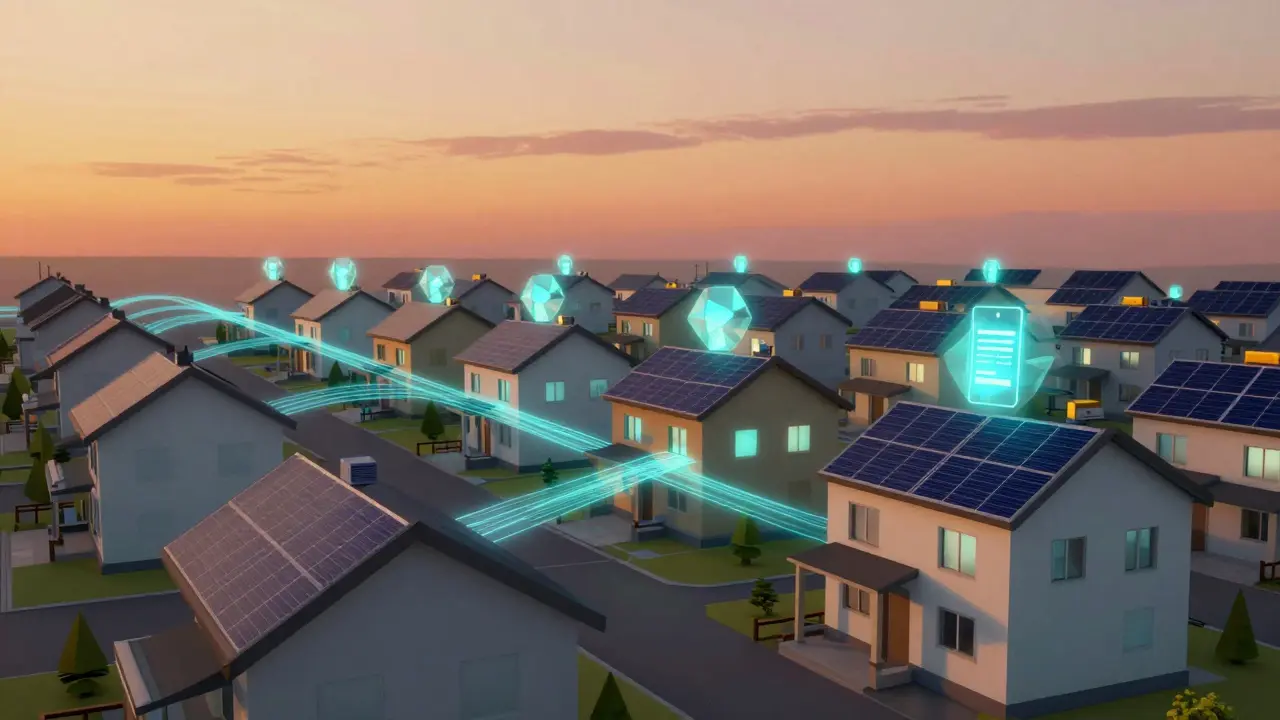
Imagine your neighbor sells extra solar power directly to you - no utility company, no middleman, no complicated billing. Just a simple, secure, and automatic transfer of energy and payment. This isn’t science fiction. It’s happening right now, thanks to blockchain.
What Blockchain Actually Does in Energy Markets
Blockchain isn’t just about Bitcoin. In energy, it’s a digital ledger that records every kilowatt-hour produced, consumed, or traded - and no one can alter it after the fact. This creates trust without needing a central authority like a power company to verify transactions. Traditional energy grids are top-down: power plants send electricity to utilities, who distribute it to homes and businesses. Blockchain flips this. It lets households with solar panels, wind turbines, or even battery storage become active participants. They can sell excess energy directly to others nearby. This is called peer-to-peer (P2P) energy trading. Smart contracts - self-executing code on the blockchain - handle everything automatically. If your solar panels generate 5 kWh more than you use, the system checks your meter, finds a buyer nearby, and transfers the energy and payment in seconds. No invoices. No delays. No disputes.Why This Matters for Renewable Energy
Renewables like solar and wind are unpredictable. The sun doesn’t always shine. The wind doesn’t always blow. That makes it hard for utilities to balance supply and demand. Blockchain solves this by creating local energy markets. When there’s too much solar power midday, neighbors with batteries buy it. When it’s cloudy, they can draw from the grid or from someone else’s stored energy. This reduces waste and keeps local grids stable. It also fixes a big problem with renewable energy certificates (RECs). RECs prove that a certain amount of electricity came from clean sources. But today, they’re often tracked on paper or outdated databases - ripe for fraud. Blockchain makes each REC a unique, traceable digital token. You can see exactly where the power came from, who produced it, and when it was used. This transparency is why the global REC market hit $28 billion in 2025 - and blockchain is driving most of that growth.Who’s Using It Right Now?
Three groups are leading the charge: households, businesses, and utilities. Residential users saw a 20% jump in blockchain-based energy trading in 2025. In Brooklyn, New York, the Transactive Grid project lets neighbors trade solar power using Ethereum-based smart contracts. In Germany, over 10,000 households are part of local energy cooperatives that use blockchain to split costs and profits fairly. Commercial buildings - think offices, warehouses, shopping centers - account for 45% of blockchain energy adoption in 2025. They use it to track their green energy usage for sustainability reports. Companies like Microsoft and IKEA now require suppliers to prove their energy comes from verified renewable sources. Blockchain makes that easy. Utilities aren’t fighting this shift - they’re joining it. About 35% of the blockchain energy market in 2025 is driven by utility companies. They use private blockchains to manage distributed energy resources (DERs): rooftop solar, home batteries, electric vehicle chargers. Instead of building expensive new power plants, they’re using blockchain to balance supply across thousands of small sources.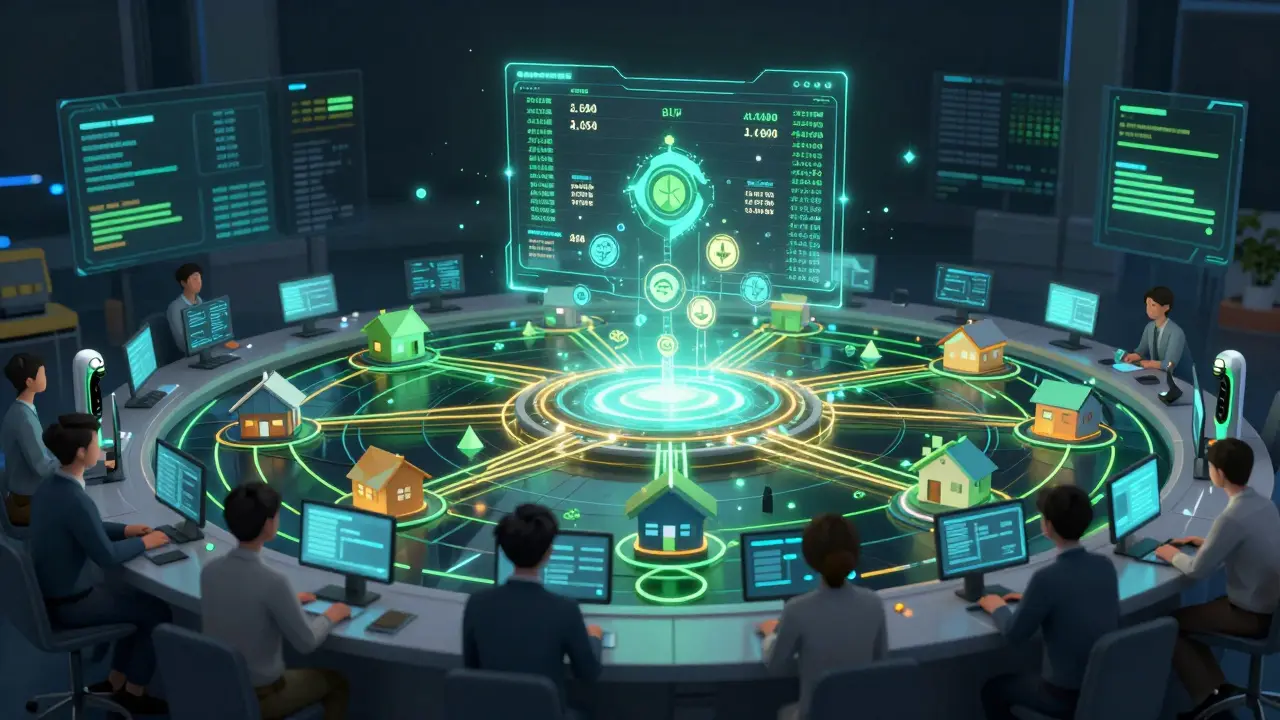
How It Works Behind the Scenes
Most energy blockchain systems use private or permissioned networks - not public ones like Bitcoin. Why? Because they need speed, privacy, and control. About 65% of real-world energy projects run on private blockchains, often built on Ethereum or Hyperledger. Here’s the tech stack:- Smart meters record usage every few minutes and send data to the blockchain.
- IoT sensors on solar panels and batteries track output and charge levels.
- Smart contracts match buyers and sellers, trigger payments in crypto or fiat, and update ledgers.
- Cryptographic security ensures only authorized users can trade or access data.
Carbon Credits and Green Mining
Blockchain isn’t just about electricity. It’s also turning environmental actions into digital assets. Carbon credits - which represent one ton of CO2 reduced or captured - are often bought and sold by companies trying to meet emissions targets. But tracking them has been messy. Double-counting? Fake offsets? Blockchain fixes that. Each credit becomes a token that can’t be copied or deleted. Startups in Kenya and Brazil now use blockchain to verify that farmers are planting trees or restoring wetlands - and pay them in crypto. Even crypto mining is getting greener. In places like Iceland and Canada, excess renewable energy that would otherwise go to waste is used to mine Bitcoin. Blockchain tracks the energy source, so miners can prove their operations are carbon-neutral. Some are even creating tokens like SolarCoin - a cryptocurrency awarded directly to solar panel owners for every MWh they produce.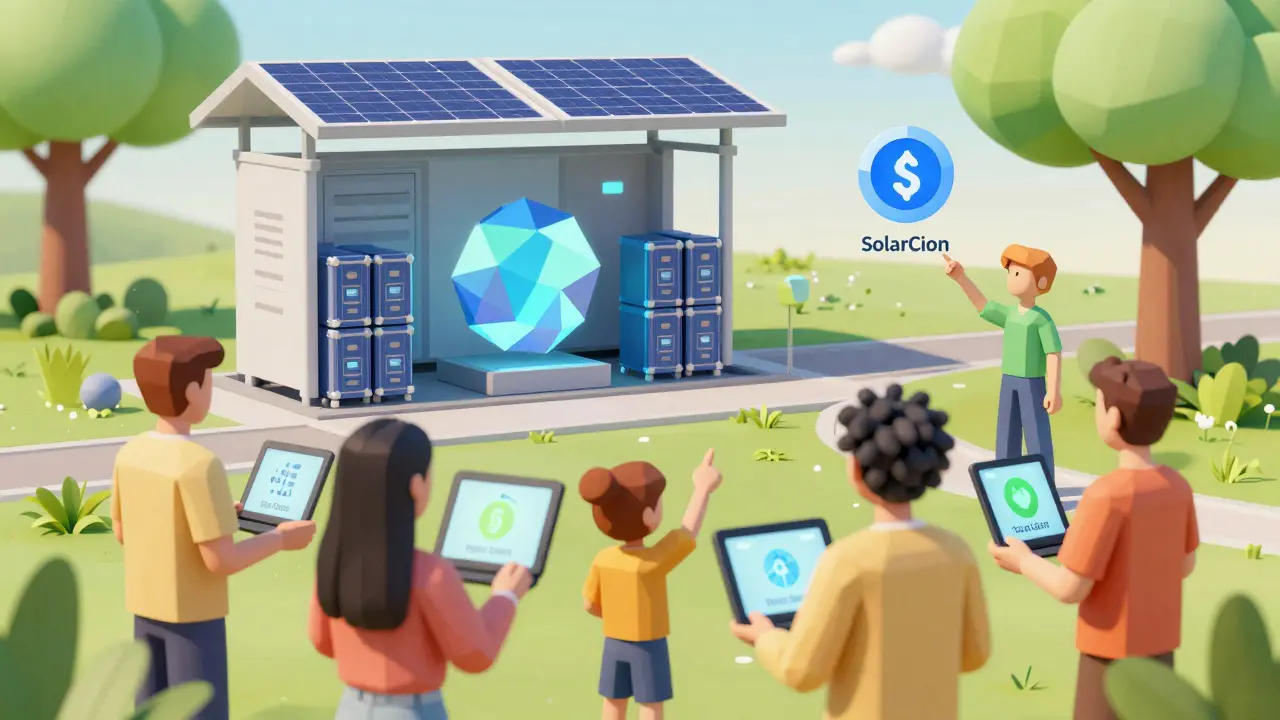
Challenges and Risks
It’s not perfect. There are real hurdles. First, integration. Most power grids were built 50 years ago. Connecting them to blockchain requires new hardware, software, and training. Utilities are moving slowly. Second, security. While blockchain itself is hard to hack, the edges aren’t. Smart contracts have bugs. A single line of bad code can let someone steal energy or money. In 2024, a major P2P platform lost $1.2 million due to a smart contract flaw. That’s why audits are now mandatory for any serious project. Third, regulation. Governments are still figuring out how to tax, license, and oversee decentralized energy markets. Some places, like California and the EU, are creating clear rules. Others are stuck in legal limbo.What’s Next? The Road to 2035
The blockchain energy market was worth $4.4 billion in 2025. By 2035, it’s expected to hit $142.3 billion. That’s a 41.6% annual growth rate - faster than almost any tech sector. Why? Because it solves real problems:- It cuts transaction costs by up to 70% compared to traditional billing.
- It reduces energy waste by matching supply and demand locally.
- It gives consumers control over their energy - and their bills.
Why This Isn’t Just a Tech Trend - It’s a System Change
Blockchain in energy isn’t about making trading faster. It’s about changing who owns the grid. For decades, energy was controlled by big companies. Now, it’s becoming a network of millions of small producers and consumers - connected, transparent, and fair. You don’t need to be a tech expert to benefit. If you have solar panels, a battery, or even just an electric car, you’re part of it. This shift is already rewriting rules. Governments are using blockchain to distribute green subsidies. Cities are using it to meet climate targets. Communities are becoming energy-independent. The future of energy isn’t centralized. It’s distributed. And blockchain is the glue holding it all together.Can I really sell my solar power to my neighbor using blockchain?
Yes. Projects like Brooklyn’s Transactive Grid and Germany’s local energy cooperatives already let homeowners trade excess solar power directly with neighbors. Smart contracts automatically handle the transfer of energy and payment, often in seconds. All you need is a smart meter and access to a local blockchain platform.
Is blockchain energy trading secure?
The blockchain ledger itself is extremely secure - once data is recorded, it can’t be changed. But the real risks are in smart contracts and connected devices. A poorly written contract can be hacked, and IoT meters can be compromised. That’s why reputable projects use third-party audits, multi-signature wallets, and regular security updates. Always choose platforms with verified code and public audit reports.
Do I need to use cryptocurrency to trade energy on blockchain?
Not necessarily. While some platforms use tokens like SolarCoin or Ethereum, many others settle payments in regular currency (USD, EUR, etc.). The blockchain handles the tracking and automation - the payment method can be flexible. Most residential systems today use fiat to make it simple for non-crypto users.
How does blockchain help with renewable energy certificates (RECs)?
Traditional RECs are prone to fraud and double-counting because they’re tracked on paper or siloed databases. Blockchain turns each REC into a unique, uncopyable digital token. You can trace every REC from the moment the solar panel generates power to when a company buys it to offset emissions. This transparency is why corporations now demand blockchain-verified RECs for their sustainability reports.
Is blockchain energy tech only for wealthy countries?
No. In fact, developing regions are often the fastest adopters. In parts of Africa and Southeast Asia, where grid access is unreliable or nonexistent, blockchain-based microgrids let communities generate, store, and trade their own power. Solar-powered microgrids with blockchain billing have brought electricity to over 2 million people in off-grid areas since 2022. It’s not just a rich-world tech - it’s a tool for energy equity.


15 Comments
Shawn Roberts
January 1, 2026 at 22:08
This is literally the future and it’s so cool 😍 I’ve got solar panels and I didn’t even know I could be selling power to my neighbor like it’s a crypto meme. My utility bill is gonna cry.
Jake West
January 3, 2026 at 17:11
Oh great, another blockchain solution looking for a problem. You really think grandma in Ohio is gonna understand smart contracts? This is just tech bro fantasy wrapped in greenwashing. Wake up.
Andrea Stewart
January 4, 2026 at 11:09
Actually, the tech is way simpler than it sounds. Most residential platforms use apps that auto-handle everything - you just see your balance go up when you sell excess power. No crypto knowledge needed. The real win is cutting out the middleman and keeping money local.
Plus, the REC tracking alone is a game-changer. No more shady carbon offset scams. You can literally trace your ‘green’ power back to the panel that made it.
dina amanda
January 5, 2026 at 20:33
This is how they’re taking over our grid. First they get us to trade power, then they’ll track every lightbulb you turn on. Soon they’ll be charging us for breathing clean air. The government and big tech are one and the same. This isn’t freedom - it’s surveillance with solar panels.
Josh Seeto
January 6, 2026 at 17:07
Wow. So you’re telling me the solution to climate change is… more blockchain? Brilliant. Next up: NFTs for oxygen. 🤡
Abhisekh Chakraborty
January 7, 2026 at 22:38
I love this so much!!! My cousin in Delhi just installed a microgrid with blockchain billing - no grid connection at all! He’s making more money selling power than his job! 😭🔥 We need this everywhere!!!
SUMIT RAI
January 7, 2026 at 23:18
You say it’s decentralized but 65% use private blockchains? That’s not decentralization, that’s corporate control with a fancy name. 🤨 Also, who’s gonna pay for all these smart meters? The poor? Don’t pretend this isn’t just another capitalist gimmick.
Kevin Gilchrist
January 8, 2026 at 14:52
I’ve seen this shit before. Every ‘revolution’ ends with someone charging $200/month for a ‘blockchain energy subscription’ and the real winners are the guys who sold the hardware. You think your neighbor’s gonna be your buddy when the price goes up? Nah. It’s just capitalism in a new hoodie.
nayan keshari
January 9, 2026 at 09:27
All this talk about peer-to-peer energy and yet you ignore that most people don’t have solar panels. This benefits the rich who can afford the tech. Meanwhile, the rest of us still pay $300/month to the same monopoly. This isn’t equity - it’s exclusion with a blockchain sticker.
Prateek Chitransh
January 11, 2026 at 03:31
You’re right to be skeptical, Nayan. But here’s the thing - the tech isn’t the problem. It’s how we deploy it. Imagine if governments subsidized smart meters for low-income households and created community energy cooperatives. Then it’s not exclusion - it’s empowerment. The tools exist. We just need the will.
Gavin Hill
January 11, 2026 at 16:39
It’s interesting how we assume technology will fix systemic issues. But what if the real problem isn’t the grid - it’s our belief that energy should be a commodity? Blockchain doesn’t change that. It just makes the transaction faster. Maybe we need to ask why we’re trading energy at all.
Mike Pontillo
January 13, 2026 at 08:55
So let me get this straight - you want me to trust a computer code to handle my electricity… but I can’t trust the utility company? The same utility company that’s been around since the 1920s? I’ll stick with my bills thank you very much.
christopher charles
January 14, 2026 at 20:37
Wait, wait, wait - did someone say SolarCoin?!?!?!?! I’ve been mining it since 2023 and I’ve got 12,000 coins!! I bought a new EV with it!! 😭🙏 The future is NOW!! Don’t sleep on this!!!
Steve Williams
January 16, 2026 at 03:23
In Nigeria, we have been using blockchain microgrids for over three years now. It is not a novelty. It is a necessity. For communities without reliable grid access, this technology is not an option - it is a lifeline. We do not romanticize it. We depend on it.
Emily L
January 17, 2026 at 05:43
I just read this and I’m crying. My dad’s solar panels are just sitting there wasting energy. I’m installing the app tomorrow. This is the most beautiful thing I’ve seen in years.