
P2P Crypto Platforms in Restricted Countries: How to Trade Safely
Living in a country where cryptocurrency is banned or heavily restricted feels like trying to breathe underwater. You see the potential for financial freedom, inflation hedging, and cheaper remittances, but your local banks block transactions, and traditional exchanges won’t let you sign up. For millions of people in nations like Nigeria, Turkey, Vietnam, and Bangladesh, this isn't just an inconvenience-it's a daily struggle against capital controls and currency devaluation.
This is where P2P crypto platforms are decentralized marketplaces that allow users to trade cryptocurrencies directly with each other without a central intermediary holding funds become more than just trading tools; they become essential financial infrastructure. They bypass traditional banking rails entirely, connecting buyers and sellers directly. But navigating these platforms in restricted jurisdictions comes with unique risks, from account freezes to sophisticated scams. Understanding how these systems work, which platforms operate where, and how to stay safe is critical if you want to participate in the crypto economy despite local laws.
Why P2P Trading Explodes in Restricted Markets
The demand for peer-to-peer trading doesn't come from speculation alone. It stems from necessity. In countries experiencing hyperinflation or strict capital controls, citizens need a way to preserve their savings and move money across borders. Take Turkey, for example. Between 2018 and 2021, the Turkish lira lost 84% of its value against the US dollar. When the central bank banned cryptocurrency payments in April 2021, it didn't stop people from wanting crypto; it just pushed them underground into P2P markets.
Similarly, in Nigeria, the Central Bank issued a directive in January 2017 prohibiting financial institutions from facilitating crypto transactions. Instead of killing adoption, this ban forced innovation. According to a 2022 study by Binance Research, 87% of Nigerian P2P users were previously unbanked. These platforms provided access to global finance for people who had no other option. The data supports this surge: Chainalysis reported that P2P volume in restricted countries grew by 217% year-over-year in 2022, reaching $128 billion annually. This isn't a niche hobby; it's a parallel financial system serving millions.
How P2P Platforms Operate Under Pressure
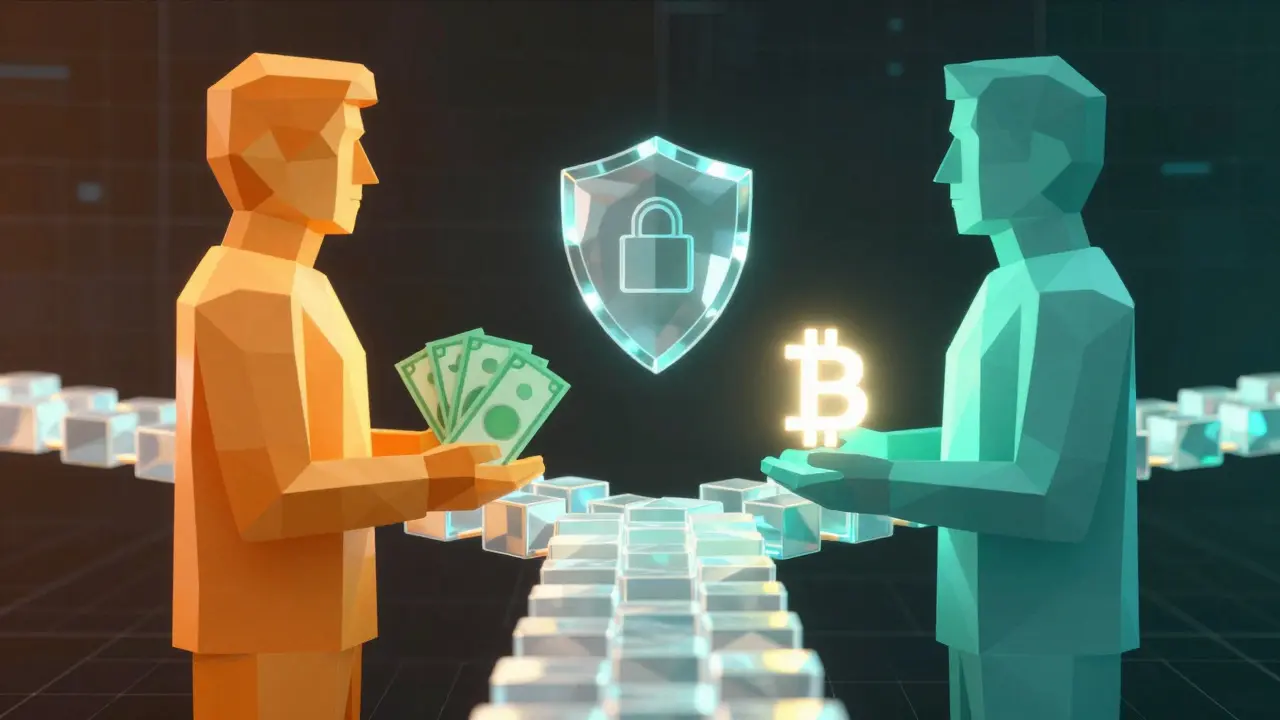
Unlike centralized exchanges that hold your assets in custodial wallets, P2P platforms act as matchmakers. They connect a buyer and a seller, provide an escrow service to hold the crypto during the transaction, and release the funds once both parties confirm the exchange. This non-custodial architecture is key to their survival in restricted environments because it reduces the platform's liability regarding fund storage.
However, operating in banned regions requires technical and compliance adaptations. Major platforms like Paxful is a global P2P marketplace known for supporting diverse payment methods including mobile money and gift cards in high-risk jurisdictions employ risk-based compliance models. They evaluate jurisdictions based on regulatory restrictions, financial crime risk, and political stability. If a country poses too much legal risk, the platform may restrict services there entirely or implement enhanced due diligence.
For users, this means the experience varies significantly by location. In some restricted countries, you might find dozens of payment options, including bank transfers, mobile money (like M-Pesa), and even cash deposits. In others, liquidity might be thin, and verification processes stricter. Transaction fees typically range from 0.5% to 1.5%, depending on the payment method's risk profile. Average completion times in restricted markets hover around 12-18 minutes, slower than the 5-8 minutes seen in regulated jurisdictions, due to these enhanced checks.
Top Platforms for Restricted Jurisdictions
| Platform | Key Feature | KYC Requirement | Best For |
|---|---|---|---|
| Binance P2P | Highest liquidity, multi-language support | Mandatory ID verification | Beginners, large volumes |
| Paxful | Diverse payment methods (gift cards, mobile money) | ID required for higher limits | Unbanked users, flexible payments |
| HodlHodl | Non-custodial, no KYC | None | Privacy-focused users |
| Yellow Card | Africa-focused, fiat wallet integration | ID required | African merchants and traders |
Binance P2P is the largest P2P marketplace globally, offering deep liquidity and support for over 350 payment methods across numerous currencies dominates the space due to its sheer volume and user base. It offers support in 14 languages, including Swahili and Hausa, making it accessible in African markets. However, its mandatory KYC (Know Your Customer) requirements mean you must upload identification documents, which carries inherent privacy risks.
For those prioritizing anonymity, decentralized alternatives like HodlHodl is a non-custodial Bitcoin P2P exchange that uses multisig escrow contracts without requiring identity verification offer a different approach. By avoiding identity verification entirely, they appeal to users wary of government surveillance. Yet, this lack of oversight also attracts bad actors, increasing fraud risk. LocalBitcoins, once a leader in this space, saw its market share in banned countries drop from 68% to 29% between 2020 and 2022 after tightening its KYC rules, illustrating the tension between security and accessibility.
Risks and Red Flags in Banned Regions
Trading in restricted countries isn't just about finding a platform; it's about managing significant risks. The most immediate threat is legal vulnerability. In China, authorities arrested 1,274 individuals related to illegal crypto transactions in Q2 2023 alone. While P2P trading itself might not always be explicitly criminalized in every banned nation, using traditional bank accounts to facilitate these trades often violates banking regulations. A 2023 Chainalysis survey found that 22% of Nigerian P2P users reported having their bank accounts frozen due to crypto activity.
Fraud is another major concern. Dr. Garrick Hileman from the Cambridge Centre for Alternative Finance noted that fraud rates in P2P markets are 43% higher than in regulated exchanges. Scammers often use social engineering tactics, such as sending fake payment receipts or tricking users into releasing crypto before confirming fiat receipt. Paxful reported that 37% of its fraud cases originated from restricted jurisdictions in 2022. Always remember: never release crypto until you have confirmed the fiat funds are actually in your account, not just a screenshot of a transfer.
Liquidity can also be a hurdle. In regulated markets, order book depth might exceed $215,000. In restricted markets, the average depth is closer to $8,500. This means if you try to trade a large amount, you might face significant slippage or inability to find a counterparty. Smaller, frequent trades are usually safer and more efficient in these environments.
Practical Steps for Safe Trading
If you decide to engage in P2P trading despite local restrictions, preparation is your best defense. First, understand your local laws. Is crypto usage banned, or only commercial activity? Vietnam, for instance, bans using crypto as payment but allows trading, albeit with heavy taxes. Misinterpreting these nuances can lead to fines ranging from $6,500 to $8,700.
Second, secure your digital footprint. Many app stores remove crypto apps in banned countries. You may need to download APK files directly from official websites. Be cautious here-only download from verified sources to avoid malware. Once installed, enable two-factor authentication (2FA) using an authenticator app, not SMS, which can be intercepted.
Third, start small. Use new platforms with minimal amounts to test the process. Verify the counterparty’s reputation score and trade history. On Binance P2P, look for merchants with over 95% positive feedback and hundreds of completed trades. Avoid new accounts with no history, regardless of how attractive their price seems.
Finally, consider using separate bank accounts or e-wallets specifically for crypto-related transactions. This isolates your primary finances from potential freezes. In Nigeria, many users maintain a dedicated mobile money account solely for P2P activities to protect their main salary accounts.
The Future of P2P in Restricted Zones
The landscape is shifting. Regulatory bodies like the Financial Action Task Force (FATF) are pushing for universal "travel rule" compliance, requiring platforms to share sender and receiver information for transactions over $1,000. This pressure is forcing even decentralized platforms to reconsider their anonymity features. Meanwhile, countries like Nigeria are exploring regulatory sandboxes to bring crypto back into the formal economy.
Despite these headwinds, the demand remains robust. Industry analysts project P2P volume in restricted markets will hit $210 billion annually by 2025. As long as economic instability persists and capital controls remain tight, P2P platforms will continue to serve as vital lifelines. The key for users is to adapt quickly, prioritize security, and stay informed about changing regulations.
Is it legal to use P2P crypto platforms in banned countries?
Legality varies significantly by country. In some nations like China, any crypto-related activity is strictly prohibited and can lead to arrests. In others, like Vietnam, trading is legal but using crypto as payment is banned. Always consult local laws. Using P2P platforms often involves violating banking regulations rather than crypto laws specifically, leading to account freezes rather than criminal charges in many cases.
Which P2P platform is safest for beginners in restricted regions?
Binance P2P is generally considered the safest for beginners due to its high liquidity, robust escrow system, and extensive user education resources. It requires KYC, which adds a layer of security by verifying users. However, ensure you understand your local risks regarding identity verification before proceeding.
How do I avoid getting scammed on P2P platforms?
Never release crypto until you have physically confirmed the fiat funds are in your account. Do not trust screenshots or fake payment notifications. Stick to highly rated merchants with long histories. Use the platform's chat feature for all communications and report any suspicious behavior immediately. Start with small transactions to build trust and experience.
Can my bank freeze my account for P2P trading?
Yes, this is a common risk in restricted countries. Banks often monitor for unusual patterns associated with crypto trading. To mitigate this, use separate bank accounts or e-wallets exclusively for crypto transactions. Keep transaction sizes moderate and consistent to avoid triggering automated fraud alerts.
What should I do if I cannot download a crypto app from the App Store?
In many banned countries, Google Play and Apple App Stores remove crypto apps. You may need to download the Android APK file directly from the platform's official website. Ensure you verify the source to avoid malware. For iOS, sideloading is more complex and may require jailbreaking, which poses additional security risks. Web-based interfaces are often a safer alternative.