
Reku Crypto Exchange Review 2025: Fees, Security, and Features
Reku Trading Fee Calculator
Reku fees for this trade:
Compare to:
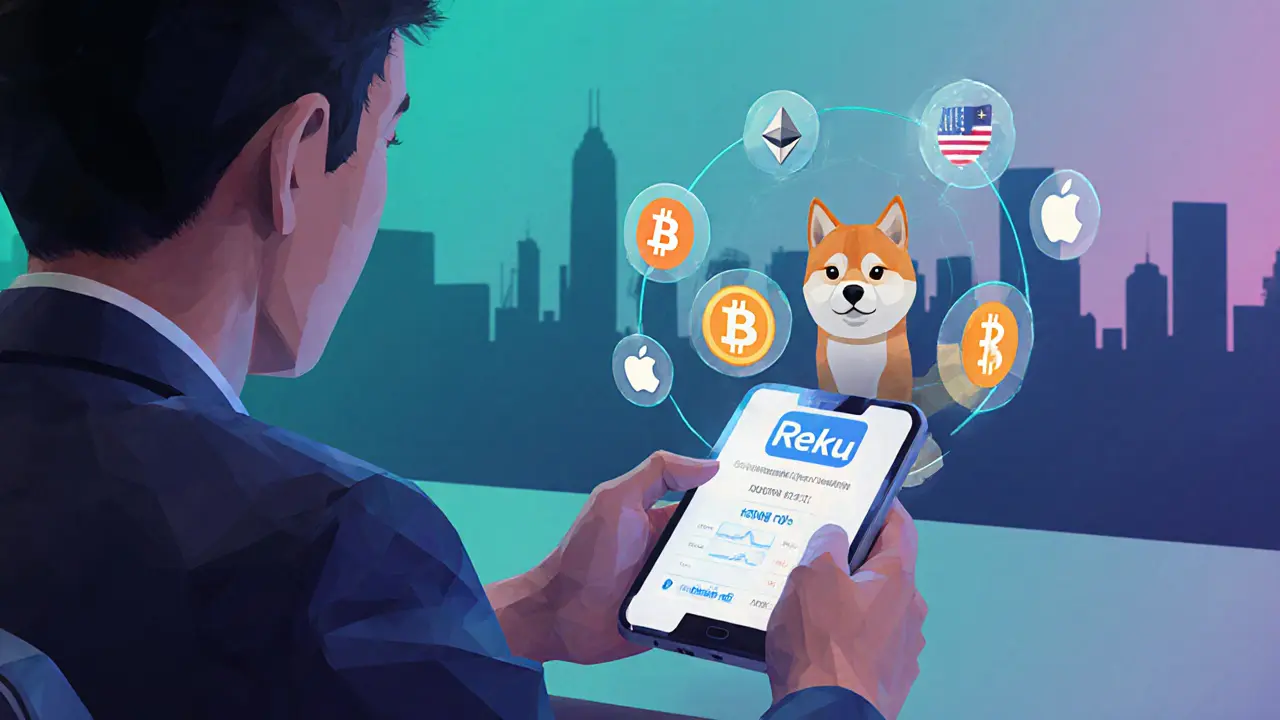
When Indonesian investors look for a home for both crypto and US stocks, Reku is the platform that constantly pops up in discussions. The exchange, formerly known as Rekeningku, claims to be fully regulated by the national futures watchdog BAPPEBTI and supervised by the financial authority OJK. That regulatory backdrop is the main reason many users start their search with a Reku exchange review-they want to know if the promises of safety, low fees, and a hybrid crypto‑stock experience actually hold up.
What Reku Offers: Asset Coverage and Trading Modes
Reku lists more than 150 cryptocurrencies, ranging from the heavy‑weights-Bitcoin (BTC) and Ethereum (ETH)-to meme coins like Shiba Inu (SHIB) and newer entrants such as Arbitrum (ARB). On the stock side, the platform provides access to over 600 US equities and ETFs, including Apple (AAPL), Tesla (TSLA) and Nvidia (NVDA). All of this sits behind a dual‑mode trading engine:
- Lightning Mode: instant execution with 0% fees, aimed at beginners who just want to buy a slice of Bitcoin without watching the order book.
- Pro Mode: advanced charting, limit orders and a flat 0.1% fee, suited for traders who need depth and precision.
Beyond spot trading, Reku offers crypto futures with up to 25× leverage and built‑in Take‑Profit/Stop‑Loss tools. The futures fee mirrors Pro Mode at 0.1%, which is competitive for the Indonesian market.
Fee Structure Compared to Global Peers
Fees are often the first deal‑breaker in a review. Reku’s 0% Lightning Mode eliminates entry costs for casual investors, while the 0.1% Pro Mode aligns with what you’d pay on Binance or Coinbase for spot trades. For US stocks, the platform charges a flat 0.25% per trade and offers free IDR‑USD conversion, a perk that many local competitors lack.
Below is a quick snapshot of how Reku stacks up against two global giants.
| Feature | Reku | Binance | Coinbase |
|---|---|---|---|
| Spot Trading Fee (standard) | 0.1% (Pro Mode) | 0.10% - 0.02% tiered | 0.50% - 0.00% tiered |
| Spot Trading Fee (beginner) | 0% (Lightning Mode) | 0% on selected pairs | 0% on first $10k (new users) |
| US Stock Trading Fee | 0.25% | Not offered | 0.25% - 0.50% |
| Deposit Methods | Indonesian banks, e‑wallets (OVO, DANA) | Bank cards, crypto deposits | Bank cards, ACH, crypto |
| Withdrawal Fee | IDR‑based fees apply | Variable | Variable |
Regulatory Backing: BAPPEBTI and OJK
Reku’s biggest selling point is its formal registration with BAPPEBTI (the Commodity Futures Trading Authority) and oversight by OJK (the Financial Services Authority). This double‑layered supervision means the exchange must adhere to capital‑adequacy rules, anti‑money‑laundering (AML) protocols, and regular reporting. For a market where many platforms operate in a gray area, that regulatory seal gives local users a concrete confidence boost.
Security Measures: Fireblocks and ISO 27001
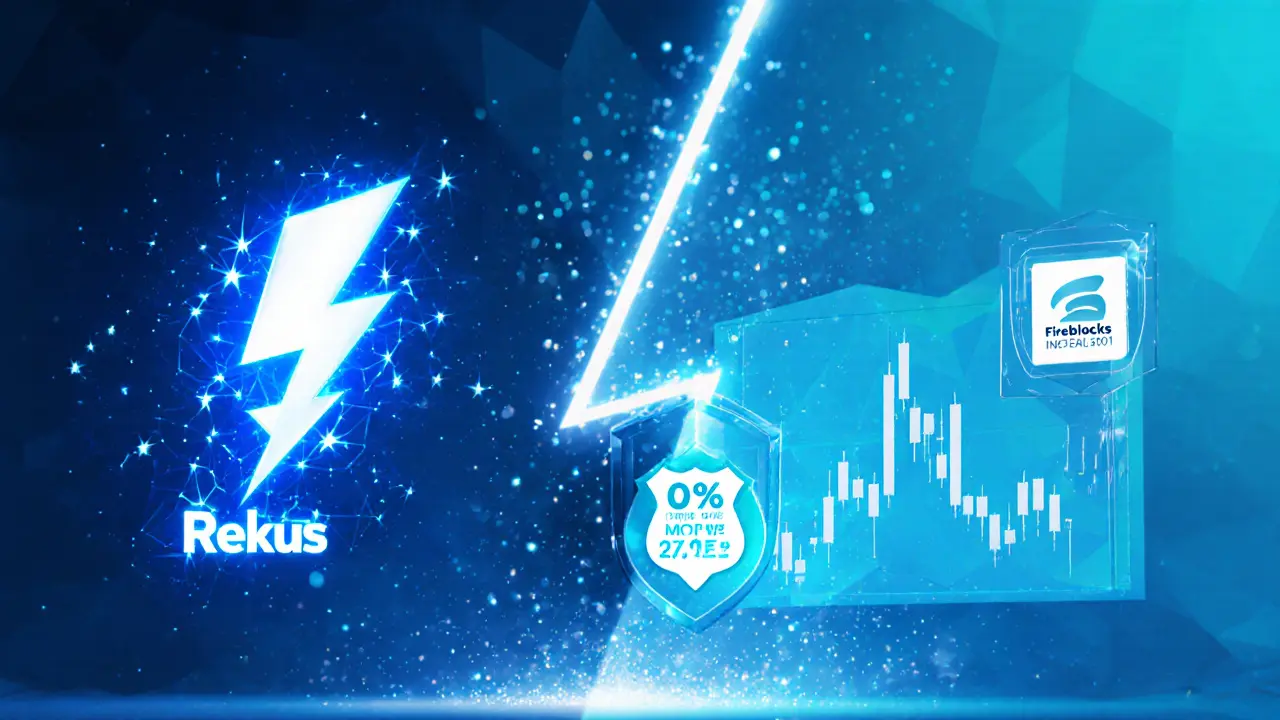
Beyond regulation, Reku backs its custodial operations with Fireblocks, an institutional‑grade digital‑asset custodian. Funds are stored in cold wallets, and the platform has achieved ISO 27001 certification, confirming a mature information‑security management system. Additional safeguards include mandatory two‑factor authentication (2FA), optional biometric login, and encryption of all data in transit and at rest.
Since its launch, Reku has not reported any major security breaches, and user complaints about fund loss are virtually nonexistent on public forums. The combination of regulatory oversight, a reputable custodian, and certified security practices makes the platform one of the safest choices for Indonesian retail investors.
User Experience: Onboarding, App Performance, and Support
Signing up is a breeze: download the app from Google Play or the Apple Store, enter your name, phone number, and a valid Indonesian ID (KTP). The KYC check usually completes in under five minutes for domestic users. After verification, you set a 4‑digit PIN, enable 2FA, and make your first deposit-minimum IDR 10,000 (about $0.70).
Most reviews give the app a 3.9‑star rating. Users love the clean layout, instant Lightning Mode trades, and human‑staffed 24/7 support. Common pain points include the lack of international credit‑card deposits and occasional lag during peak market hours. The dual‑mode system can also confuse newcomers; many tutorials now focus on helping users pick the right mode based on their trading knowledge.
Pros and Cons at a Glance
- Pros
- Fully regulated by BAPPEBTI and OJK
- 0% fees for beginner trades (Lightning Mode)
- Access to both crypto and over 600 US stocks in one app
- Institutional‑grade custodial security (Fireblocks, ISO 27001)
- Low entry barrier - deposits start at IDR 5,000
- Cons
- No support for international credit/debit cards
- Limited to Indonesian payment methods
- App performance hiccups during high‑volume periods
- Futures trading still restricted to crypto, not stocks

Who Should Consider Reku?
If you’re an Indonesian retail investor who wants a single dashboard for crypto and US equities, Reku is a solid pick. Beginners benefit from the fee‑free Lightning Mode and quick KYC, while seasoned traders can dive into Pro Mode, leverage futures, and use advanced charting tools.
Non‑Indonesian users will hit a wall at the deposit stage because the platform only accepts local bank transfers and e‑wallets. In that case, a global exchange like Binance or Kraken might be a better fit.
Future Outlook: New Features and Market Position
Reku’s roadmap includes expanding its staking catalog (currently offering up to 12.5% APY on select coins) and adding more automated investment products such as robo‑advisors for diversified portfolios. Analysts expect the platform to maintain its lead in the regulated Indonesian segment as long as it continues to bundle crypto with traditional assets-a niche that few global players have fully replicated.
Bottom Line
In a market where regulation often separates the winners from the pretenders, Reku’s official licensing, low‑fee structure, and security pedigree give it a genuine advantage for Indonesian users. The platform isn’t perfect-its payment ecosystem is very local, and the app can wobble under stress-but the trade‑off between accessibility and safety leans heavily toward the positive side.
Is Reku safe for storing crypto long‑term?
Yes. Reku stores the majority of user assets in cold wallets managed by Fireblocks, holds ISO 27001 certification, and is supervised by BAPPEBTI and OJK. No major security incidents have been reported to date.
Can I use a foreign credit card to fund my Reku account?
No. Reku only accepts Indonesian bank transfers, virtual accounts and local e‑wallets such as OVO, DANA, Shopee Pay and LinkAja. International cards are not supported.
What is the difference between Lightning Mode and Pro Mode?
Lightning Mode executes trades instantly with 0% fees and is targeted at beginners. Pro Mode offers limit orders, advanced charting, and a flat 0.1% fee, designed for experienced traders who need more control.
How does Reku handle US stock trading?
Reku provides access to over 600 US stocks and ETFs, allows 24‑hour overnight trading on weekdays, and charges a flat 0.25% commission per trade. Currency conversion between IDR and USD is free for stock transactions.
Is there a fee for withdrawing funds?
Withdrawals are subject to standard Indonesian bank fees, which vary by the receiving bank. There is no extra charge from Reku beyond the usual banking cost.



22 Comments
johnny garcia
October 23, 2025 at 08:05
The regulatory scaffolding that Reku operates under represents a pivotal evolution in the Indonesian financial ecosystem. By securing licensure from BAPPEBTI and oversight by OJK, the platform transcends the ambiguous gray zones that have historically plagued crypto exchanges. This dual supervision engenders a level of custodial confidence seldom observed outside traditional banking corridors. Moreover, the alignment with Fireblocks and ISO 27001 certification fortifies asset safety through institutional-grade safeguards. Consequently, investors can contemplate participation with a rigor reminiscent of classical risk‑return analysis. 📈
Andrew Smith
October 30, 2025 at 05:45
It's encouraging to see a platform that bridges crypto and US equities under one roof. The 0% Lightning Mode lowers the barrier for newcomers, while the Pro Mode satisfies the needs of seasoned traders without excessive fees. Users will likely appreciate the free IDR‑USD conversion for stock trades, a convenience that many local competitors lack. This blend of accessibility and depth could foster a more inclusive investment culture across Indonesia.
Ryan Comers
November 6, 2025 at 04:25
While most hail Reku as a beacon of regulatory compliance, one must question whether the veneer of legitimacy masks hidden constraints. The exclusion of international credit cards, for instance, feels like a deliberate bottleneck designed to keep capital within domestic channels. Moreover, the platform's reliance on local e‑wallets may inadvertently expose users to systemic risks tied to Indonesia's fintech infrastructure. In short, the promised freedom might be more illusion than reality. 😜
Prerna Sahrawat
November 13, 2025 at 03:05
In the contemporary discourse surrounding digital asset custodianship, Reku emerges not merely as a service provider but as an artefact of fiscal aristocracy, meticulously curated to appeal to the discerning investor who values both ostentation and security. Its regulatory endorsements by BAPPEBTI and OJK confer upon it a sanctified aura, reminiscent of the venerable banking houses of yesteryear, yet it simultaneously embraces the avant‑garde ethos of blockchain technology with a bravado that borders on the theatrical. One cannot overlook the platform's deployment of Fireblocks, a custodian whose reputation is buttressed by a litany of institutional endorsements, thereby ensuring that user assets reside in cold storage akin to a vault guarded by the highest order of cryptographic sentinels. Moreover, the attainment of ISO 27001 certification is not a trivial accolade; it signifies a comprehensive commitment to information security management, echoing the meticulous standards observed in aerospace engineering. The dual‑mode trading architecture, featuring a Lightning Mode with zero fees and a Pro Mode with a modest 0.1% levy, demonstrates a stratified approach to market participation, catering to both the neophyte seeking effortless entry and the virtuoso demanding granular control. While the fee structure is laudable, the conspicuous omission of international payment avenues imposes a parochial limitation that may frustrate globally‑mindful investors yearning for seamless cross‑border liquidity. The platform’s exclusive reliance on Indonesian banking channels, though reflective of regulatory prudence, inadvertently engenders a form of financial siloing that could stifle the organic diffusion of capital. Nevertheless, the provision of free IDR‑USD conversion for stock transactions is a nuanced perk that mitigates some friction, fostering a more fluid investment experience. In terms of user experience, the onboarding process, consummated within a span of merely minutes, underscores an operational efficiency that rivals even the most polished fintech applications. The 3.9‑star rating, while respectable, hints at latent performance hiccups during market surges, an area where infrastructural robustness must be incessantly honed. The absence of any reported security breaches to date serves as a testament to the platform's defensive fortifications, albeit vigilance must remain perpetual in the ever‑evolving threat landscape. As Reku aspires to augment its staking catalog and introduce robo‑advisors, it signals an ambition to transcend mere brokerage and evolve into a holistic wealth management ecosystem. This strategic diversification could well position it as a fulcrum for Indonesia’s burgeoning middle class seeking diversified exposure. Ultimately, Reku’s synthesis of regulatory compliance, institutional custody, and user‑centric features crafts a compelling proposition, provided it continues to reconcile its domestic focus with the aspirations of an increasingly global investor base.
Joy Garcia
November 20, 2025 at 01:45
One can't help but feel that the veneer of security surrounding Reku is nothing more than a carefully orchestrated façade, constructed to lull the masses into a false sense of safety. The alliance with Fireblocks, while impressive on paper, may simply serve as a smokescreen to divert attention from the opaque mechanisms governing asset custody. Moreover, the platform's strict adherence to Indonesian payment methods feels like a strategic move to keep capital under tight governmental control, hinting at ulterior motives beyond mere regulatory compliance. In a world where data is currency, the lack of transparency regarding internal audits should raise eyebrows among the vigilant. Ultimately, the promise of "no major security breaches" could be a selective narrative, curated to mask latent vulnerabilities that only a discerning few dare to contemplate.
mike ballard
November 27, 2025 at 00:25
Building on the optimism highlighted earlier, it's worth noting that Reku's integration of local e‑wallet ecosystems aligns with a broader fintech convergence trend in Southeast Asia 🌏. By leveraging APIs native to OVO, DANA, and LinkAja, the platform minimizes friction in on‑ramp processes, thereby enhancing user acquisition metrics. This interoperability also facilitates a more seamless KYC pipeline, which is crucial for maintaining AML compliance without sacrificing user experience. In essence, the platform's strategic partnership model serves as a catalyst for scaling network effects across the region.
Molly van der Schee
December 3, 2025 at 23:05
While the concerns raised about opacity are understandable, many users have reported a smooth experience with Reku's support channels and clear documentation. The platform's commitment to regulatory standards often translates into tangible protections for investors, which can alleviate some of the anxiety surrounding custodial arrangements. It's encouraging to see that the community is actively discussing these topics, as open dialogue can lead to improved transparency over time.
Erik Shear
December 10, 2025 at 21:45
Agreed. The API ecosystem really does cut onboarding time down dramatically
Tom Glynn
December 17, 2025 at 20:25
Even if the platform imposes certain limitations, it still offers a robust suite of tools for both beginners and seasoned traders. The 0.1% fee in Pro Mode is competitive, and the advanced charting features can help users refine their strategies. For those worried about the lack of international cards, focusing on local liquidity pools might actually simplify the trading process. Keep pushing forward, and the community will adapt. 🚀
Johanna Hegewald
December 24, 2025 at 19:05
Reku's fee structure is straightforward: 0% for Lightning Mode trades and a flat 0.1% for Pro Mode, with a 0.25% commission on US stock transactions.
Benjamin Debrick
December 31, 2025 at 17:45
Indeed, the fee schedule is, as you have aptly observed, remarkably uncomplicated; however, one must also consider the ancillary costs associated with withdrawals, which, while not levied by Reku per se, are subject to the standard banking fees imposed by Indonesian financial institutions; these ancillary expenses, albeit modest, can accumulate over time, especially for high‑frequency traders seeking to capitalize on marginal price differentials.
Anna Kammerer
January 7, 2026 at 16:25
Ah, the bliss of a platform that promises security yet conveniently forgets to mention the hidden fees lurking in the fine print. Nothing says "trust us" quite like a free IDR‑USD conversion that comes with a side of vague withdrawal costs.
Mike GLENN
January 14, 2026 at 15:05
While the sarcasm is noted, it's also important to recognize that Reku's approach to fee transparency, albeit not perfect, does attempt to delineate the primary charges associated with trading activities. The platform explicitly states that spot trading in Lightning Mode incurs no fees, and the Pro Mode maintains a modest 0.1% commission, which aligns competitively with global standards. Furthermore, the absence of a fee for currency conversion on US stock trades is a nuanced benefit, reducing overhead for investors looking to diversify across asset classes. Nevertheless, the withdrawal process does entail standard banking fees that are beyond Reku's direct control, a reality common to most financial service providers. Users seeking to minimize these ancillary costs might consider consolidating withdrawals or exploring alternative banking partners with lower transaction fees. In the broader perspective, the balance between regulatory compliance, security measures, and fee transparency constitutes a complex equilibrium that Reku appears to navigate with reasonable diligence, though there remains room for improvement in clearly communicating all cost components to its user base.
Paul Barnes
January 21, 2026 at 13:45
The hype around regulation often overshadows the fact that bureaucratic oversight can stifle innovation and lock users into outdated frameworks.
John Lee
January 28, 2026 at 12:25
True, excessive red tape can feel like a cage, but in Reku's case the regulatory umbrella actually serves as a shield against the wild west of unregulated exchanges. By adhering to BAPPEBTI and OJK standards, the platform builds a foundation of trust that attracts a broader audience, especially those wary of scams. So while some may lament the constraints, the trade‑off is a more secure environment that can foster sustainable growth. In other words, the "cage" is more of a protective coop for fledgling investors.
Jireh Edemeka
February 4, 2026 at 11:05
So you're telling me that a platform limited to Indonesian banks and e‑wallets is somehow a revolutionary step forward? Fascinating how innovation sometimes masquerades as a regional monopoly.
Lindsey Bird
February 11, 2026 at 09:45
Oh, absolutely! It's like watching a blockbuster where the hero is shackled by invisible chains, yet somehow still manages to save the day with a dramatic flourish that leaves everyone breathless.
john price
February 18, 2026 at 08:25
Look, the fee sturcture is clear and if you cant see it you need to reade the terms again.
Ty Hoffer Houston
February 25, 2026 at 07:05
Hey there, I get where you're coming from-sometimes the fine print can be a bit dense. Just remember that the 0% Lightning Mode really does mean no fees on those quick buys, which can be a nice perk for getting started.
Ryan Steck
March 4, 2026 at 05:45
They want you to think it's safe because the government backs it, but that's just a cover to keep every penny under their control. Don't be fooled.
James Williams, III
March 11, 2026 at 04:25
While the concerns are valid, Reku's partnership with Fireblocks and ISO 27001 certification provide a solid security backbone that many local platforms lack. It's a step forward in safeguarding user assets.
Patrick Day
March 18, 2026 at 03:05
International cards are still a no‑go on this platform.