What is BNB VEGETA (BNBVEGETA)? A Deep Dive into the Dead Token
You’ve probably stumbled across a ticker symbol that looks promising, maybe even funny, and wondered if it’s the next big thing. That’s exactly what happens with BNB VEGETA, a token built on the BNB Smart Chain using the BEP20 standard. It sounds like a meme coin, right? Maybe a play on Vegeta from Dragon Ball Z mixed with Binance’s native coin. But when you actually pull back the curtain on this specific asset, the story isn’t about hidden gems or early adopter wealth. It’s a cautionary tale about liquidity, supply mechanics, and how easily a project can vanish into thin air.
If you are looking at BNBVEGETA today, August 2026, you aren't looking at an investment opportunity. You’re looking at a ghost town. The metrics don’t lie: zero trading volume, a price effectively at zero, and a circulating supply that defies basic economic logic. Before you connect your wallet to buy anything labeled BNBVEGETA, let’s break down exactly why this token has flatlined and what it tells us about the broader crypto landscape.
The Basics: What Is BNB VEGETA?
At its core, BNB VEGETA is just another ERC-20-style token, except it lives on the BNB Smart Chain. This blockchain uses Proof of Staked Authority consensus for fast, cheap transactions. Launched in 2024, it was supposed to be part of the vibrant ecosystem of meme coins and community-driven projects that populate Binance’s infrastructure. Technically, it exists. You can find its smart contract address-starting with 0x6625...80b5F5-if you dig through block explorers.
But existence doesn’t mean viability. Think of it like a shop that opens its doors, prints a million coupons, but never stocks any shelves. The building is there, the sign is up, but no one is buying anything because there’s nothing real inside. BNB VEGETA operates on the same technical rails as successful tokens like PancakeSwap or Venus Protocol, yet it lacks the crucial element that makes those projects work: active usage and genuine demand.
The Numbers Don’t Lie: A Market Collapse
Let’s look at the hard data. If you check major aggregators like CoinMarketCap or CoinGecko, or even the listing pages on Coinbase and Binance, the picture is stark. As of mid-2026, the price of BNB VEGETA is listed as less than $0.000001 USD. In some places, it’s literally $0.0000000000. That’s not a rounding error; that’s a total lack of value.
| Metric | Value | Status |
|---|---|---|
| Current Price | <$0.000001 | Effectively Zero |
| 24-Hour Volume | $0.00 | No Liquidity |
| Market Cap | $0.00 | Non-existent |
| Circulating Supply | 0 Tokens | Data Error / Locked |
| Total Max Supply | 99,974,308.15 Billion | Hyper-Inflated |
| Fully Diluted Valuation | $3,902.94 | Minimal Value |
Notice the circulating supply says "0 tokens." That’s a massive red flag. How can a token exist with zero circulation? Usually, this means the tokens are locked in a vesting contract, burned, or simply stuck in a developer wallet that hasn’t moved them in years. Meanwhile, the total maximum supply is nearly 100 quadrillion tokens. To put that in perspective, Bitcoin has 21 million. Ethereum has ~120 million. BNB VEGETA has enough tokens to give every person on Earth billions of them, and they’d still be worth fractions of a penny. This extreme dilution makes it mathematically impossible for the price to ever recover to meaningful levels unless 99.999% of those tokens are destroyed forever.

Why Did It Fail? The Anatomy of a Dead Coin
So, how does a token on the reputable BNB Smart Chain end up with zero volume and zero market cap? It usually comes down to three factors: failed marketing, poor tokenomics, and loss of community interest.
1. The Meme Fatigue Factor
Meme coins rely entirely on hype. When BNB VEGETA launched in 2024, the market was already saturated with thousands of similar tokens. Without a unique utility, a strong team, or a viral moment, these tokens fade quickly. By 2025, the initial buyers had likely sold their positions to cut losses, and new buyers never arrived because the narrative died.
2. Liquidity Evaporation
For a token to trade, someone needs to provide liquidity-usually by pairing it with BNB or USDT on a decentralized exchange like PancakeSwap. If the liquidity providers pull their funds out (a common event known as a "rug pull" or simply exiting a failing project), the pool dries up. With $0 volume, it’s clear that whoever provided the initial liquidity left long ago. Now, if you try to buy it, you might spend $100 to get a handful of tokens that you can’t sell because there’s no one else holding the other side of the trade.
3. Technical Glitches vs. Economic Reality
The "NaN" (Not a Number) all-time high seen on some platforms suggests the token may have had such low volume or erratic pricing that algorithms couldn’t calculate a reliable historical peak. This often happens with micro-cap tokens that trade only a few times before going silent. It’s not necessarily a hack; it’s just indifference. The market voted with its feet, and it walked away.
Can You Still Buy BNB VEGETA?
Technically, yes. You can open your Binance Web3 Wallet, which allows users to connect to decentralized exchanges for direct token swaps, search for the contract address, and swap some BNB for BNBVEGETA. You’ll see the price in USD, EUR, GBP, or whatever fiat currency you prefer. But should you?
Here’s the reality check: Buying a token with $0 volume is like buying a house in a neighborhood where everyone has moved out. You own the deed, but there’s no market for it. If you manage to acquire some BNBVEGETA, selling it later will be incredibly difficult. Slippage-the difference between the expected price and the executed price-could eat up 50% or more of your investment. In many cases, you might not be able to sell at all.
Furthermore, be wary of scams. Because the name is generic and the token is obscure, scammers often create fake versions of popular tokens. Always verify the contract address. The legitimate BNB VEGETA contract starts with 0x6625...80b5F5. If you see a different address, you’re likely buying a counterfeit token designed to drain your wallet.
Lessons for Crypto Investors
BNB VEGETA serves as a perfect case study for what *not* to do in crypto. It highlights the importance of checking three things before buying any small-cap token:
- Liquidity Depth: Is there enough money in the pool to support trades? Check the 24-hour volume. If it’s near zero, walk away.
- Supply Dynamics: Does the token have a reasonable max supply? Hyper-inflationary supplies (like 100 quadrillion) are almost always bad news for price appreciation.
- Community Activity: Are people talking about it on Twitter, Telegram, or Discord? Or is the silence deafening? A dead social presence usually precedes a dead token.
In the world of DeFi, "buy low, sell high" only works if there’s a "sell" market. With BNB VEGETA, the market has evaporated. It’s a reminder that being on a major chain like BNB Smart Chain doesn’t guarantee success. It just guarantees that your failure is recorded permanently on the blockchain.
Final Verdict: Avoid or Archive?
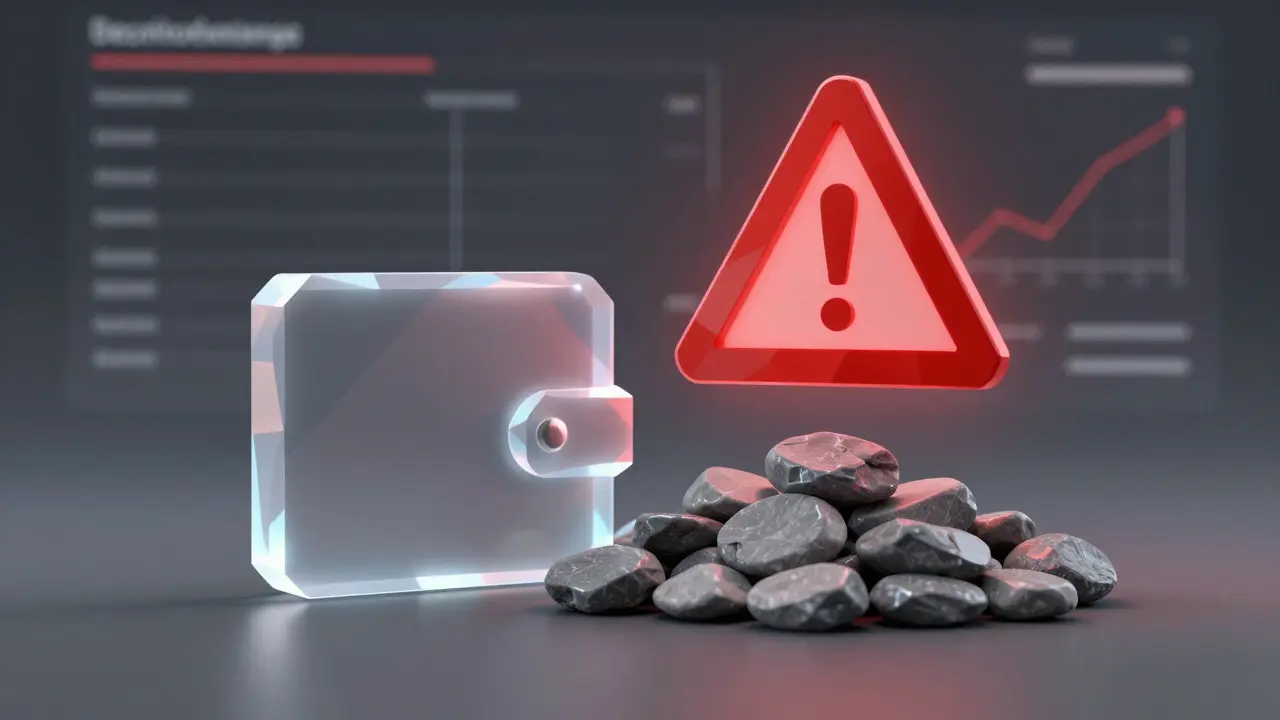
If you hold BNB VEGETA from 2024, you’re likely sitting on a bag of digital rocks. There’s little hope for a recovery given the massive supply and zero volume. The best move might be to accept the loss, learn from it, and focus on assets with real utility and active communities.
If you’re considering buying it now, ask yourself: Why? Is it for nostalgia? For speculation on a zombie revival? Unless you have a very specific reason to interact with this smart contract, there are thousands of better opportunities on the BNB Chain. Projects like PancakeSwap, a leading decentralized exchange on BNB Chain, offer actual yield farming and trading opportunities. BNB VEGETA offers neither.
In crypto, attention is currency. BNB VEGETA has lost both. Treat it as a museum piece-a relic of the 2024 meme coin boom that didn’t make the cut. Keep your capital safe, stick to liquid markets, and always do your own due diligence before clicking "swap."
Is BNB VEGETA a scam?
It’s hard to label it a outright "scam" in the legal sense without evidence of malicious intent, but it behaves like a failed project. The developers may have abandoned it, or the liquidity providers pulled out. Either way, it holds no value and poses a risk of losing your entire investment due to illiquidity. Treat it with extreme caution.
Why is the circulating supply of BNB VEGETA zero?
A circulating supply of zero usually indicates that the tokens are either locked in a vesting contract, held entirely by the development team, or that the data feed from exchanges is broken due to lack of trading activity. It means no tokens are actively being traded on the open market, which kills liquidity.
Where can I buy BNB VEGETA safely?
You can attempt to buy it via the Binance Web3 Wallet by connecting to a decentralized exchange like PancakeSwap. However, ensure you use the correct contract address (0x6625...80b5F5) to avoid fake tokens. Be prepared for high slippage and potential inability to sell later.
Will BNB VEGETA price recover?
The likelihood is extremely low. With a maximum supply of nearly 100 quadrillion tokens and zero trading volume, there is no market force driving the price up. For the price to recover significantly, most of the supply would need to be burned, which requires developer action that hasn’t happened.
What is the difference between BNB and BNB VEGETA?
BNB is the native coin of the BNB Chain, used for gas fees and governance, with a strong market cap and utility. BNB VEGETA is a third-party BEP20 token with no inherent utility, minimal adoption, and essentially zero value. They are completely different assets despite the similar naming convention.