
What is Phantasma (SOUL) Crypto Coin? The Dual-Token Blockchain for Gaming and Smart NFTs
Phantasma (SOUL) isn't just another crypto coin. It’s a blockchain built for games, NFTs, and digital economies - and it does things no other network quite does. While most blockchains try to be everything to everyone, Phantasma carved out a niche: making digital ownership fast, cheap, and green. If you’ve ever tried minting an NFT on Ethereum and got hit with $50 in gas fees, or watched a game server crash because one player flooded the network, Phantasma was made for you.
The Two Tokens That Keep Phantasma Running
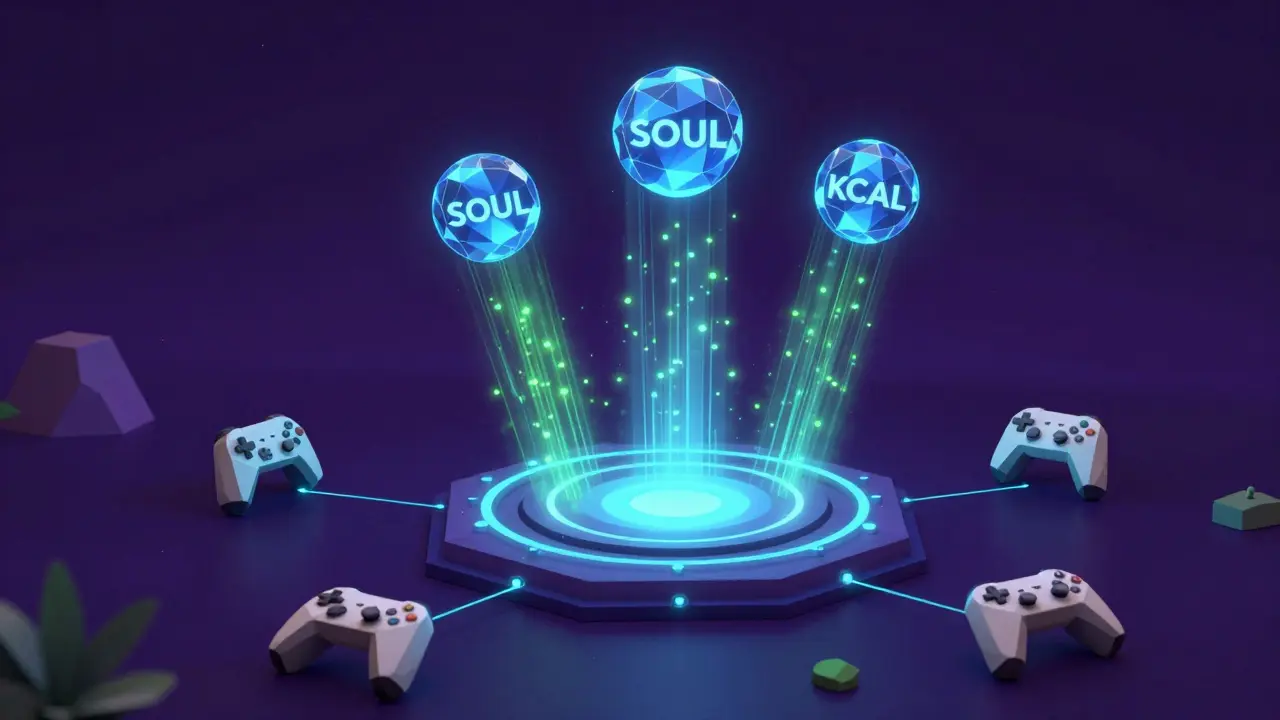
Most blockchains use one token for everything - paying fees, voting, staking. Phantasma breaks that mold with two tokens: SOUL and KCAL. They don’t compete; they work together.
SOUL is the governance token. If you hold it, you vote on upgrades, choose validators, and steer the network’s future. Think of it like owning shares in a company, but instead of dividends, you get influence over how the system evolves. There are 94 million SOUL tokens max, with a 3% yearly inflation to keep developers motivated to build on the chain.
KCAL is the energy token. Every action on the Phantasma blockchain - sending a transaction, minting an NFT, deploying a smart contract - costs KCAL. You can’t buy KCAL directly. You earn it by staking SOUL. For every SOUL you lock up, you get 0.002 KCAL per day. Stake 50,000 SOUL? That’s 100 KCAL daily. That’s enough to cover hundreds of transactions. This design ensures that people who care about the network long-term (stakers) are the ones keeping it running.
Smart NFTs: NFTs That Can Change
Standard NFTs are static. A digital cat is always that same cat. Phantasma’s Smart NFTs aren’t. They can evolve.
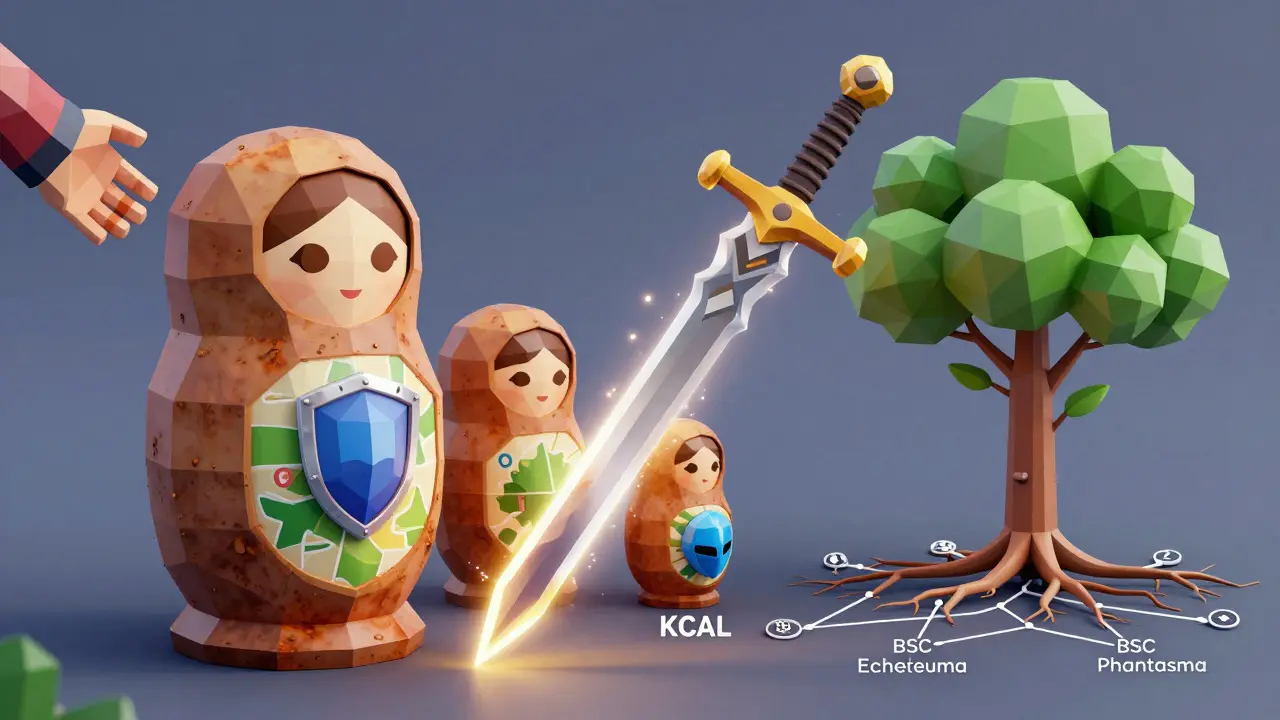
Imagine a sword in a game that gets stronger as you win battles. Or a piece of virtual land that changes its appearance based on weather data from the real world. Or an NFT that contains another NFT inside it - like a Russian nesting doll made of digital assets. That’s what Smart NFTs do. They support infusion, nesting, layering, and on-demand minting. You can even change an NFT’s traits based on time, user actions, or external triggers. No other blockchain offers this level of dynamic control natively.
And it’s cheap. Minting a Smart NFT on Phantasma costs a fraction of what it does on Ethereum or Solana. Developers use it to build games where items aren’t just collectibles - they’re living parts of the game world.
How Phantasma Links to Other Blockchains
Phantasma doesn’t want to be isolated. Its Phantasma Link tech lets dApps on Ethereum, Binance Smart Chain, or anywhere else talk to Phantasma. It’s like having a universal translator for blockchains.
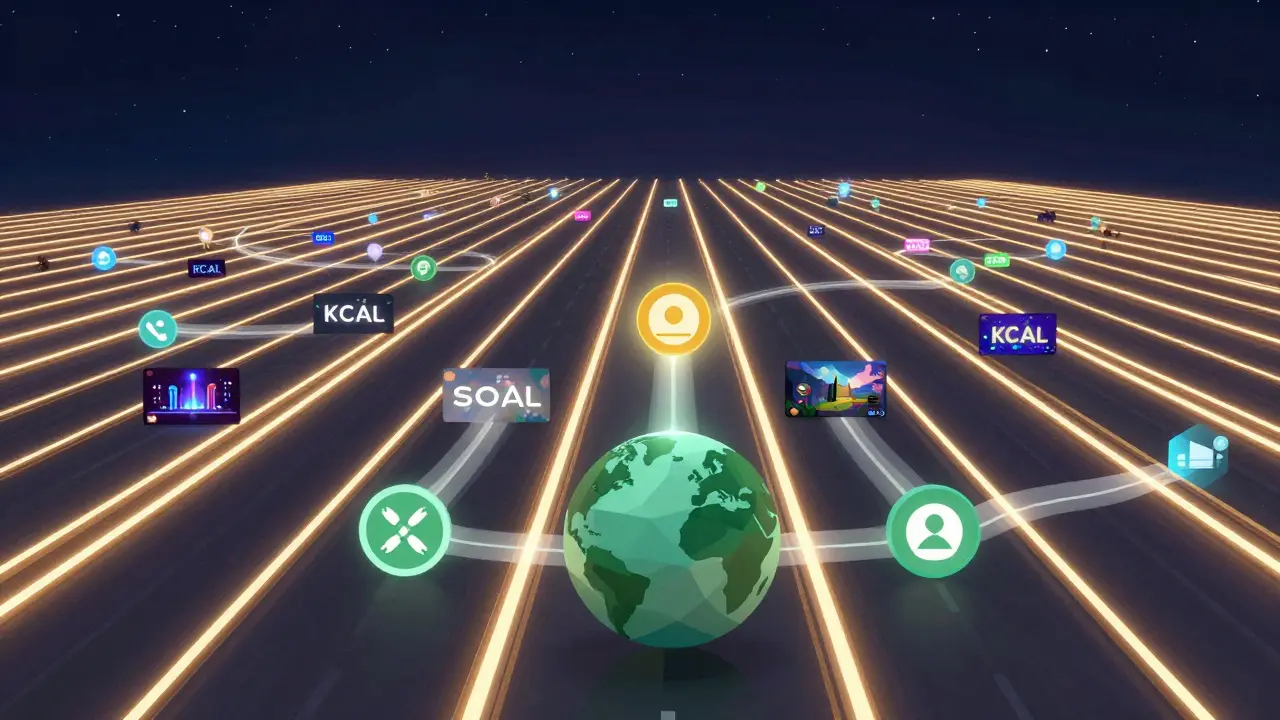
This isn’t just a bridge. It’s built on something called infinite parallel chains. Each game, app, or service runs on its own side chain. That means if one game gets flooded with users, it doesn’t slow down the whole network. Think of it like having 100 separate highways instead of one congested road. Each highway handles its own traffic, but they all connect to the same central system.
Phantasma Link also acts as an oracle. It lets smart contracts use real-world data - like stock prices, sports scores, or weather - to trigger events in games or financial apps. No third-party API needed. It’s built in.
Why Phantasma Is Carbon-Negative
Most blockchains burn energy. Phantasma reverses that. It’s certified as the first carbon-negative cryptocurrency.
How? Three things:
- Its consensus mechanism is ultra-efficient - transactions use almost no power.
- It doesn’t rely on energy-hungry mining. Validators are chosen by staking, not brute force.
- It actively offsets more carbon than it produces through verified environmental programs.
This isn’t marketing. It’s baked into the code. For every transaction, the network calculates its energy use and automatically funds carbon removal projects. If you’re a developer or gamer who cares about sustainability, this matters.
Who Uses Phantasma?
It’s not a general-purpose blockchain like Ethereum. It’s built for specific use cases:
- Game developers who need dynamic in-game items that work across platforms.
- NFT creators who want to build items that evolve, not just sit in wallets.
- Metaverse projects that need scalable, low-cost digital real estate and asset trading.
- Enterprises looking for eco-friendly blockchain infrastructure.
Companies aren’t just testing Phantasma - they’re building on it. One gaming studio used Smart NFTs to create a collectible card game where cards upgrade based on player stats. Another built a virtual concert venue where tickets are NFTs that change access levels depending on attendance history.
Market Stats and Real-World Performance
As of February 2026, Phantasma’s market cap sits at $4.95 million. That’s small compared to giants like Ethereum or Solana, but it’s growing. Over the last week, SOUL rose 4.3% while the broader crypto market dropped 3%. That kind of resilience suggests strong community support.
The network has been live since October 2019 - over six years of uninterrupted operation. That’s longer than many projects that raised millions in funding. It’s stable. It’s working. It’s not hype.
Why SOUL Isn’t Just Another Staking Coin
Staking SOUL isn’t about earning passive income. It’s about access. Without staking, you can’t use the network. You need KCAL to transact. And KCAL only comes from staking SOUL. So holding SOUL isn’t an investment - it’s a key to participation.
There’s no lock-up period. Stake 1 SOUL for 24 hours, get your KCAL, and you’re ready to mint, trade, or vote. The system is designed for everyday use, not just long-term speculation.
What’s Next for Phantasma?
The roadmap is focused on three things:
- Expanding Smart NFT capabilities - adding more triggers, more layers, more integration.
- Deepening cross-chain links - connecting with more blockchains, not just Ethereum and BSC.
- Enterprise adoption - helping businesses build internal NFT systems for loyalty, tickets, and digital IDs.
The team isn’t chasing trends. They’re doubling down on what makes Phantasma unique: a blockchain built for digital goods that actually work in real applications.
Is Phantasma (SOUL) a good investment?
Whether SOUL is a good investment depends on what you’re looking for. If you want a coin that will 10x in six months, Phantasma isn’t it. It’s not a speculative play. But if you believe in blockchain infrastructure for gaming and NFTs - and want to support a carbon-negative, technically unique network - then holding SOUL gives you both governance power and access to a growing ecosystem. Its value comes from utility, not hype.
How do I get KCAL tokens?
You can’t buy KCAL. You earn it by staking SOUL. Just lock up at least 1 SOUL for 24 hours, and you’ll start receiving 0.002 KCAL per day per SOUL. The more you stake, the more KCAL you generate. This system ensures that active users - not speculators - keep the network running.
Can I use Phantasma to mint NFTs cheaper than Ethereum?
Yes. On Ethereum, minting an NFT can cost $50-$200. On Phantasma, it costs a few cents in KCAL - often less than $0.10. Plus, Smart NFTs let you create dynamic, upgradable items that aren’t possible on other chains. For creators, this is a game-changer.
Is Phantasma only for gamers?
No. While gaming and NFTs are its main focus, Phantasma’s infrastructure works for any digital economy. Think digital tickets for concerts, loyalty points that trade like NFTs, or corporate digital IDs. Its interoperability and Smart NFT features make it useful beyond games.
How does Phantasma compare to Solana or Polygon?
Solana and Polygon are fast and cheap, but they’re general-purpose. Phantasma is specialized. It doesn’t just offer low fees - it offers Smart NFTs, carbon-negative operations, and a dual-token system designed for digital goods. If you’re building a game or a metaverse project, Phantasma gives you tools no other chain does. It’s not a competitor - it’s a complement.

14 Comments
Angela Henderson
February 17, 2026 at 06:57
I've been staking SOUL for like three months now and honestly? It's the first crypto thing that didn't make me feel like I'm throwing money into a black hole. I used to mint NFTs on Ethereum and just cry every time I saw the gas fee. Now I just click, pay like 3 cents, and move on. My digital cat got a new hat last week because I had enough KCAL. It's weirdly satisfying.
Also, the fact that it's carbon-negative? I didn't even know that was a thing. Like, I don't care about climate change in theory, but if I can feel like I'm not contributing to the apocalypse while collecting digital swords? Sign me up.
Sarah Shergold
February 18, 2026 at 14:15
lol so this is just ethereum but with a vibe check and a yoga mat? 🙄
Andrew Edmark
February 18, 2026 at 16:53
I really appreciate how this isn’t trying to be a ‘decentralized everything’ mess. It’s focused. Like, if you’re a game dev or an NFT artist, this actually solves real problems. I’ve seen so many projects that promise the moon and then vanish. Phantasma’s been live since 2019? That’s not luck. That’s discipline.
Also, the dual-token system? Genius. KCAL as energy, SOUL as governance - it’s like giving people skin in the game without forcing them to be traders. I’ve never seen a crypto project that actually thinks about the user experience like this. Kudos to the team.
Dominica Anderson
February 19, 2026 at 21:40
America built this. Everything else is just copy-paste with a greenwashing label.
sruthi magesh
February 19, 2026 at 21:41
KCAL? SOUL? Sounds like a CIA psyop to get indie devs addicted to energy credits while they mine their soul data. 😏
Lisa Parker
February 21, 2026 at 06:17
i just want to know if i can use this to buy my cat a digital sweater
Nova Meristiana
February 22, 2026 at 05:41
Oh great. Another ‘green’ crypto that’s just a glorified spreadsheet with a vibe. 😒 Meanwhile, Solana’s doing real innovation. This feels like a college project that never got deleted.
Aileen Rothstein
February 23, 2026 at 20:33
I love how this doesn’t just talk about utility - it *builds* it. Smart NFTs that evolve? That’s not tech. That’s storytelling. Imagine a digital pet that grows with your kid, or a concert ticket that unlocks backstage access after you’ve been to three shows. This isn’t crypto. It’s digital culture.
I’ve been in this space since 2017 and I’ve never seen a project that actually *gets* how people connect with digital things. This is the future. Not hype. Not speculation. Just... presence.
JJ White
February 25, 2026 at 05:41
Let me get this straight - you’re telling me this is the first blockchain that’s actually carbon-negative?
And you expect me to believe that?
That’s not innovation. That’s a fairy tale wrapped in a whitepaper. The entire crypto space is built on energy waste. This is just the latest attempt to make greed look virtuous. I’m not fooled.
They’re not saving the planet. They’re selling carbon credits to rich people who want to feel good while buying virtual swords.
And don’t even get me started on ‘Smart NFTs.’ Sounds like a Microsoft Word macro with a PR team.
Nicole Stewart
February 25, 2026 at 08:35
Too many words
Alan Enfield
February 26, 2026 at 15:52
The KCAL staking model is actually quite elegant. It aligns incentives in a way that’s rare in this space. Most chains reward hoarders. This rewards participants. I’ve seen this architecture before in energy grid systems - the same logic applies here. It’s not crypto magic. It’s systems design. And it works.
Ruby Ababio-Fernandez
February 28, 2026 at 14:48
USA again. Always the first to claim they invented everything.
Jeremy Fisher
March 2, 2026 at 03:29
I’m from the Philippines and I’ve been using Phantasma to sell digital art to folks in Jakarta and Manila. The fees are so low that even someone making $5 a day can mint something and actually make a profit. I didn’t think blockchain could be this... human.
My niece drew a dragon and turned it into an NFT. It’s now in a game that her cousin in Cebu plays. They trade it back and forth. It’s not about money. It’s about connection. Phantasma didn’t just build a chain. It built a bridge.
Geet Kulkarni
March 3, 2026 at 21:25
Ah yes, the classic ‘carbon-negative’ narrative. How quaint. The blockchain industry has been using this as a Trojan horse for capital flight since 2021. The real innovation? The dual-token model. KCAL as a utility tether, SOUL as a governance veil. It’s not about sustainability - it’s about creating a gated ecosystem where only the staked elite can participate.
And let’s be honest - Smart NFTs? That’s just a fancy way of saying ‘dynamic metadata.’ Nothing new. Just rebranded.
But hey, if you wanna believe in digital dragons that grow when you win battles, I won’t stop you. 🌿🐉