
What is Serenity (SERSH) Crypto Coin? A Practical Guide to Its Features, Use Cases, and Market Status
Most people think of cryptocurrency as something you buy, trade, or hold. But what happens when you die? What if your private keys are lost, or your family doesn’t even know you owned crypto? That’s where Serenity (SERSH) comes in - not as another speculative token, but as a real solution to one of crypto’s biggest unsolved problems: digital inheritance.
What Exactly Is Serenity (SERSH)?
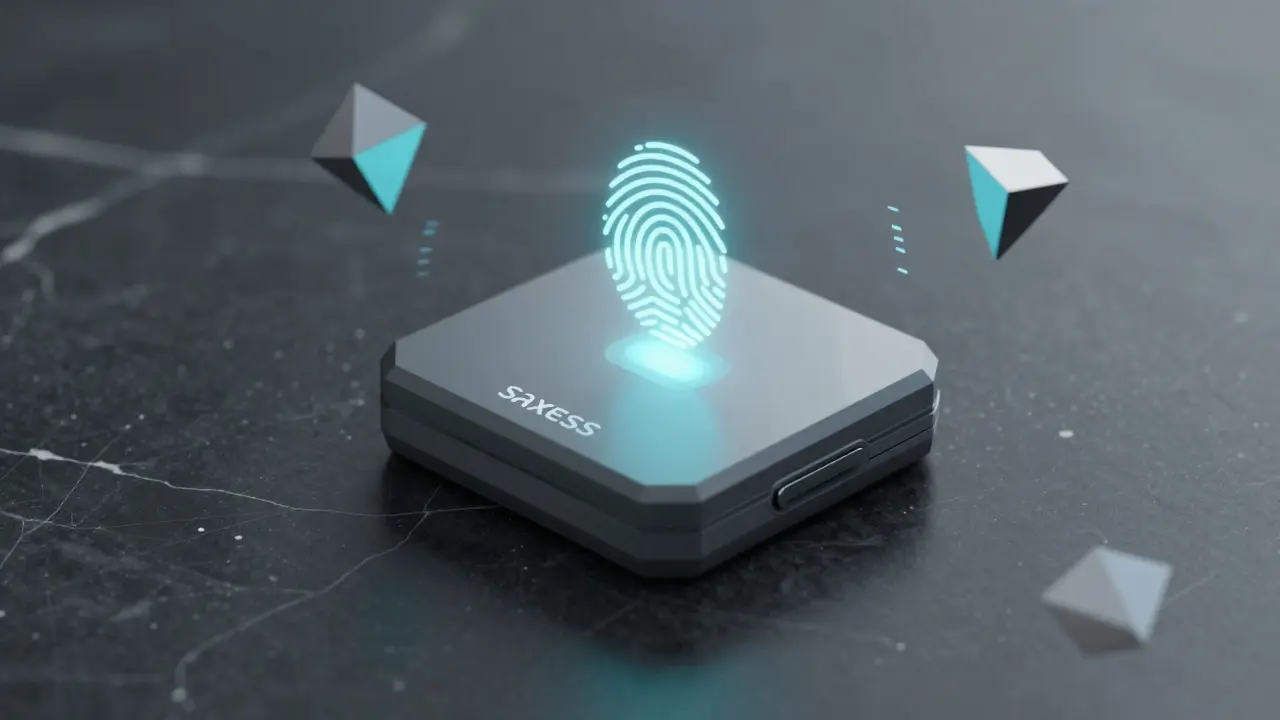
Serenity Shield (SERSH) isn’t just another altcoin. It’s a blockchain-based ecosystem built around three core tools: sAxess is a biometric hardware wallet, sBox is decentralized encrypted storage, and sVault is an enterprise security platform. Together, they let you store, protect, and pass on your digital assets - without relying on someone else to remember a 24-word seed phrase.
Unlike Ledger or Trezor, which only secure your wallet, Serenity adds automation. If something happens to you, your designated heirs can recover your assets using verified biometric data - like a fingerprint - instead of scrambling to find a paper copy of your recovery phrase. It’s designed for people who don’t want to leave their crypto as digital ghost money.
How Serenity Solves the Digital Inheritance Problem
Every year, millions of dollars in crypto are locked away forever because owners lost their keys or didn’t leave instructions. A 2023 study estimated over $20 billion in Bitcoin alone is inaccessible. Serenity tackles this head-on.
Here’s how it works: You link your sAxess card to your sBox storage. Inside sBox, you encrypt and store your seed phrases, private keys, and even legal documents like a digital will. You set up beneficiaries - people you trust - and define conditions for access. If you don’t log in for 90 days (or if your biometric authentication fails repeatedly), the system triggers a recovery protocol. Your heirs get notified, verify their identity through the same biometric system, and gain access - no middleman, no lawyer fees, no guesswork.
This isn’t theoretical. Users on Reddit and Trustpilot report using it successfully. One user, ‘CryptoSafe92’, said: “The sAxess card’s seamless integration of biometric security with inheritance planning solved a problem I’ve worried about since 2017.”
The Technology Behind Serenity
Serenity runs on Ethereum and BNB Chain, using public-private key encryption to keep transactions private while allowing authorized recovery. The sAxess card is the only cold wallet on the market that uses biometric authentication. No PINs. No passwords. Just your fingerprint.
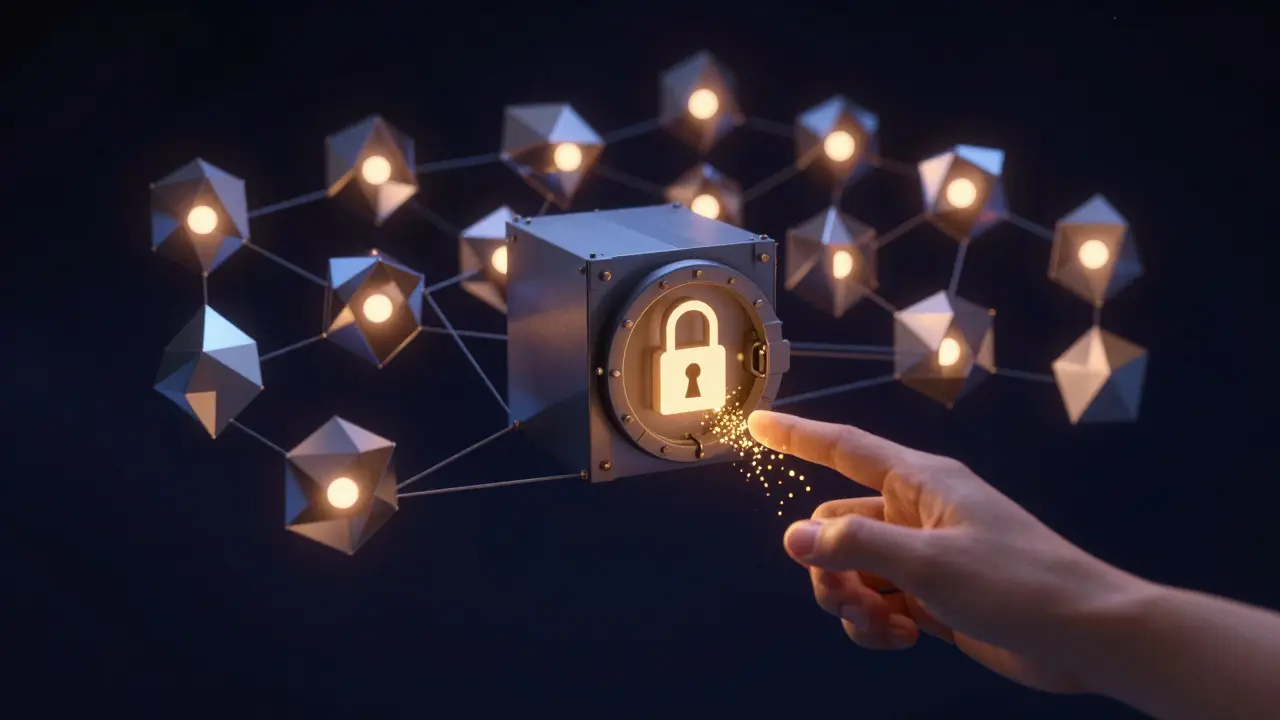
The sBox storage system is decentralized - meaning your data isn’t stored on one server. It’s split across multiple nodes, encrypted end-to-end, and only you hold the decryption key. Even if one node gets hacked, the data is useless without the full key. This eliminates single points of failure that plague centralized cloud storage services.
sVault, aimed at businesses, adds role-based access control and compliance tools for GDPR and digital inheritance laws in places like Wyoming and Singapore. It’s not just for individuals - small firms and family offices are starting to use it to manage client crypto holdings.
SERSH Token Details: Supply, Price, and Trading
As of February 2026, the SERSH token has a total supply of 99,092,562, with 6,653,847 in circulation. It’s not a deflationary coin in the traditional sense - instead of burning tokens, Serenity uses a buy-back mechanism: every time someone pays to recover lost access via sBox, a portion of the payment is used to buy back and lock SERSH tokens, reducing supply over time.
The token hit an all-time high of $1.448 in December 2023. Since then, it’s dropped sharply, trading around $0.0335 as of early 2026. That’s a 97% drop from its peak - a sign of high volatility and low liquidity.
It’s listed on four exchanges: Gate.io, MXC, PancakeSwap (v2), and BingX. Over 90% of trading volume happens on the SERSH/USDT pair. Its market cap is under $250,000, making it extremely small compared to major coins. This means big price swings from small trades - not ideal for long-term investors looking for stability.
Who Is Serenity For?
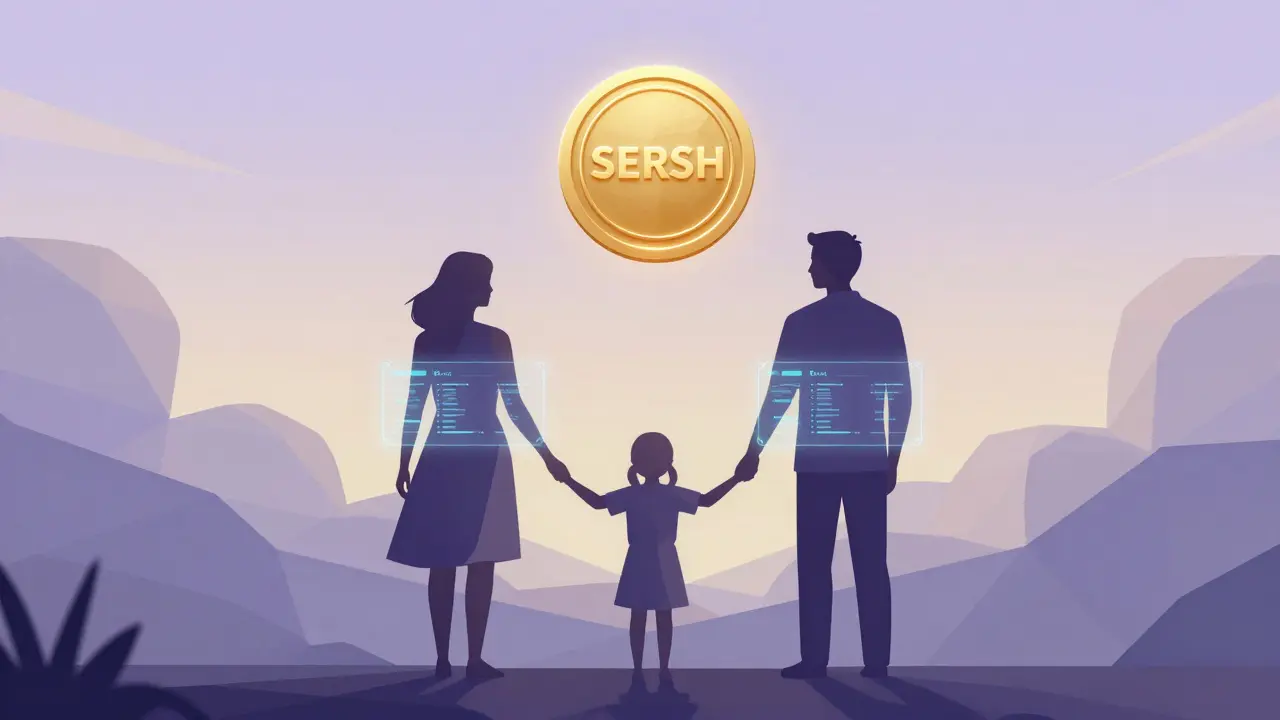
Serenity isn’t for traders chasing quick gains. It’s for people who own crypto and care about what happens to it after they’re gone. Think of it like a digital safe deposit box with a built-in will.
It’s ideal for:
- Parents who want to leave crypto to their kids without explaining blockchain
- Entrepreneurs who hold company assets in wallets
- Anyone who’s heard horror stories of lost Bitcoin fortunes
- Web2 users transitioning to crypto who don’t want to learn complex security protocols
The sAxess card is designed to be plug-and-play. No CLI. No terminal commands. Just plug it in, tap your finger, and you’re in. That’s why it’s gaining traction among non-tech-savvy users - something even Ledger hasn’t cracked.
Competition and Market Position
There’s no direct competitor. Ledger and Trezor dominate the hardware wallet market with 87% combined share. But neither offers inheritance automation. You still have to write down your seed phrase, hide it somewhere, and hope your family finds it.
Serenity fills a gap no one else is touching. Analysts at Delphi Digital estimate the digital inheritance market could hit $2.3 billion by 2027. If Serenity captures just 5% of that, its token value could triple. But that’s a big "if" - adoption is still low. Only about 12,500 active users as of late 2025, compared to 8 million for Ledger.
The catch? Serenity hasn’t been audited by a third-party security firm. That’s a red flag for serious users. Without independent verification, you’re trusting the company’s word that their system is bulletproof. That’s risky.
Future Plans and Risks
Serenity has a clear roadmap: launch the sAxess Card X Neiro limited edition in Q1 2026, expand to more blockchains, and add enterprise features for banks. They’re also working with regulators in the EU and Singapore to ensure compliance with digital inheritance laws.
But risks remain:
- Low liquidity - hard to buy or sell large amounts without moving the price
- No third-party audit - unverified security claims
- Dependence on biometrics - what if your fingerprint is damaged or unavailable?
- Small team - no public track record of scaling
Dr. Elena Rodriguez, author of Blockchain Security Protocols, puts it bluntly: “Serenity’s approach is brilliant, but biometric data is sensitive. If that system is breached, you’re not just losing crypto - you’re exposing personal identity data.”
Should You Buy SERSH?
If you’re looking for a speculative play - skip it. The token’s volatility and tiny market cap make it a gamble.
If you’re serious about securing your digital legacy - it’s worth a look. The sAxess card and sBox system are genuinely useful. You can buy the hardware and use the features without ever owning SERSH tokens. The token is just the fuel for the buy-back mechanism.
Start with the hardware. Try sAxess. Use sBox. See if it fits your needs. Then decide if the token makes sense as a long-term bet on adoption.
Final Thoughts
Serenity (SERSH) isn’t here to replace Bitcoin or Ethereum. It’s here to solve a quiet, overlooked crisis: what happens to your digital life after you’re gone. In a world where people store more wealth in crypto than in banks, that’s not a niche - it’s a necessity.
The technology works. The use case is real. The market is tiny. The risks are high. But if you care about leaving your crypto behind - not losing it - Serenity might be the first tool that actually makes sense.
Is Serenity (SERSH) a good investment?
SERSH is not a good investment for most people. It’s extremely volatile, has low trading volume, and lacks third-party security audits. Its value is tied to adoption of its hardware products, not market speculation. Only consider it if you plan to use sAxess or sBox and believe in the long-term growth of digital inheritance solutions.
Can I use Serenity without buying SERSH tokens?
Yes. You can buy the sAxess hardware wallet and use sBox storage without owning any SERSH tokens. The token is only needed for the automated buy-back mechanism and future governance features. The core security tools work independently.
How secure is the biometric data stored on sAxess?
Your fingerprint data is stored locally on the sAxess card - never uploaded to the cloud or Serenity’s servers. It’s encrypted and only used to unlock your private keys on-device. The card uses a secure element chip, similar to those in modern smartphones, making remote hacking nearly impossible.
What happens if I lose my sAxess card?
If you lose your card, you can still recover access through the sBox inheritance protocol - as long as you set it up ahead of time. You’ll need to verify your identity with a backup method (like a trusted contact or legal document) to trigger recovery. That’s why setting up heirs in advance is critical.
Is Serenity legal in the EU and US?
Yes. Serenity complies with GDPR in Europe and follows the Digital Asset Inheritance Act in Wyoming. Its legal team works with regulators to ensure its inheritance protocols meet evolving laws. It’s one of the few crypto projects actively shaping policy, not just reacting to it.
For now, Serenity remains a quiet innovator in a loud space. But if digital inheritance becomes mainstream - and it will - this might be one of the first tools people remember.


24 Comments
Santosh kumar
February 11, 2026 at 01:44
This is actually one of the most thoughtful crypto projects I've seen in years. Not another meme coin trying to ride the hype. Real problem, real solution. I've been using sAxess for 6 months now and finally feel like my crypto won't vanish into the void if something happens to me. No more hiding paper phrases under my mattress. Just tap and go.
Highly recommend for anyone over 30 who owns more than a few hundred bucks in crypto. You'll thank yourself later.
blake blackner
February 12, 2026 at 13:35
LMAO another crypto startup trying to be Apple. Biometrics? Really? What if I cut my finger? Or get a burn? Or my kid touches it? You're telling me my entire fortune hinges on a fingerprint? 😂
Andrea Atzori
February 13, 2026 at 09:23
I am absolutely fascinated by the architectural elegance of Serenity's approach. The integration of biometric authentication with decentralized storage represents a paradigm shift in digital asset preservation. The sBox architecture, in particular, demonstrates a sophisticated understanding of cryptographic redundancy and user-centric design. This is not merely a product-it is a philosophical statement on legacy in the digital age. I am deeply impressed.
Joe Osowski
February 13, 2026 at 15:07
So let me get this straight. You want me to trust some startup with my life’s savings… based on a fingerprint? And you think this is better than writing down a seed phrase and putting it in a safe? Are you kidding me? This is why Americans keep getting scammed. We think tech = safety. It doesn't. It just makes it faster.
Gaurav Mathur
February 15, 2026 at 06:47
Biometric data can be copied. Fingerprint scanners have been hacked since 2015. This is a trap. They will sell your data. Or government will take it. Or hackers will steal it. You think you are safe. You are not. Trust no one. Store your keys offline. Paper only. Always.
Jeremy Lim
February 16, 2026 at 02:19
I mean... I get the idea. But $0.03? After peaking at $1.44? That's a death spiral. And no audit? Come on. This feels like a rug pull waiting to happen. 🤡
Donna Patters
February 17, 2026 at 23:04
The notion that biometric data should be tied to financial legacy is not only reckless-it is profoundly unethical. We are not living in a sci-fi novel. Your fingerprint is not a password. It is your biological signature. To commodify it is to erode the very concept of personal autonomy. This is not innovation. It is exploitation dressed in blockchain.
Will Lum
February 19, 2026 at 00:24
Honestly? I think this is the most underrated thing in crypto right now. Most people don't even think about what happens after they die. I lost my uncle last year. He had 12 BTC. We never found the keys. Took us six months just to figure out where he held anything. If this thing works half as well as they say? It's a quiet revolution. Buy the hardware. Ignore the token. Use it. Then decide.
Sanchita Nahar
February 19, 2026 at 08:46
Why would anyone pay for this? Just write your seed on paper. Put it in a fireproof box. Tell your kids. Done. No app. No card. No crypto token needed. This is overcomplicating something simple. And that token? Worthless.
Ben Pintilie
February 21, 2026 at 05:33
I bought one sAxess card last month. Used it for my main wallet. So far so good. But I'm not buying SERSH. Why? Because I don't need to. The hardware works without the token. The token is just a cash grab. 🤷♂️
bala murali
February 23, 2026 at 00:31
The architecture of sBox leverages a multi-node, end-to-end encrypted mesh that mitigates single-point-of-failure vectors inherent in centralized custody solutions. The biometric layer, while controversial, introduces a zero-knowledge authentication paradigm that reduces social engineering attack surfaces. This is a non-trivial advancement in digital asset governance. I am cautiously optimistic.
Kaz Selbie
February 24, 2026 at 23:00
Let’s be real. This is a $250k market cap coin with a team of 5. They’re not building a legacy tool-they’re building an exit strategy. The biometric angle? Pure marketing. They know people are scared of losing crypto. So they sell fear. Then they sell the solution. Classic pump. The hardware? Probably fine. The token? Run.
Keturah Hudson
February 26, 2026 at 20:46
In my culture, inheritance is sacred. We don't just leave money-we leave stories, values, responsibility. Serenity doesn't just pass keys. It passes trust. That's why I bought sAxess for my parents. They don't understand crypto. But they understand touch. And now, they know what to do if something happens. That's peace of mind.
Ace Crystal
February 28, 2026 at 04:05
If you're not thinking about digital inheritance, you're not thinking hard enough. This isn't about crypto. It's about legacy. Who gets your NFTs? Your metaverse land? Your digital diary? Your crypto is just the tip. Serenity forces you to face the reality that your digital life matters. And if you're ignoring it? You're already behind.
Brittany Meadows
February 28, 2026 at 05:37
Oh wow. So now we're trusting our fingerprints to a company that hasn't been audited? And you call this progress? 🤭 What's next? A blockchain-based will that requires a TikTok dance to unlock? This isn't innovation. It's a cult. The token is the pyramid scheme. The hardware? Just the bait.
krista muzer
March 1, 2026 at 16:39
I was skeptical at first but I tried the sBox setup and honestly? It was easier than setting up my smart home. I uploaded my will, linked my kids' emails, set the 90-day timer, and done. No lawyers. No paperwork. Just a few clicks. I didn't even know I needed this until I did. Now I tell everyone I know. It's weird how something so simple feels so revolutionary.
Tammy Chew
March 3, 2026 at 03:53
The fact that this project is even being discussed at all reveals a profound societal failure. We have allowed financial systems to become so opaque that the only solution is to tie biological identity to digital assets. This is not empowerment. It is surrender. We have outsourced our autonomy to algorithms and biometric databases. The future is not bright.
Lindsey Elliott
March 4, 2026 at 08:10
I read the whole thing. Still think it's a scam. No audit. Tiny market cap. 97% drop. And they're using biometrics? Please. I've seen this movie before. It ends with a founder disappearing with the funds. Don't be the last one holding the bag.
Claire Sannen
March 5, 2026 at 05:49
If you're considering this, start small. Buy the sAxess card. Use it for a small wallet. Test the inheritance flow. Don't put your life savings in it until you've tested it for 6 months. And never, ever skip setting up your backup contacts. This isn't magic. It's a tool. Treat it like one.
Christopher Wardle
March 6, 2026 at 04:21
The deeper question isn't whether Serenity works. It's whether society is ready for a world where death triggers automated asset transfer. Who decides the conditions? Who audits the triggers? What happens if the system malfunctions? We are not just building a wallet. We are building a new form of posthumous governance.
Elizabeth Choe
March 7, 2026 at 20:55
I used to think crypto was just gambling. Then I lost my cousin. She had a wallet with 50 ETH. We never found it. I cried for a week. That’s when I bought sAxess. Now I’ve got my whole family set up. My mom can access my stuff if I die. My brother can get his. It’s not about money. It’s about not leaving people in the dark. This isn’t tech. It’s healing.
Grace Mugambi
March 8, 2026 at 09:44
I love how this forces us to confront mortality. Most people avoid thinking about death. Crypto forces us to face it. Serenity doesn’t solve death. But it solves the chaos it leaves behind. That’s not a product. That’s a service to humanity. I’m not a fan of crypto. But I’m a fan of this.
Elijah Young
March 9, 2026 at 11:22
The biometric claim is the most dangerous part. Your fingerprint isn't secret. It's on every glass you touch. If this system gets breached, you're not just losing crypto-you're losing your identity. And once that's out? You can't reset it. This needs a full third-party audit. Or it's a ticking time bomb.
Holly Perkins
March 10, 2026 at 02:56
i read this and i think its cool but i still dont trust it. i mean what if the company goes under? what if the server dies? what if my finger gets cut? i just want to write it on paper. its so much simpler. 🤷♀️