
Why Pakistan Ranks 3rd-4th in Global Crypto Adoption Despite Past Restrictions
Crypto Remittance Cost Calculator
Calculate how much you save when sending money from Pakistan to another country using stablecoins versus traditional remittance services.
Enter amount and recipient country to see savings.
Traditional Remittance
12% fee (avg.)
Time: 3-5 days
Stablecoin Transfer
Fixed $1 fee
Time: Under 10 minutes
Estimated savings:
By using stablecoins, you'll save compared to traditional remittance services.
For years, Pakistan was one of the most hostile countries in the world toward cryptocurrency. In 2018, the State Bank of Pakistan banned banks and exchange firms from dealing with digital currencies. Anyone caught trading Bitcoin or Ethereum risked losing their accounts. Yet today, Pakistan sits at 3rd or 4th globally in crypto adoption - ahead of Japan, Germany, and even the United Kingdom. How did this happen?
From Ban to Boom: The Regulatory Flip
The change didn’t come from a sudden love of Bitcoin. It came from necessity. Pakistan’s economy has been under pressure for over a decade. Inflation hit 38% in 2023. The Pakistani rupee lost nearly half its value against the dollar between 2020 and 2025. People couldn’t trust their savings. Banks were slow. Remittances from overseas workers - which make up 7% of GDP - took days and cost up to 12% in fees. Then, in 2024, things started shifting. The government didn’t legalize crypto overnight. Instead, it watched what people were already doing. Millions were using peer-to-peer platforms like Paxful and LocalBitcoins. Others were buying USDT (Tether) on decentralized exchanges to protect their money. By mid-2024, an estimated 20 million Pakistanis - nearly 9% of the population - owned some form of cryptocurrency. That’s more than double the global average. In July 2025, the State Bank of Pakistan officially launched the Pakistan Virtual Assets Regulatory Authority (a government body established to license, monitor, and regulate virtual asset service providers in Pakistan). It wasn’t a free-for-all. Exchanges had to register, know-your-customer rules were enforced, and stablecoins were classified as digital assets, not currency. But for the first time, crypto was no longer illegal - it was regulated.Why Stablecoins Are the Real Story
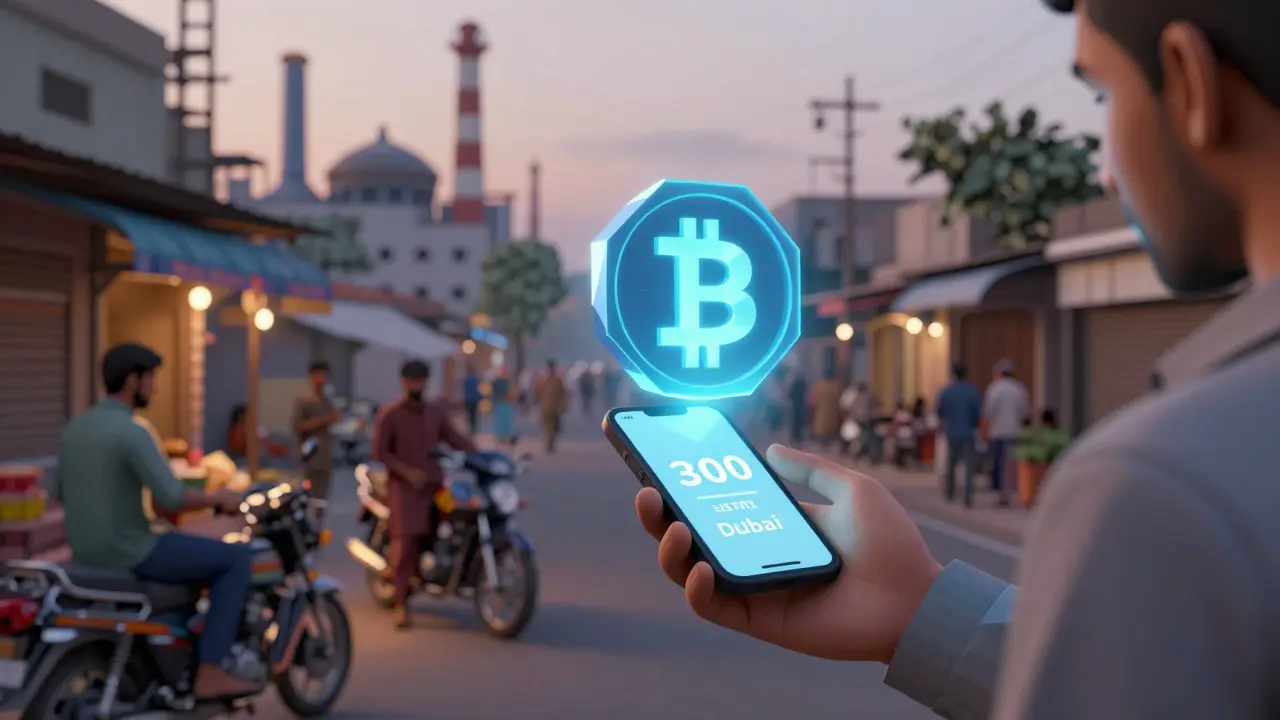
You won’t find many Pakistanis buying Bitcoin to flip it. You won’t see them trading Solana for fun. What you will find is people using USDT, USDC, and BUSD to move money - fast, cheap, and across borders. A factory worker in Lahore sends $300 to his brother in Dubai. Without crypto, that costs $36 in fees and takes three days. With USDT, it costs $1 and arrives in under 10 minutes. That’s the real driver. Chainalysis data shows over 70% of crypto value received in Pakistan in 2025 came from stablecoin purchases. Most of it was used for savings or remittances, not speculation. This isn’t just about convenience. It’s about survival. When your currency loses 20% of its value in a year, holding cash is a loss. Holding USDT is a hedge. And since most Pakistanis don’t have access to foreign bank accounts, crypto became the only way to keep value safe.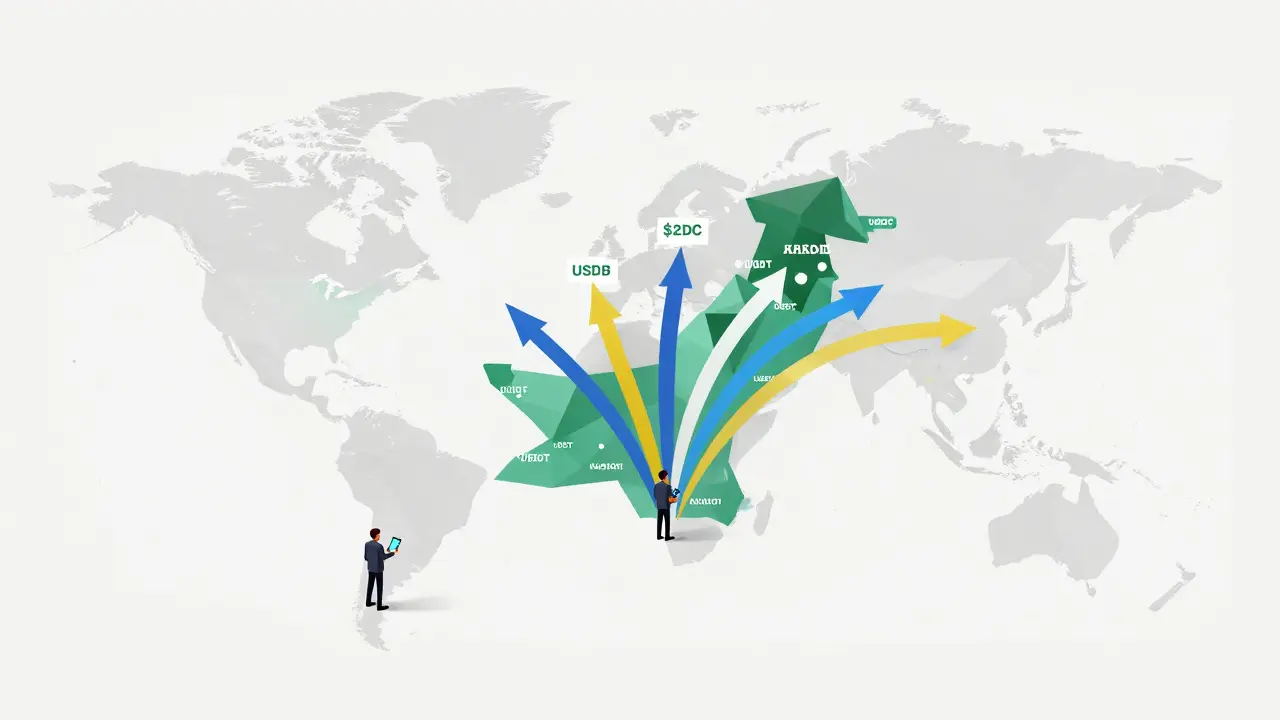
How Pakistan Ranks So High - And Why Numbers Vary
You’ll see Pakistan ranked 3rd in some reports, 4th in others, and even 9th in a few. That’s because rankings aren’t based on one single rule. Chainalysis’ 2025 Global Adoption Index - the most widely cited - puts Pakistan at 3rd. It measures total crypto value received, adjusted for population size and economic activity. It doesn’t count how many people own crypto. It counts how much money flows in. And Pakistan’s inflows are massive. Other reports, like the one from May 2025, rank Pakistan 9th because they measure ownership rates - how many people hold crypto, not how much they hold. In those rankings, Nigeria and Indonesia come out ahead because more people own small amounts. But in Pakistan, people aren’t buying $10 worth of crypto. They’re buying $500, $1,000, even $5,000. The difference matters. Pakistan’s crypto economy is worth an estimated $20-25 billion. That’s more than the entire GDP of some small African nations. It’s not a side hustle. It’s a parallel financial system.Who’s Behind the Push?
The government didn’t do this alone. In early 2025, the Pakistan Crypto Council was formed - a public-private body led by CEO Bin Saqib. Its job? To bridge the gap between regulators and crypto businesses. It’s not a lobby group. It’s a working team. They brought in lawyers, tech founders, and even auditors from the Big Four firms to design compliance frameworks. International players got involved too. In August 2025, the Pakistan Crypto Council signed a partnership with World Liberty Financial, a company linked to the Trump family. The deal promised to build blockchain-based remittance channels and train 100,000 Pakistani entrepreneurs in crypto finance. Critics called it political. Supporters said it brought real capital and expertise. One thing’s clear: this isn’t just about politics. It’s about economics. Michael Saylor’s MicroStrategy, which holds over $62 billion in Bitcoin, quietly started advising Pakistan’s finance ministry on how to use crypto as a reserve asset. That’s not something you do unless you believe it’s sustainable.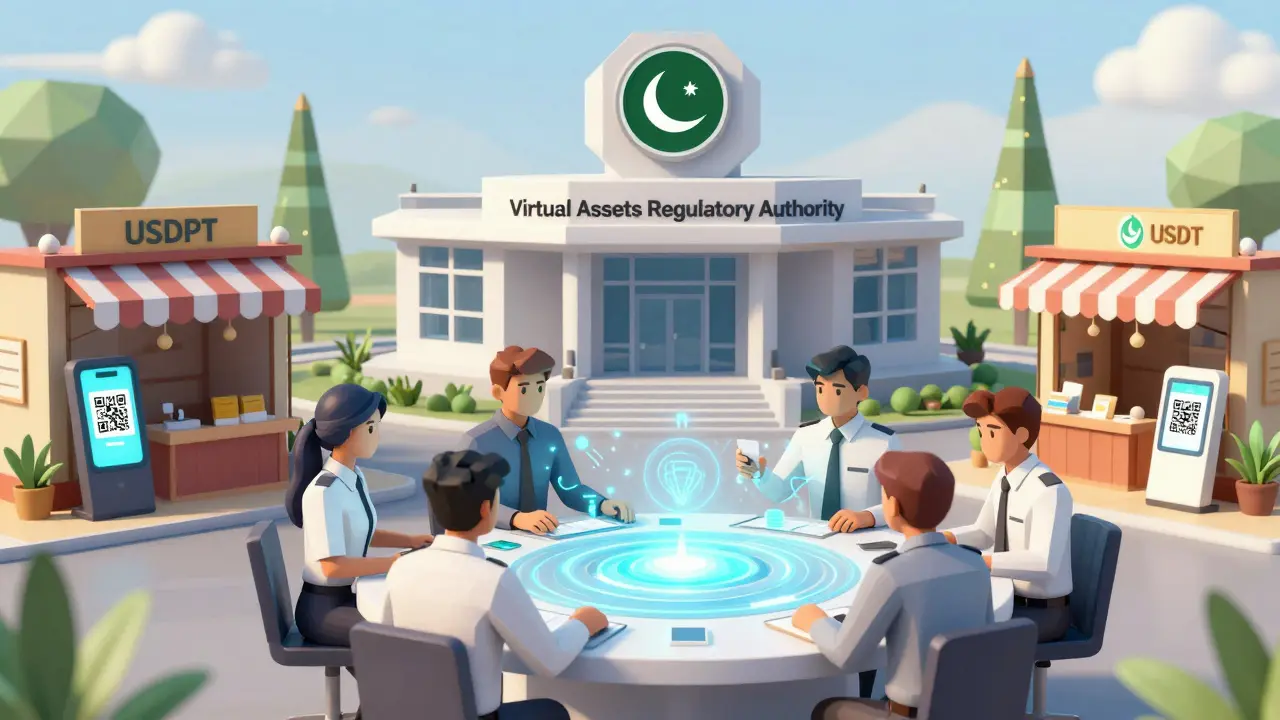
What This Means for the Future
Pakistan’s crypto adoption isn’t a flash in the pan. It’s built on three solid foundations:- Utility - People use crypto because it solves real problems, not because they want to get rich.
- Regulation - Clear rules mean businesses can operate without fear of sudden crackdowns.
- Scale - With 230 million people, even 10% adoption creates a market bigger than most countries’ stock exchanges.
What’s Next for Pakistan’s Crypto Scene
The next two years will be critical. The Pakistan Virtual Assets Regulatory Authority has issued 47 licenses so far. More are coming. Local exchanges like BuyUcoin and CryptoPak are expanding into mobile apps and offline kiosks in rural areas. Universities are adding blockchain courses. Even small shops in Karachi now accept USDT for groceries. The real test? Will Pakistan keep its focus on utility? Or will it turn into a speculative playground? So far, the answer is clear: people aren’t buying crypto to trade. They’re buying it to live.Is cryptocurrency legal in Pakistan in 2025?
Yes. While crypto was banned in 2018, Pakistan officially legalized and began regulating virtual assets in July 2025 with the launch of the Pakistan Virtual Assets Regulatory Authority. Exchanges and service providers must now be licensed, but individuals can legally buy, hold, and transfer cryptocurrencies.
Why is Pakistan ranked so high in crypto adoption?
Pakistan ranks high because millions of people use stablecoins like USDT to protect savings from inflation and send remittances cheaply. The country leads in total crypto value received, not just ownership. Chainalysis ranks it 3rd globally because of massive inflows driven by practical use, not speculation.
Do Pakistanis trade Bitcoin for profit?
Very few. Most crypto use in Pakistan is for stablecoins - not Bitcoin or Ethereum. People use them to store value and move money across borders. Speculative trading exists, but it’s a small fraction of total activity. Experts say utility, not gambling, is driving adoption.
How many people in Pakistan own cryptocurrency?
An estimated 20 million Pakistanis - nearly 9% of the population - own some form of cryptocurrency as of 2025. This is significantly higher than the global average of 6.9% and represents one of the highest adoption rates in the developing world.
Is Pakistan’s crypto growth sustainable?
Yes - if the focus stays on utility. The regulatory framework is solid, demand is real, and infrastructure is expanding. But if politics or foreign interests push for speculative projects or lax oversight, the momentum could stall. Right now, the system works because it helps people survive - not because it promises quick riches.
How does Pakistan’s crypto use compare to Nigeria or India?
India leads in total users, with over 100 million crypto owners, but much of it is speculative. Nigeria has high ownership rates but lower transaction volumes. Pakistan sits in between: fewer users than India, but higher average transaction sizes than Nigeria. Pakistan’s edge is its focus on stablecoins for remittances and savings - a more stable, long-term use case.





13 Comments
Nelia Mcquiston
December 4, 2025 at 22:18
The real story here isn't crypto-it's desperation turned innovation. When institutions fail, people build alternatives. Pakistan didn't choose Bitcoin because it's cool. They chose it because it was the only lifeline left. This isn't adoption-it's evolution under pressure.
Mark Stoehr
December 6, 2025 at 00:40
lol usa banned crypto for years and now they act like they invented it
Shari Heglin
December 6, 2025 at 08:10
The assertion that Pakistan’s regulatory shift was reactive rather than proactive is well-supported by empirical data. However, the conflation of stablecoin usage with formal financial inclusion warrants scrutiny. While transaction volume is high, the absence of legal tender status and consumer protection mechanisms undermines claims of systemic integration.
Reggie Herbert
December 6, 2025 at 18:42
Let’s cut through the noise. This isn’t adoption-it’s capital flight disguised as innovation. The State Bank didn’t ‘embrace’ crypto. They surrendered to a black market that outmaneuvered them. And now they’re slapping on compliance labels like it’s a badge of honor. Crypto isn’t a solution-it’s a symptom.
Murray Dejarnette
December 7, 2025 at 15:58
Bro this is the most beautiful thing I’ve seen all year. People in Lahore are out here building their own economy while we’re arguing about debit card rewards. I’m not even mad. I’m inspired. We need this in the US. Like, now.
Sarah Locke
December 8, 2025 at 19:04
Imagine being so locked out of the system that your only hope is a digital dollar you can’t even cash out easily. That’s not crypto. That’s survival. And guess what? It’s working. This is the future of finance-bottom-up, human-first, no permission needed. We’re not watching a trend. We’re witnessing a revolution.
Mani Kumar
December 8, 2025 at 23:28
Statistical noise. Pakistan’s ranking is inflated by remittance volume, not genuine adoption. True financial innovation requires institutional trust, not peer-to-peer arbitrage. This is not progress-it is economic fragmentation.
Philip Mirchin
December 10, 2025 at 19:33
I’ve worked with fintech teams in Karachi. The energy there is unreal. Kids in small towns are teaching their grandparents how to send USDT via WhatsApp. No bank needed. No paperwork. Just a phone and a will to survive. This isn’t crypto hype. It’s human ingenuity at its purest.
Britney Power
December 11, 2025 at 01:59
One must question the sustainability of a financial ecosystem predicated on volatile regulatory environments and foreign corporate partnerships with opaque affiliations. The involvement of entities linked to political dynasties introduces a profound conflict of interest. The $20–25 billion valuation is likely overstated, given the absence of audited liquidity metrics and the high probability of wash trading on P2P platforms. This is not financial inclusion-it is a speculative bubble masquerading as necessity.
Maggie Harrison
December 11, 2025 at 15:15
This is why I believe in humanity 💪❤️ When the system breaks, people don’t wait for permission-they build. USDT in Lahore isn’t a coin. It’s a promise. A promise that your money won’t vanish overnight. That your family won’t starve because of inflation. That’s not tech. That’s love. 🌍✨
Lawal Ayomide
December 12, 2025 at 10:53
Nigeria did this first. We’ve been using crypto since 2017. Pakistan is just catching up. But hey, credit where it’s due-your remittance game is strong.
justin allen
December 13, 2025 at 19:14
So let me get this straight. A country that bans banks from touching crypto for 7 years somehow becomes a global leader? That’s not innovation. That’s failure. And now they’re letting Trump’s people come in and ‘help’? This isn’t progress-it’s surrender to foreign capital with a fancy new regulator name.
ashi chopra
December 13, 2025 at 22:37
I grew up in a family that sent money home through Western Union. It took 5 days. It cost half a week’s salary. Now my cousin in Ludhiana sends money to our uncle in Dubai in 8 minutes for less than a dollar. I cried when I saw it. This isn’t about crypto. It’s about dignity. And for the first time in my life, I feel like technology is serving people-not the other way around.