Are Cryptocurrencies Securities? How to Tell Using the Howey Test
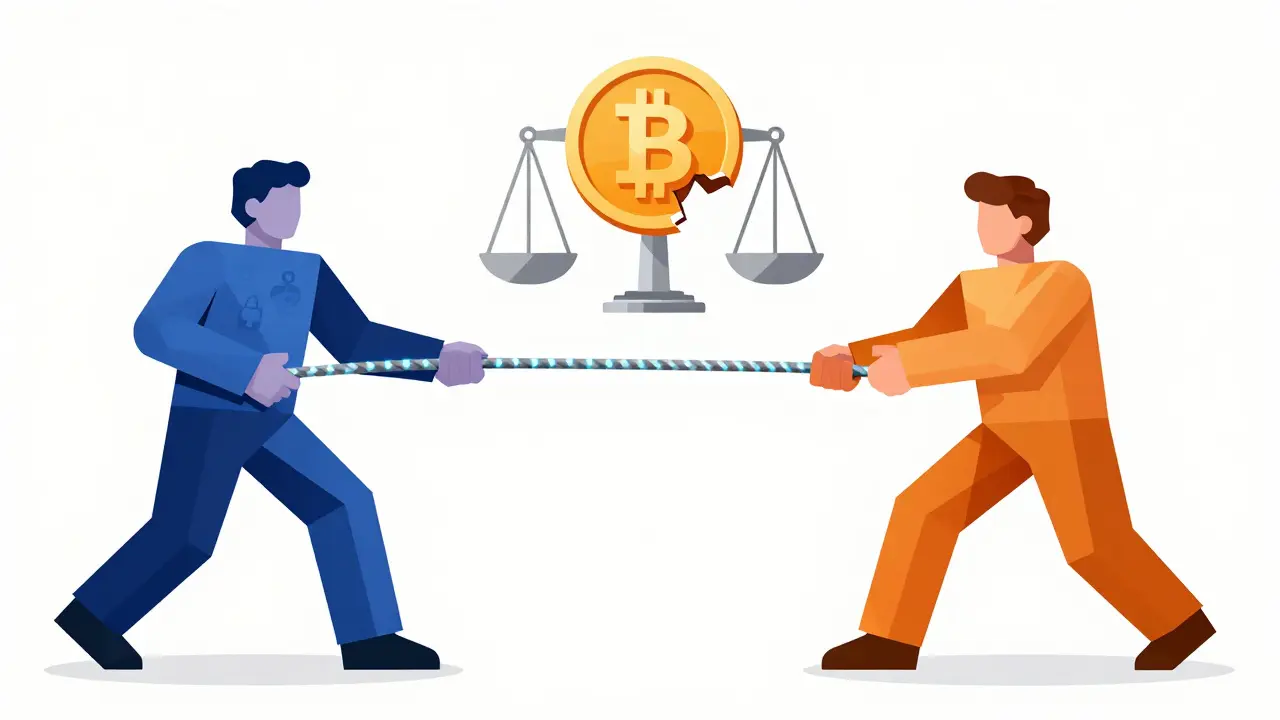
Is your favorite token a security or a commodity? This question isn't just academic-it determines whether you can legally trade it, how much tax you owe, and if your project might get shut down by regulators. For years, the answer has been murky. The U.S. Securities and Exchange Commission (SEC) argues that most digital assets are investment contracts, while the Commodity Futures Trading Commission (CFTC) treats giants like Bitcoin as commodities. This jurisdictional tug-of-war creates massive uncertainty for investors and developers alike.
The truth is, there is no single label for "cryptocurrency." Some tokens are clearly securities. Others are utilities. Many fall into a gray area that depends entirely on how they function and how they were sold. To navigate this, you need to understand the legal framework used in the United States, which serves as a global benchmark for crypto regulation.
The Gold Standard: The Howey Test
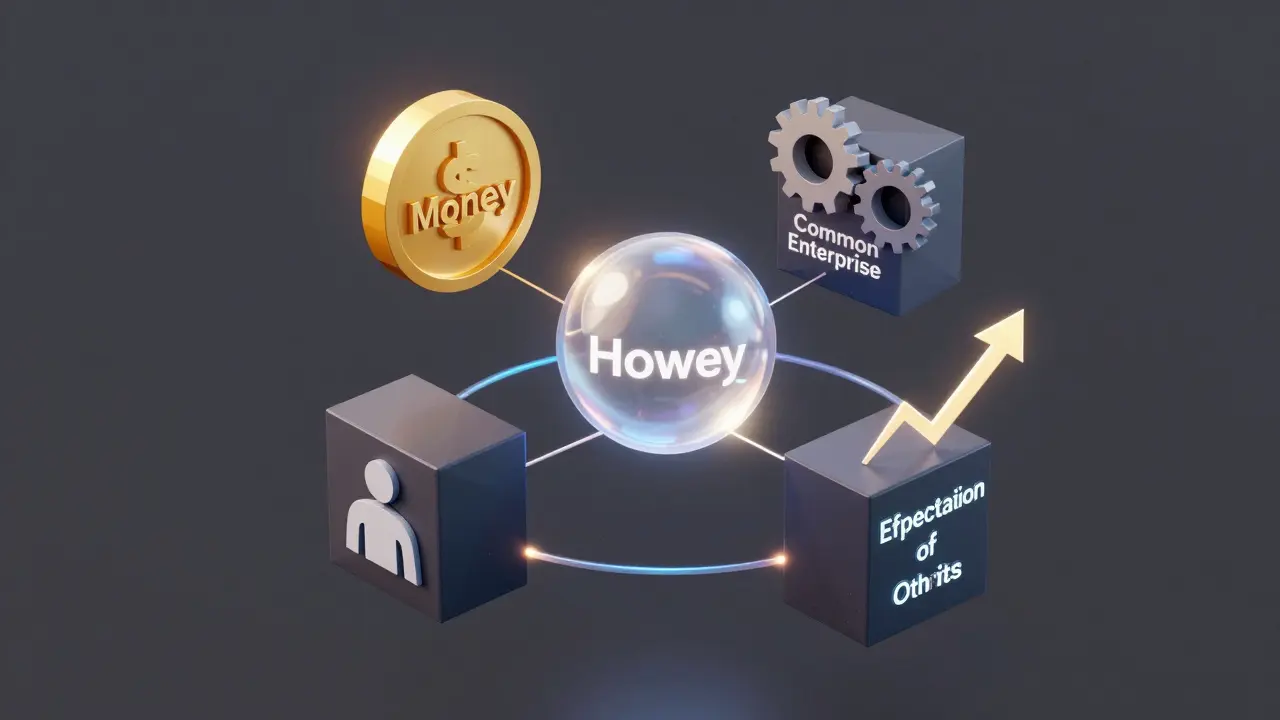
When regulators ask if a crypto asset is a security, they almost always apply the Howey Test. Established in 1946 by the Supreme Court case SEC v. W.J. Howey Co., this test defines an "investment contract"-a type of security-as any transaction involving:
- An investment of money
- In a common enterprise
- With a reasonable expectation of profits
- To be derived from the entrepreneurial or managerial efforts of others
If a token meets all four criteria, it is likely a security. The key phrase here is "efforts of others." If you buy a token hoping its value goes up because a central team is building a platform, marketing the product, or managing liquidity, you are relying on their efforts. That points toward security status. If you buy a token purely to use a service-like paying for cloud storage-and don't care about price appreciation, it leans toward a utility.
The SEC applied this logic in its landmark 2017 ruling against The DAO, declaring its tokens securities despite their decentralized nature. Since then, the agency has enforced this view aggressively, settling cases with major players like Ripple Labs ($125 million penalty) and Telegram (which had to return $1.2 billion).
Bitcoin and Ethereum: The Commodity Exception
Not all cryptos are treated equally. Bitcoin is widely accepted as a commodity, not a security. Why? Because it is sufficiently decentralized. No single entity controls the network's development or promotion. When you buy Bitcoin, you aren't betting on a CEO's vision; you're betting on market demand for a scarce digital asset.
Ethereum occupies a similar space. In September 2022, both the SEC Chair Gary Gensler and CFTC Chair Rostin Behnam testified before Congress that Ether is a commodity. The SEC even approved spot Ethereum ETFs in March 2025, signaling a tacit acceptance of its non-security status. However, this doesn't mean every ERC-20 token built on Ethereum is safe. Newer projects with active development teams often fail the Howey Test because investors rely on those teams to deliver value.
| Asset Type | Primary Function | Regulatory Status (US) | Key Risk |
|---|---|---|---|
| Bitcoin | Store of value / Money | Commodity (CFTC) | Price volatility |
| Ethereum | Smart contract platform | Commodity (CFTC) | Network congestion / Gas fees |
| Utility Tokens | Access to services | Gray Area / Often Security | SEC Enforcement Action |
| Stablecoins | Pegged to fiat (e.g., USD) | Payment Instrument / Security | De-pegging / Reserve transparency |
Utility Tokens vs. Investment Contracts
Many projects launch as "utility tokens," claiming they are only for accessing a specific platform. But intent matters less than economic reality. If a project markets its token primarily as an investment opportunity, promising high returns based on the team's future work, the SEC will likely call it a security regardless of its technical utility.
Consider the concept of "decentralize-and-morph." Former SEC official William Hinman suggested in 2018 that a token might start as a security during its fundraising phase but could become a utility once the network becomes truly decentralized. Unfortunately, this transition is rarely automatic. Most new networks remain reliant on core developers, keeping them in the security zone for years.
This distinction is critical for investors. If a token is a security, it must be registered with the SEC or qualify for an exemption. Unregistered securities cannot be freely traded on public exchanges. This is why many U.S.-based exchanges delist certain altcoins-they simply don't have the regulatory clearance to offer them.
The Stablecoin Complication
Stablecoins add another layer of complexity. Fiat-backed stablecoins like USDC and USDT are generally regulated as payment instruments under state money transmission laws. They are designed to maintain a 1:1 peg with the dollar, minimizing profit expectations.
However, algorithmic stablecoins, which use complex mechanisms to maintain their peg without full collateralization, face stricter scrutiny. The collapse of TerraUSD in May 2022, which wiped out $40 billion in value, highlighted the risks of these models. Regulators now view many algorithmic structures as potential securities due to the reliance on the issuer's management to stabilize the asset.
Why Classification Matters for You
For investors, buying a security carries different rights and risks than buying a commodity. Securities offer investor protections, such as disclosure requirements and fraud remedies. Commodities offer fewer protections but greater trading freedom. If you hold a token classified as a security, you may have recourse if the issuer defrauds you. If you hold a commodity, you are largely on your own.
For developers, misclassification can be catastrophic. Launching an unregistered security can lead to billions in fines, forced refunds, and criminal charges. In 2025, the American Institute for Economic Research noted that 37% of tokens launched would likely be classified as securities under current SEC priorities. This has caused 68% of startups to delay or cancel launches, according to a CoinDesk survey.
The Path Forward: Clarity Act and Global Trends
The regulatory landscape is shifting. In January 2026, the Senate introduced the Responsible Financial Innovation Act, aiming to create clear criteria for crypto classification. This legislation seeks to end the "regulatory guessing game" that has driven innovation overseas. Meanwhile, international bodies like IOSCO recommend focusing on "economic substance rather than form," suggesting a move toward more consistent global standards.
Until clear laws pass, the safest approach is caution. Assume any new token is a security until proven otherwise. Look for decentralization, lack of profit promises, and genuine utility. And remember, just because a token trades on an exchange doesn't mean it's legally compliant for your jurisdiction.
Is Bitcoin considered a security?
No, Bitcoin is widely considered a commodity by the CFTC and other regulators. It does not meet the Howey Test criteria for a security because it is sufficiently decentralized, and no central party manages the network or promises profits to holders.
What is the Howey Test?
The Howey Test is a legal standard used to determine if a transaction is an "investment contract" (a security). It requires an investment of money in a common enterprise with a reasonable expectation of profits derived from the efforts of others.
Can a utility token be a security?
Yes. Even if a token is labeled a "utility," it can still be a security if investors buy it primarily for profit and rely on the development team's efforts to increase its value. The SEC looks at economic substance over technical labels.
Why did the SEC sue Ripple?
The SEC sued Ripple Labs, alleging that XRP was sold as an unregistered security. While a judge ruled in 2023 that programmatic sales of XRP on exchanges were not securities offerings, institutional sales were deemed violations. The case remains pivotal for defining token classifications.
How does decentralization affect security status?
Decentralization reduces the likelihood of a token being classified as a security. If no central group controls the network or drives profits, the "efforts of others" prong of the Howey Test is harder to satisfy. Bitcoin is the prime example of this.