
COINZIX Crypto Exchange Review: Is It Safe for Eastern European Traders in 2026?
You’ve probably seen the ads or heard whispers about COINZIX, a cryptocurrency exchange that claims to be building the leading infrastructure for Eastern Europe. Founded in 2021, it promises ease of use, top-tier security, and deep regulatory compliance. But here is the hard truth you won’t find in their marketing emails: major data aggregators like CoinMarketCap currently list COINZIX as "Untracked." What does that actually mean for your money? Does it signal a hidden gem, or should you keep your funds elsewhere?
In this review, we cut through the hype. We look at the real features, the physical presence in Romania, the missing volume data, and whether this platform is ready for serious trading in 2026.
The Core Promise: A Regulatory-First Approach
Most crypto exchanges start with technology and add compliance later. COINZIX appears to have flipped this script. The platform positions itself not just as a place to buy Bitcoin, but as a compliant financial institution deeply embedded in the legal frameworks of Eastern Europe. Since its launch in 2021, the company has worked directly with lawmakers and officials across the region to ensure adherence to evolving EU standards.
This strategy makes sense on paper. As the European Union tightens regulations under frameworks like MiCA (Markets in Crypto-Assets), exchanges that are already aligned with local authorities gain a significant advantage. For traders in countries where banking access to crypto is historically difficult, a platform that boasts direct lines to regulators offers peace of mind. You aren't just trusting code; you're trusting a entity that claims to be playing by the book.
However, there is a catch. Being "compliant" doesn't automatically mean being "liquid" or "popular." An exchange can be fully licensed and still have very few users. This leads us to the most critical part of any exchange review: transparency.
The Red Flag: Untracked Listing Status
If you go to CoinMarketCap and search for COINZIX, you will likely see an "Untracked Listing" status. This isn't a minor detail; it’s a major warning sign for active traders. According to CoinMarketCap’s Listings Review Criteria Section B - (3), this classification indicates limited market data availability and potential transparency concerns regarding trading volumes.
Why does this matter? When an exchange is "tracked," independent auditors verify that the reported trading volume is real. They check if the trades are coming from unique users or if the exchange is artificially inflating numbers to look popular (a practice known as wash trading). An "untracked" status means no one has verified these numbers yet. In fact, current data shows no available reserve data and no visible trading pairs or volume statistics on major aggregators.
For a casual user buying $50 worth of Ethereum, this might not be a dealbreaker. But for anyone looking to trade larger amounts, liquidity is king. If you try to sell a large position on an untracked exchange, you might find that there are no buyers waiting on the other side, causing your price to crash instantly. Until COINZIX achieves tracked status, assume that liquidity is thin and volatility could be higher than on established platforms like Binance or Kraken.
Beyond Trading: ATMs, Staking, and Future Features
Despite the data gaps, COINZIX is trying to build a comprehensive ecosystem. They are expanding beyond simple spot trading into several other verticals:
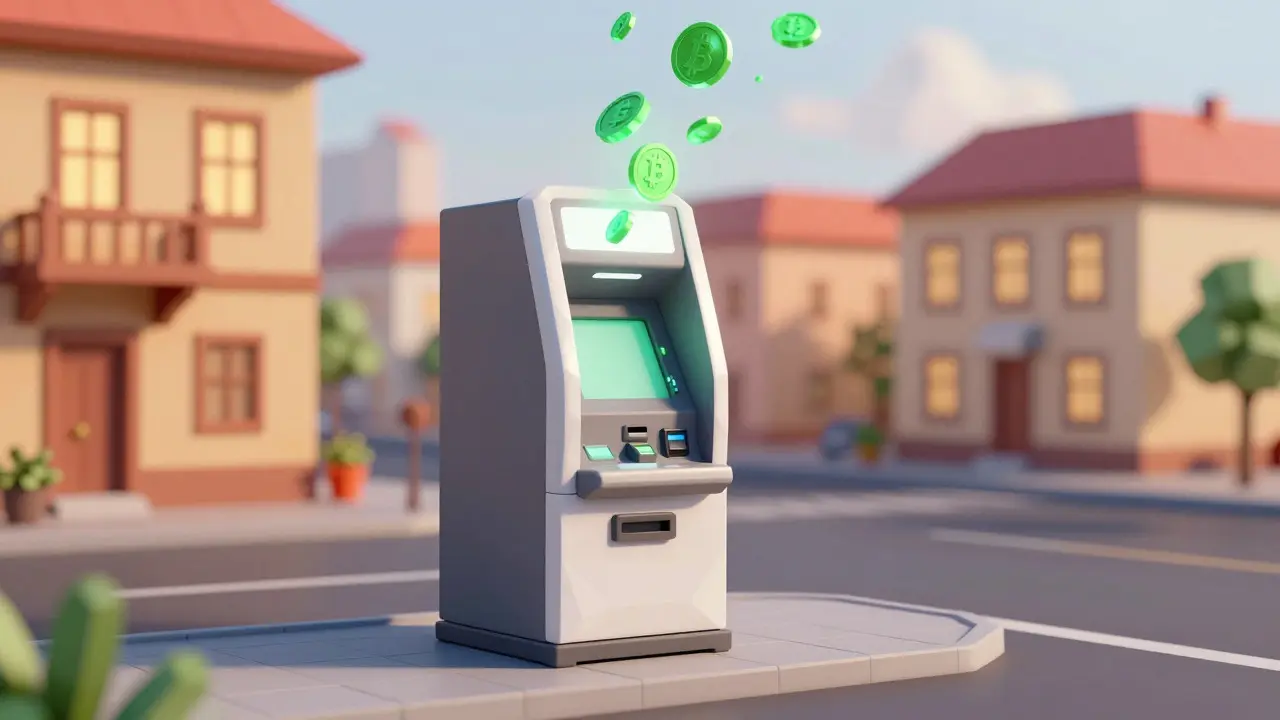
- Cryptocurrency ATMs: COINZIX has deployed a network of crypto ATMs across Romania. This is a bold move. Physical access points bridge the gap between cash and crypto, which is crucial in regions where traditional bank transfers to crypto exchanges are often blocked or delayed. If you are in Bucharest or Cluj, this offers immediate, anonymous-ish access to digital assets without needing a complex bank setup.
- Launchpad: The platform features a launchpad for new token offerings. This allows early investors to get in on new projects before they hit major markets. However, launchpads carry high risk. Many new tokens fail within months. Without strong due diligence tools, this feature can be a trap for inexperienced investors.
- Intra-platform Staking: Users can stake their holdings to earn rewards. This is standard fare now, but the key question is always: who holds the keys? If the exchange controls the private keys to your staked assets, you are relying entirely on their security and solvency.
- Planned Financial Services: The roadmap includes crypto-backed loans, debit cards, and savings accounts. These features aim to turn COINZIX into a full-service bank alternative. While attractive, note that these are *planned*. In the crypto world, roadmaps change frequently. Don’t base your decision to join today on features that don’t exist yet.

Security and Trust: What Do We Know?
Security is the bedrock of any exchange review. COINZIX emphasizes its focus on security and regulatory compliance. But let’s break down what that actually looks like in practice.
First, the lack of public proof-of-reserves is concerning. Major exchanges publish monthly audits showing that they hold 1:1 backing for user deposits. COINZIX currently lists reserve data as unavailable. Without this transparency, you are operating on faith. Are your funds segregated from company operational funds? Are they held in cold storage? The details are sparse.
Second, consider the age of the platform. Founded in 2021, COINZIX has survived the bear market of 2022-2023, which is a positive sign. Many fraudulent schemes collapse during downturns when interest wanes. Surviving three years suggests some level of operational stability. However, surviving is different from thriving. The lack of volume growth suggests it hasn't gained massive mainstream traction yet.
For users in Eastern Europe, the local regulatory engagement is a form of security. If something goes wrong, having a local legal entity and relationships with lawmakers provides more recourse than dealing with a faceless offshore server. This is a distinct advantage over many global giants that operate in gray areas.
Who Should Use COINZIX? And Who Should Avoid It?
Not every exchange is for everyone. Based on the current landscape in 2026, here is how you should decide:
| User Type | Suitability | Reasoning |
|---|---|---|
| Romanian Residents | High | Access to local ATMs and tailored regulatory compliance makes fiat-onboarding easier than with global competitors. |
| Active Day Traders | Low | Lack of tracked volume data suggests low liquidity. High slippage and wide spreads could eat into profits. |
| Long-term HODLers | Medium | If you believe in the long-term vision and want exposure to their future loan/card products, it may be worth a small allocation. Keep amounts manageable. |
| Privacy Seekers | Medium | ATM usage offers some anonymity, but KYC (Know Your Customer) requirements for the main platform are likely strict due to their compliance focus. |
| Large Institutional Investors | Very Low | Lack of transparent reserves and untracked status makes it unsuitable for large capital deployment. |
Comparison: COINZIX vs. Established Alternatives
To put COINZIX in perspective, let’s compare it briefly with two types of competitors: a global giant and a regional challenger.
Vs. Binance/Kraken: These platforms offer deep liquidity, thousands of trading pairs, and robust mobile apps. They are tracked by all major data aggregators. The downside? They can be complex for beginners, and fiat onboarding in Eastern Europe can sometimes be glitchy or slow. COINZIX wins on local simplicity and ATM access; it loses heavily on liquidity and feature depth.
Vs. Local Bank Partnerships: Some banks in Poland and Romania now offer direct crypto custody. These are highly secure but offer limited coin selection. COINZIX offers more variety and staking options, but carries higher counterparty risk than a regulated bank.
Final Verdict: Proceed with Caution
COINZIX is an ambitious project with a clear vision for Eastern Europe. Its physical presence via ATMs and proactive regulatory stance are genuine strengths that set it apart from fly-by-night operations. For residents of Romania and neighboring countries who struggle with traditional bank transfers, it solves a real pain point.
However, the "Untracked" status on CoinMarketCap is a significant hurdle. It means the platform lacks the transparency and volume verification that serious traders demand. Until COINZIX publishes regular proof-of-reserves and achieves tracked listing status, it should be treated as a secondary wallet, not a primary vault.
If you decide to use it, start small. Test the deposit process via their Romanian ATMs or bank transfers. Check the withdrawal fees. Verify that customer support responds quickly. Treat it as a tool for specific regional advantages rather than a replacement for your main global exchange account.
Is COINZIX safe for large investments?
Currently, it is risky for large investments. The lack of tracked volume data and unavailable reserve information on CoinMarketCap means there is less transparency regarding liquidity and asset backing. It is better suited for smaller, diversified allocations rather than holding your entire crypto portfolio.
Where are COINZIX's crypto ATMs located?
As of 2026, COINZIX has deployed a network of cryptocurrency ATMs primarily across Romania. This physical infrastructure allows users to convert cash to crypto easily, bypassing some traditional banking hurdles common in Eastern Europe.
What does "Untracked Listing" mean on CoinMarketCap?
It means CoinMarketCap has not yet verified the exchange's trading volume or liquidity data. Under their criteria, this indicates limited market data availability. It doesn't necessarily mean the exchange is a scam, but it does mean you cannot trust the displayed volume figures until it is tracked.
Does COINZIX comply with EU regulations?
COINZIX positions itself as highly compliant, working directly with lawmakers in Eastern Europe. This proactive approach aims to align with upcoming EU frameworks like MiCA. However, always verify the specific licenses held by the entity in your country before depositing funds.
Can I stake cryptocurrencies on COINZIX?
Yes, the platform offers intra-platform staking capabilities. This allows users to earn rewards on their holdings. Keep in mind that staking on an exchange usually involves locking your coins with the platform, so you are exposed to both market risk and the exchange's operational risk.
When was COINZIX founded?
COINZIX was founded in 2021. It has operated through the subsequent bear market, suggesting some level of business resilience, though it has yet to achieve mass adoption or tracked status on major data aggregators.