What are Decentralized Applications (dApps)? A Simple Guide to Web3 Software
Have you ever wondered why some apps feel like they belong to a corporation while others seem to belong to the community? That’s the core difference between traditional software and Decentralized Applications, also known as dApps. These are programs that run on peer-to-peer networks instead of centralized servers. They don’t rely on a single company to keep them alive or control your data.
In this guide, we’ll break down what dApps actually are, how they work under the hood, and why they matter for the future of the internet. We’ll look at real-world examples, compare them to the apps you use every day, and explain the technology that makes them possible without getting lost in jargon.
The Core Idea: No Middlemen, Just Code
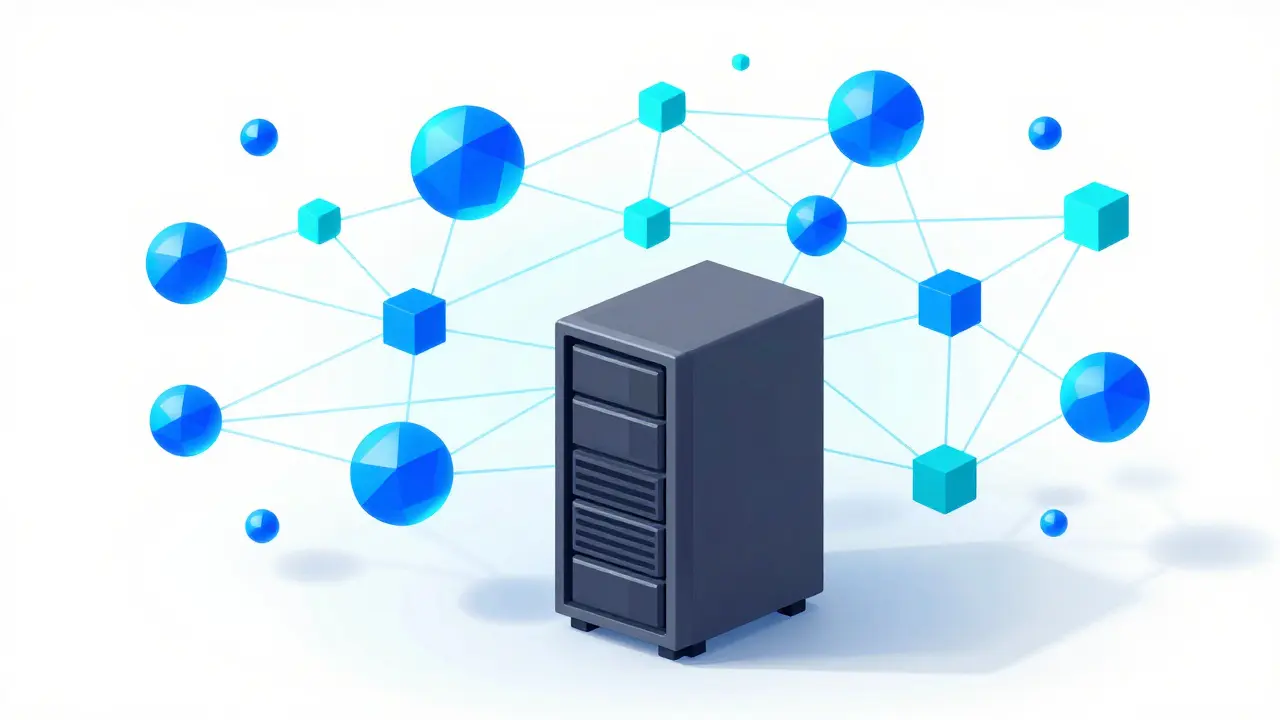
At its simplest, a dApp is an application that operates without a central authority. Think about how you use Facebook or Google. You create an account, store your photos, and trust that their servers won’t crash or delete your content arbitrarily. In a dApp, there is no single server. Instead, the application runs across a network of computers called nodes.
This structure changes who holds the power. In traditional apps, the developer controls the rules. If Twitter decides to ban a user, they can do it with a click. In a decentralized version of such a platform, no single entity has that power. The rules are written into code, specifically Smart Contracts. These are self-executing agreements with the terms directly written into lines of code. Once deployed, they cannot be easily changed or stopped.
This means that even if the original developers disappear, the app keeps running. This autonomy is the biggest selling point for users who value privacy and censorship resistance. It shifts control from corporations back to individuals.
How Do dApps Actually Work?
You might think dApps look completely different from the apps on your phone, but often, they don’t. The front end-the part you see and click-is usually built with standard web technologies like HTML, CSS, and JavaScript. You can interact with it just like any other website.
The magic happens in the back end. Instead of sending your data to a private database owned by a company, the dApp sends instructions to a Blockchain. This is a distributed ledger shared across thousands of computers. Here is the typical architecture:
- Frontend Interface: The user-friendly screen you interact with.
- Smart Contracts: The backend logic stored on the blockchain. For example, on Ethereum, these are often written in a language called Solidity.
- Decentralized Storage: Files like images or documents aren’t stored on a single server. They’re often split up and stored across networks like IPFS (InterPlanetary File System) or Arweave.
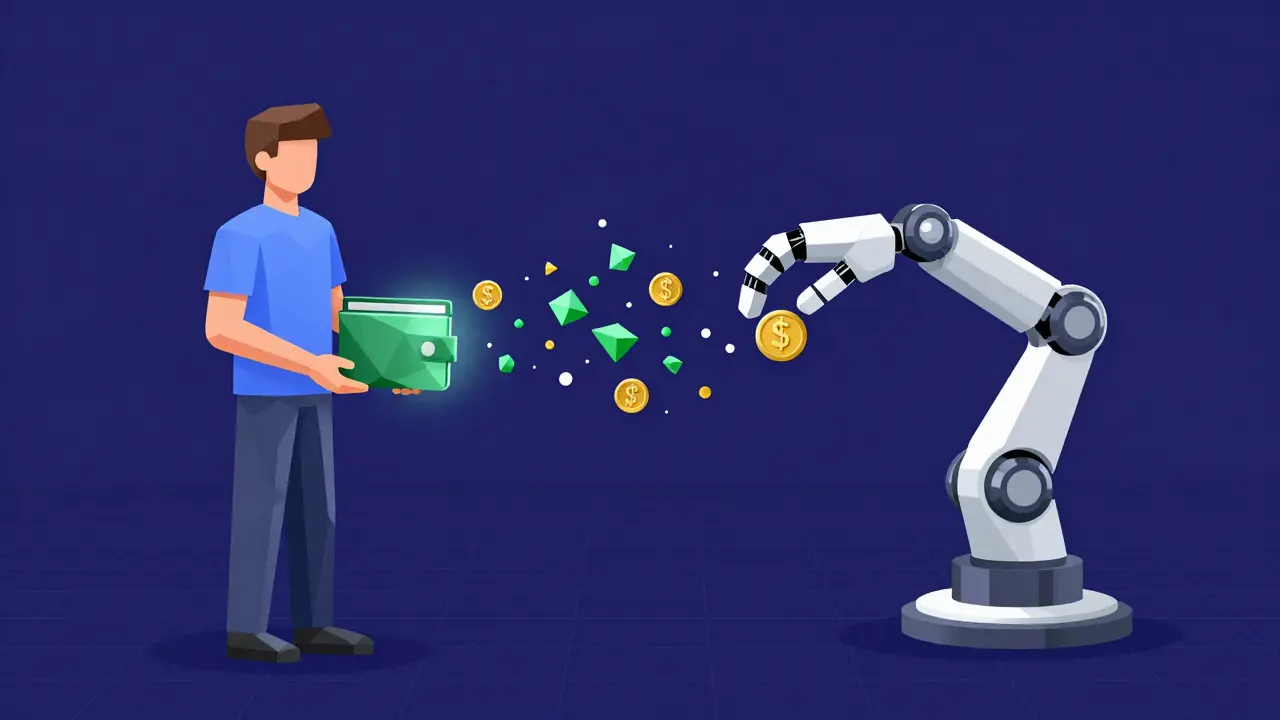
- Wallet Integration: Instead of logging in with an email and password, you connect a crypto wallet like MetaMask. This proves your identity and allows you to sign transactions.
When you perform an action, like swapping tokens or posting a message, your wallet signs a transaction. This transaction is broadcast to the network, validated by nodes, and recorded permanently on the blockchain. This process ensures transparency; anyone can audit the history of the app because the ledger is public.
dApps vs. Traditional Apps: What’s the Difference?
To really understand dApps, it helps to compare them side-by-side with the apps you already know. The differences go beyond just where the data is stored; they affect security, speed, and user rights.
| Feature | Traditional App (Web2) | Decentralized App (Web3) |
|---|---|---|
| Data Storage | Centralized servers owned by one company | Distributed across many nodes on a blockchain |
| Control & Governance | Company decides rules and updates | Code governs actions; token holders may vote on changes |
| Censorship Resistance | Low (admins can ban users/content) | High (no single point of failure or control) |
| Login Method | Email and password | Cryptocurrency wallet connection |
| Transparency | Closed source; users must trust the provider | Open source; all transactions are publicly verifiable |
| Speed & Scalability | Fast (e.g., Visa handles 24,000 tx/sec) | Slower (e.g., Ethereum handles ~15-30 tx/sec base layer) |
The trade-off is clear. Traditional apps are fast and convenient because they optimize for efficiency. dApps prioritize security and trustlessness. This comes at the cost of speed and complexity. For instance, Ethereum processes significantly fewer transactions per second than Visa. However, new solutions like Layer 2 scaling networks are working to close this gap.

Real-World Examples of dApps
dApps aren’t just theoretical concepts. They are actively used in several industries, most notably in finance, gaming, and social media. Let’s look at a few prominent categories.
Decentralized Finance (DeFi): This is the largest sector for dApps. Protocols like Aave allow users to lend and borrow money without a bank. There is no credit check or middleman taking a cut. The smart contract automatically calculates interest and secures the collateral. If you default, the code liquidates your assets. It’s banking, but automated and open to anyone with an internet connection.
Decentralized Exchanges (DEXs): Platforms like Uniswap let you swap cryptocurrencies directly from your wallet. Unlike Coinbase or Binance, which hold your funds, a DEX never takes custody of your assets. You trade peer-to-peer through liquidity pools managed by smart contracts. This reduces counterparty risk significantly.
NFT Marketplaces: Sites like OpenSea are dApps that facilitate the buying and selling of non-fungible tokens. While the interface looks like a regular e-commerce site, the ownership records are stored on the blockchain. This ensures that digital art or collectibles have provable scarcity and authenticity.
Decentralized Social Media: Projects like Lens Protocol aim to rebuild social networks where users own their followers and content. If a centralized platform shuts down your account, you lose your audience. On a decentralized protocol, your social graph lives on the blockchain, so you can take it with you to any compatible frontend.
Benefits and Risks You Should Know
Before diving into dApps, it’s important to weigh the pros and cons honestly. They offer powerful advantages but come with unique risks.
The Benefits:
- Ownership: You truly own your data and assets. No company can freeze your account or seize your funds arbitrarily.
- Transparency: All code and transactions are public. You can verify exactly how an app works and where your money goes.
- Resilience: Because there is no central server, dApps are highly resistant to downtime and hacking attempts targeting a single point of failure.
- Global Access: Anyone with an internet connection can participate, regardless of location or financial status.
The Risks:
- User Error: There is no customer support to reset your password. If you lose your wallet seed phrase, your access is gone forever. This is the biggest hurdle for new users.
- Smart Contract Bugs: Code is law, but bad code is still law. If there is a flaw in the smart contract, hackers can exploit it. Since transactions are irreversible, stolen funds are rarely recovered.
- Scalability Issues: During peak times, network congestion can lead to high transaction fees (gas fees) and slow processing speeds.
- Regulatory Uncertainty: Governments are still figuring out how to regulate decentralized systems. This could lead to legal challenges for developers and users in certain jurisdictions.
How to Get Started with dApps
If you want to try using a dApp, here is a simple step-by-step guide. Don’t worry, it’s easier than it sounds.
- Choose a Wallet: Download a non-custodial wallet like MetaMask, Phantom, or Trust Wallet. These act as your login and bank account combined. Write down your recovery phrase on paper and store it safely. Never share it with anyone.
- Fund Your Wallet: Buy some cryptocurrency (like ETH for Ethereum-based dApps or SOL for Solana) from a centralized exchange and send it to your wallet address.
- Find a Reputable dApp: Use directories like DappRadar or DefiLlama to find popular and audited dApps. Stick to well-known projects initially to minimize risk.
- Connect Your Wallet: Go to the dApp’s website and click “Connect Wallet.” Select your wallet provider and approve the connection request. Note that connecting does not mean spending money; it just identifies you.
- Interact Carefully: When you perform an action, like swapping tokens, review the transaction details carefully. Check the amount and the recipient address. Then, confirm the transaction in your wallet. You will need to pay a small gas fee for the network to process it.
Start small. Use a tiny amount of money to test the waters. Familiarize yourself with the interface and the feeling of signing transactions. Once you’re comfortable, you can explore more complex functionalities.
The Future of dApps
We are currently in the early stages of the Web3 revolution. As technology matures, dApps are becoming faster, cheaper, and more user-friendly. Innovations like Layer 2 scaling solutions (such as Arbitrum and Optimism) are solving the speed and cost issues of main blockchains. Cross-chain bridges are allowing dApps to communicate across different networks, breaking down silos.
By 2026, industry analysts predict that decentralized applications will handle over $100 billion in annual transaction volume. This growth suggests that dApps are moving from niche crypto tools to mainstream utilities. We might soon see decentralized versions of everyday services like cloud storage, identity verification, and supply chain tracking.
The key takeaway is that dApps represent a shift in how we think about software. They move us from a model of renting access to platforms owned by others, to owning our digital lives. While the learning curve is steep, the potential for greater autonomy and fairness makes it a space worth watching closely.
Are dApps safe to use?
dApps can be very secure due to their cryptographic foundations, but they carry specific risks. Smart contract bugs can lead to hacks, and users are responsible for securing their own wallets. Always use audited, reputable dApps and never share your private keys.
Do I need to know coding to use a dApp?
No, you do not need to know coding to use a dApp. Most dApps have user-friendly interfaces similar to regular websites. You only need to set up a crypto wallet and understand basic transaction concepts.
What is the difference between a dApp and a regular app?
The main difference is control and data storage. Regular apps run on centralized servers controlled by a company. dApps run on decentralized blockchain networks, meaning no single entity controls the app, and data is distributed across many nodes.
Can I make money with dApps?
Yes, many dApps in the DeFi space allow users to earn yields through lending, staking, or providing liquidity. However, these activities involve financial risk, including market volatility and smart contract vulnerabilities.
Why are dApps slower than traditional apps?
dApps are slower because every transaction must be verified by multiple nodes on the blockchain network. This consensus process ensures security and immutability but takes more time than a single server processing a request instantly.