

What is Medicle (MDI)? A Deep Dive into the ICP-Based Health Crypto
Imagine handing over your entire medical history, including your genetic code, to a single hospital database. Now imagine that same data living on a decentralized ledger where you hold the keys, not some corporate server room. That is the promise behind Medicle (MDI), a cryptocurrency project positioning itself as the world’s first WEB3 medical service ecosystem. It claims to put a "blockchain in your palm," allowing you to manage, store, and monetize your personal health information. But does the technology match the hype, or is it just another speculative token riding the wave of niche crypto trends?
To understand what Medicle actually is, we have to look past the marketing slogans and dig into the infrastructure, the tokenomics, and the stark reality of its current market performance. As of mid-2026, MDI sits in a precarious position: ambitious in concept but opaque in execution and volatile in value.
The Core Concept: Web3 Meets Healthcare
Medicle isn't trying to be a general-purpose currency like Bitcoin or a smart contract platform like Ethereum. Its focus is hyper-specific: healthcare data management. The central entity here is the patient's data, which has traditionally been trapped in silos-different hospitals, labs, and clinics often cannot share records easily, and patients have little control over who sees their info.
Medicle proposes a shift. By leveraging the Internet Computer Protocol (ICP), it aims to create a decentralized application layer where users can:
- Store personal medical records securely on-chain or via hybrid storage solutions.
- Control access rights to their data, sharing it with doctors or researchers only when they choose to.
- Potentially monetize this data, especially sensitive information like DNA sequences, by granting temporary access for research purposes.
- Use the native MDI token to pay for medical services or reserve appointments within the ecosystem.
This model relies heavily on the idea of "DNA database transcription." This doesn't mean storing raw, massive genomic files directly on the blockchain-which would be technically impractical due to size and cost-but rather anchoring cryptographic hashes or pointers to that data on the ICP ledger. This ensures the data hasn't been tampered with while keeping the actual heavy lifting off-chain.
Why the Internet Computer Protocol (ICP)?
Most healthcare crypto projects you see are built on Ethereum or Binance Smart Chain. They use ERC-20 tokens and rely on centralized servers for the actual app interface. Medicle differentiates itself by building natively on Dfinity’s Internet Computer Protocol.
ICP is designed to run "canisters"-smart contracts that can host full-stack web applications directly on the blockchain. For a project like Medicle, this offers two theoretical advantages:
- True Decentralization: The front-end of the medical app could theoretically run entirely on-chain, removing reliance on traditional web hosting providers.
- Scalability and Speed: ICP promises near-instant transaction finality and low costs, which is crucial for a system handling micro-transactions for medical reservations or data access fees.
However, this also means MDI is not compatible with standard Ethereum wallets like MetaMask out of the box. Users need to interact with ICP-compatible wallets, such as the Internet Identity system, adding a layer of complexity for average consumers who aren't already deep into the crypto space.
Tokenomics and Supply: The Numbers Don't Add Up
If you want to know if a crypto project is healthy, look at its tokenomics. Here is where Medicle gets murky. According to data from aggregators like Bitget and CoinMarketCap, the structure looks like this:
| Metric | Value / Status |
|---|---|
| Total Supply | 1,000,000,000 MDI |
| Max Supply | 1,000,000,000 MDI |
| Circulating Supply | Reported as 0 MDI on major platforms |
| All-Time High (ATH) | $0.7316 USD (March 2024) |
| Current Price Range | $0.000006 - $0.0105 USD (Highly variable) |
| Fully Diluted Valuation (FDV) | ~$10.51 Million USD (at $0.01 price point) |
The most alarming figure here is the circulating supply. Multiple sources, including Coinbase and Bitget, report the circulating supply as zero. If no coins are circulating, how is there a price? How is there trading volume? This discrepancy usually points to one of three things: a technical error in data aggregation, a token that hasn't officially launched its public distribution phase yet, or extreme illiquidity where very few trades occur, causing price feeds to glitch.
Furthermore, the price volatility is staggering. MDI hit an all-time high of roughly $0.73 in March 2024. By mid-2026, prices on various exchanges range from fractions of a cent ($0.000006) to slightly higher values ($0.01). A drop of nearly 100% from ATH suggests that early speculation evaporated quickly, leaving behind a thin market with little institutional interest.

Utility vs. Speculation: What Can You Actually Do?
A crypto token needs utility to survive long-term. Medicle claims two primary use cases:
- Medical Reservations and Payments: You can use MDI to book appointments or pay for customized medical services within the Medicle network.
- Data Monetization: Providers or researchers might pay you in MDI for access to your anonymized health or DNA data.
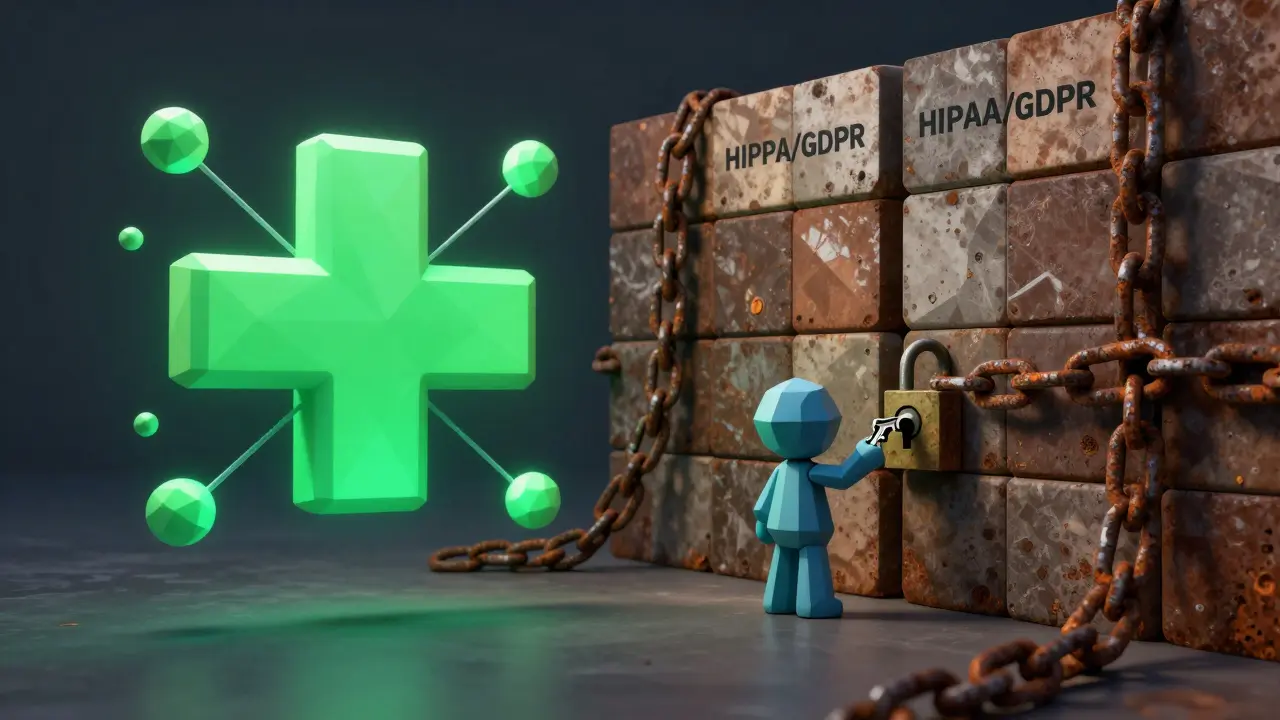
On paper, this sounds revolutionary. In practice, the adoption barrier is immense. Hospitals and clinics are bound by strict regulations like HIPAA in the US or GDPR in Europe. Integrating a blockchain-based payment and data system requires massive legal and technical overhaul. There is no public evidence of major healthcare institutions partnering with Medicle. Without real-world partners, the "utility" remains theoretical.
Currently, MDI functions more as a speculative asset than a functional currency. Most holders are likely betting on a future partnership announcement or a broader Web3 healthcare boom, rather than using the token to pay for a doctor's visit today.
Risks and Red Flags
Before you consider buying or interacting with Medicle, you need to weigh the risks. This is not a blue-chip investment; it is a high-risk, experimental asset.
- Lack of Transparency: Major aggregators do not list verifiable founder names or team identities. In the crypto world, anonymity is common, but in healthcare-a trust-based industry-it raises eyebrows.
- No Security Audits: There is no public record of independent security audits by firms like CertiK or Trail of Bits. Given that MDI handles sensitive data concepts, unverified smart contracts are a significant liability.
- Liquidity Issues: With a reported circulating supply of zero and tiny trading volumes, selling your MDI tokens could be difficult. You might find yourself unable to exit a position without crashing the price further.
- Regulatory Uncertainty: Tokens tied to health data face intense regulatory scrutiny. If regulators decide that MDI constitutes an unregistered security or violates data privacy laws, the project could face shutdowns.
How Does It Compare to Other Health Cryptos?
The "HealthFi" sector is crowded. Projects like MediBloc or Patientory have been around longer and have more visible partnerships. Medicle tries to differentiate through its ICP foundation and DNA focus. However, competitors often have established user bases and clearer roadmaps. Medicle currently lags behind in visibility, ranking in the thousands on market cap lists, whereas top health tokens break into the top 500.
Unlike Ethereum-based health tokens that can integrate with DeFi protocols for staking yields, MDI lacks clear yield mechanisms. It is purely a service token, meaning its value depends entirely on the success of the Medicle platform itself, not on financial engineering.
Final Verdict: Is Medicle Worth Your Attention?
Medicle (MDI) represents an interesting intersection of blockchain technology and personal health sovereignty. The idea of owning your DNA data and being compensated for its use is compelling. Building on the Internet Computer Protocol gives it a unique technical edge over generic ERC-20 tokens.
However, the current reality is harsh. The token is highly speculative, with inconsistent data, minimal liquidity, and no proven real-world adoption. The gap between the "world's first WEB3 medical ecosystem" claim and the actual usage metrics is wide. If you are a developer interested in ICP and health tech, it’s worth watching. If you are an investor looking for stability or immediate utility, MDI currently offers neither.
Always do your own due diligence. Check the latest whitepaper, verify the team's identity through official channels, and never invest more than you can afford to lose in such a volatile asset class.
What is the current price of Medicle (MDI)?
The price of MDI is highly volatile and inconsistent across platforms. As of mid-2026, reports range from $0.000006 to $0.01 USD. Some aggregators show $0.00 due to lack of liquid trading data. Always check multiple exchanges for the most accurate real-time price.
Is Medicle (MDI) available on Coinbase?
No. While Coinbase provides informational pages and price charts for MDI, it explicitly states that the token is not tradable on its platform. You would need to use other exchanges like KuCoin or Bitget to buy or sell MDI.
Which blockchain is Medicle built on?
Medicle is built on the Internet Computer Protocol (ICP), developed by DFINITY. This distinguishes it from many other healthcare tokens that operate on Ethereum or Binance Smart Chain.
What is the total supply of MDI tokens?
The total and maximum supply of Medicle (MDI) is 1,000,000,000 tokens. However, the circulating supply is frequently reported as zero, indicating limited availability in the open market.
Can I use MDI to pay for medical services?
In theory, yes. The project aims to allow users to reserve and pay for medical facilities using MDI. However, as of now, there is limited evidence of widespread adoption by healthcare providers, so practical usability may be restricted to specific partners within the Medicle ecosystem.
Is Medicle secure?
Security details are sparse. While the underlying ICP blockchain is secure, there are no publicly cited independent smart contract audits for Medicle. Users should exercise caution regarding the storage of sensitive personal data on any new blockchain platform.





15 Comments
Terry Hyland
June 17, 2026 at 11:03
they want your dna and they want your money. it is a trap. big pharma and the deep state are watching you through this tech. do not give them your data ever.
Monica Pathammavong
June 18, 2026 at 03:08
look at the tokenomics again u idiots. the circulating supply is zero which means its a rug pull waiting to happen. why are people still buying this garbage? i have analyzed the charts and it is clear that the founders are dumping on retail investors. stop being so naive about blockchain health records because there is no security audits and that is criminal negligence
Tim Lefebvre
June 18, 2026 at 06:44
i think the idea is cool but the execution is lacking. icp is fast but hard for normal people to use. maybe if they added metamask support it would be better. just my two cents tho
Grace Newman
June 18, 2026 at 09:17
It is with profound concern that I observe the lack of regulatory compliance in this so-called ecosystem. The absence of HIPAA adherence renders any claim of medical utility entirely void. Furthermore, the anonymity of the development team suggests malicious intent rather than innovation. One must question the ethical implications of monetizing genetic data without proper oversight from federal agencies.
Jessica Lane
June 19, 2026 at 12:15
I really appreciate how detailed this article is! It helps me understand what Web3 healthcare could look like in the future. I am curious if anyone has tried using similar platforms before? I would love to hear about your experiences with managing personal data online because privacy is so important to me these days.
Charles Pawlikowski
June 20, 2026 at 17:18
this is american technology gone wrong :( we should not trust foreign servers with our health info. keep it local and secure. why are we even looking at crypto for hospitals when we cant even fix the real system here in the us
Andrea Burd
June 21, 2026 at 11:27
boring. another scam coin with no utility. the writing is pretentious and the project is trash. pass.
Akeem Whittaker
June 23, 2026 at 10:02
We need to approach this with caution. While decentralization offers benefits, the current infrastructure is not ready for sensitive health data. Developers should focus on security audits first before asking users to trust them with their lives. Let's build something sustainable rather than speculative.
Manish Prajapat
June 23, 2026 at 22:31
The philosophical question here is who owns the truth of our biological selves. If the ledger is immutable, does that mean our health history is fixed forever? This raises interesting points about identity and change. However, practically speaking, the lack of liquidity makes it a poor investment vehicle right now.
John Doe
June 25, 2026 at 00:15
I feel for the patients who might lose money on this. It is tragic that hope for better healthcare is being exploited by speculators. We need real solutions not tokens that drop 99% in value. My heart goes out to those who invested their savings based on hype alone.
Mekz Wheoki
June 26, 2026 at 11:21
Oh look, another 'revolutionary' project that fails to deliver basic functionality. You people actually believe you can store DNA hashes on a blockchain and call it innovation? Please. The tech is years behind reality and the tokenomics are a joke.
Kumaran sowkarpet
June 27, 2026 at 07:04
namaste friends :). i think india has better systems for digital health already. abdm is working well here. maybe west can learn from us instead of making new coins for everything. please be careful with your investments ok?
Mauricio Contreras Loredo
June 27, 2026 at 15:21
lol yeah sure it will work. right after i win the lottery. great concept though if you ignore the fact that nobody uses it. nice try guys.
sreeja boora
June 29, 2026 at 11:53
This platform represents a significant threat to national sovereignty regarding health data. Foreign entities accessing citizen information via decentralized ledgers is unacceptable. We must protect our domestic healthcare infrastructure from such external influences and maintain strict control over all medical records within our borders.
Kenneth Riley
June 30, 2026 at 02:44
the drama is unreal. everyone is panicking about a token that is basically worthless. i told you this was coming. the team is ghosting and the price is dead. wake up sheeple. this is exactly how rugs work. dont let them fool you with fancy words about web3 and dna. it is all smoke and mirrors and you are eating the smoke