
EtherDelta and ForkDelta Crypto Exchange Review: History, Risks, and Why It Still Matters
Back in 2017, if you wanted to trade a new ERC-20 token right after its ICO, there was one place most people went: EtherDelta. It wasn’t the flashiest platform. It didn’t have mobile apps or sleek design. But it worked-until it didn’t. Today, its successor, ForkDelta, still runs, barely. And if you’re thinking of using it, you need to know exactly what you’re getting into.
What EtherDelta Was (And What It Became)
That model was revolutionary at the time. While centralized exchanges were getting hacked left and right-Mt. Gox, Bitfinex, Poloniex-EtherDelta promised security through decentralization. By late 2017, it was handling over 15% of all decentralized trading volume. Over 240 ERC-20 tokens were listed. If you had a new token from a tiny ICO, EtherDelta was your only real chance to trade it.
Then came December 24, 2017.
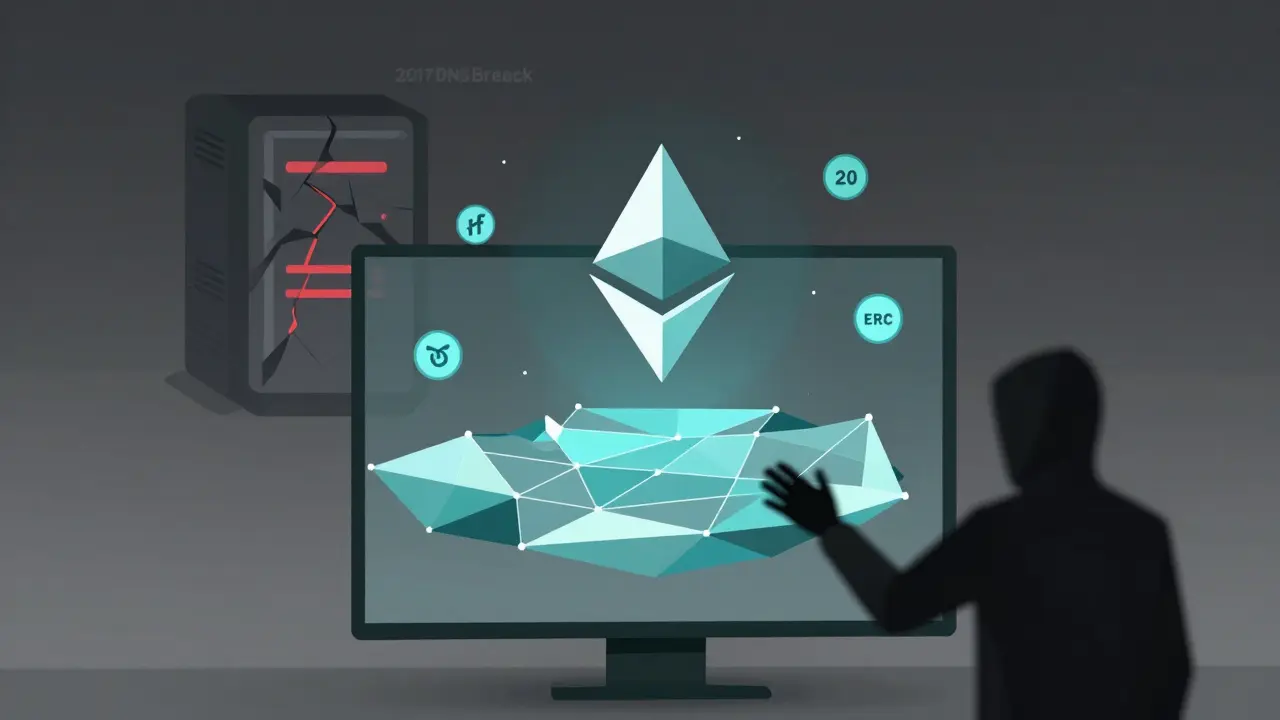
Hackers didn’t break the smart contract. They didn’t steal from the blockchain. They took over EtherDelta’s domain name server (DNS). Suddenly, when users typed in etherdelta.com, they were sent to a fake site that looked identical. Hundreds of people deposited their ETH into what they thought was the real contract. In reality, the funds went straight to the attackers. At least 308 ETH-worth $154,000 then-vanished overnight.
Worse, rumors spread that Coburn had sold the platform. New owners launched a shady ICO with no whitepaper, no team, no transparency. The community lost trust. By February 2019, the interface stopped updating. No new trades showed up. No new tokens were added. EtherDelta was dead.
ForkDelta: The Ghost That Lived On
But the smart contract never died. It was immutable. So the community forked it. ForkDelta was born-a new website, same contract, same rules. No central authority. No CEO. No promises. Just code.
As of 2025, ForkDelta still runs. It lists over 200 ERC-20 tokens. You can still trade ETH for obscure tokens no other exchange will touch. But here’s the catch: trading volume is a fraction of what it once was. In 2017, EtherDelta handled $187 million in a single month. In Q4 2024, ForkDelta did $1.7 million. That’s less than 0.1% of the entire DEX market.
Why does it still exist? Because some traders need it.
Reddit user u/EthereumVeteran says he’s made 37x returns on three different micro-cap tokens by trading them on ForkDelta right after their ICOs. For experienced traders hunting early-stage gems, it’s one of the last places where you can get in before the big exchanges list them. If you’re trading tokens under $1 million in market cap, ForkDelta is still the third most popular platform for that.
How It Actually Works (And Why It’s Hard)
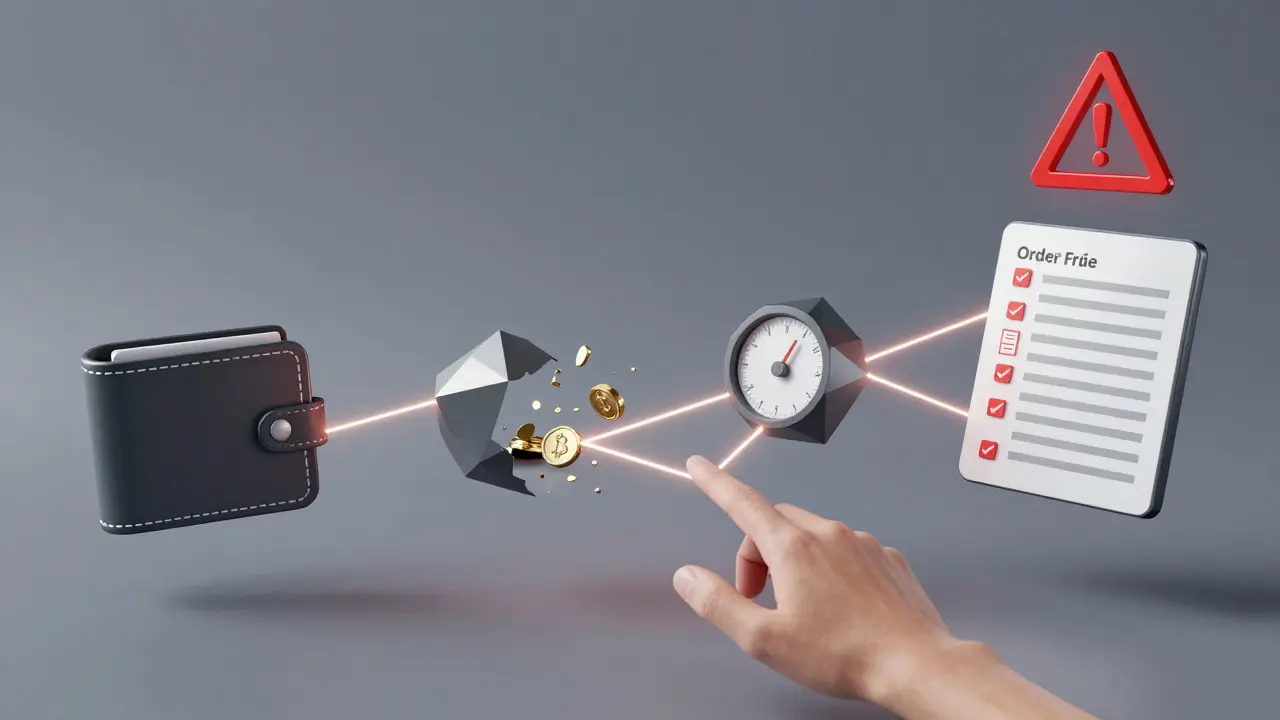
Using ForkDelta isn’t like using Binance. There’s no “buy now” button. No one-click deposits. Here’s what you actually have to do:
- Set up an Ethereum wallet (MetaMask, Ledger, Trezor)
- Buy ETH from a centralized exchange
- Send that ETH to your wallet
- Go to ForkDelta’s website
- Connect your wallet
- Deposit ETH or tokens into the smart contract (this costs gas)
- Place a buy or sell order on the order book
- Wait for someone to match your order (could take minutes, sometimes hours)
- Withdraw your funds back to your wallet (another gas fee)
Each step has risks. If you send ETH to the wrong address? Gone forever. If you set your gas fee too low? Your transaction gets stuck for hours. If you misread the order book? You might buy 100x more than you intended.
A 2024 study by CaptainAltcoin found new users took an average of 2.7 hours to complete their first trade. 78% needed over 30 minutes just to deposit funds. One user on SourceForge said: “I lost $45 in gas fees before I even figured out how to deposit.”

Security: Is It Safe?
The smart contract? Solid. It hasn’t changed since 2017. No one can alter it. No one can drain it. The code is open. It’s been audited. Ethereum Foundation gave it a “low risk” rating.
But the website? High risk.
The 2017 DNS attack proved the flaw: the platform relies on a web interface you access through your browser. If someone hijacks the domain, or tricks you into visiting a fake site, your funds are gone. That’s not a bug-it’s a design weakness shared by nearly every early DEX.
James Lovejoy, former CISO of Coinbase, put it bluntly in his 2025 report: “The DNS vulnerability exposed in 2017 remains a fundamental weakness of all web-based DEX interfaces.”
There’s no two-factor authentication. No email alerts. No customer support. If you get phished, there’s no one to call. No refund. No recourse.
Speed, Fees, and Liquidity
ForkDelta uses an order book model-like a stock exchange. Buyers and sellers post prices. Trades happen when they match.
That’s different from Uniswap or SushiSwap, which use automated market makers (AMMs). AMMs let you swap tokens instantly. ForkDelta? You wait.
Under normal conditions, a trade takes 15-20 seconds. During Ethereum congestion, it can take over a minute. Binance processes trades in milliseconds. ForkDelta is 50-100 times slower.
Fees? 0.3% per trade. Same as most DEXs. But you also pay Ethereum gas fees-usually $1-$10 per transaction. That’s not part of the 0.3%. It’s extra. And if your transaction fails? You still pay the gas.
Liquidity is thin. The average order book depth for ETH/ERC-20 pairs is around 15 ETH. Compare that to Uniswap V3, which has over 85 ETH in depth on major pairs. That means large orders get slippage. If you try to sell 100 tokens, you might get half the price you expected.
Who Should Use ForkDelta Today?
Here’s the truth: for 95% of people, ForkDelta is the wrong choice.
If you’re new to crypto? Use Uniswap or SushiSwap. They’re easier. Faster. Safer.
If you want to trade Bitcoin, Solana, or BNB? ForkDelta doesn’t support them. It only works with ETH and ERC-20 tokens.
If you care about customer support, mobile apps, or fast trades? Don’t even open the site.
But if you’re an experienced trader hunting for early-stage tokens-tokens with no exchange listings yet, tokens with market caps under $1 million-ForkDelta might still be your best option. It’s the last standing order book DEX with deep token coverage. No other platform lets you trade as many obscure tokens as it does.
And yes, it’s risky. But that’s the trade-off. You’re trading convenience for access.
Why It’s Dying (And Why That’s Okay)
ForkDelta has no active development. The last GitHub commit was September 2021. No new features. No UI updates. No mobile app. Just a static website running on ancient code.
Delphi Digital’s 2025 report calls it “a historical artifact.” That’s accurate. It’s not a product. It’s a relic.
But relics matter. EtherDelta and ForkDelta were the first real test of decentralized trading. They showed us what was possible-and what was dangerous. They taught us that security isn’t just about code. It’s about the whole system: domain names, user interfaces, education, trust.
Today’s DEXs-Uniswap, Curve, Balancer-built on those lessons. They fixed the UI. They added better liquidity models. They moved to layer-2 to cut gas fees. ForkDelta didn’t evolve. And that’s why it’s fading.
By 2028, most analysts predict its volume will drop to near zero. But it won’t disappear. It’ll remain as a case study in blockchain textbooks, a cautionary tale in crypto forums, and a last-resort tool for a tiny group of traders who know exactly what they’re doing.
Final Verdict
ForkDelta isn’t a crypto exchange you choose because it’s good. You choose it because you have no other choice.
It’s slow. It’s confusing. It’s risky. But for a specific, narrow use case-trading brand-new, low-market-cap ERC-20 tokens-it’s still alive.
If you’re not in that group? Walk away. Use Uniswap. Use SushiSwap. Use a centralized exchange if you need speed and support.
If you are? Make sure you’ve studied the process. Double-check every address. Use a hardware wallet. Never trust the website link. Bookmark it. And always, always verify the contract address on Etherscan before depositing anything.
EtherDelta and ForkDelta aren’t the future of crypto trading. But they were the beginning. And sometimes, knowing where you came from matters more than where you’re going.


14 Comments
Jon Martín
January 10, 2026 at 18:48
Man I still remember the first time I traded on EtherDelta back in 2017-felt like I was hacking the system myself
No bank. No middleman. Just me and the blockchain
And yeah I lost 0.5 ETH to a phishing site but hey I learned
That’s crypto baby
Worth it
Katrina Recto
January 11, 2026 at 22:30
ForkDelta still running? That’s wild
I thought it died with the 2018 bear market
Guess some ghosts just won’t leave
Tre Smith
January 12, 2026 at 08:07
The premise of this article is fundamentally flawed. ForkDelta is not a viable exchange-it is a liability. The 0.3% fee structure is misleading because it ignores the gas cost variability, which in 2024 averaged $8.27 per trade. Furthermore, the order book depth of 15 ETH is statistically insignificant compared to Uniswap V3’s 85 ETH median. The claim that it serves micro-cap tokens is only true because no legitimate DEX will touch them due to rug pull risk. This is not a niche tool-it is a graveyard for uninformed traders.
greg greg
January 12, 2026 at 17:02
It’s interesting how people romanticize EtherDelta as this revolutionary pioneer when in reality it was just the first to expose the fatal flaw in decentralized exchange design-the separation between the smart contract and the UI. The contract was immutable, yes, but the website was a single point of failure, and that’s not a bug, it’s a philosophical contradiction. If decentralization means no central authority, then why does a single domain name control access to a trustless system? The answer is it doesn’t, but users think it does, and that’s the real vulnerability. ForkDelta survives not because it’s better, but because people are bad at verifying contract addresses and still type etherdelta.com into their browser like it’s 2017. The real innovation wasn’t the code-it was the collective delusion that the interface was secure. That’s why we have Uniswap now, with its frontends audited, pinned to IPFS, and signed by multiple entities. ForkDelta is the last holdout of the Wild West era, and honestly, I respect that, but I wouldn’t trade there unless I was literally trying to lose money on purpose.
LeeAnn Herker
January 13, 2026 at 15:18
Of course it still works-because the government doesn’t want you to know how easy it is to trade unregistered tokens without KYC
They’ve been trying to shut it down since 2018
But the blockchain doesn’t care about SEC letters
And that’s why it’s still alive
They hate it because it’s free
And free is dangerous
Calen Adams
January 15, 2026 at 07:16
Let’s be real-ForkDelta is the last bastion of true DeFi
No fiat gateways. No custodial BS. Just raw, unfiltered peer-to-peer trading
Yeah it’s slow. Yeah gas is a pain. But if you’re not willing to deal with that, you’re not a crypto trader-you’re a speculator with a Coinbase account
And if you’re trading micro-caps? You better know how to verify a contract address or you deserve to lose
This isn’t a platform for beginners-it’s a proving ground
Sarbjit Nahl
January 15, 2026 at 20:10
The notion that ForkDelta is a relic is a Western bias
Decentralization does not require UI polish
It requires immutability and accessibility
Many in India and Southeast Asia still use it because it requires no identity verification
And in regions where banking is restricted, this is not nostalgia-it is necessity
Do not mistake survival for obsolescence
Paul Johnson
January 16, 2026 at 22:07
People still use this thing? Bro you’re gonna get rekt
I saw a guy lose 3 ETH because he clicked a link from a Reddit post
And he didn’t even check the contract
And now he’s crying on Twitter
Stop being lazy
Use Uniswap
Or better yet
Just buy Bitcoin and chill
Meenakshi Singh
January 18, 2026 at 03:26
OMG I just did a trade on ForkDelta last week 😱
Gas was $12 but I got 100x on a token no one’s heard of
It’s like crypto treasure hunting 🗺️💎
Also I’m still mad about the 2017 hack
But at least the contract didn’t change
That’s the real win
UI? Who cares
Code is law
And I’m living it 🤖
Kelley Ramsey
January 18, 2026 at 09:50
I just want to say how incredibly brave and resilient the ForkDelta community is…
Despite all the risks, the outdated interface, the lack of support…
People still show up…
And that’s not just technical loyalty…
That’s faith in the original promise of crypto…
That we can build systems without permission…
That we can trade without intermediaries…
Even if it’s messy…
Even if it’s slow…
Even if it costs us gas…
It matters…
And I’m so grateful for those who keep it alive…
Thank you…
Really…
Thank you…
Michael Richardson
January 19, 2026 at 04:07
Why is this even a thing?
USA made better exchanges.
China banned it.
EU regulates it.
But somehow this relic still exists?
Pathetic.
Mujibur Rahman
January 19, 2026 at 10:44
As someone who ran a node for EtherDelta back in '17, I can tell you this: the real legacy isn’t the trading volume
It’s the fact that it forced the entire ecosystem to ask: how do we make this safe?
That’s why Uniswap has frontends signed by multiple parties
That’s why wallets now warn you about contract mismatches
That’s why we have Etherscan verification
ForkDelta didn’t evolve
But it made us evolve
And that’s worth more than any trade
Danyelle Ostrye
January 20, 2026 at 06:56
I used to trade here all the time
Then I got phished
Lost my entire ETH stash
Took me six months to trust crypto again
Now I use Uniswap
But I still check ForkDelta once a month
Just to see if it’s still alive
It’s like visiting a haunted house
And hoping the ghost still remembers you
Tiffani Frey
January 21, 2026 at 13:51
For those considering ForkDelta: please, please, please verify the contract address on Etherscan before any deposit.
Bookmark the official site.
Use a hardware wallet.
Never click links from Reddit or Discord.
And if you're unsure-don't trade.
There's no customer support.
No refunds.
No second chances.
But if you're careful?
You might just find a gem.
And that's worth the risk.