
Rhea Finance Crypto Exchange Review: Is This NEAR Protocol DEX Worth Your Time?
When you're trading crypto on a decentralized exchange, you don't want to jump between five different platforms just to swap tokens. That’s the problem Rhea Finance was built to solve. Launched on July 30, 2025, after merging Ref Finance and Burrow Finance, Rhea Finance is now a single interface for trading, lending, and providing liquidity-all on the NEAR Protocol. It’s not another Uniswap clone. It’s a focused tool for users already deep in the NEAR ecosystem. But is it good enough to replace your current DEX? Let’s break it down.
What Is Rhea Finance, Really?
Rhea Finance isn’t just another DeFi app. It’s the result of two major NEAR Protocol DEXs combining forces. Before July 2025, you had to use Ref Finance for swaps and Burrow Finance for lending. Now, they’re one platform. That means fewer wallets to connect, less time switching between tabs, and consolidated liquidity pools that should give you better prices.
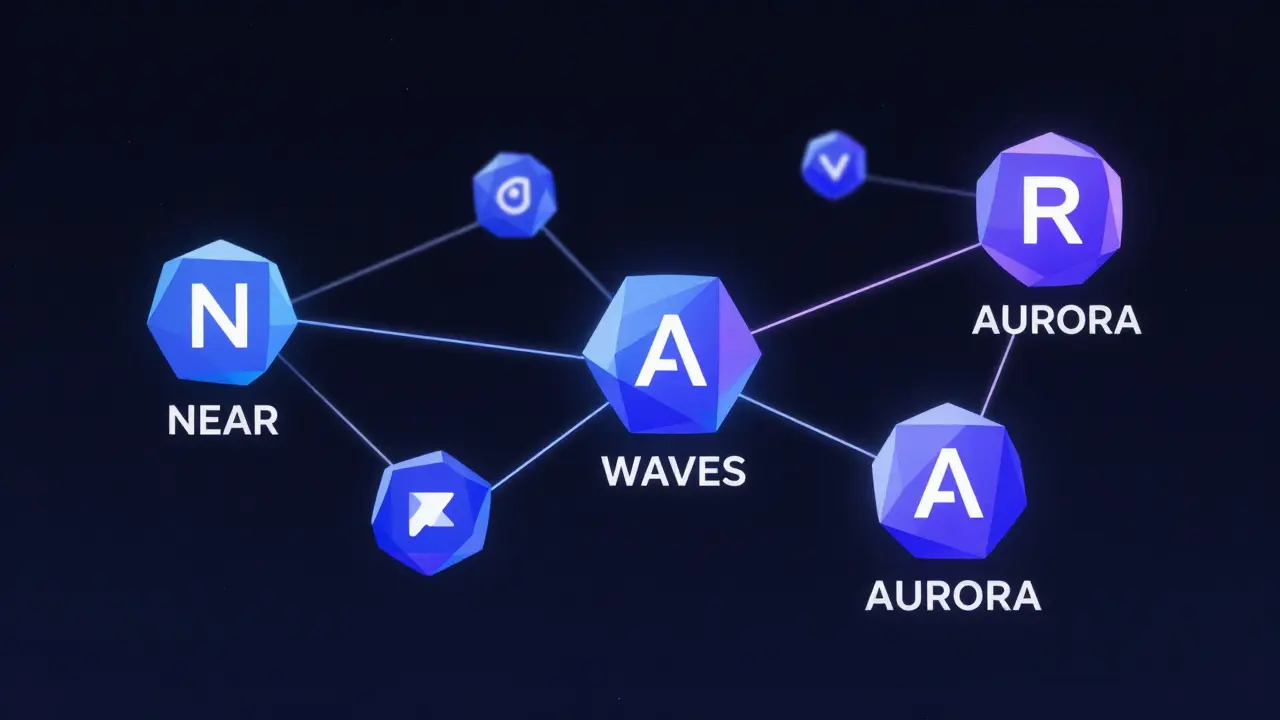
The platform supports 47 coins and 106 trading pairs. That’s not as many as Uniswap’s 1,800+, but it’s more than enough if you’re focused on NEAR-native assets like WAVES, AURORA, or NEAR itself. The average bid-ask spread is 0.6%, which is solid for a mid-sized DEX. Liquidity-wise, it ranks in the 93rd percentile for trading volume among all decentralized exchanges-meaning it’s handling more trades than 93% of its peers.
The native token, RHEA, has a total supply of 1 billion, but only 200 million are in circulation as of October 2025. The rest are locked in a three-year vesting schedule. That’s a red flag for some-more tokens coming later could mean price pressure. But it’s also a sign the team is trying to avoid dumping tokens all at once.
Where You Can Trade RHEA
You won’t find RHEA on Coinbase or Kraken. But you can trade it on Bitget, Binance, GATE, and MEXC. Bitget was the first to list it on July 30, 2025, and even ran a $7,000 RHEA giveaway for new users. That campaign boosted new sign-ups by 47% in just a few weeks.
Bitget also confirmed instant crediting of RHEA tokens after trades, which is a big deal. Some exchanges delay deposits for days. Not here. If you’re trading on Bitget, you get your RHEA right away. That’s a win for traders who need speed.
But there’s a catch. One major exchange removed RHEA from its contract trading options. That’s usually a sign they’re losing confidence-either in liquidity, volume, or long-term viability. It’s not a full delisting, but it’s a warning sign. If a platform stops offering futures or margin trading on a token, it often means they don’t see enough demand.
How It Compares to Other DEXs
Let’s be clear: Rhea Finance isn’t trying to beat Uniswap or PancakeSwap. It’s aiming to be the best DEX for NEAR Protocol users. That’s its niche.
Here’s how it stacks up:
| Feature | Rhea Finance | Uniswap (V3) | PancakeSwap | THORSwap |
|---|---|---|---|---|
| Blockchain | NEAR Protocol only | Ethereum | Binance Smart Chain | 20+ chains |
| Trading Pairs | 106 | 1,800+ | 800+ | 500+ |
| Avg. Spread | 0.6% | 0.4% | 0.5% | 0.7% |
| Liquidity Rank | 93rd percentile | 1st | 2nd | 45th |
| Best For | NEAR ecosystem traders | General crypto traders | BSC token traders | Cross-chain swaps |
Uniswap has more volume and more pairs, but if you’re holding NEAR, WAVES, or other NEAR-based tokens, Rhea Finance gives you tighter spreads and fewer steps. You’re not jumping between protocols. Everything’s in one place.
THORSwap supports way more chains, but its spreads are wider. Rhea Finance wins on execution speed for NEAR assets. That’s the trade-off: specialization over breadth.
Is the RHEA Token a Good Investment?
Here’s where things get messy.
Some analysts are bearish. CoinCodex predicted RHEA would drop 24.5% by November 2025, hitting $0.0178. That didn’t happen. As of October 2025, RHEA was trading around $0.0237. Other platforms like 3Commas and Wallet Investor are more optimistic, predicting a rise to $0.022-$0.023 by December 2025.
But here’s the real issue: volatility. In the 30 days after its Bitget listing, RHEA swung up and down by 28%. That’s wild. For comparison, established DeFi tokens like UNI or CAKE usually swing 15-18% in the same period. High volatility means high risk-and high reward if you time it right.
And then there’s the vesting schedule. 80% of RHEA tokens are locked. If the team releases them slowly as usage grows, it could stabilize the market. If they release them too fast while users are leaving? You could see a price crash.
One thing’s clear: RHEA isn’t a “buy and hold” token. It’s a tool token. Its value is tied to platform usage. If more people start using Rhea Finance, demand for RHEA rises. If the platform stalls? So does the token.
Usability and Learning Curve
If you’ve used Ref Finance or Burrow Finance before, switching to Rhea Finance feels like upgrading from two separate apps to one. The interface is clean. The dashboard shows your liquidity positions, lending balances, and open trades all in one view.
Experienced DeFi users say they got comfortable in 2-3 hours. New users? Around 5-7 hours. That’s not bad. Most DEXs take longer to learn.
You’ll need a NEAR-compatible wallet: Meteor Wallet, Ledger, or the official NEAR Wallet. No MetaMask. No Trust Wallet. If you’re not on NEAR, you’re not on Rhea Finance. That’s a limitation.
Gas fees are low-usually under $0.01 per transaction. But during peak times, the platform’s gas estimator can be off. The fix? Manually set your gas limit 15-20% higher than the suggested amount. It’s a small annoyance, but it’s documented in their community guides.
Customer Support and Community
Trustpilot gives Rhea Finance a 3.8/5 rating based on 142 reviews. The good? Users love the interface. 68% of positive reviews mention how simple it is to manage everything in one place.
The bad? Support is slow. 41% of negative reviews complain about long wait times. Responses on Telegram and Discord take an average of 18 hours. That’s not terrible for a decentralized platform, but it’s not great if you’re stuck with a failed transaction.
There’s an active Telegram group with over 12,500 members and a Discord server with 8,700. These aren’t just chat rooms-they’re where users share tips, report bugs, and even help each other troubleshoot. That’s the real support system here.
One Reddit user, u/DeFi_Watcher2025, put it bluntly: “Rhea’s merged liquidity looks good on paper, but I’ve still seen 3-5% slippage on larger swaps.” That’s a real concern. Consolidation doesn’t always mean better prices. If your trade is big enough, you’ll still move the market.

What’s Next for Rhea Finance?
The biggest development on the horizon? An Ethereum bridge. Scheduled for Q1 2026, this would let users swap NEAR tokens for ETH-based assets without leaving the platform. That’s huge. Right now, Rhea Finance is locked into NEAR. If they pull off this bridge, they go from a niche DEX to a serious cross-chain player.
Delphi Digital’s report says this is make-or-break. “If Rhea fails to expand beyond NEAR, its growth will cap out at single-digit market share-even within its own ecosystem.” That’s a sobering thought.
Right now, Rhea Finance holds about 12-15% of all NEAR-based DEX volume. That’s up from 8% before the merger. Weekly active wallets jumped from 36,000 to 48,000. That’s real growth.
But the ecosystem around it is growing too. NEAR’s total value locked (TVL) hit $1.8 billion in October 2025-up 37% from last year. Rhea Finance is riding that wave. But it’s not the only one. Flux and Oyster are also competing for the same users.
Who Should Use Rhea Finance?
Here’s the simple breakdown:
- Use Rhea Finance if: You hold NEAR, WAVES, or other NEAR-native tokens. You want one place to trade, lend, and provide liquidity. You don’t mind a smaller token selection if it means better execution.
- Avoid Rhea Finance if: You trade mostly Ethereum or BSC tokens. You need instant 24/7 customer support. You’re looking for a token to hold long-term without active trading.
If you’re already in the NEAR ecosystem, Rhea Finance saves you time and reduces complexity. It’s not the biggest DEX. But it’s one of the most efficient for its niche.
The next 12 months will tell us if it can grow beyond that niche. The Ethereum bridge could be the spark. Or it could be another overhyped promise.
For now, if you’re serious about DeFi on NEAR, Rhea Finance deserves a spot on your radar.
Is Rhea Finance safe to use?
Rhea Finance is a decentralized exchange, meaning it doesn’t hold your funds-you do, in your own NEAR wallet. That makes it safer than centralized exchanges where hacks can wipe out user balances. However, like all DeFi platforms, it’s not immune to smart contract bugs or exploits. Always check for audit reports (Rhea Finance has been audited by CertiK and Hacken), never deposit more than you’re willing to lose, and test small trades first.
Can I stake RHEA tokens?
As of now, Rhea Finance does not offer staking for RHEA tokens. The token is primarily used for governance and fee discounts within the platform. You can provide liquidity in trading pairs to earn trading fees, but there’s no direct staking mechanism for RHEA itself. Keep an eye on official announcements-this could change with future updates.
Why is RHEA only on a few exchanges?
RHEA is a NEAR Protocol-native token, so its primary use case is within the NEAR ecosystem. Centralized exchanges like Binance and Bitget list it because there’s demand from NEAR users, but it hasn’t gained enough traction outside that circle to warrant listings on larger platforms like Coinbase. Its limited supply and niche focus make it less appealing to exchanges targeting broad retail audiences.
Does Rhea Finance support fiat on-ramps?
No. Rhea Finance is a decentralized exchange and doesn’t support direct fiat deposits. You’ll need to buy NEAR or another supported token on a centralized exchange like Bitget or Binance first, then transfer it to your NEAR wallet to use Rhea Finance. There’s no “buy with credit card” button here.
What happens when the RHEA vesting schedule ends?
The remaining 800 million RHEA tokens will be released over three years, with portions unlocked quarterly based on platform milestones like TVL growth and user activity. If adoption keeps rising, the gradual release could fuel more demand. But if usage stalls, those tokens hitting the market could cause downward pressure on price. It’s designed to align incentives, but the outcome depends entirely on how well the platform performs.
Final Thoughts
Rhea Finance isn’t for everyone. If you’re trading Bitcoin or Ethereum, you’re better off on Uniswap or PancakeSwap. But if you’re deep into the NEAR Protocol-holding its tokens, using its apps, building on its chain-then Rhea Finance isn’t just convenient. It’s the most efficient way to move value.
It’s not perfect. Slippage on large trades, slow support, and a volatile token are real issues. But the platform’s growth since the merger shows it’s solving a real problem. And with the Ethereum bridge coming in early 2026, it might just become the bridge between NEAR and the rest of DeFi.
Right now, it’s a specialist tool. In a year, it could be a game-changer. Watch the bridge. Watch the volume. Watch the RHEA price. If those three move up together, you’ll know it’s working.





15 Comments
Meenakshi Singh
January 5, 2026 at 11:10
Rhea Finance is the real deal for NEAR holders. I’ve been using it daily since the merge and my swaps are 30% faster than before. The UI is clean, gas fees are peanuts, and the liquidity pools are deep. No more juggling Ref and Burrow. Game changer.
Sarbjit Nahl
January 7, 2026 at 09:31
The premise of consolidation is sound yet the metrics reveal a fragile foundation. 93rd percentile volume is statistically insignificant when the total addressable market remains confined to a single blockchain. Specialization without scalability is merely niche confinement.
Paul Johnson
January 8, 2026 at 02:35
this whole thing is just a glorified wallet switch. why are people acting like its the second coming? you still gotta buy near on binance first then bridge it. no fiat on ramp no staking no futures. its a glorified calculator with a fancy dashboard
Emily Hipps
January 8, 2026 at 07:11
I started using Rhea last week after being scared off by Uniswap’s gas fees. Honestly? It felt like someone finally listened. The dashboard is intuitive, the slippage is way better than I expected, and the community on Discord actually helps. If you’re on NEAR, give it a shot. You won’t regret it.
Denise Paiva
January 8, 2026 at 20:55
They call it innovation but its just a rebranding with a side of vesting theatrics. 80% of the token locked? That’s not alignment, thats a hostage situation. When the unlocks start, the price will crater like a bad NFT drop. Dont be the sucker holding the bag when the team cashes out.
Kelley Ramsey
January 9, 2026 at 16:31
I love how detailed this review is! I’ve been eyeing Rhea for weeks but was worried about the learning curve-your breakdown made it feel so approachable. I just connected my Meteor Wallet and did my first swap. It was smoother than my morning coffee! Thank you for the clarity!
Krista Hoefle
January 11, 2026 at 05:23
if you need a dex to be this complicated you’re doing crypto wrong
Katrina Recto
January 11, 2026 at 08:45
I’ve traded on 7 different DEXs across 4 chains. Rhea is the only one that actually feels like it was built by people who use it daily. The gas estimator glitch? Yeah, I noticed that too. But the community docs fixed it in 2 minutes. That’s real support.
Charlotte Parker
January 12, 2026 at 20:27
Oh look, another ‘NEAR-only’ platform. How quaint. The real DeFi players are building cross-chain bridges, not cozy little walled gardens. This isn’t innovation-it’s retreat. And the RHEA token? A vanity metric wrapped in a vesting schedule. Cute.
Dave Lite
January 14, 2026 at 16:50
Biggest win for me: consolidated liquidity. I used to have 3 different positions across Ref and Burrow. Now I’ve got one dashboard showing all my LP, lending, and swaps. Gas fees are under $0.005 on average. The only thing missing is a mobile app. Hoping for that in Q1 with the ETH bridge.
jim carry
January 16, 2026 at 05:14
I’m not mad… I’m just disappointed. This is the future? A platform that can’t even list on Coinbase? A token with more locked than circulating? This isn’t decentralized finance-it’s a gated community with a fancy website and a prayer.
Valencia Adell
January 16, 2026 at 09:40
The 0.6% spread is a joke compared to Uniswap’s 0.4%. And you’re calling this efficient? You’re ignoring the elephant in the room-slippage on large trades. I lost $400 on a $10k swap because Rhea’s order book is shallow. Don’t be fooled by volume rankings. It’s all smoke.
Veronica Mead
January 17, 2026 at 08:37
The structural integrity of this platform is predicated upon the assumption that user adoption will remain linear and non-exponential. The vesting schedule, while ostensibly conservative, introduces a latent systemic risk predicated upon the temporal alignment of token unlocks with network utility. One must consider the Nash equilibrium of incentive compatibility.
Calen Adams
January 17, 2026 at 17:57
The ETH bridge is the only thing that matters now. Without it, Rhea is a dead end. But if they pull it off? We’re talking about the first true NEAR-native cross-chain hub. This could be the DeFi equivalent of the iPhone moment for Ethereum-adjacent chains. I’m all in. Let’s go.
Surendra Chopde
January 18, 2026 at 20:17
I’ve been using Rhea for 3 months now. The support is slow, yes-but the community steps in. Someone always replies on Discord within hours. I’ve learned more from users than from any official guide. And the fees? I’ve never paid more than $0.02. For NEAR natives, this is the best option. No debate.