How Iran Uses Crypto to Evade Sanctions: A 2026 Deep Dive
Imagine trying to send money abroad while your country is cut off from the global banking system. For millions of Iranians, this isn't a hypothetical scenario-it's daily life. Since international sanctions severely restricted access to SWIFT and traditional finance in 2017, cryptocurrency has evolved from a niche tech experiment into a critical lifeline for the Iranian economy. It is no longer just about speculation; it is about survival.
By mid-2026, the landscape has shifted dramatically. What started as individual citizens using Bitcoin to save wealth has morphed into a sophisticated infrastructure involving state-aligned entities, domestic exchanges, and complex evasion networks. The scale is staggering: between January and July 2025 alone, Iran recorded approximately USD 3.7 billion in total cryptocurrency flows. While this represents an 11% decline from the same period in 2024 due to intensified enforcement, the sheer volume underscores how deeply embedded digital assets have become in Iran’s financial reality.
The Dual Strategy: Control vs. Necessity
The Iranian government’s approach to crypto is a study in contradictions. On one hand, they want control. On the other, they know that cutting off crypto entirely would crush an economy already reeling from inflation and isolation. This tension creates a dual strategy that defines the current market.
In December 2024, the Central Bank of Iran (CBI) attempted a hardline move by blocking all cryptocurrency-to-rial conversions via internet websites. The goal was to stop capital flight and enforce monetary policy. But the backlash was immediate. By January 2025, the CBI partially reversed course. They unblocked specific crypto-to-fiat exchanges-but with a catch. These platforms must use government APIs that provide full access to user data. This allows the state to monitor transactions while letting citizens convert their digital assets into cash.
This regulatory whiplash highlights a core truth: the regime tacitly acknowledges that Iranians need alternative financial channels. Domestic exchanges like Nobitex have gained significant popularity because they operate within this gray area-compliant enough to stay open, but accessible enough to serve the public. However, this compliance comes at a cost. Users trade privacy for access, knowing every transaction is visible to authorities.
State Involvement and the IRGC Factor
If you think crypto in Iran is just about regular people buying Bitcoin, you’re missing half the picture. The Islamic Revolutionary Guard Corps (IRGC) has become deeply embedded in these operations. U.S. Treasury Department officials have explicitly stated that cryptocurrency is no longer a peripheral tool for Iran; it is a core settlement mechanism for procurement and finance networks tied to sanctioned entities.
This isn’t small-scale trading. We are talking about industrial-scale sanctions evasion. Iranian networks utilize companies across China, Hong Kong, and the UAE to layer transactions. They fragment audit trails through multiple intermediary wallets before off-ramping funds through exchanges with weak compliance oversight. At the end of 2024, Iran commanded nearly 60% of all sanctions-related cryptocurrency activity by value globally. To put that in perspective, sanctioned jurisdictions received $15.8 billion in crypto in 2024, and Iran’s share dwarfed other nations like Russia or North Korea in terms of sophistication and volume.
The motivation here is clear: bypassing restrictions on oil sales and military procurement. By converting fiat revenue into stablecoins like USDT, moving them through decentralized layers, and then cashing out in friendly jurisdictions, the IRGC maintains operational funding despite heavy international pressure.
The Mining Sector: Legalized but Strangled
Mining is another pillar of Iran’s crypto ecosystem, though it’s fraught with challenges. The government legalized cryptocurrency mining in 2019, recognizing its potential to generate foreign currency revenue. However, the rules were strict: licensed miners had to sell their digital assets directly to the Central Bank of Iran.
Sound fair? Not really. Licensed miners face exorbitant energy tariffs designed to make profitability difficult. As a result, many operators found the legal route financially unsustainable. This drove a significant portion of Iran’s mining activities underground. Unlicensed miners tap into the national grid illegally, causing power shortages and further straining an already fragile energy infrastructure. The government periodically launches crackdowns on these illegal farms, creating a cycle of disruption and adaptation.
For the average citizen, mining is less relevant than trading. But for the state, controlling the narrative around mining is crucial. It allows Tehran to claim legitimacy in the global crypto space while simultaneously restricting independent wealth generation through high costs and forced sales.
User Adaptation: VPNs, Stablecoins, and Rapid Migration
How do ordinary Iranians navigate this minefield? With remarkable agility. Despite government efforts to restrict access, widespread use of Virtual Private Networks (VPNs) allows users to connect to foreign exchanges. This circumvents local blocks and avoids direct scrutiny from domestic monitoring systems.
But technology alone isn’t enough. Users must also adapt to sudden enforcement actions. Consider the events of July 2025. Tether executed its largest-ever freeze of Iranian-linked funds, targeting 42 cryptocurrency addresses. More than half of these showed substantial exposure to Nobitex. Many of these wallets had transactional flows to IRGC-affiliated addresses previously flagged by Israeli counter-terrorism financing agencies.
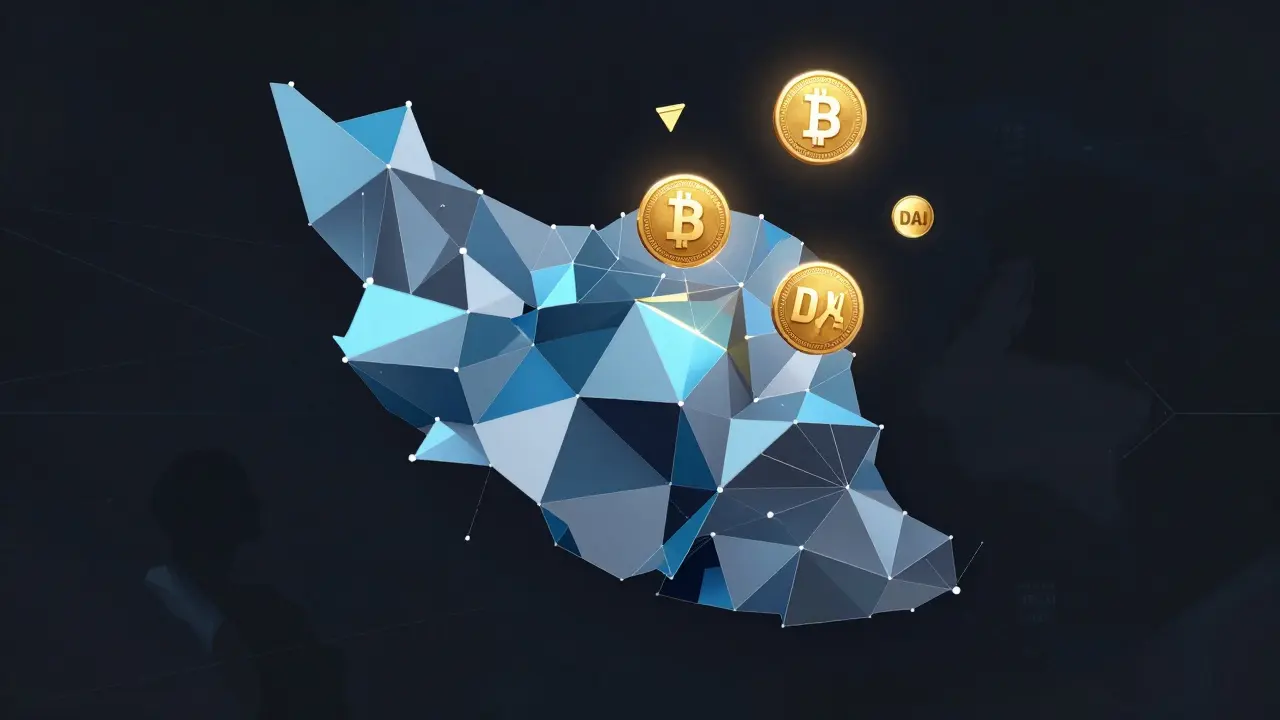
The reaction was instantaneous. Within days, domestic exchanges, crypto influencers, and government-aligned channels coordinated a massive shift. Users were urged to offload USDT holdings and migrate to DAI via the Polygon network. Why? Because Tether froze USDT, making it risky. DAI, being decentralized, couldn’t be frozen by a single entity. And Polygon offered faster transaction speeds and lower costs compared to Ethereum mainnet, which was congested and expensive during the panic.
This wasn’t chaos; it was a calculated response. Community discussions on Telegram and Reddit revealed detailed guides for cross-chain swaps. Users shared strategies for maintaining liquidity despite heightened sanctions pressure. It demonstrates a population that is not only tech-savvy but also highly motivated to preserve their financial autonomy.
Taxation and Formalization: The 2025 Shift
Perhaps the most significant development in recent years is the move toward formal regulation. In August 2025, Iran enacted the Law on Taxation of Speculation and Profiteering. For the first time, this imposed a capital gains tax on cryptocurrency trading. Crypto was positioned alongside other speculative assets like gold, real estate, and forex.
Why does this matter? It signals Tehran’s intent to legitimize the market. By taxing crypto, the government acknowledges its role in the domestic economy. It’s a pragmatic move: rather than fighting a losing battle against black-market trading, they bring it into the light and extract revenue. The phased implementation suggests recognition that immediate, harsh enforcement could destabilize the ecosystem that millions depend on for economic survival.
However, this formalization comes with risks. If the tax burden becomes too high, it may push more activity underground. Conversely, if it remains moderate, it could encourage greater transparency and integration with the formal banking sector, albeit under strict state supervision.
| Method | Risk Level | Accessibility | Primary Use Case |
|---|---|---|---|
| Domestic Exchanges (e.g., Nobitex) | Low (Regulated) | High | Daily transactions, fiat conversion |
| Foreign Exchanges via VPN | Medium (Legal risk) | Medium | Access to global markets, larger volumes |
| P2P Trading | High (Scams/Fraud) | High | Anonymous transfers, avoiding banks |
| DeFi Protocols (Polygon/DAI) | Low (Technical barrier) | Low | Censorship resistance, asset protection |
Enforcement Escalation: The Cat-and-Mouse Game
International regulators are not sitting idle. The Office of Foreign Assets Control (OFAC) issued 13 designations including cryptocurrency addresses in 2024-the second-highest amount in seven years. Their strategy has evolved. They no longer just target names and legal entities; they now designate wallet addresses, vessels, individuals, and front companies.
The goal is to deny Iran the ability to exploit both traditional financial systems and digital tools. Recent sanctions in August 2025 targeted over 75 individuals and entities across multiple jurisdictions for involvement in Iranian oil operations. This expanding scope shows that enforcement is becoming more granular and aggressive.
Yet, for every action, there is a reaction. When Tether freezes addresses, Iranians migrate to DAI. When one exchange gets blocked, they switch to another. The resilience of the ecosystem lies in its decentralization and the willingness of users to adapt. As long as traditional banking channels remain restricted, cryptocurrency will remain a vital tool for both the state and the people.
What This Means for Global Compliance
For compliance teams worldwide, the Iranian case offers a stark lesson. Screening can no longer stop at names. You must extend your analysis to wallet addresses and transaction behavior. Patterns identified by firms like TRM Labs show familiar traits: fiat converted to stablecoins, layered through intermediary wallets, and off-ramped via weak-compliance exchanges.
These patterns mirror global trends during times of war or economic turmoil. Bitcoin’s censorship-resistant nature makes it appealing when governments crack down. Unlike traditional assets, it can be transferred across borders, held on-chain, and requires only a seed phrase for storage. This flexibility is a double-edged sword: it empowers individuals but also enables illicit finance.
As we look ahead, the balance between international enforcement pressure and Iran’s domestic stability needs will dictate the future. Cryptocurrency adoption is expected to remain high. The question is not whether Iranians will use crypto, but how they will continue to evolve their methods to stay ahead of the curve.
Is cryptocurrency legal in Iran?
Yes, but with strict regulations. Mining is legal but heavily taxed and monitored. Trading is permitted on domestic exchanges like Nobitex, which must report user data to the government. Using foreign exchanges without authorization is technically prohibited but widely practiced via VPNs.
Why did Iranians switch from USDT to DAI in 2025?
In July 2025, Tether froze numerous Iranian-linked addresses holding USDT. To avoid similar freezes, users migrated to DAI, a decentralized stablecoin that cannot be frozen by a central authority. They used the Polygon network for its low fees and fast transactions.
How much crypto does Iran process annually?
Between January and July 2025, Iran recorded approximately USD 3.7 billion in crypto flows. This figure represents a slight decline from 2024 due to increased enforcement, but the overall volume remains massive, accounting for nearly 60% of global sanctions-related crypto activity.
Does the Iranian government profit from crypto?
Yes. Through the Central Bank, the government forces licensed miners to sell assets at fixed rates. Additionally, the 2025 taxation law imposes capital gains taxes on trading, generating revenue from speculative activities within the domestic economy.
Can I send crypto to someone in Iran?
Technically yes, but it carries significant legal risks. Sending funds to sanctioned entities or individuals violates OFAC regulations. Most reputable exchanges block transactions involving Iranian IP addresses or wallets to avoid penalties.