
Real Estate Tokenization: Unlocking Property on the Blockchain
When working with real estate tokenization, the process of converting physical property rights into digital tokens that can be bought, sold, or traded on a blockchain. Also known as property tokenization, it bridges traditional real‑estate markets with decentralized finance. This innovation relies on blockchain, a distributed ledger that records ownership transfers immutably and smart contracts, self‑executing code that enforces sale rules and royalty distributions. Together they create a digital asset, a token representing fractional ownership of a real‑world property that can move instantly across borders.
Why does this matter? First, tokenization enables real estate tokenization to break down high‑value assets into affordable slices. An investor can own 0.1 % of a downtown office building for the price of a coffee, while the blockchain guarantees an immutable audit trail. Second, liquidity improves dramatically: secondary markets can match buyers and sellers in seconds, unlike the weeks‑long process of a traditional deed transfer. Finally, transparency rises because every transaction is publicly recorded, reducing fraud risk and easing due‑diligence for lenders.
Key Players and Practical Use Cases
Most projects start with a special purpose vehicle (SPV) that holds the property title. The SPV then issues ERC‑20 or similar tokens on a public chain. Investors receive tokens, and the smart contract governs dividend payouts, voting rights, and exit mechanisms. Real‑world examples include residential complexes in Berlin, commercial warehouses in Singapore, and even vacation‑home portfolios in the Caribbean. Each case demonstrates a semantic triple: real estate tokenization encompasses fractional ownership, real estate tokenization requires regulatory compliance, and blockchain enables transparent record‑keeping.
Regulation is the elephant in the room. In many jurisdictions, tokenized property is treated as a security, meaning issuers must follow securities registration or qualify for exemptions. Smart contracts can embed compliance checks—such as KYC verification or country‑level restrictions—so that only eligible investors can hold tokens. This blend of legal frameworks and technology creates a hybrid model where traditional real‑estate law meets code‑driven automation.
Looking ahead, the ecosystem is expanding beyond ownership. Some platforms are adding insurance layers, automated rent collection, and AI‑driven property valuation directly into the token protocol. As the market matures, you’ll see more integration with DeFi primitives like lending, where token holders can collateralize their property tokens for instant loans. Below, you’ll find a curated set of articles that dive deeper into hash rates, DeFi tokens, trading volume, and other crypto concepts that intersect with real estate tokenization. These pieces will give you a broader perspective on the tech stack powering tokenized assets and help you spot opportunities in this fast‑moving space.
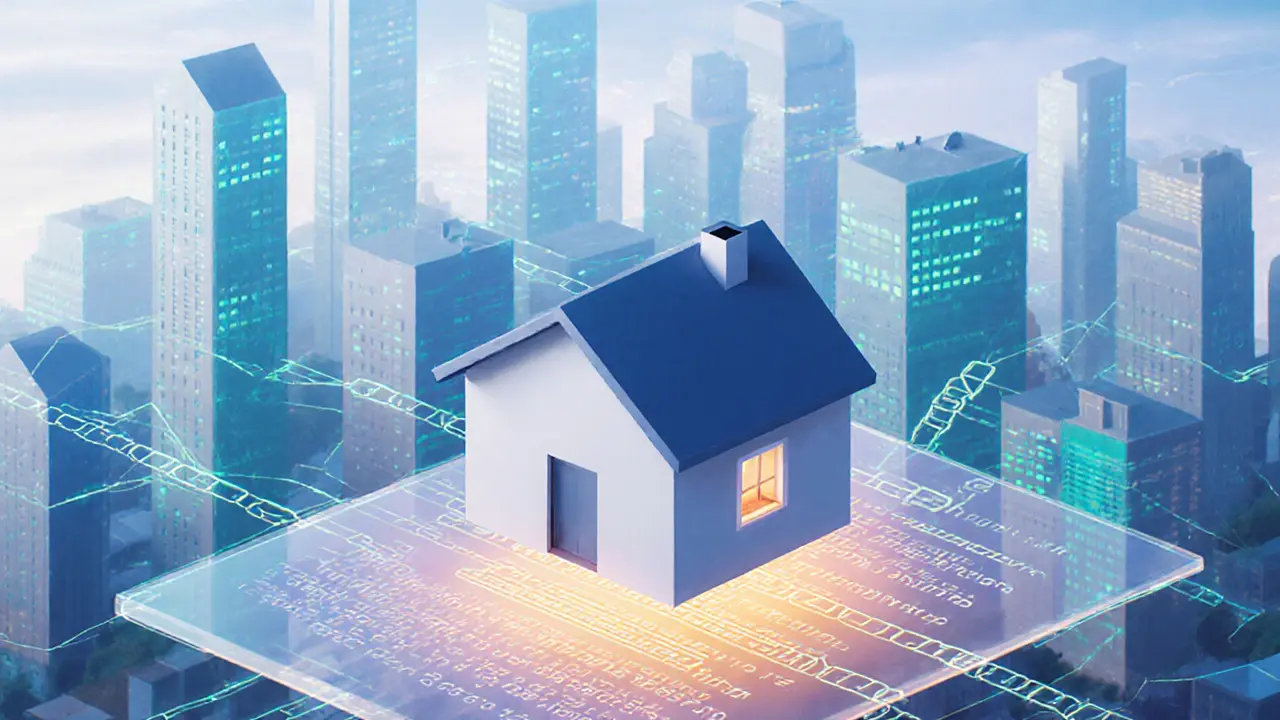
Blockchain Real Estate Transactions Explained: How Tokenization & Smart Contracts Speed Up Property Deals
Learn how blockchain transforms property deals with tokenization, smart contracts, faster closings and lower costs. A practical guide for investors and homebuyers.
Read MoreLatest Post
-
-

-

-
BitHash Crypto Exchange Review: Low Fees, High Risks 23 November 2025
-
What Are Smart Contracts on Blockchain? A Simple Breakdown 23 December 2025