
Trading Futures: What It Is, How It Works, and What You Need to Know
When you trade futures, a binding contract to buy or sell an asset at a set price on a future date. Also known as futures contracts, they let you speculate on price changes without owning the underlying asset—like Bitcoin, gold, or soybeans. This isn’t gambling. It’s a tool used by farmers, hedge funds, and retail traders alike to lock in prices or bet on volatility. But here’s the catch: futures amplify both gains and losses. One wrong move, and you can lose more than your initial deposit.
What makes futures different from regular buying and selling? It’s all about leverage, borrowed capital that lets you control a large position with a small amount of money. Also known as margin trading, it’s why someone with $1,000 can control $50,000 worth of crypto. That sounds powerful—until the market moves against you. Most retail traders blow up their accounts because they don’t understand how liquidation works. If your position drops below the maintenance margin, the exchange automatically closes it—and you lose everything. No warning. No second chance.
Futures aren’t just for crypto. They’ve been around for centuries, used by wheat traders in Chicago to hedge against harvest risks. Today, you’ll find them on exchanges like Binance, Bybit, and Kraken—where crypto futures, futures contracts tied to digital assets like Bitcoin and Ethereum. Also known as digital asset derivatives, they let you go long or short without holding the actual coin. But here’s what most guides won’t tell you: the biggest risk isn’t the market. It’s the platform. Many exchanges offer 100x leverage on crypto futures. That’s not trading—it’s Russian roulette with your wallet. And if the exchange freezes withdrawals or gets hacked? Good luck getting your money back.
Understanding expiration dates, funding rates, and open interest matters more than any indicator. A high open interest means lots of traders are in the same position—could be a trap. A negative funding rate on perpetual futures? That means longs are paying shorts to hold their positions. It’s not magic. It’s math. And if you ignore it, you’re just guessing.
Below, you’ll find real cases of traders who got burned—some by fake airdrops pretending to be futures tools, others by exchanges that vanished overnight. You’ll see how DeFi platforms like Meteora DAMM v2 use complex fee structures that mimic futures mechanics. You’ll learn why privacy coins like Monero are being banned from regulated futures markets. And you’ll find out why a $290K IDO like BitOrbit collapsed faster than a leveraged long on a black swan day.
Trading futures isn’t about getting rich quick. It’s about knowing the rules before you play. And if you don’t, someone else will win—while you lose.
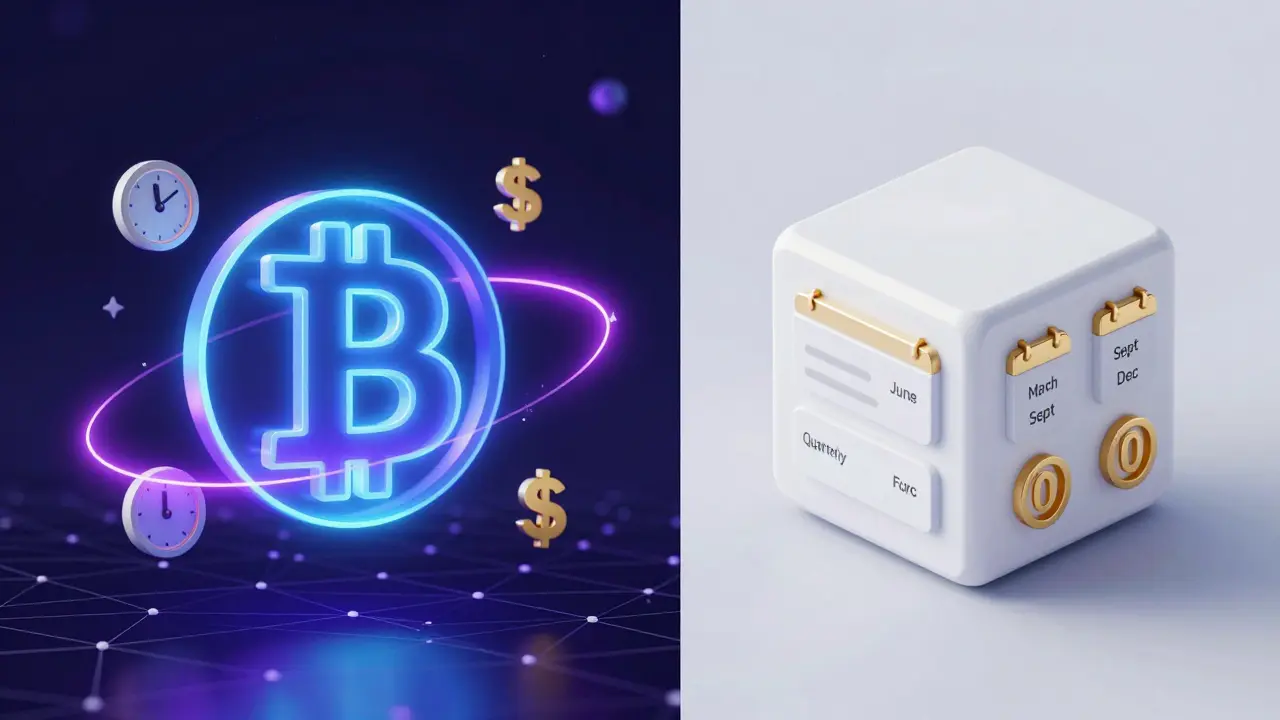
Perpetual Futures vs Quarterly Futures: Which Crypto Derivative Fits Your Strategy?
Perpetual futures offer 24/7 trading with funding fees; quarterly futures have no fees but expire every three months. Learn which one fits your trading style and holding period.
Read MoreLatest Post
-
-

-
-

How Blockchain Ensures Transparent Charity Donations 3 October 2025
-