Petro Cryptocurrency in Venezuela: How Government Restrictions and Sanctions Shape Its Reality
Imagine a currency that promises to bypass international sanctions, backed by oil and gold, yet struggles to buy a loaf of bread in the very country that created it. That is the paradox of the Petro, Venezuela’s state-backed cryptocurrency. Launched in 2018 under President Nicolás Maduro, the Petro was designed as a financial lifeline for an economy crushed by hyperinflation and heavy-handed U.S. sanctions. But instead of becoming a global digital asset, it has become a case study in how government control, legal battles, and external restrictions can stifle even the most ambitious crypto projects.
As we look at the landscape in mid-2026, the story of the Petro isn’t just about technology; it’s about power, politics, and the harsh reality of operating a sovereign digital currency in a sanctioned environment. If you are wondering whether the Petro works, who controls it, or why it remains largely invisible on global exchanges, you need to understand the complex web of regulations and restrictions that define its existence.
The Birth of a Sovereign Crypto Asset
To understand the restrictions surrounding the Petro, you first have to understand why it exists. In December 2017, amidst a deepening economic crisis with a falling bolívar and $140 billion in foreign debt, the Venezuelan government announced a new strategy: monetary sovereignty through cryptocurrency. Presidential Decree 3196 officially created the Petro, defining it as a crypto asset issued and backed by the Bolivarian Republic of Venezuela.
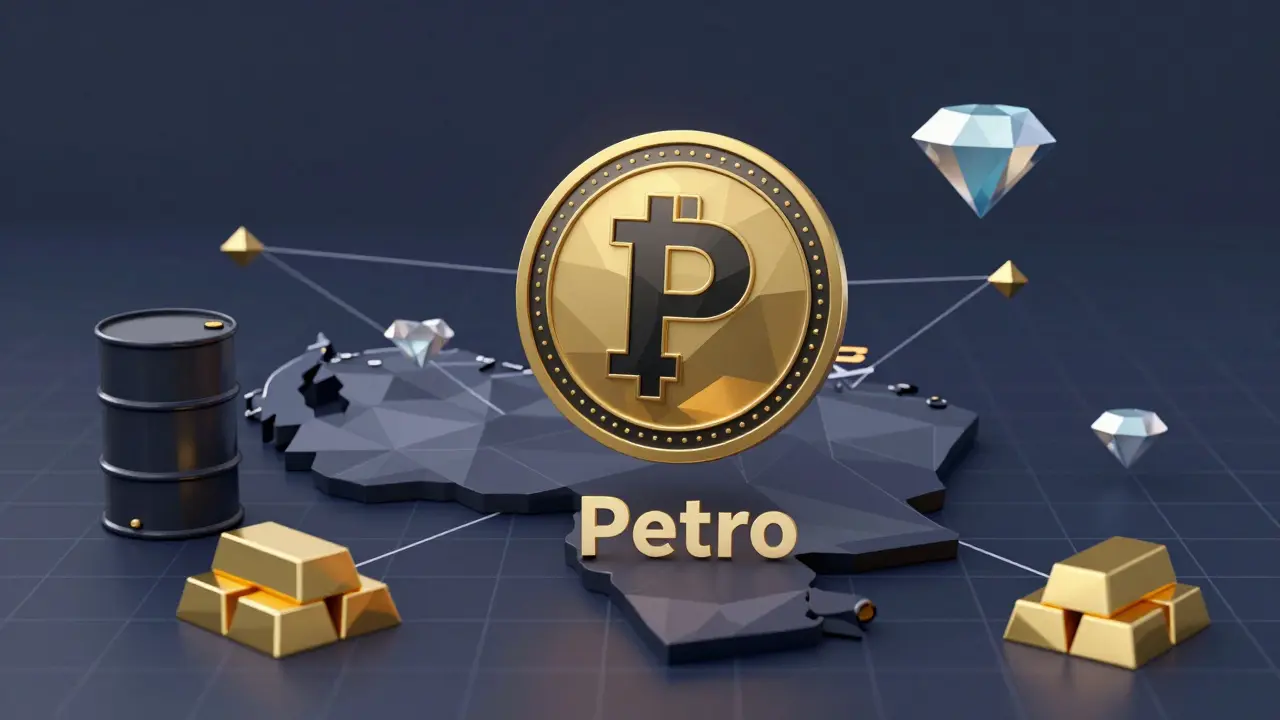
The pitch was bold. The Petro would be backed by Venezuela’s vast reserves of oil, gasoline, gold, and diamonds. The government planned to issue 100 million tokens, valuing the entire supply at over $6 billion-roughly $60 per token. This valuation was not based on market demand but on the estimated value of these natural resources. The goal was clear: create a new form of international financing that could circumvent the traditional banking system blocked by sanctions.
| Attribute | Details |
|---|---|
| Launch Date | February 2018 (Announced Dec 2017) |
| Total Supply | 100 Million Tokens |
| Backing Assets | Oil, Gasoline, Gold, Diamonds |
| Blockchain Type | Federated Blockchain |
| Regulatory Body | SUPCACVEN |
However, the launch was met with immediate skepticism. Unlike Bitcoin or Ethereum, which rely on decentralized networks of miners worldwide, the Petro operates on a federated blockchain architecture. This means that not everyone can participate in verifying transactions. Instead, a specific group led by the government controls the network. While this gives the state absolute authority, it contradicts the core philosophy of decentralization that attracts most crypto enthusiasts. For many investors, this lack of transparency raised red flags from day one.
Government Control and Regulatory Framework
If you think cryptocurrencies are free from government oversight, the Petro proves otherwise. It is perhaps the most regulated crypto asset in the world. The creation of the Petro came with a comprehensive legal framework designed to keep tight control over every aspect of its lifecycle.
At the center of this control is SUPCACVEN (Superintendence of Crypto Assets and Related Activities). Established by presidential decree in April 2018, SUPCACVEN is responsible for ensuring the normal functioning of Petro exchanges, maintaining registries of miners, and collecting fees. Carlos Vargas serves as the Superintendent of Cryptocurrencies, overseeing this regulatory body. Essentially, SUPCACVEN acts as the gatekeeper, deciding who can mine, trade, or use the Petro legally.
The government also established a Treasury of Cryptoassets, a state-owned company under the Vice-Presidency, to handle the issuance, custody, collection, and distribution of these assets. This structure ensures that the state retains ownership and control over the supply, preventing any independent market forces from dictating the price. The Cryptoassets Constituent Decree further empowered the National Executive to regulate the broader cryptoasset market, allowing them to authorize virtual exchange operations and promote the use of cryptocurrencies as payment methods domestically and internationally.
This level of centralization creates a unique dynamic. While proponents argue it provides stability and legal clarity, critics point out that it makes the Petro vulnerable to political manipulation. If the government decides to change the rules, they can do so overnight, without needing consensus from a decentralized community. This is a crucial distinction when evaluating the risks associated with holding or using the Petro.
Sanctions and International Restrictions
The biggest hurdle for the Petro is not technological; it is geopolitical. From its inception, the Petro was designed to bypass international sanctions imposed on Venezuela by the United States and other Western nations. However, these sanctions have evolved to specifically target cryptocurrency activities.
U.S. Congressional measures, such as S.37, aim to codify financial sanctions on Venezuelan debt and cryptocurrency-related technologies. These restrictions make it nearly impossible for international banks and major cryptocurrency exchanges to interact with the Petro. Without access to global liquidity pools, the Petro cannot achieve the convertibility needed to function as a true international currency.
The impact of these sanctions is stark. Major exchanges like Binance or Coinbase refuse to list the Petro due to compliance risks. This isolation means that the Petro’s value is largely theoretical. The government’s claimed valuation of $60 per token has never been validated by open market trading. In fact, leaked documents revealed that the government’s own advisory group, VIBE, recommended selling $2.3 billion worth of Petros in private offerings at discounts of up to 60%. This suggests that even insiders recognized the gap between the official price and what the market would actually pay.
Furthermore, PDVSA, Venezuela’s state-owned oil company, was encouraged to incorporate cryptocurrencies into foreign dealings. However, with global partners wary of violating sanctions, this strategy has seen limited success. The Petro remains trapped within Venezuela’s borders, unable to serve its primary purpose of facilitating international trade.

Legal Battles and Political Opposition
Domestically, the Petro faces another layer of restriction: legal opposition. Venezuela’s political landscape is deeply divided, and the cryptocurrency has become a battleground. When the Petro launched in early 2018, the opposition-controlled National Assembly declared it illegal just one month later.
Opposition leaders argued that the Petro was an illegal debt issuance by a cash-desperate government. They refused to recognize its legitimacy, creating a dual legal reality within the country. On one side, you have the executive branch promoting the Petro as a tool for economic salvation. On the other, you have the legislative branch labeling it as unconstitutional. This conflict creates significant uncertainty for businesses and citizens trying to navigate the legal waters.
This political polarization extends to public perception. Many Venezuelans view the Petro with suspicion, seeing it as another mechanism for the government to extract wealth rather than provide relief. The lack of trust is compounded by the country’s history of economic mismanagement. Even if the technology worked perfectly, the social license to operate remains fragile.
Forced Adoption vs. Organic Use
In response to low organic adoption, the government turned to mandates. By January 2020, President Maduro decreed that payments for certain government document services and airplane fuel must be made in Petro. This approach represents forced adoption rather than market-driven acceptance.
Citizens were required to purchase Petros to access essential services, effectively turning the cryptocurrency into a tax rather than a choice. While this ensured some level of circulation, it did not foster genuine utility. People used the Petro because they had to, not because they wanted to. This dynamic limits the potential for innovation and widespread integration into daily commerce.
Meanwhile, ordinary Venezuelans seeking protection against hyperinflation have gravitated toward established cryptocurrencies like Bitcoin and stablecoins such as USDT. These assets offer greater liquidity, global acceptance, and independence from government interference. The contrast highlights a key lesson: people will choose financial tools that empower them, not those that restrict them.

Petro Zones and Mining Incentives
To boost mining activity and local usage, the government designated four "Petro Zones" in March 2018. These areas include Margarita Island, Los Roques Archipelago, the Paraguaná peninsula, and the Ureña-San Antonio area near the Colombian border. Within these zones, the government offered significant tax incentives, including exemptions from importation duties for two years on electronic equipment, software, hardware, and power generation plants.
The idea was to create hubs where virtual mining and crypto asset use could thrive. Miners could set up operations with reduced costs, while locals could use Petros to pay for goods and services, including gasoline. However, reports on actual usage within these zones remain scarce. While some mining activity has occurred, the extent of its economic impact is unclear. High energy costs and infrastructure challenges continue to hinder large-scale mining efforts.
Additionally, the federated nature of the blockchain means that mining rewards are controlled by the state. Miners do not have the same autonomy as they would in decentralized networks. This limits the appeal for professional mining firms who prioritize security and fairness. As a result, the Petro Zones have not become the vibrant crypto economies envisioned by policymakers.
Current Status and Future Outlook
As of mid-2026, the Petro remains primarily a government-controlled instrument rather than a widely adopted cryptocurrency. Its use cases are limited to mandatory payments for specific government services. Broader adoption for everyday commerce is minimal, and international recognition is virtually non-existent.
The future viability of the Petro depends heavily on several factors. First, Venezuela needs broader economic recovery and political stability. Second, there must be changes in international sanctions regimes. Without lifting these restrictions, the Petro will remain isolated from global financial systems. Third, the ongoing legal uncertainty caused by the opposition’s non-recognition poses a long-term risk.
For now, the Petro serves more as a symbol of Venezuela’s defiance against Western financial dominance than as a functional currency. It demonstrates both the potential and the pitfalls of state-backed cryptocurrencies. While it offers a template for how governments might attempt to regain monetary sovereignty, it also warns of the dangers of centralization, lack of transparency, and ignoring market realities.
Is the Petro cryptocurrency legal?
The legality of the Petro is contested. The Venezuelan executive branch supports it through various decrees and laws, making it legal for government transactions. However, the opposition-controlled National Assembly declared it illegal in 2018, creating significant legal ambiguity for citizens and businesses.
Can I buy Petro on international exchanges?
No, the Petro is not listed on major international cryptocurrency exchanges like Binance or Coinbase. Due to U.S. sanctions and compliance risks, global platforms avoid trading the Petro, limiting its accessibility to domestic markets and private offerings.
What backs the value of the Petro?
The Petro is officially backed by Venezuela's reserves of oil, gasoline, gold, and diamonds. However, this backing is theoretical, as there is no transparent mechanism for redeeming tokens for these assets, and the government's valuation has not been accepted by independent markets.
Who regulates the Petro?
The Petro is regulated by SUPCACVEN (Superintendence of Crypto Assets and Related Activities), a government agency created specifically to oversee crypto assets in Venezuela. It handles licensing, monitoring, and enforcement of crypto-related activities.
Why don't people use the Petro for daily transactions?
Adoption is limited due to lack of trust, forced usage mandates, and better alternatives. Most Venezuelans prefer Bitcoin or stablecoins for protecting savings against inflation, as these offer greater liquidity and independence from government control.