
VPN Usage for Crypto in Iran: Detection Risks for Traders
Imagine waking up to find your entire cryptocurrency portfolio locked behind a verification wall you can't pass. For thousands of Iranian traders, this isn't a hypothetical nightmare-it's the reality following intensified enforcement actions in late 2024 and 2025. If you are an Iranian trader using a Virtual Private Network (VPN) to access global markets, you are playing a high-stakes game of digital cat-and-mouse. The days of simply toggling on a free app and buying Bitcoin anonymously are over. Today, sophisticated blockchain intelligence firms and exchange algorithms can sniff out your location even when your IP address says otherwise.
This article breaks down exactly how exchanges detect VPN usage, why recent crackdowns have changed the landscape, and what specific technical pitfalls could cost you your funds. We aren't just talking about theory; we're looking at real data from $3.7 billion in crypto flows that vanished or got frozen because users underestimated the tech stack working against them.
The Shift From Anonymity to Surveillance
For years, Iranian users relied on platforms like Binance because they offered easy entry with minimal identity checks. You’d download the app, connect via VPN, register with an email, and trade. But the ecosystem shifted dramatically in October 2024. Two major blockchain intelligence platforms launched wallet identification bounty programs specifically targeting Nobitex, Iran’s largest domestic exchange. This wasn't just about compliance; it was about mapping the underground economy. Suddenly, every transaction leaving or entering Iranian-linked wallets became a potential flag.
The result? A chilling effect on volume. Between January and July 2025, total cryptocurrency flows involving Iranian users dropped by 11% compared to the previous year. Even more alarming, June 2025 saw a 50% year-over-year decline in inflows, with July dropping another 76%. Why such a steep fall? Because the risk of getting caught is no longer abstract. It’s immediate. When enforcement intensifies, accounts freeze first, and explanations come later-if they come at all.
How Exchanges Actually Detect You
You might think hiding your IP address is enough. It’s not. Modern exchanges use a multi-layered approach to identify users, often referred to as "fingerprinting." Here is what they are actually looking at:
- Device Fingerprinting: Your browser sends unique identifiers based on your screen resolution, installed fonts, and battery status. If your device profile suddenly changes while your account history remains static, it raises red flags.
- Behavioral Analysis: Do you log in at 3 AM Tehran time but your IP shows London? Do you make rapid-fire trades typical of high-frequency bots but withdraw to a personal bank account? Algorithms spot these mismatches instantly.
- Transaction Patterns: Blockchain analytics firms track where coins go. If you deposit USDT into an exchange from a wallet known to interact with Iranian merchants, your account gets flagged regardless of your current IP.
- Network Layer Leaks: WebRTC leaks can reveal your true local IP address even when a VPN is active. Many free or poorly configured VPNs fail to block these requests, handing your real location to the exchange on a silver platter.
It’s worth noting that TRON network transactions dominate Iranian activity, accounting for over $2 billion of Nobitex’s processed volume. Because TRON is cheaper and faster than Ethereum, it became the default rail for Iranian traders. However, this concentration makes it easier for analysts to isolate Iranian traffic patterns. If you’re moving large amounts of USDT-TRC20, you’re standing out in a crowd that’s already under a microscope.

The Underground Economy of Identity
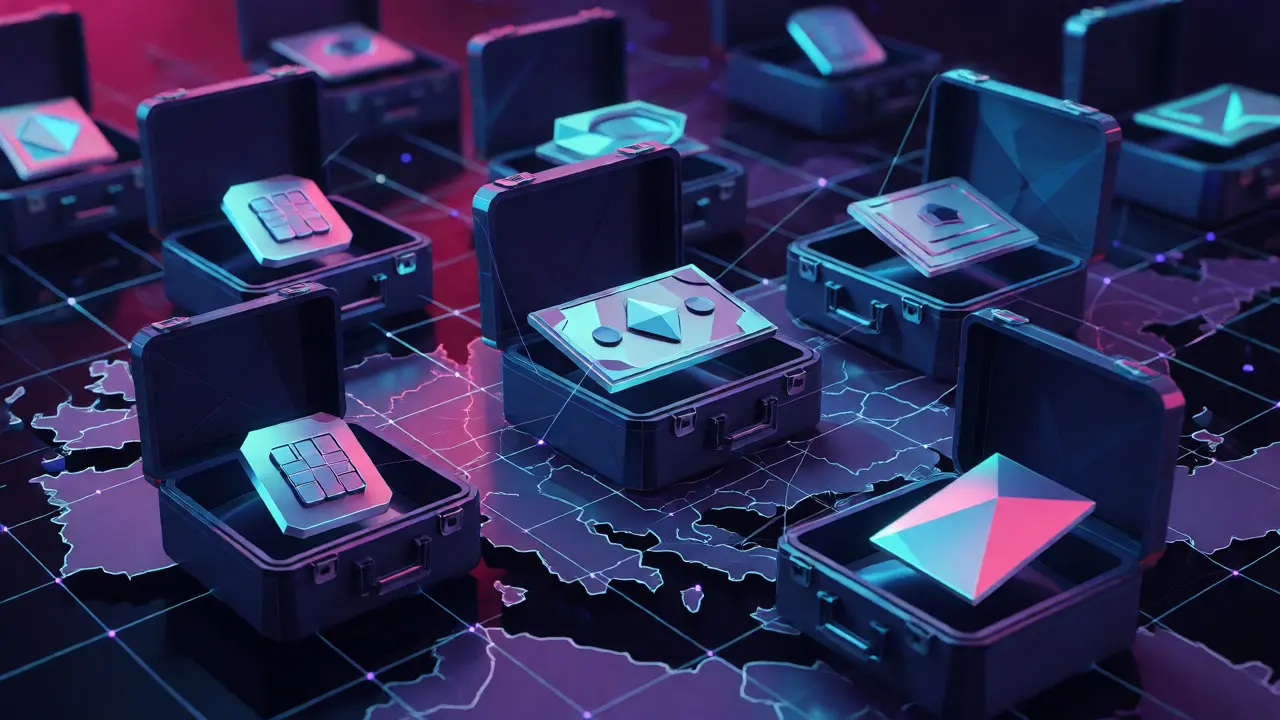
To bypass strict Know Your Customer (KYC) rules, a robust underground market has emerged. Iranian traders don’t just buy VPNs; they buy complete "identity packages." These bundles typically include foreign IBANs, SIM cards for receiving One-Time Passwords (OTPs), and authentic-looking residency documents. This allows users to appear as residents of countries like Turkey, UAE, or European nations.
| Component | Purpose | Detection Risk |
|---|---|---|
| Foreign SIM Card | Receive SMS OTPs for login/security | Medium (SIM provider may be linked to mass registration) |
| Virtual IBAN | Fiat deposits/withdrawals | High (Banks monitor source of funds closely) |
| Residency Documents | KYC verification | Very High (Document fraud databases are improving) |
| Static Residential IP | Mimic home internet connection | Low (If properly rotated and clean) |
Nicholas Smart, Director of Intelligence at Crystal, noted that there is a "whole tranche of very normal Iranian people" relying on these methods. They aren't necessarily criminals; many are just trying to protect their savings from currency devaluation. But the reliance on third-party document providers introduces new vulnerabilities. If one provider gets banned, hundreds of accounts associated with their document templates can be swept up in a single compliance purge.
Domestic vs. International Enforcement
You face threats from two directions: international exchanges and domestic regulators. Internationally, platforms like Binance have hardened their anti-money laundering (AML) rules. In September 2021, seven Iranian traders confirmed to Reuters that they successfully evaded geoblocking via VPN. By October 2021, that window had largely closed due to stricter KYC enforcement. Today, the bar is even higher.
Domestically, the situation is complex. The Central Bank of Iran prohibits domestic payments using cryptocurrencies, yet allows licensed miners to sell mined coins. This creates a legal gray area where holding assets is tolerated, but using them for everyday commerce is restricted. The Iran Cyber Police (FATA) actively monitors illegal operations, freezing over one million bank accounts connected to crypto activities in early 2025 alone. If you transfer funds from a foreign exchange back to an Iranian bank account, you risk triggering a domestic audit.
Technical Pitfalls That Get You Banned
Many traders lose access not because of grand conspiracy theories, but due to simple technical errors. Here are the most common mistakes:
- Using Free VPNs: Free services often lack sufficient encryption and may sell user data. Worse, they share IP addresses among thousands of users. If one user engages in suspicious activity, the entire IP range gets blacklisted by exchanges.
- IP Drops During Transactions: If your VPN disconnects mid-trade, your Iranian IP is exposed to the exchange’s monitoring system. This often results in immediate suspension until manual review.
- Inconsistent Time Zones: Logging in from a German IP while your device clock shows Tehran time is a classic mismatch. Ensure your operating system settings match the location of your proxy server.
- Reusing Wallet Addresses: Sending funds from a wallet that previously interacted with sanctioned entities or known Iranian merchants links your new "clean" account to old baggage.
The case of Hamster Combat illustrates how ordinary Iranians adapt. This tap-to-earn game surged in popularity partly because it allowed users to earn crypto without heavy initial investment or complex exchange interactions. However, even gaming rewards eventually need to be cashed out, bringing users back into the crosshairs of exchange compliance teams.
What the Future Holds for Iranian Traders
The trend is clear: detection technology is outpacing circumvention tools. As blockchain intelligence firms expand their focus on Iranian-linked wallets, the cost of maintaining anonymity rises. Trust in domestic Virtual Asset Service Providers (VASPs) is eroding following security breaches and revelations about warrantless surveillance. This drives capital flight to foreign exchanges, which in turn increases scrutiny on those very flows.
If you continue to trade, assume that every action leaves a trace. The era of casual VPN usage is ending. Successful traders are now those who treat their digital identity with the same care as their financial portfolio-diversifying IPs, verifying document sources, and understanding that a frozen account is a matter of "when," not "if," unless you adapt quickly.
Can I still use Binance if I live in Iran?
Technically, yes, but it requires significant effort. You must use a reliable residential IP proxy, not just a standard VPN, and ensure your KYC documents match the country of your IP. Binance has implemented strict geoblocking, so a sudden drop in your VPN connection can lead to account suspension. Many users report success only after establishing a consistent digital footprint that mimics a resident of the target country.
Why did my crypto account get frozen even though I used a VPN?
Exchanges use more than just IP addresses for detection. They analyze device fingerprints, behavioral patterns, and blockchain history. If your wallet interacts with addresses tagged as Iranian-linked, or if your login times conflict with your IP location, you may trigger automated compliance alerts. Additionally, if you used a shared IP address from a low-quality VPN, other users' suspicious activities could have tainted your account.
Is it illegal to hold cryptocurrency in Iran?
Holding cryptocurrency is generally tolerated, but using it for domestic payments is prohibited by the Central Bank of Iran. Licensed mining is allowed, and miners can sell their output. However, unlicensed trading and transfers, especially those bypassing official channels via VPNs, exist in a legal gray area. The Iran Cyber Police (FATA) actively enforces regulations against illegal operations, which can result in frozen bank accounts.
Which blockchain network do Iranian traders use most?
The TRON network is dominant among Iranian traders due to its low transaction fees and fast settlement times. Over $2 billion of Nobitex’s transaction volume flows through TRON. This concentration makes it easier for blockchain analytics firms to identify Iranian transaction patterns, potentially increasing detection risks compared to using less concentrated networks like Bitcoin or Ethereum mainnet.
Are free VPNs safe for crypto trading?
Generally, no. Free VPNs often suffer from slow speeds, frequent disconnections, and shared IP addresses that may already be blacklisted by exchanges. More critically, some free providers may log and sell user data, compromising your privacy. For crypto trading, paid services with dedicated residential IPs are recommended to minimize the risk of exposure and account suspension.